
The complete guide
Choosing a Desktop World Globe, A Practical Buyer's Guide
The problem with most desk ornaments
Most things people put on a desk are there to fill a gap. A ceramic dish nobody uses. A frame with the stock photo still in it. They look fine for a fortnight and then they become background, and eventually they become clutter.
A globe is different, and the reason is simple. It does something. You turn it, you find a place, you notice that two countries you thought were nowhere near each other actually share a border. That small moment of genuine curiosity is what stops a globe from fading into the furniture.
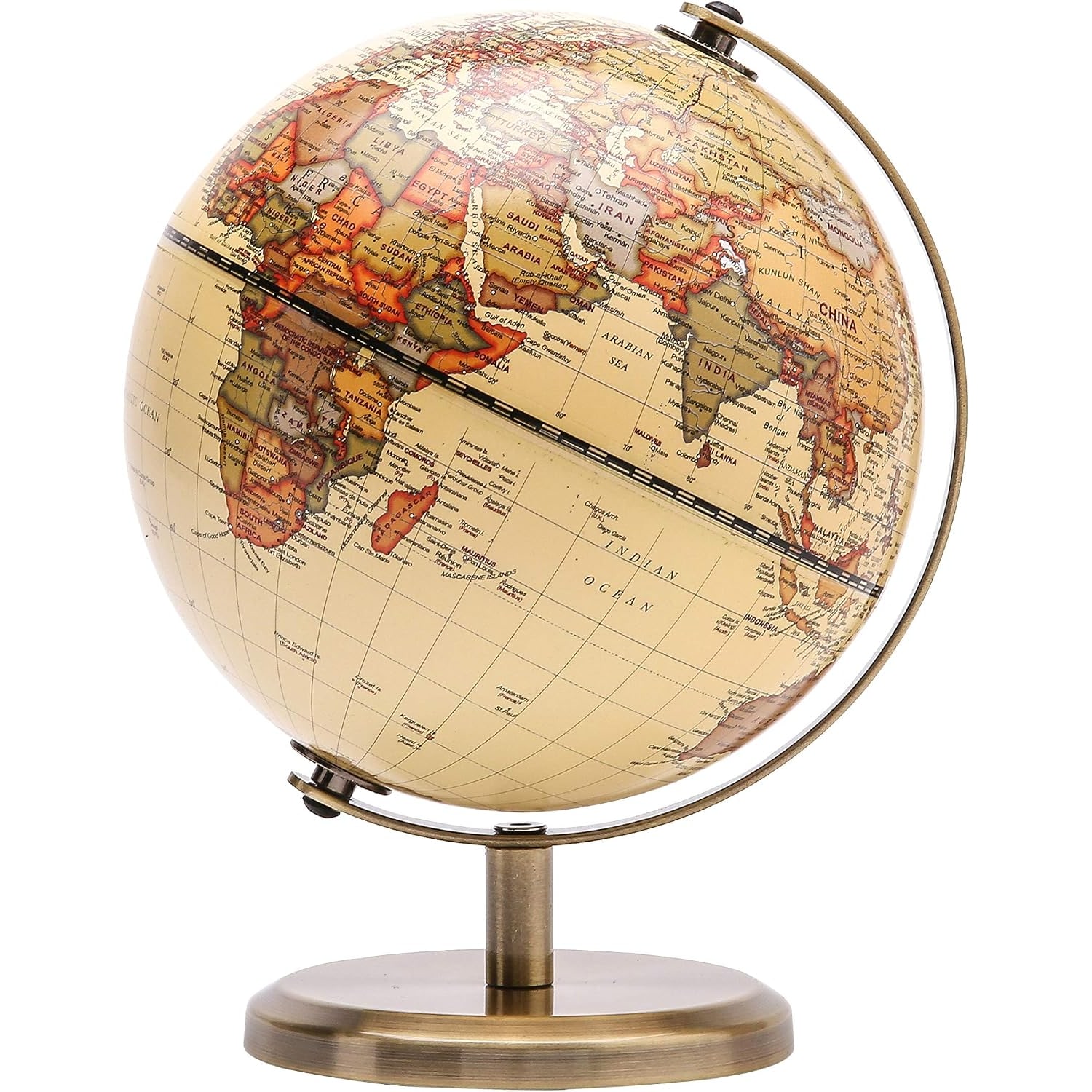
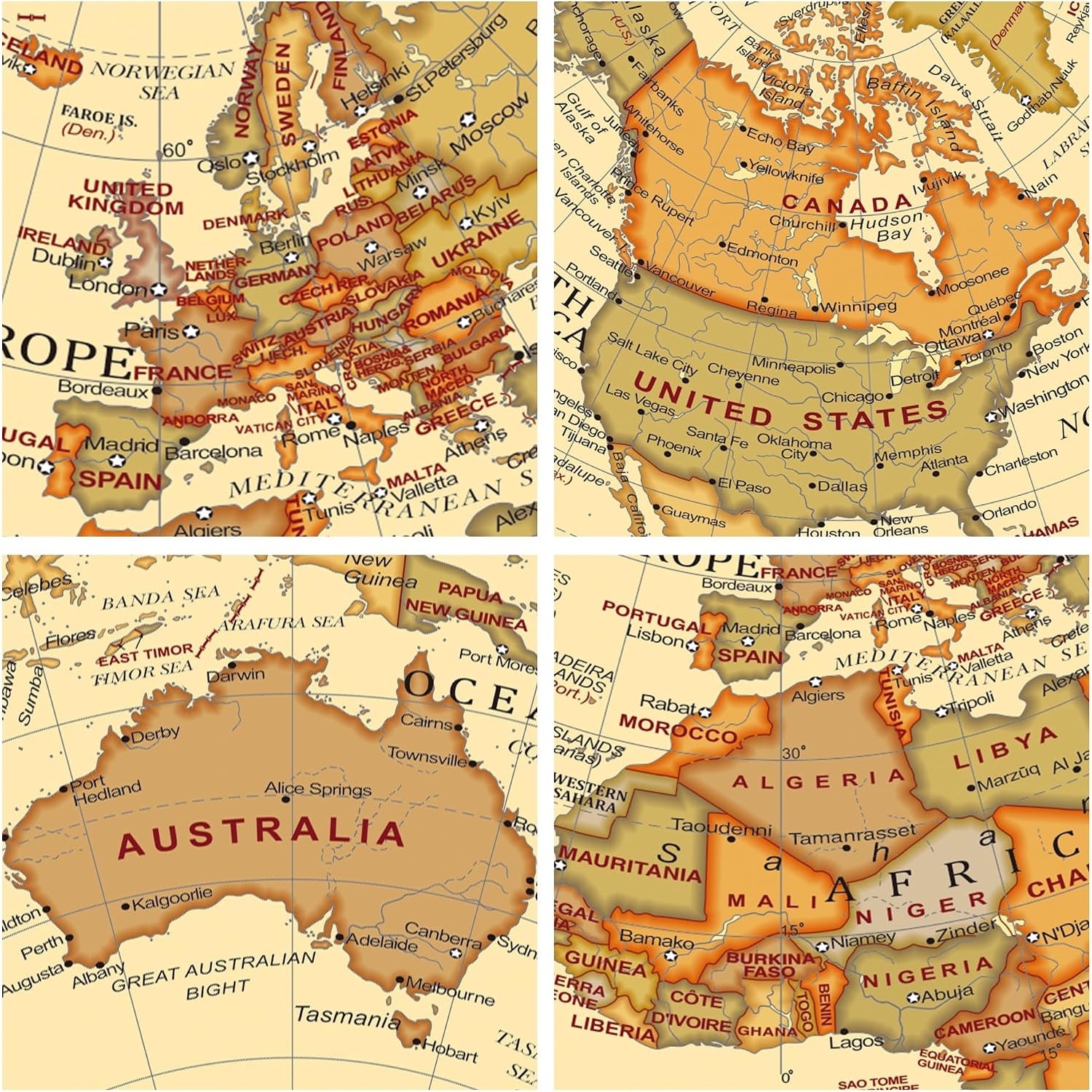
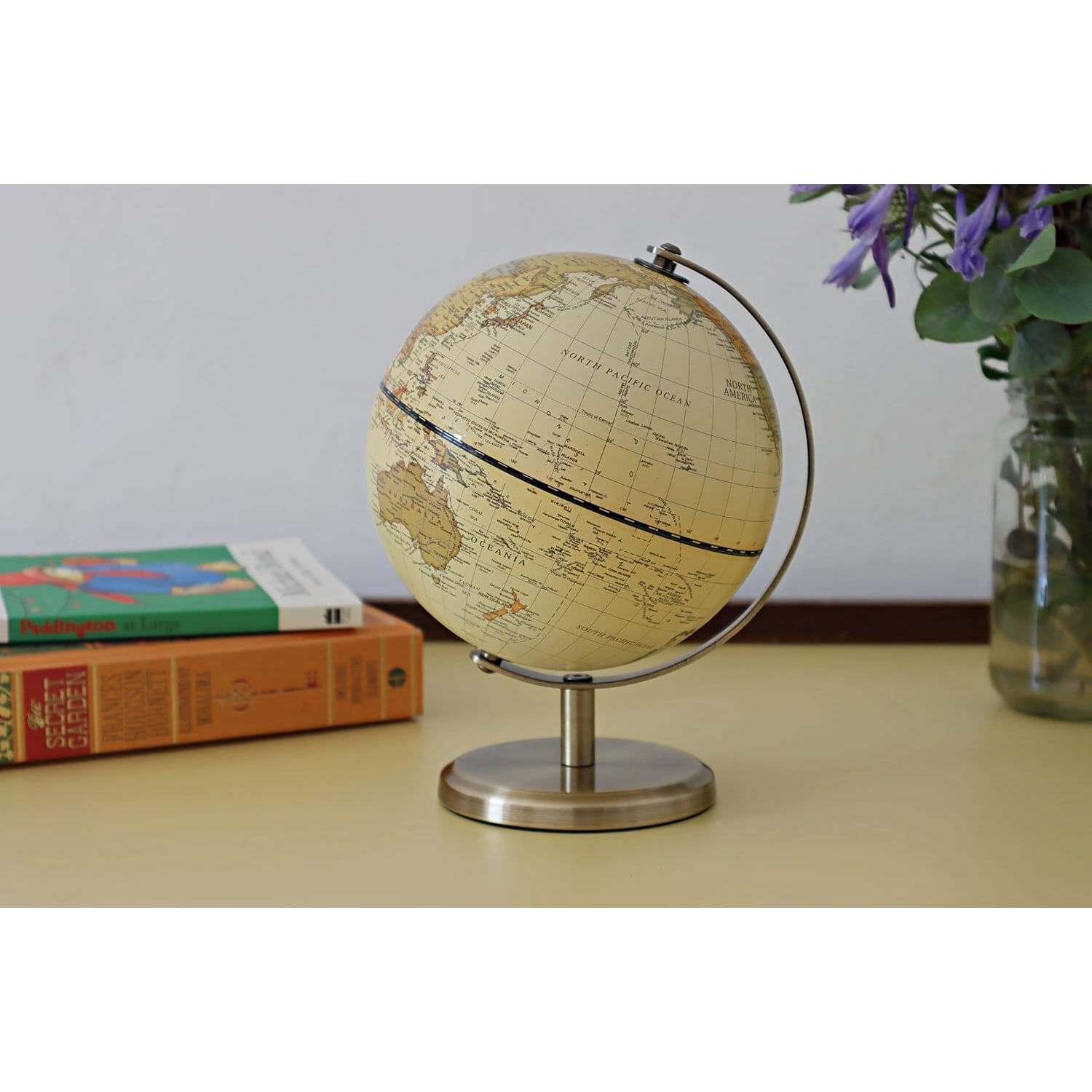
The catch is that plenty of globes are sold purely as decoration, with maps so soft and washed out that you cannot read them from an arm's length away. You end up with an object shaped like a globe rather than a globe. The 14cm antique style world globe is built the other way around. The printing is a modern political world map in English, with countries, political boundaries, capital cities and major cities all marked, wrapped in a vintage colour palette that gives it the aged look without sacrificing legibility.
What you are actually getting
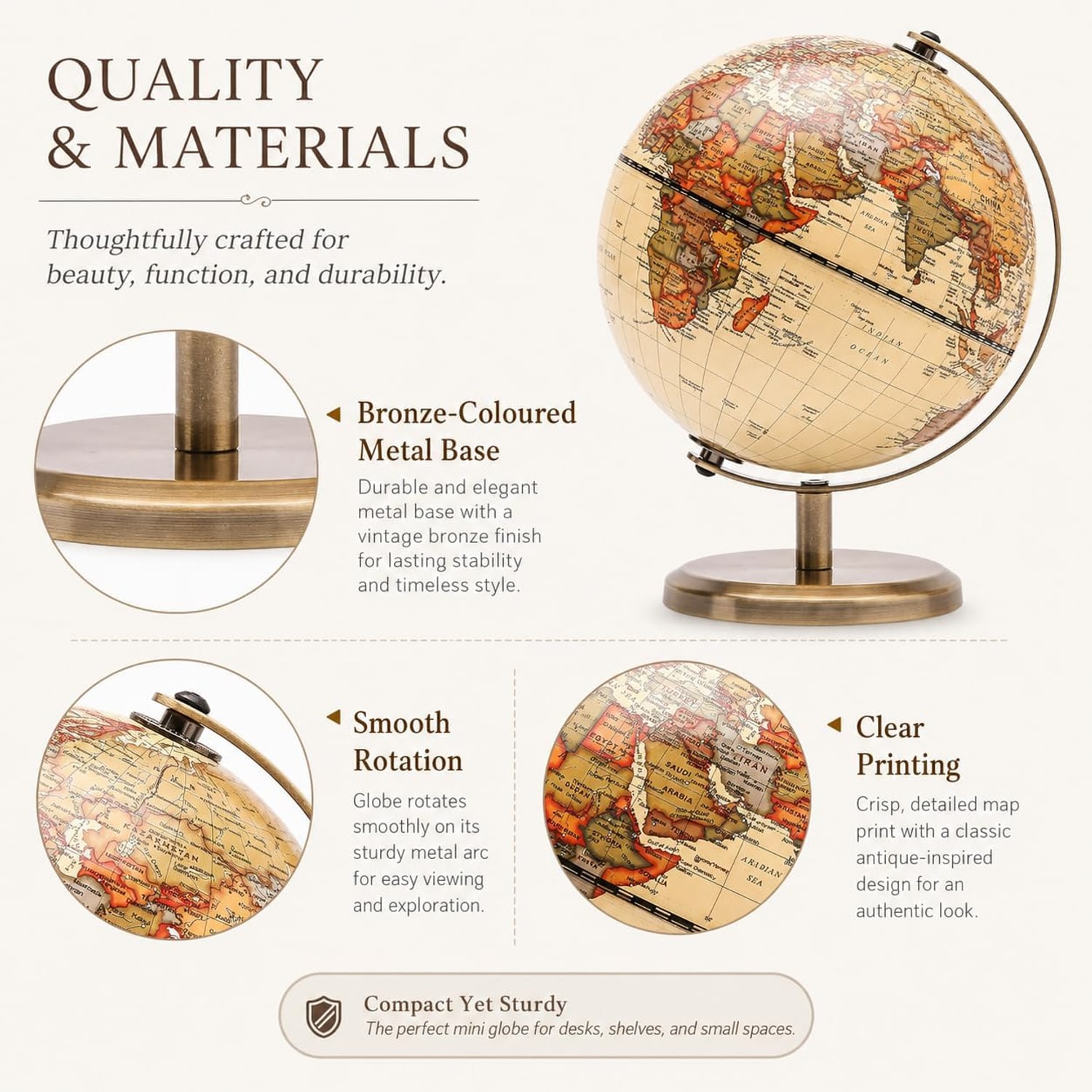
The sphere measures 14 centimetres across. The arc that holds it and the base beneath it are both metal, polished, in a bronze tone. Total weight is 0.38 kg.
Those numbers tell you more than they look like they do. Fourteen centimetres is small, but it is the smallest size where country labels on a world map still stay comfortably readable. Drop much below that and the text on smaller nations becomes a squint. The 0.38 kg weight, most of which sits in the metal base, is what keeps the whole thing anchored when you spin it. Lightweight plastic-based globes at this size tend to skate across a desk or tip when you give them a decent push.
The sphere is mounted on the arc, so it turns freely. One finger is enough.
What is not published is worth saying out loud. The maker does not state an overall height including the base, nor a specific metal type beyond "metal" with a polished finish, nor a colour name for the sphere itself. We would rather tell you that than invent a figure.
How a small rotating globe earns its keep
There are a few ways people actually use one of these.
The first is reference. Someone mentions a country in conversation, a news item names a city you cannot place, a child asks where a relative lives. A political map answers that faster than unlocking a phone, and it answers it in context. You see the neighbours, the coastline, the rough distance. That context is the thing a search result does not give you.
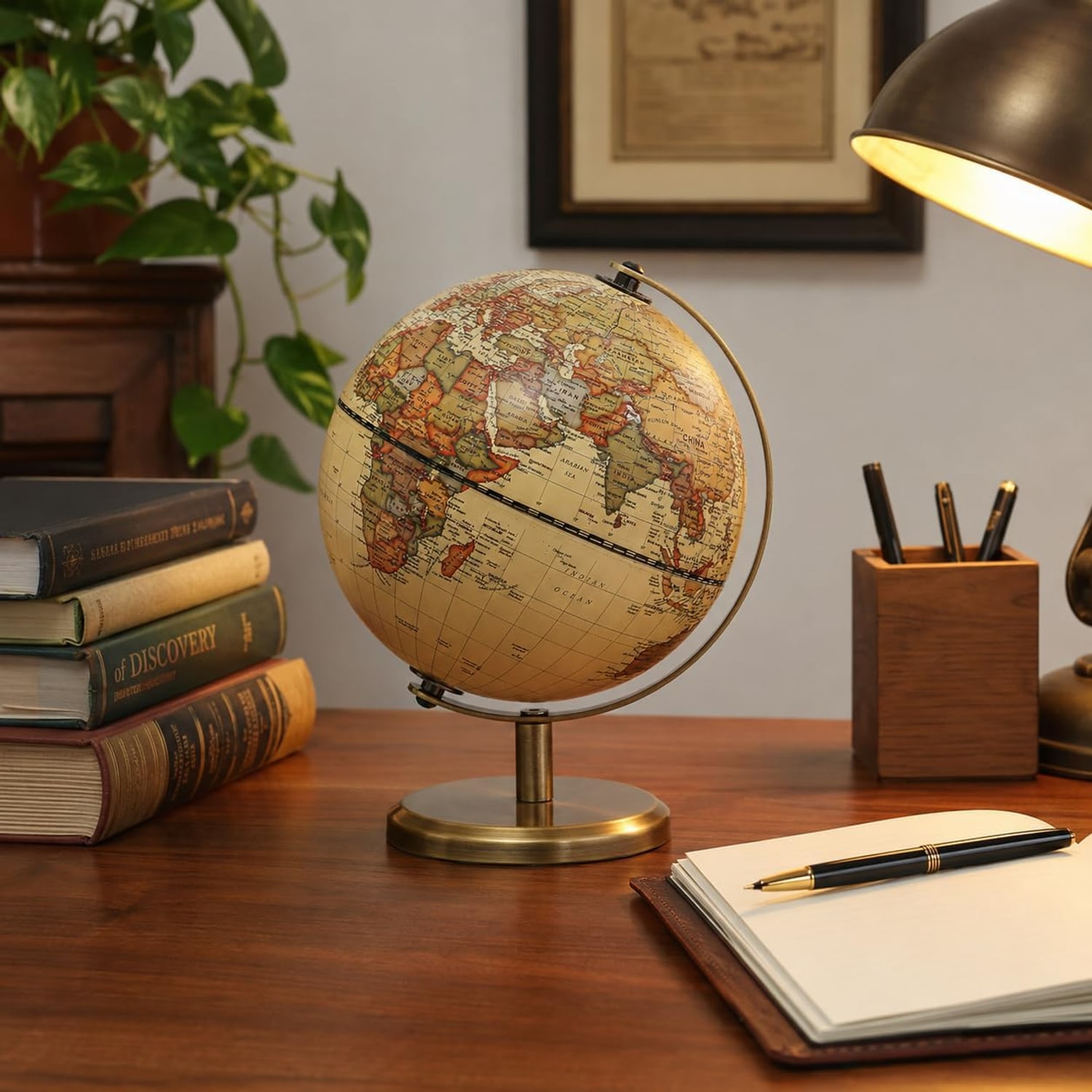
The second is decoration, which is not a lesser purpose. The bronze-tone polished metal reads as warm against timber, against dark shelving, against painted bookcases. It sits comfortably in a room that already has a bit of character, and it adds some to a room that does not.
The third, and the one people underestimate, is as something for your hands. Spinning a globe while you think is a surprisingly common habit among people who work at a desk all day. It gives restless fingers somewhere to go.
Who it suits
A compact globe for a shelf suits anyone short on space. If your desk is already carrying a monitor, a laptop stand and a lamp, a 30 centimetre floor or table globe is not realistic. Fourteen centimetres fits into the kind of gap most desks already have.
It suits students and anyone with a study room. A study room globe placed within reach of a desk chair gets used. One placed high on a shelf gets dusted.
It suits home offices where video calls happen. A globe behind you on a shelf is one of the few background objects that reads as considered rather than staged.
And it suits shared spaces. A café counter, a reception desk, a waiting area. People touch globes. That is the point of a small rotating globe rather than a fixed one.
Where it is less ideal is a large teaching space. If twenty people need to read it at once from several metres back, you want a bigger sphere.
How to choose between globes
Four things separate one globe from another, and price is only loosely connected to any of them.
Map type. A political world map globe shows countries, borders and cities. A physical map shows terrain, elevation and ocean depth. Political is the better everyday choice for most people because the questions you ask a globe are usually about countries. This one is political, in English, in vintage colours.
Size versus readability. Bigger is more readable but takes more space. Fourteen centimetres is the practical floor for a globe you want to actually read rather than just look at.
Base material. Metal bases add weight and stability and generally hold their look longer than coated plastic. The arc and base here are both metal with a polished finish.
Mounting. Some globes sit in a full cradle, some on a half arc, some on a single pivot. A half arc is the most common and gives you an easy single-handed spin.
One more thing worth thinking about is the finish you are matching. A bronze metal globe sits well with warm woods, brass lamps and darker palettes. If your room is all cool greys and chrome, the contrast will be more noticeable, which some people like and some do not. Worth a quick look at the shelf before you decide.
Looking after it
This is not demanding. Dust the sphere with a soft dry cloth whenever you dust the shelf it sits on. For a fingerprint or a mark, a cloth with the smallest amount of water on it will lift it, then dry the spot straight away.
Stay away from solvents, glass cleaner, metal polish and anything abrasive. Printed map surfaces do not forgive that. If the metal needs attention, the same dry cloth is usually enough, and polished finishes generally look better lightly maintained than heavily treated.
Two placement habits help. Keep it out of long hours of direct sunlight, because strong light fades printed colour over time. And keep it back from the edge of a desk or shelf, because the most common end for any decorative world globe is a bump and a short drop.
Hold the base when you spin it hard. Not because it is delicate, but because it is a habit that keeps the thing where you put it.
The short version
A 14 centimetre sphere, a polished metal arc and base in a bronze tone, a modern political world map in English with countries, borders, capitals and major cities, printed in vintage colours, weighing 0.38 kg in total. It spins with one finger and sits on roughly the space a mug and saucer would take.
If you want something on your desk that looks good and also answers a question now and then, this is a straightforward choice. The size is honest, the map is readable, and the metal base means it behaves like a proper object rather than a trinket.
Overall height and the exact metal specification are not published, so if those matter to your particular shelf or your particular style, factor that in. Everything else is on the spec list above.