
The complete guide
How to Choose a Chinese Mahjong Set That Lasts
The problem with most mahjong sets
Plenty of people buy a mahjong set once, play twice and then leave it in a cupboard. Usually it is not the game that put them off. It is the set. Tiles that are too small to read across a table, a flimsy zip bag that spills, missing dice, no way to tell which wind is which. Small annoyances stack up, and the game that was meant to be relaxing starts to feel like admin.
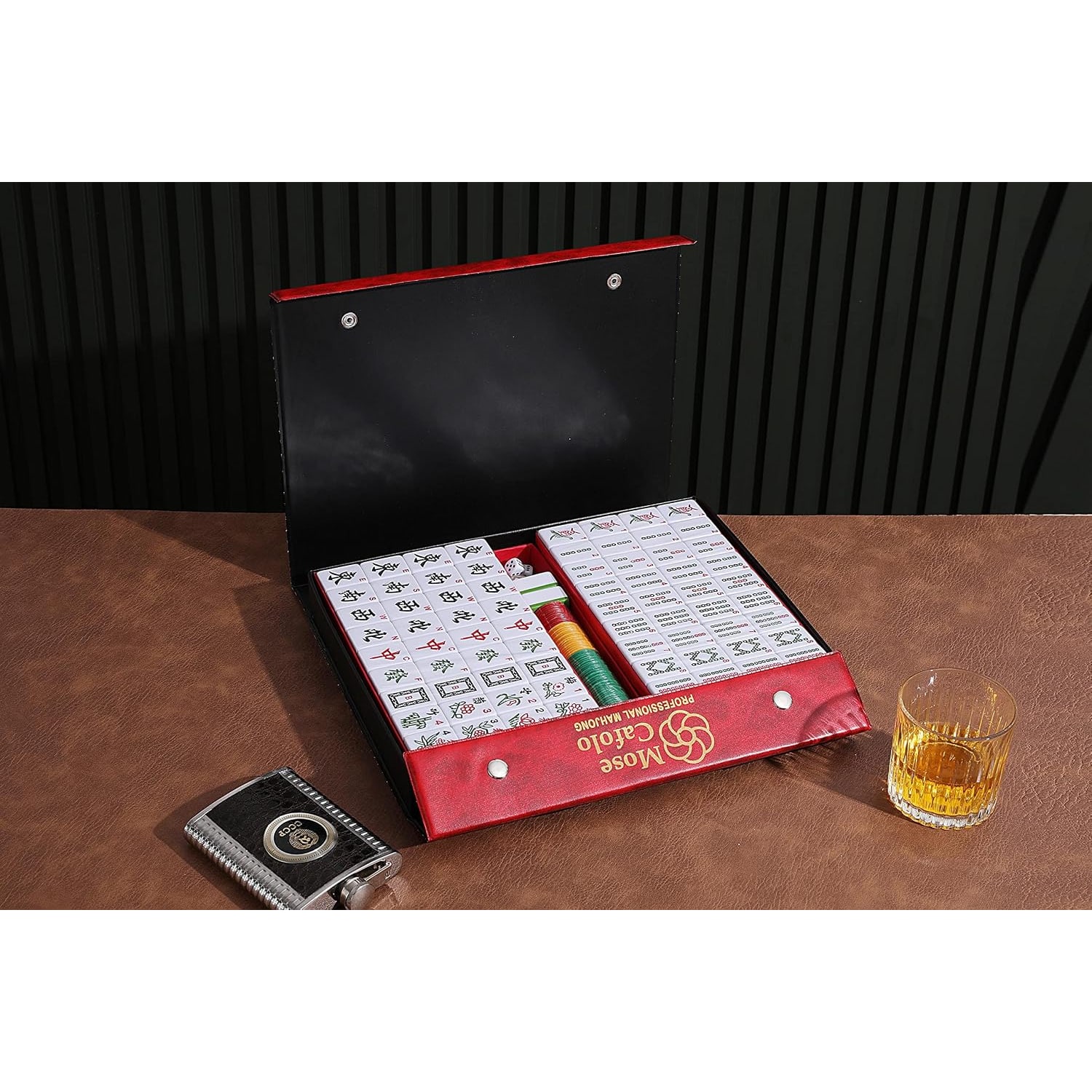
A good set removes all of that. You open a case, lift out the trays and the game is ready. Nobody is hunting for a dice under the sofa. Nobody is squinting at a tile trying to decide if it is a five or a six. The equipment gets out of the way and the game itself takes over, which is the whole point.
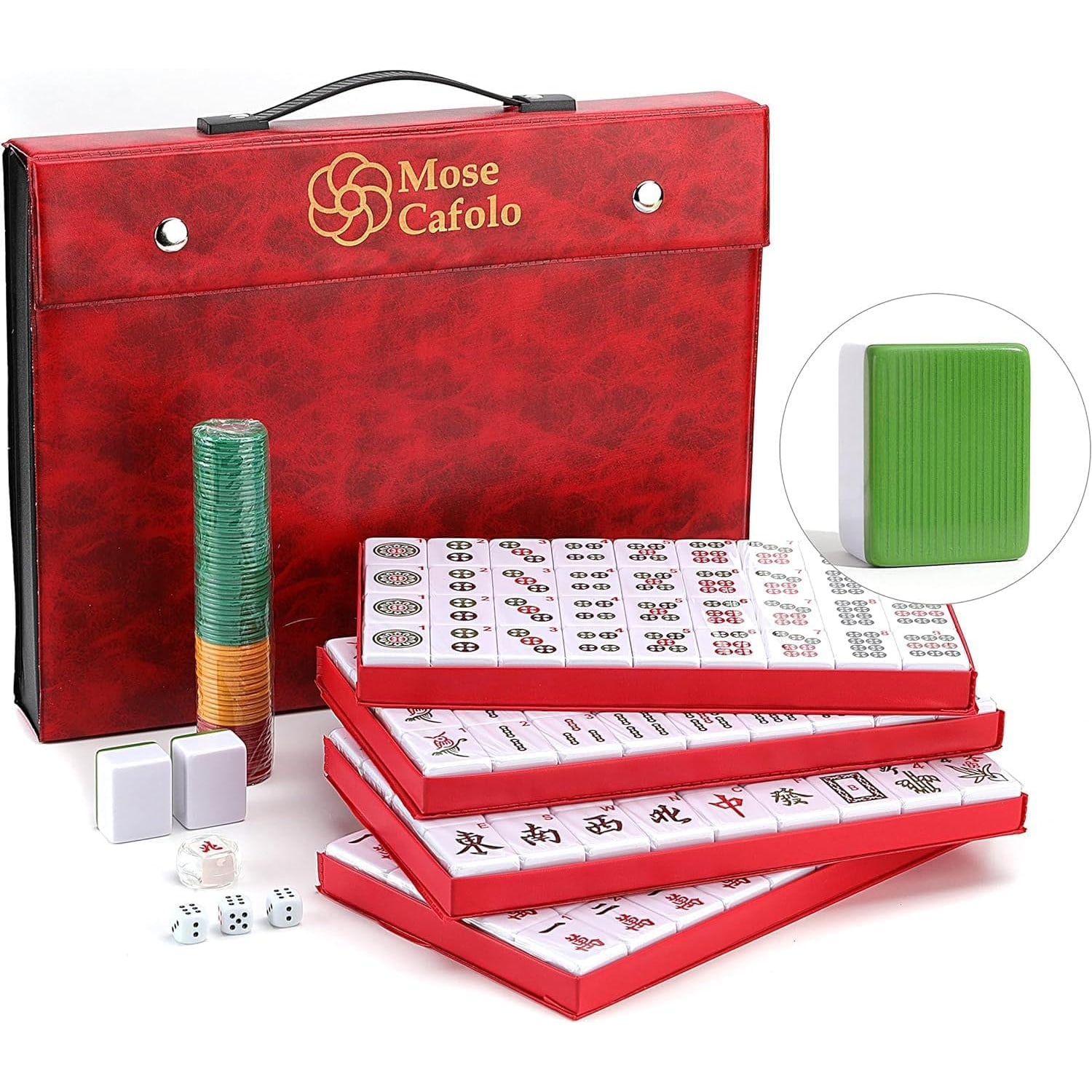
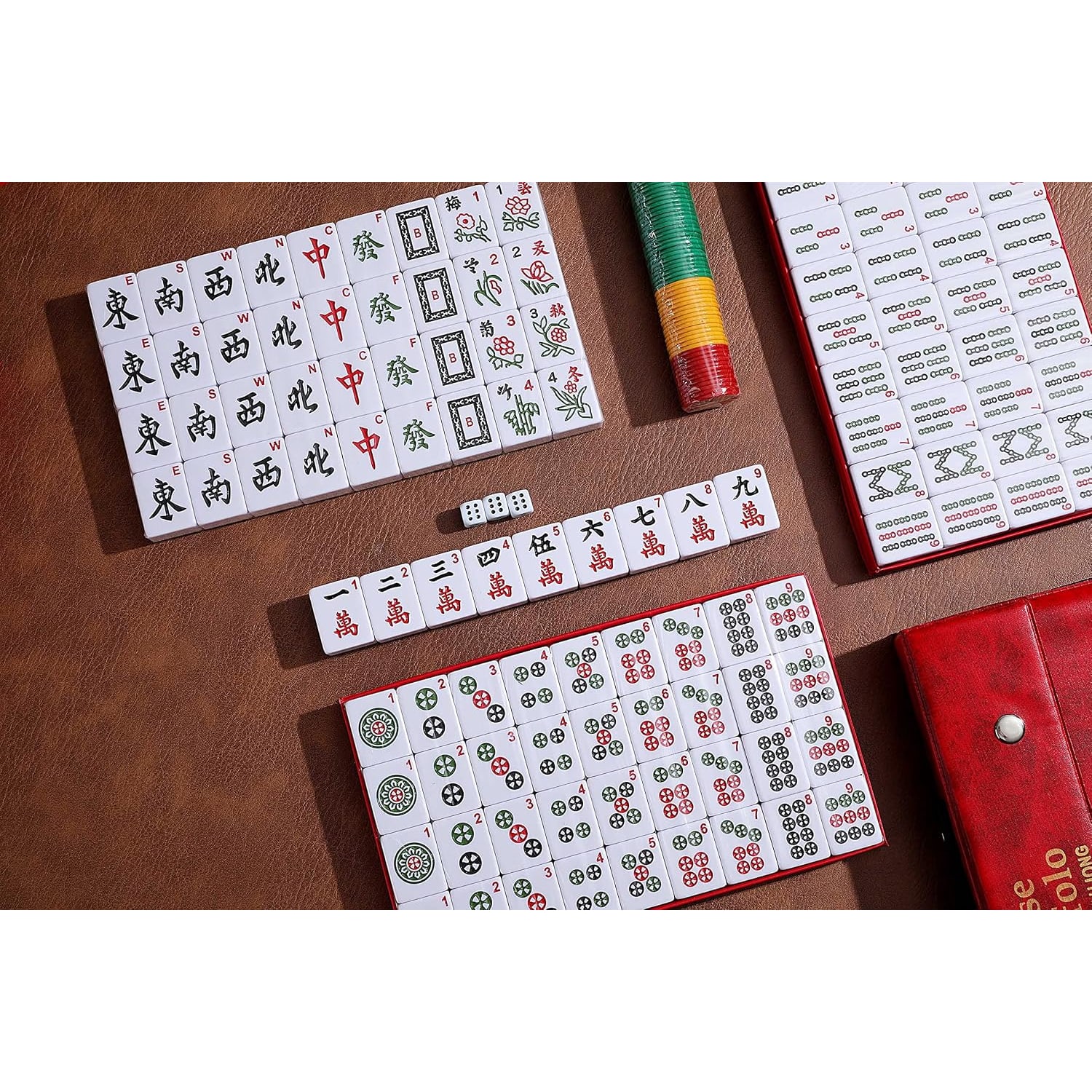
That is the gap this Chinese mahjong set fills. It is a complete 144 tile mahjong set in melamine, with the dice and chips packed alongside it and a red carry case to keep everything together.
How a mahjong set actually works
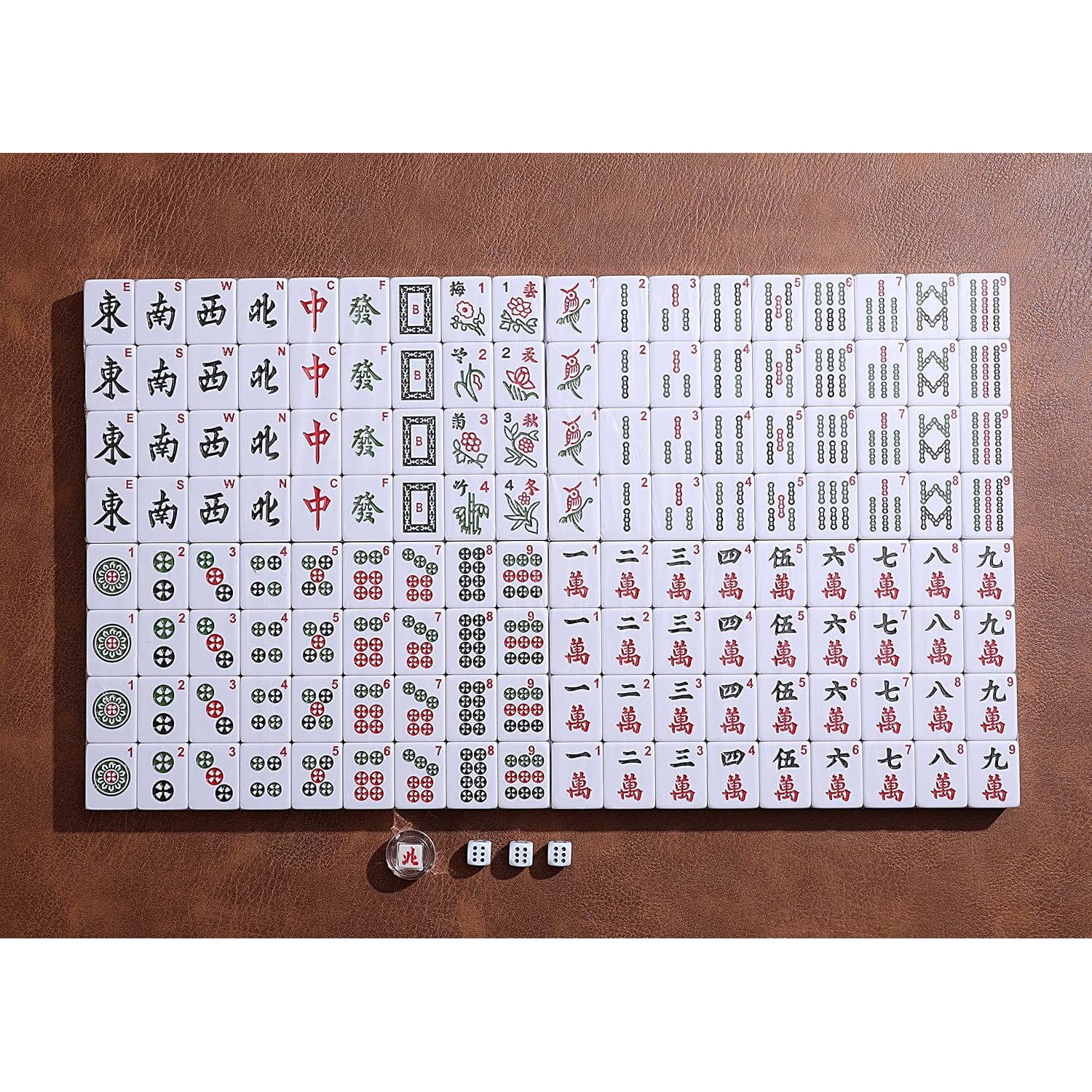
The core of the game is 144 tiles split into groups. There are three suits, circles, bamboos and characters, each running one to nine with four copies of every number. That accounts for 108 tiles. Then come the honour tiles, the dragons and the winds, and finally the bonus flower and season tiles. Players build walls from the tiles, draw and discard in turn, and try to complete a hand of sets and a pair before anyone else does.
Because the suits are visually distinct, tile clarity makes a real difference. This set engraves both Arabic numerals and Chinese characters on the tiles. If you grew up with the game that is a minor detail. If you are learning, it halves the mental load, because you can read a number straight off the face rather than decoding the character first. It is quietly one of the biggest reasons people describe a set as beginner friendly.
The dice decide the deal. One player rolls to set the starting position on the wall, and the chips track scoring between hands. A wind indicator keeps everyone clear on seat positions as the rounds rotate. None of it is complicated, but having all the pieces in one box is what turns a game night from an idea into something that actually happens.
Chinese rules versus everything else
This is the single most important thing to understand before buying any set. Mahjong is not one game. It is a family of games with significant regional differences in scoring, hand structure and even tile count.
This set is built for the Chinese game. It does not include joker tiles and it does not include racks, which means American mahjong is off the table. If your group plays the American variant with a yearly card and jokers, you need a different set entirely. There is no workaround.
For the Chinese game, though, having no jokers is correct rather than missing. You get the clean 144 tile count, no extras to sort out of the trays, and a set that matches the way the game is taught and played across most of Asia and in a lot of social clubs elsewhere. The maker includes English instructions, which cover the basics of the set. Most new players pair that with a short video walkthrough for their first session.
Melamine and why it matters
Tile material shapes the whole feel of play. Traditional sets used bone and bamboo, and those are lovely objects, but they cost considerably more and need careful handling. Cheap sets at the other end use thin, light plastic that slides around and sounds hollow when you shuffle.
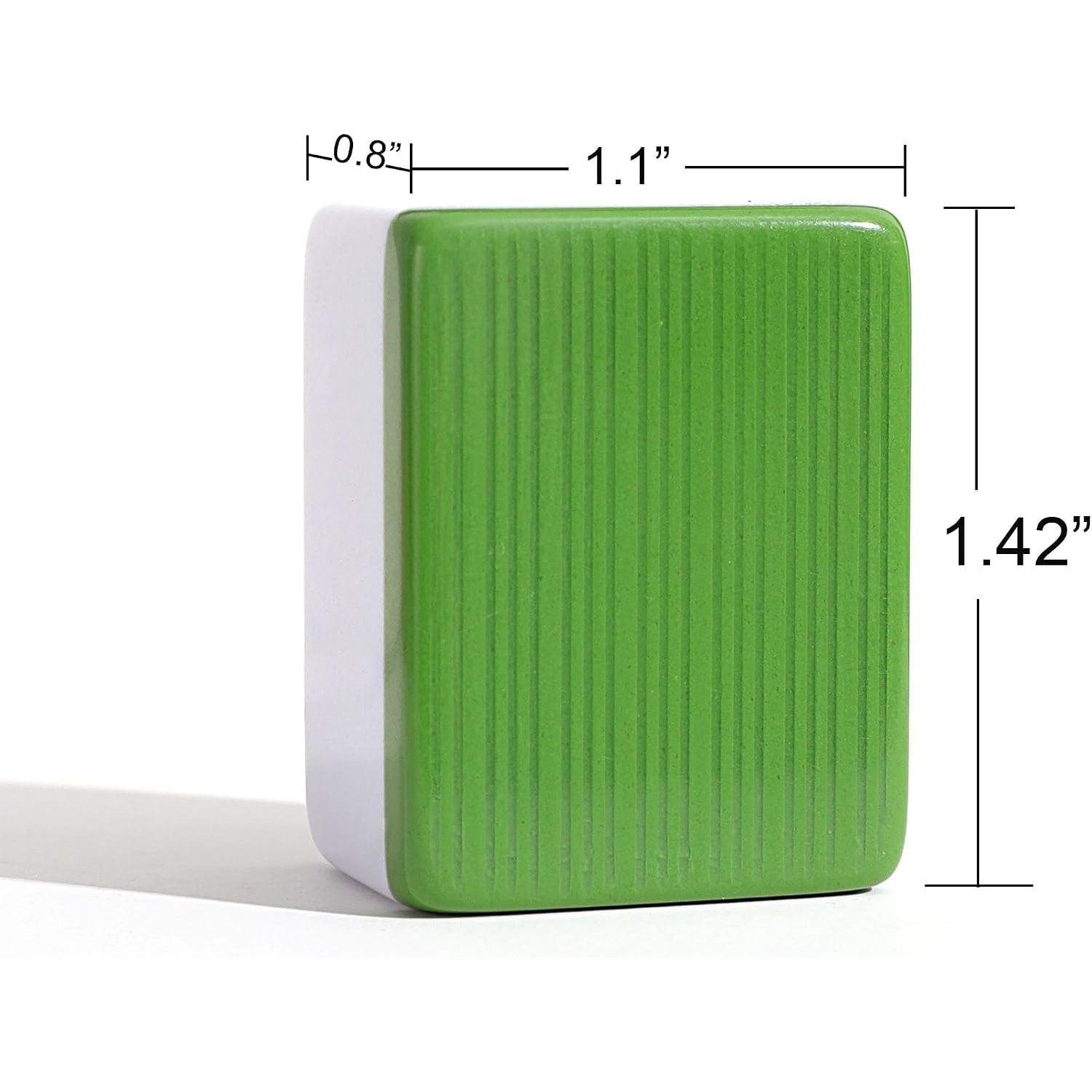
Melamine sits in a useful middle position. It is dense, so tiles have weight and sit flat without rocking. It takes an engraved face cleanly, so numerals and characters stay sharp. It wipes clean with a damp cloth and it does not absorb anything from a table. For a set that gets used week after week, a best melamine mahjong tiles option tends to outlast the alternatives without needing any special care.
The practical test is the shuffle. Good tiles make a steady, even sound when you mix them face down and they do not skitter off the table edge. That weight is also why the full set comes in at 5.44 kg. You are carrying real material, not air.
Who this set suits
If you already play regularly, this is straightforward. A full tile count, a tidy case and tiles sized for comfortable reading is exactly what a standing game needs. It lives on a shelf and comes out whenever four people are free.
If you are learning, the numerals on the tiles are the deciding factor. They flatten the learning curve more than anything else a set can offer. Pair it with a rules video and you will be playing properly inside an evening.
If you are buying as a gift, the case does a lot of work. It arrives looking like a complete thing rather than a bag of parts, and the recipient does not have to buy anything extra to start playing. For anyone who has mentioned wanting to try the game, a best chinese mahjong set in a case is an easy decision.
Where it is less of a fit: travel-light situations. At over five kilograms, this is a car-boot set, not a backpack set. And again, American rules players should look elsewhere.
How to choose between sets
A few things worth checking whenever you compare options.
Tile count first. A standard Chinese set needs 144 tiles. Anything less and you are buying for a specific regional variant.
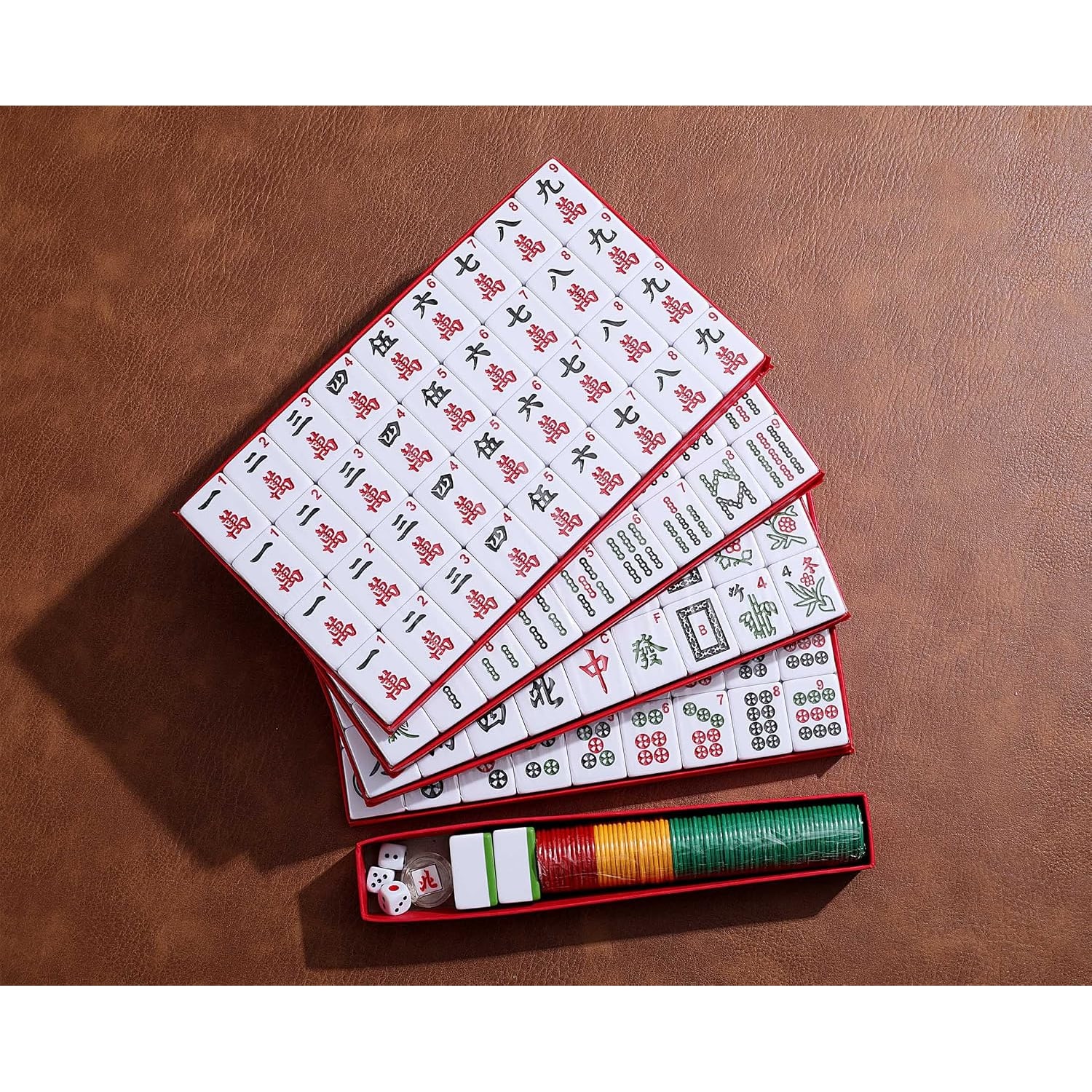
Case and trays second. Trays keep tiles sorted and let you spot a missing piece immediately. A soft bag with everything loose is where sets go to die.
Tile face third. Can you read the numbers from across a table in normal room light? Engraved faces with numerals age better than printed ones.
Accessories fourth. Dice and chips should come with the set. Having to source them separately is a small cost but a real nuisance.
Then weight and size, which tell you how the set will live in your home. A bigger case with larger tiles plays better but asks for shelf space. A compact travel set packs away easily but can feel fiddly in a long session. Decide which problem you would rather have.
Keeping it in good shape
Care is simple. Wipe tiles with a barely damp soft cloth and dry them before they go back in the trays. Skip solvents, bleach and anything abrasive, because they will dull the faces over time.
Count the tiles back into their trays at the end of a session. It takes thirty seconds and it saves the day a tile vanishes under a cushion. Close the case properly so nothing shifts around.
Store the case flat, out of direct sun and away from heaters. Melamine copes well with normal indoor conditions, but no moulded plastic enjoys months in a hot car or on a sunny windowsill.
The short version
This is a complete Chinese mahjong set, 144 tiles in melamine, with dice, chips and a wind indicator packed into a red carry case with trays. It plays the Chinese game only, with no jokers and no racks. Tiles carry both Arabic numerals and Chinese characters, which makes it genuinely workable for people still learning.
At 35.6 x 33 x 7.6 cm and 5.44 kg it is a proper table set rather than a travel novelty, and that heft is where the good playing feel comes from. If you want a game that four people can sit down to without any setup fuss, and one that will still be in the cupboard in ten years, this covers it.