
The complete guide
Choosing a Kids Shopping Trolley Play Set That Actually Gets Played With
The toy that solves the "I want to help" problem
Anyone who has taken a three-year-old to the supermarket knows the pattern. They want to push the trolley. They want to put things in it. They want to be the one who hands over the card at the end. The real shop is a bad place to let them practise, because the aisles are narrow, the stock is fragile and there is a queue forming behind you.
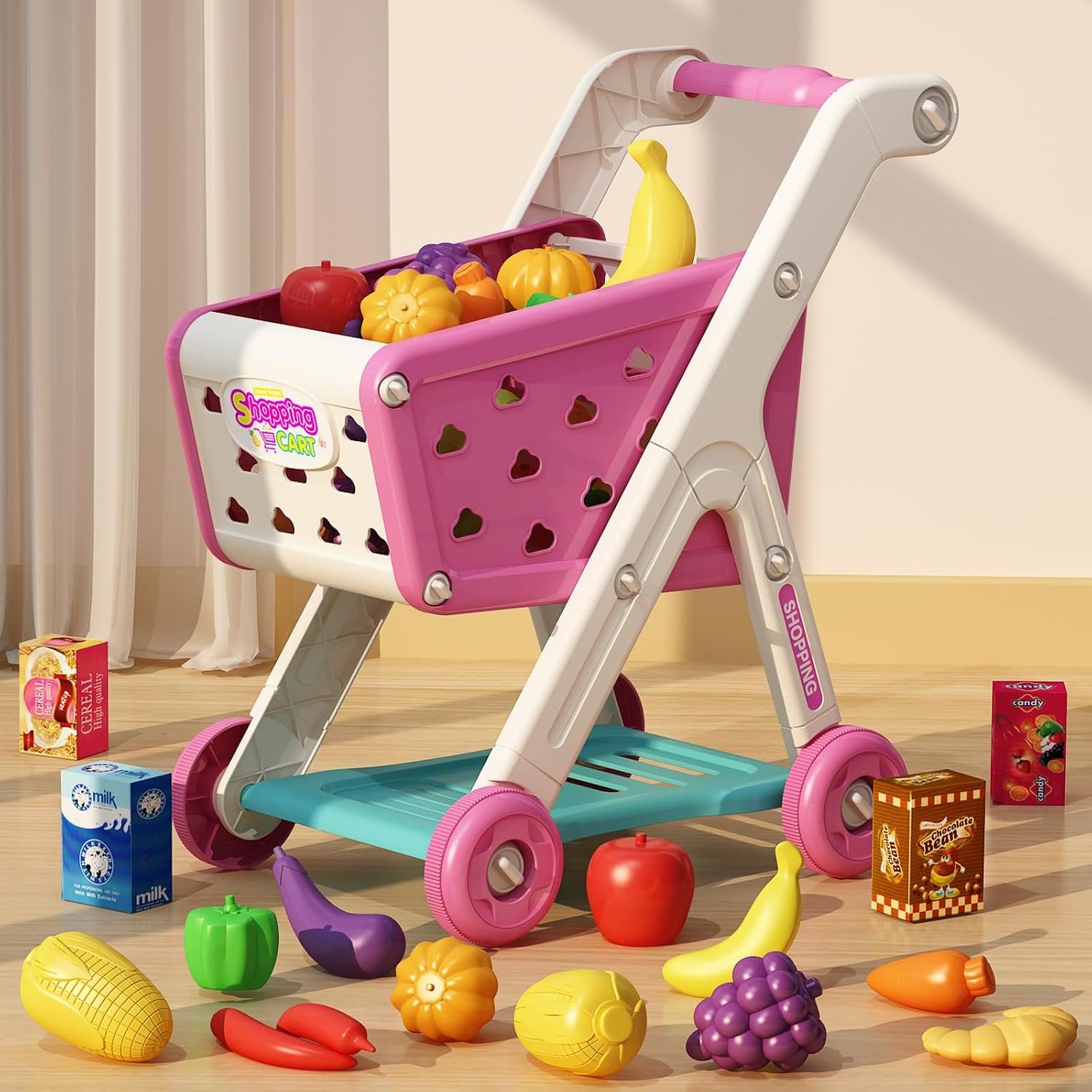
A kids shopping trolley play set moves that whole experience home. The child gets a cart they can actually steer, a bag with handles they can hold, and a pile of food they are allowed to load, unload and reload as many times as they want. Nobody is waiting. Nothing breaks. The game lasts as long as their attention does, which with 102 pieces is usually longer than you expect.
That is the practical case for this kind of toy. The quieter case is that shopping play is one of the richest pretend games a young child has access to, because they have watched it so many times. They already know the script. All they have been missing is the props.
What is actually in the box
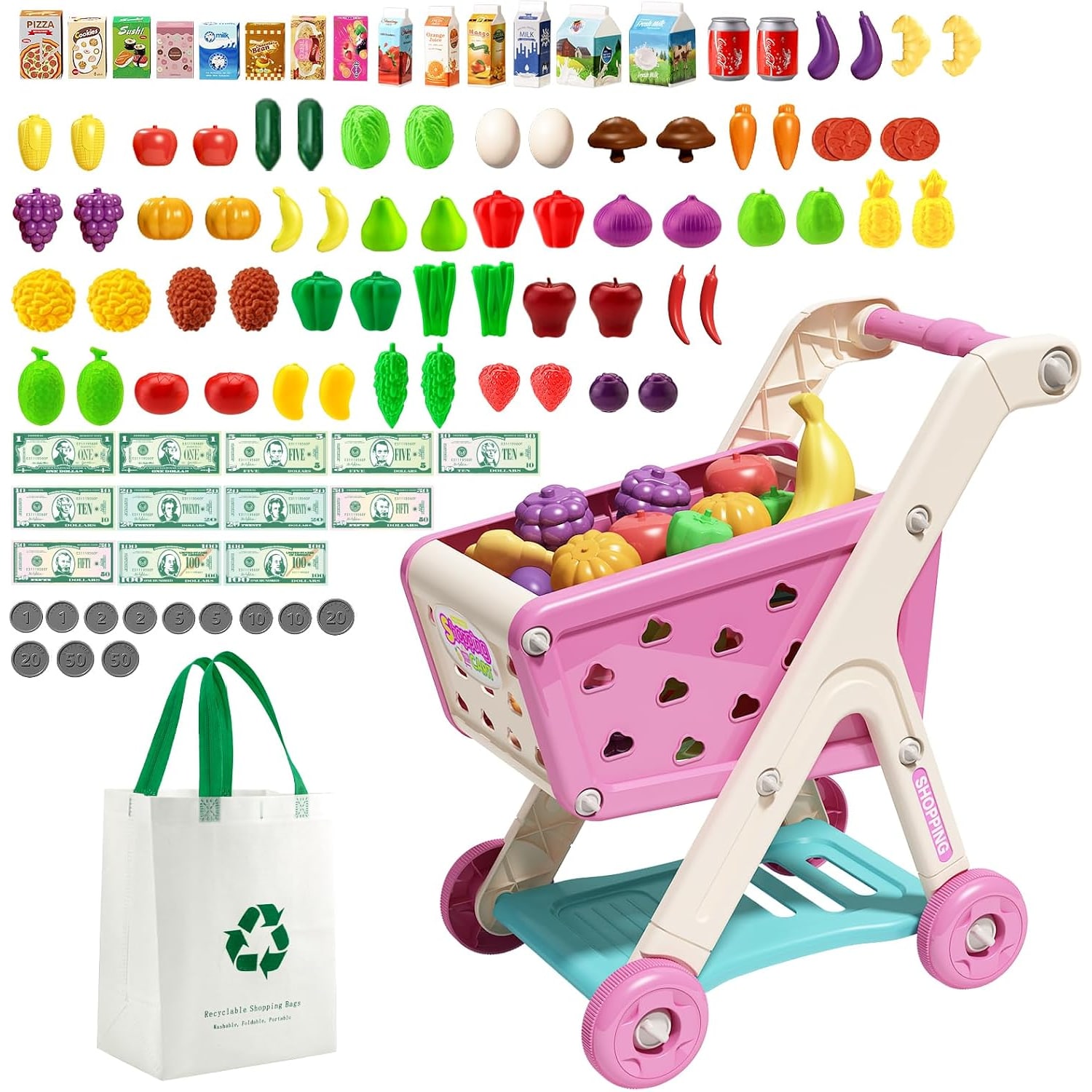
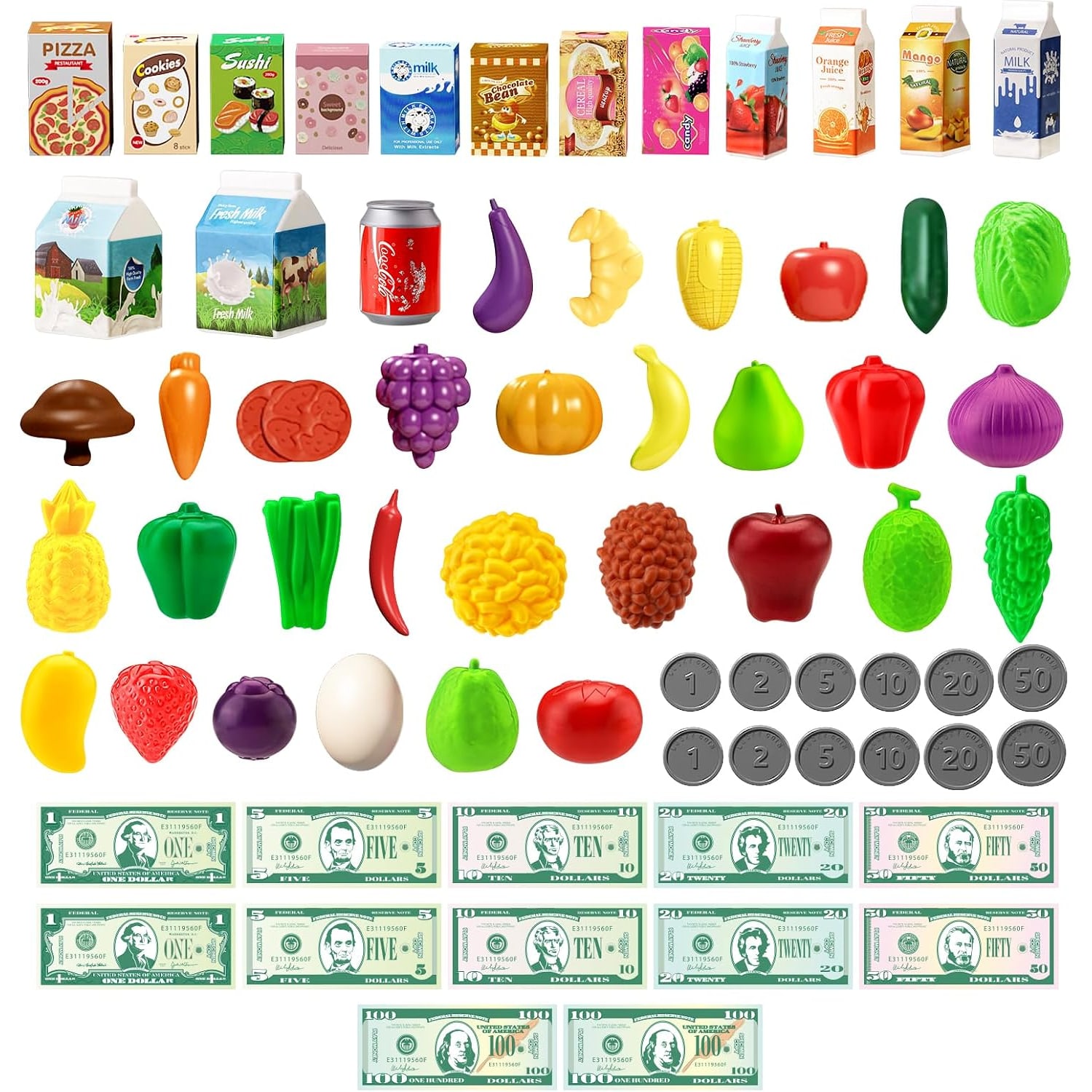
This set is built around four parts. There is the shopping cart, which needs simple assembly before the first use. There is a shopping bag. Then there are 60 fruit and vegetable pieces and 16 fast food toys, which together make up the bulk of the 102 piece count.
That ratio matters more than the headline number. Plenty of toy shopping cart sets pad their totals with duplicates of the same three apples. Sixty produce pieces plus a separate run of 16 fast food items gives a child two distinct kinds of shop to run. They can set out a greengrocer along the edge of the rug one afternoon and a takeaway counter the next.
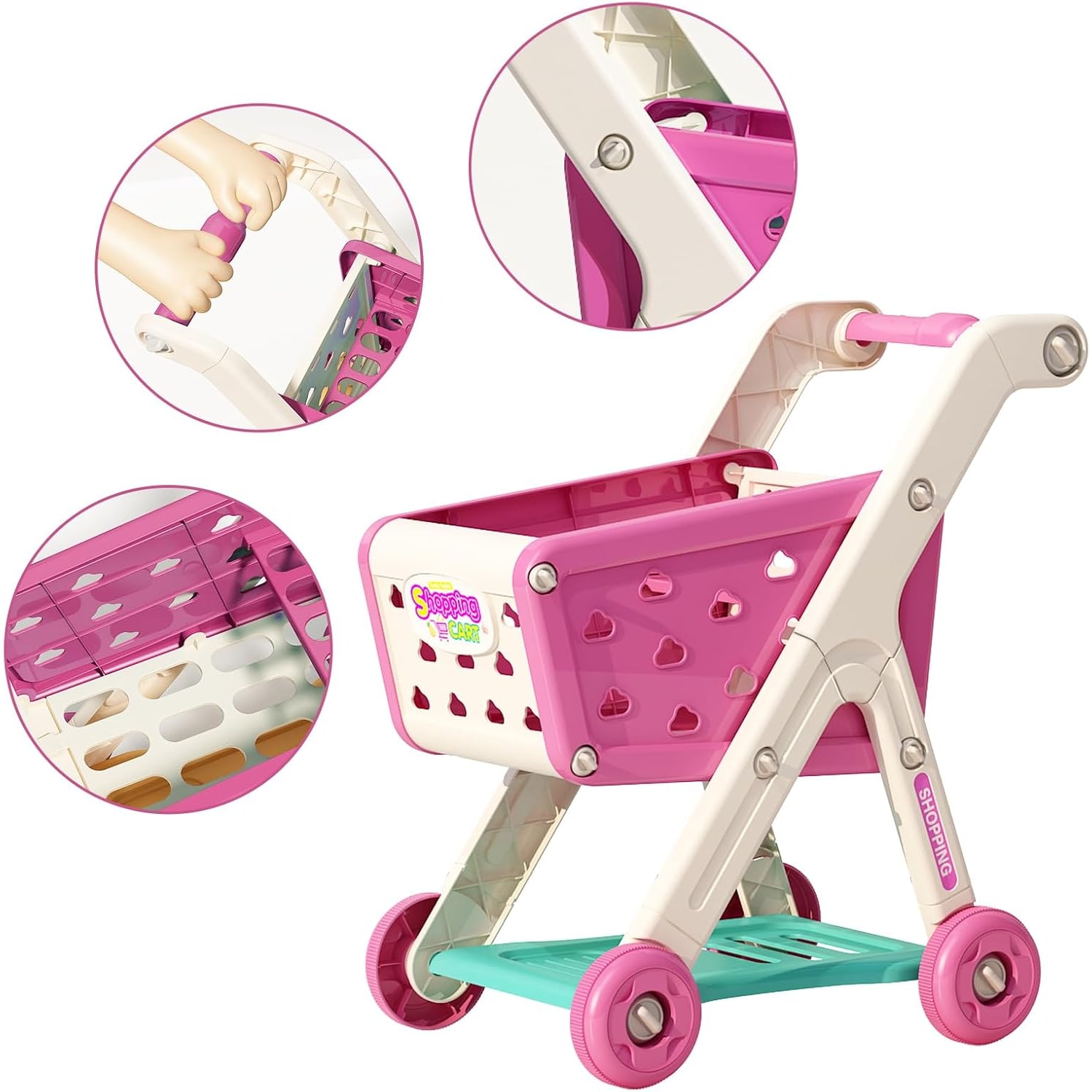
Everything is moulded in ABS plastic. ABS is the standard choice for this sort of toy because it keeps a crisp moulded shape, does not go soft, and wipes clean. The cart is rose red. Assembled, the item measures 31.8 x 25.4 x 16.5 cm and the whole set weighs 1.09 kg.
How the cart handles
The wheels are the part people tend to overlook, and then regret. A cart with square-edged or hard plastic castors will catch on carpet pile, skip across tiles and leave grey marks on a timber floor. This one uses round wheels chosen to run across a range of surfaces without scratching.
In practice that means it will roll down a hallway, across a lounge rug and over kitchen tiles in the same trip, which is exactly the route most children take. Deep pile carpet is always going to be harder work than a smooth floor, but the cart will move.
The height is child size rather than scaled-down-adult, so a standing child can hold the handle at a comfortable angle. Keep play indoors and on the flat. The cart is a push toy, not something to lean on, sit on or ride.
Who it suits
This is a set for ages 3 and up. It contains small parts, so it is not suitable for children under 3, and that is worth remembering if you have a younger sibling who crawls through the same room. A tub with a lid for pack-away time solves most of that.
It works for a single child playing alone. One of the nice things about a play grocery set is that a child does not need a partner to make the game work: they can be shopkeeper and customer at once and narrate both parts.
It works even better with two or three. Role play toys for kids really come alive when somebody else has to pay, complain about the price or ask whether the bananas are ripe. With 102 pieces, two children can both have a full basket without running the shelves dry.
It also pairs naturally with a play kitchen. The food goes from the cart to the bench, which turns one game into two. If you already own a kitchen and the child has been cooking with the same four wooden carrots for a year, a large toy food set is the upgrade that actually changes the play.
How to choose between sets like this
A few things are worth checking when you compare pretend play groceries sets.
Count the useful pieces, not the total. A 150 piece set where 80 of those pieces are tiny plastic coins is not more generous than a 102 piece set where 76 pieces are food.
Look at the material. Moulded plastic like ABS handles being dropped, stepped on and thrown in a tub. Soft or hollow thin plastic food dents and splits. There is a place for fabric and wood too, but they do not wipe clean the same way.
Check the wheels and the assembly. A cart that needs simple assembly is normal and nothing to worry about. A cart that needs twenty screws and two adults is less so.
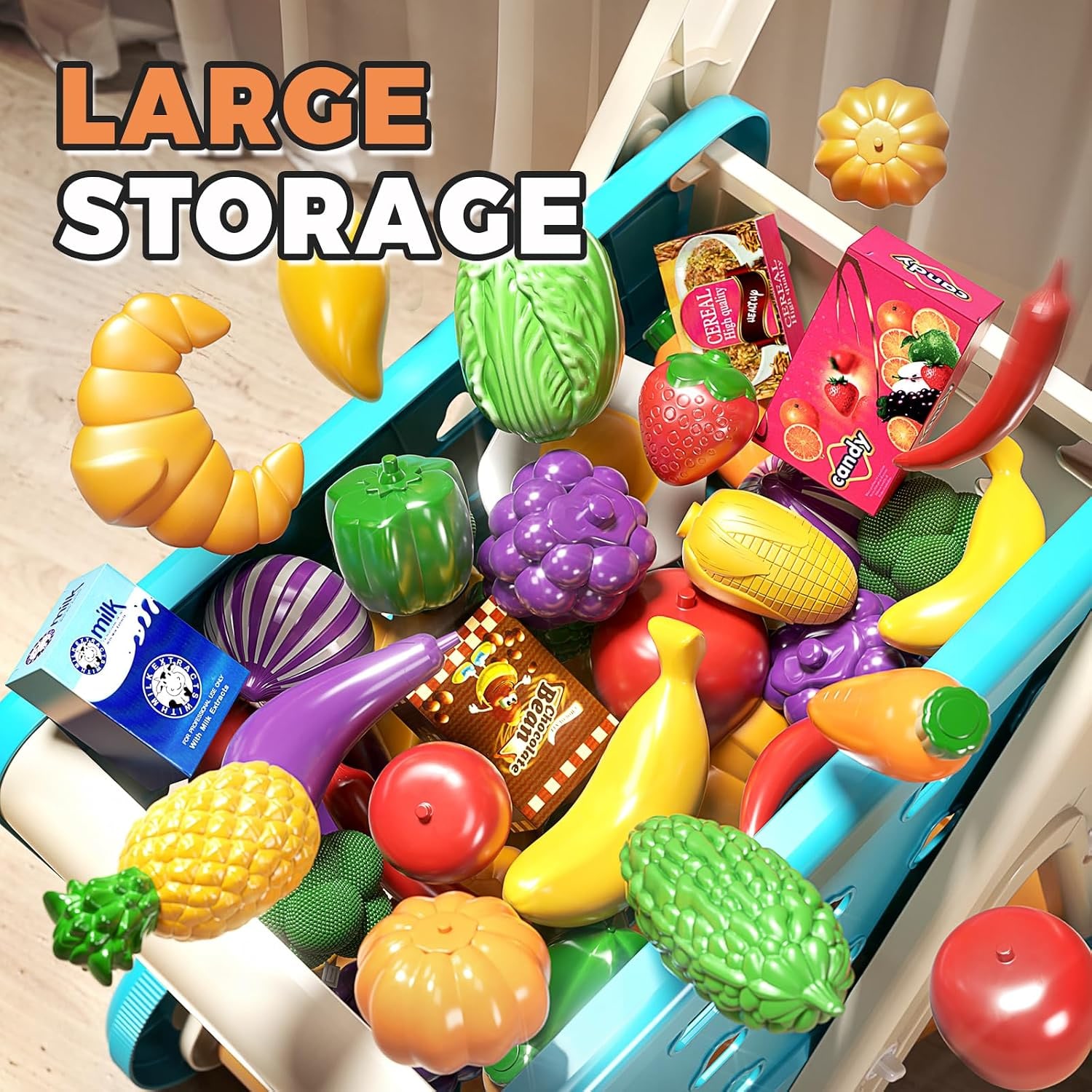
Think about storage before you buy. A child-size shopping cart does not disappear into a toy box. You need a corner for it. The bag helps, because the small pieces can live in there instead of migrating under the sofa.
Finally, consider the floor you have. If your house is all hard surfaces, wheel quality matters a great deal. If it is carpeted throughout, wheel size matters more than the finish.
Keeping it in good shape
Care is simple. Wipe the cart frame and the food pieces with a damp cloth and a bit of mild detergent, then dry them properly before they go away. Skip the dishwasher and skip soaking: hot water and long soaks can warp moulded plastic, and water trapped inside a hollow piece is a nuisance to get out.
Every month or so, turn the cart over and look at the wheels. Hair, carpet fibres and the odd hair tie wind around axles and make the cart drag. Picking them out takes a minute and the cart rolls like new again.
Keep the set out of long direct sun. Bright plastic colours fade over time on a sunny windowsill.
And have a home for the pieces. The shopping bag is the obvious one, and the cart basket takes the rest. The single biggest reason a 102 piece set stops being played with is that it has become a 60 piece set scattered across three rooms.
A few ways to extend the game
Write a shopping list together before play starts. For a child who is not reading yet, draw the items instead. It gives the trip a goal and turns the game into a small puzzle.
Set up a checkout. A cushion, a box and some paper money is enough. The paying part is often the bit children most want to copy.
Sort by colour, then by type, then by size. Children do this unprompted, and it is a good deal more interesting to them than a worksheet.
Let them serve you. Being the customer and asking for two carrots and something orange is a quietly effective way to spend twenty minutes on the floor.
The short version
This is a 102 piece pretend shop built around a child-size toy shopping cart. You get the cart, a shopping bag, 60 fruit and vegetable pieces and 16 fast food toys, all moulded in ABS, in rose red, at 31.8 x 25.4 x 16.5 cm and 1.09 kg. The cart needs simple assembly and runs on round wheels that cope with carpet, timber and tiles without scratching.
It suits ages 3 and up, contains small parts so it is not for children under 3, and works alone, with siblings or alongside a play kitchen. Brand, country of origin and warranty are not specified by the maker, and we would rather say so than guess.
If the child in your house keeps trying to take over the real trolley, this is the sensible answer.