
The complete guide
Choosing a Travel Backgammon Set That You Will Actually Carry
The problem with most backgammon boards
Plenty of people own a backgammon board. Far fewer people play backgammon regularly, and the reason is usually size. A traditional wooden board is heavy, awkward to lift, and lives on a shelf where it gathers dust between Christmas visits. By the time you have found it, cleared the table and dug the dice out of a drawer, the moment has passed.
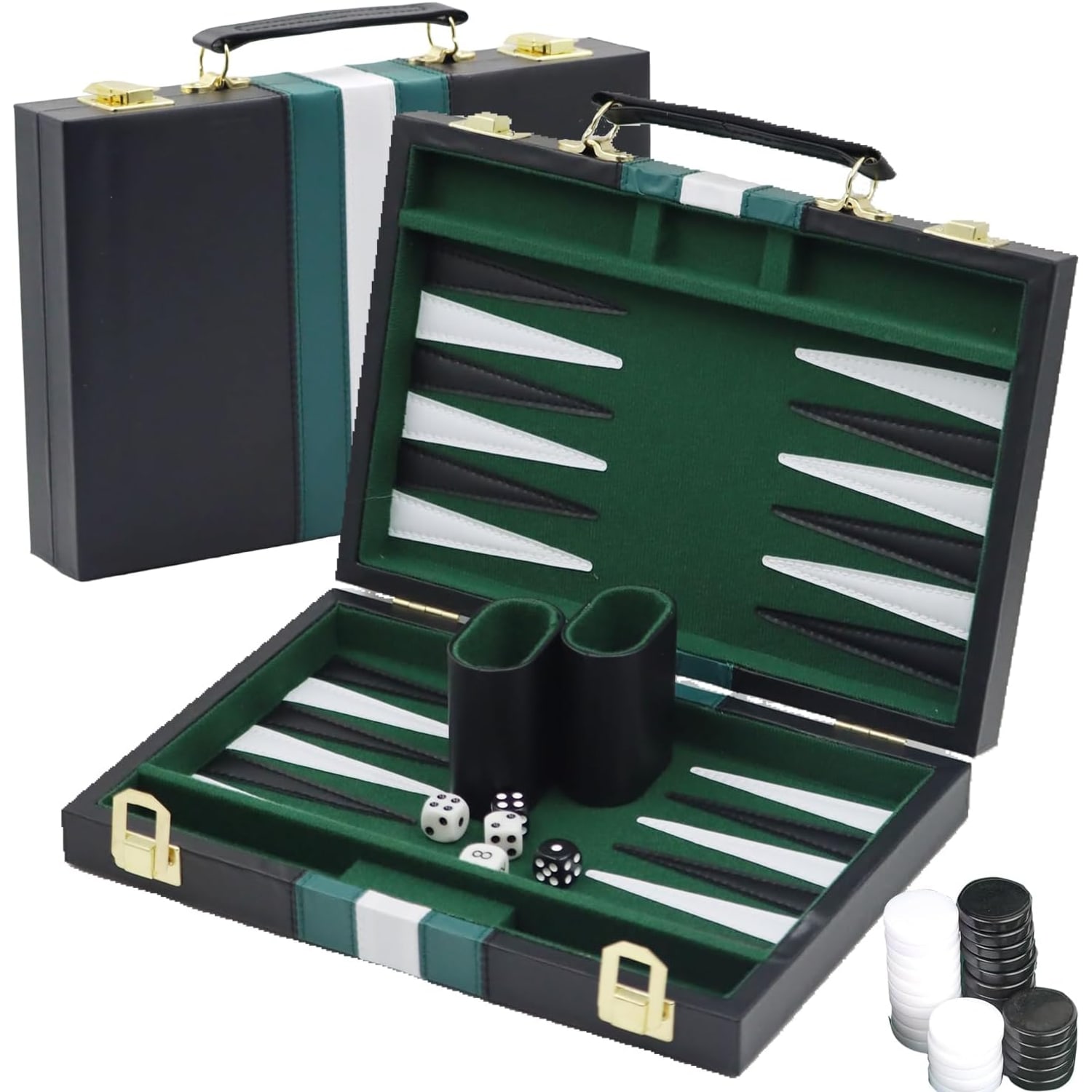
A set built into a carry case solves that in a simple way. The board, the stones, the dice and the cups all live in one object with a handle on it. You grab it on the way out the door the same way you would grab a book. That one change, from "the board is somewhere in the house" to "the game is in my bag", is what turns an occasional game into a regular one.
This set is 28 cm by 20 cm packed, weighs 0.9 kg and closes with clasps. It is the kind of thing that ends up in a caravan cupboard, a boat locker, a holiday house drawer or a backpack for a long train trip.
How a case-style backgammon set works
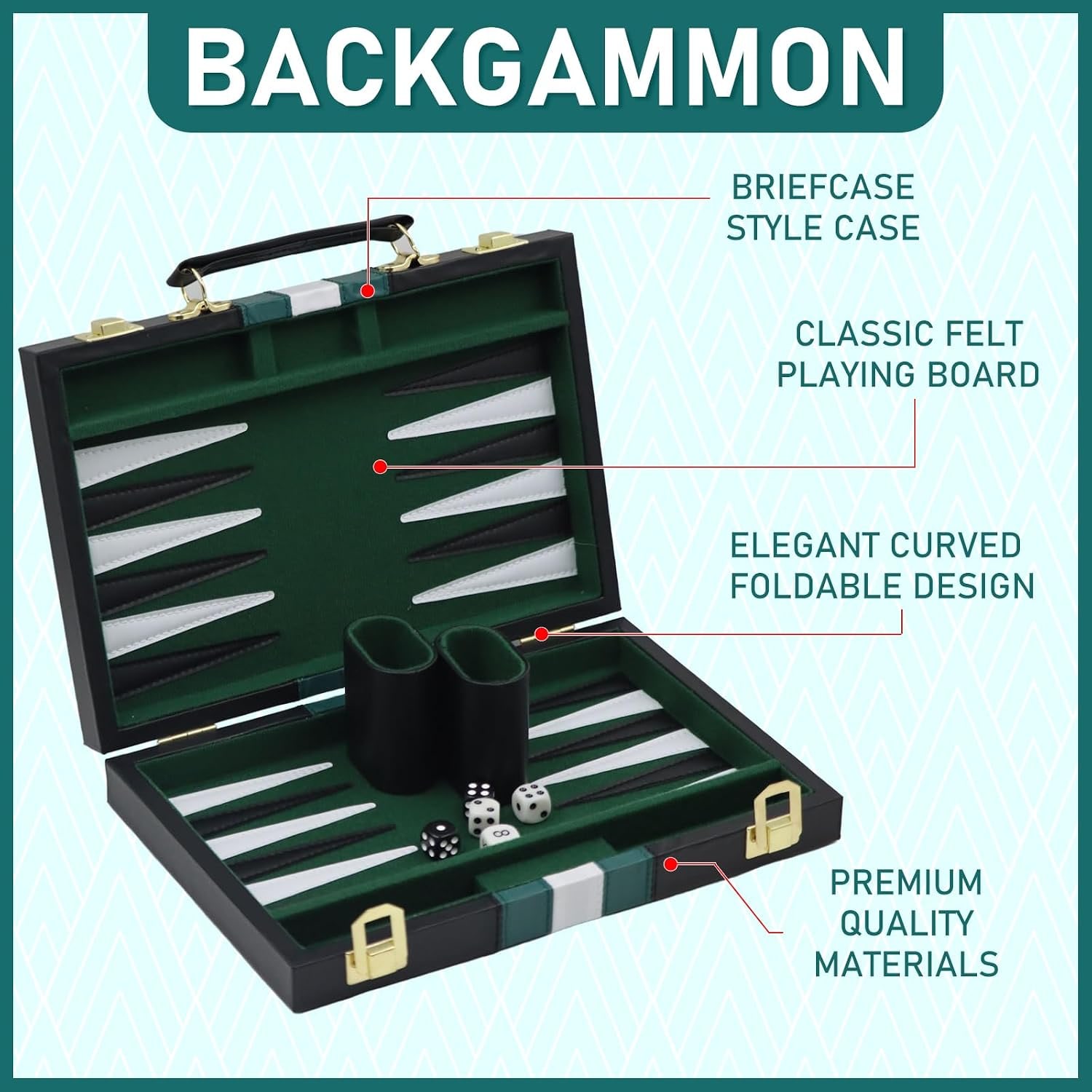
The board is split across the two halves of the case. Open the lid flat and the playing surface runs across both halves, giving you the standard 24 points in four quadrants. The hinge sits where the bar would be on a full-size board.
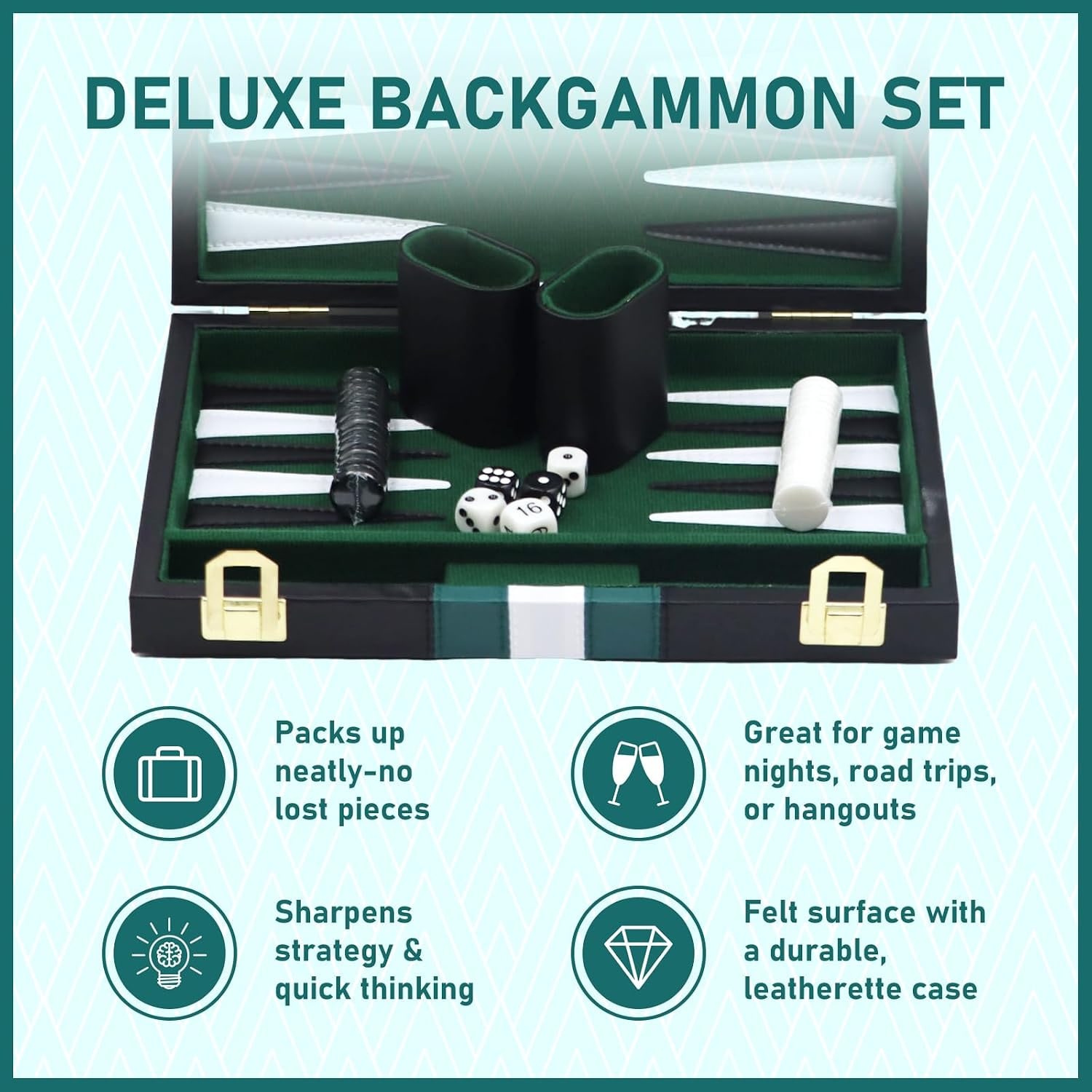
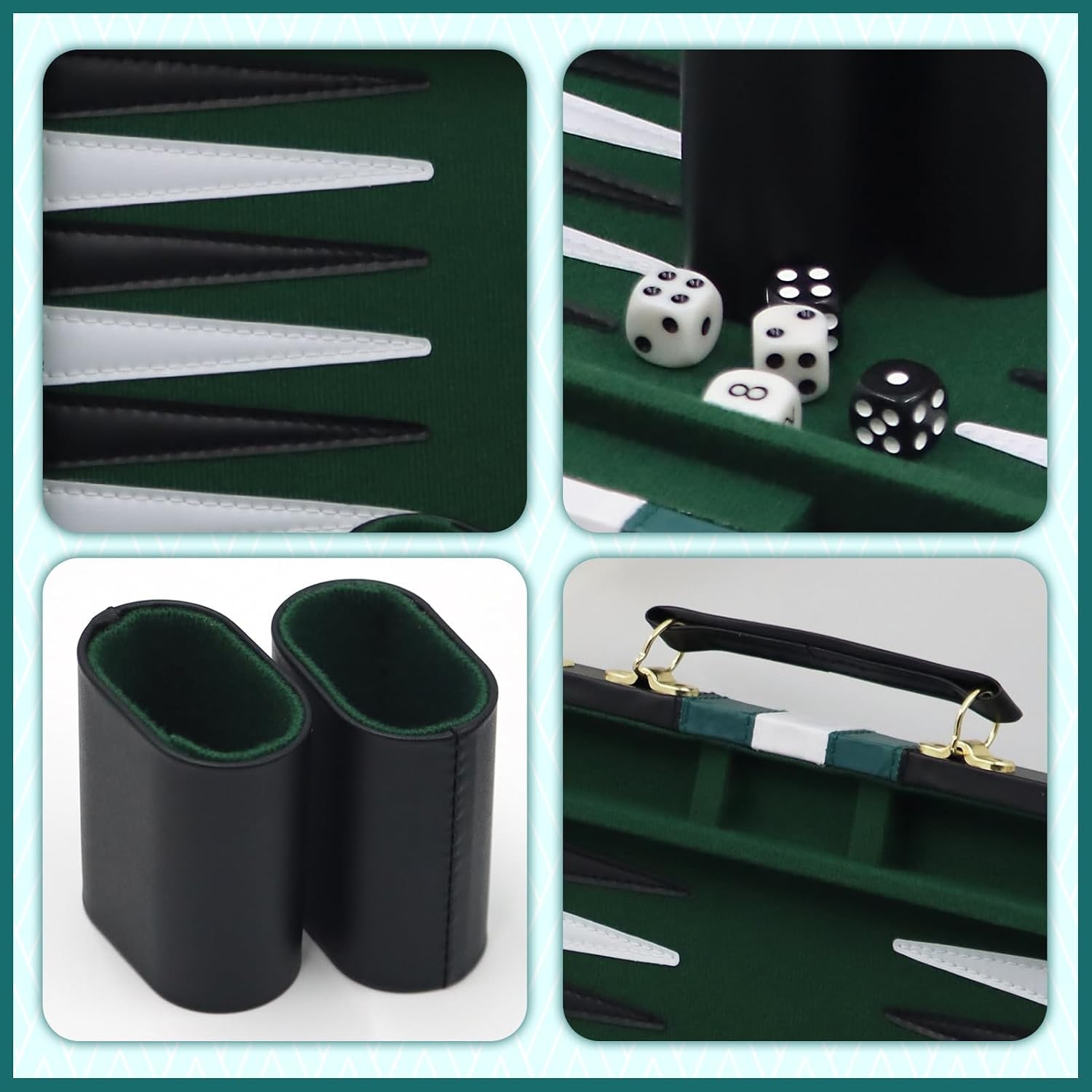
Around the edges are small compartments. These hold the 30 stones, the four dice, the doubling cube and the two dice cups while the case is shut. They do two jobs. They stop pieces sliding into a pile at one end, and they stop the rattle that makes a packed board game sound like a tin of loose screws.
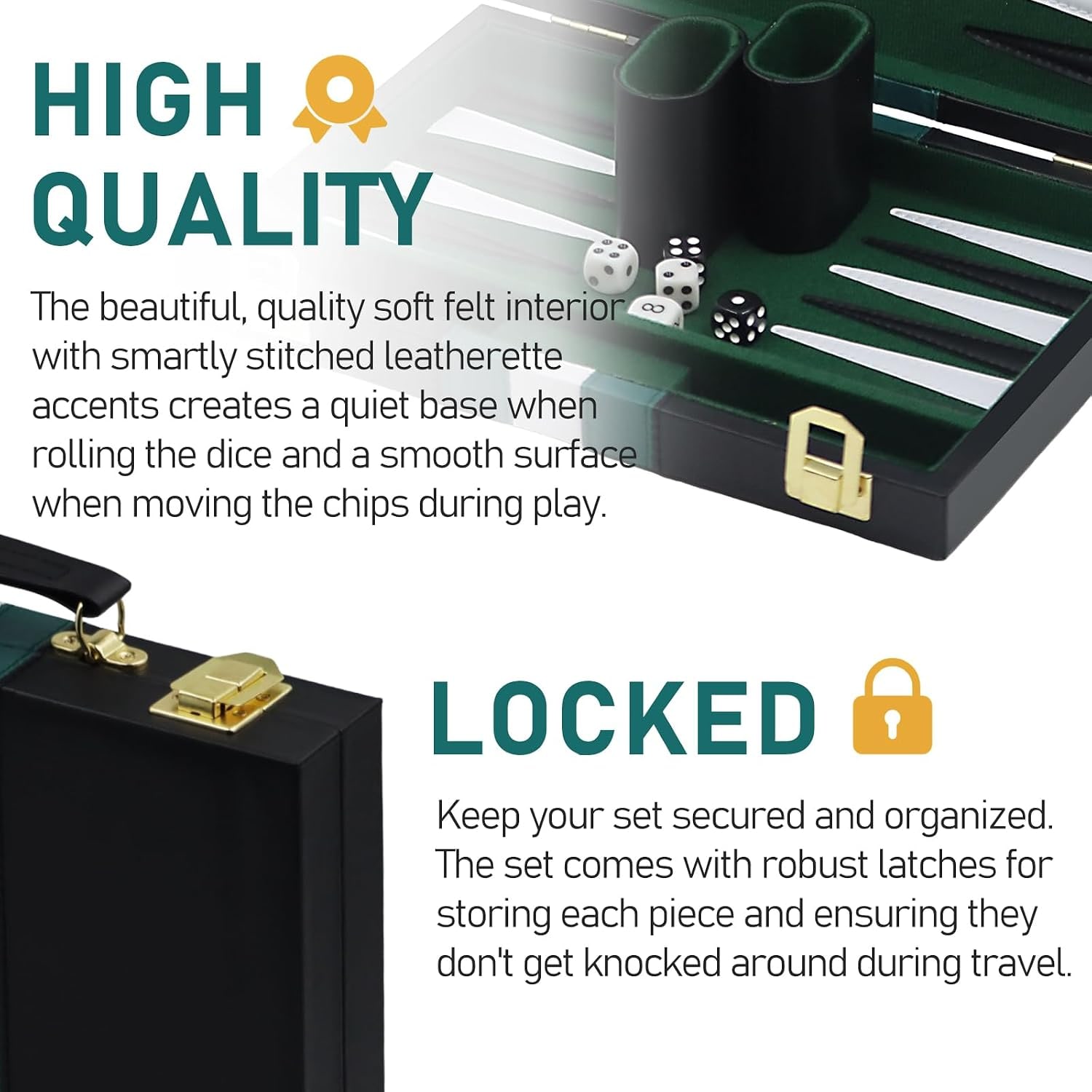
The interior is lined, which matters more than it sounds. Hard cases amplify every stone you put down. A lined surface takes the crack out of it. If you have ever tried to finish a game in a shared hotel room while someone is asleep, you will appreciate the difference.
The clasps are the last piece of the puzzle. Fasten them and the whole thing travels as a sealed unit. No bag needed, no separate pouch for dice, nothing to forget on a kitchen bench.
Who this suits
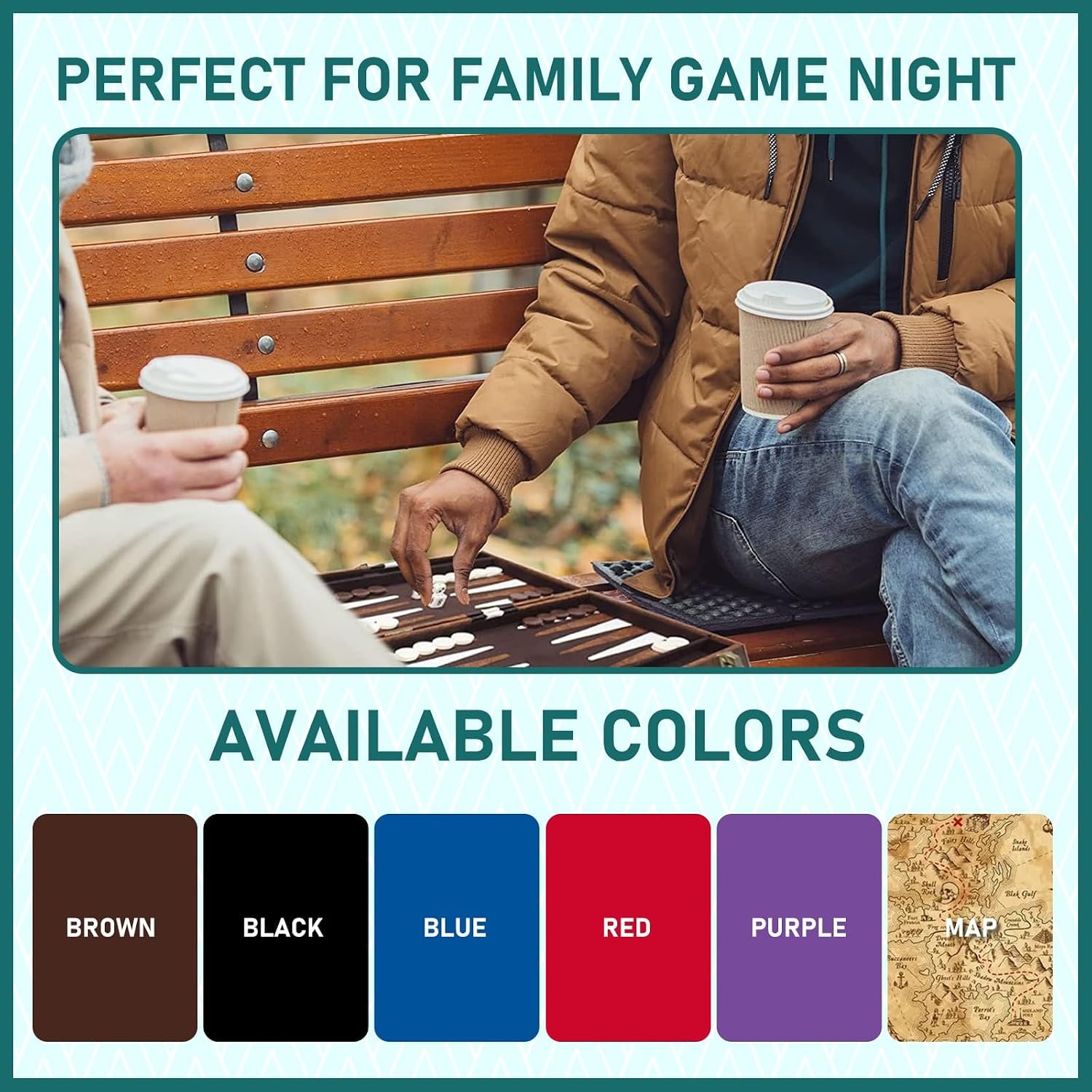
Travellers are the obvious group. A compact board game for travel earns its space in a bag only if it gives you a real game, not a watered-down version. Backgammon in a carry case does, because the game itself does not need a big board. Fifteen stones a side and two dice is the whole thing.
Couples and regular opponents are another. Backgammon is strictly two players, which makes it a good evening game when the house is quiet. Games are short enough to play several in a row and uneven enough that nobody wins every time. Luck keeps the weaker player in it; skill decides who comes out ahead over a long match.
Older children and teenagers take to it well once someone walks them through the first game. The maker lists a minimum recommended age of 72 months. The set does contain small parts and is not suitable for children under 3.
It also works as a quiet desk game. Some people keep a set at work for lunch breaks, and a black faux leather case looks tidy enough on a shelf that nobody minds it being there.
How to choose between backgammon sets
A few things actually matter when you are picking one.
Size versus playability. Very small sets, the ones that fold to the size of a paperback, use tiny pieces that are fiddly to move and easy to lose. Very large sets are beautiful and stay home. A board around 28 cm hits the middle, with stones big enough to pick up properly and a case small enough to pack.
Whether the pieces are held in place. Sets with magnetic or recessed pieces survive being tilted. Sets with moulded compartments, like this one, survive being carried. If your set has neither, every trip becomes a scavenger hunt under the car seat.
Case material and finish. Faux leather is the common choice for a reason. It wipes clean, it does not splinter, and it takes knocks without showing every mark the way timber does. It is not waterproof, so keep it out of rain.
What is included. Count the pieces before you buy. A full kit is 30 stones, four dice and a doubling cube, plus cups if you want them. This set includes all of that, including two cups so each player rolls their own.
Noise. This is the thing nobody thinks about until they are playing in a campervan at 11pm. A lined interior is worth having.
Learning the game, if you are new
Backgammon is easier than it looks. Each player has 15 stones travelling in opposite directions around 24 points. You roll two dice and move stones that many points. Land two or more stones on a point and your opponent cannot land there. Land a single stone and it can be hit, sending it back to the start.
Once all your stones are in your home quadrant, you bear them off the board. First player to bear off all 15 wins. That is the whole game in five sentences.
The doubling cube is the part that takes a few games to appreciate. At any point before rolling, you can offer to double the stakes. Your opponent either takes it, and gains control of the cube, or drops and concedes at the current value. It turns a dice game into a game about judging when you are ahead.
Play five or six games back to back and it will click. Most people find the strategy opens up around game three, when they start noticing that leaving a single stone exposed is sometimes worth the risk and sometimes a disaster.
Looking after it
Faux leather wants very little. Wipe it with a soft cloth that is just damp, then dry it. Skip solvents, alcohol wipes and anything abrasive, because those strip the finish and leave dull patches.
Keep the case out of direct sun and away from heaters. Heat is what makes synthetic leather go stiff and crack over time. A cupboard, a drawer or a suitcase pocket is ideal.
Make a habit of counting the pieces back into their compartments before you close the lid. Thirty stones, four dice, one doubling cube, two cups. It takes ten seconds and it means the set is complete the next time you open it.
If the stones get grubby from handling, a dry cloth usually does it. Do not soak anything, and make sure everything is fully dry before you shut the case.
The short version
This is a complete backgammon game packed into a faux leather case you can carry with one hand. You get the board, 30 stones in two colours, four dice, a doubling cube and two dice cups, all held in side compartments behind clasps that keep the case shut in transit.
At 28 x 20 cm and 0.9 kg it fits in a bag without any argument, and the lined interior keeps the game quiet enough to play in places where a wooden board would be rude. No batteries, no assembly, no setup beyond opening the lid.
If you want a backgammon set that gets used instead of stored, the one you can carry is the one that wins.