
The complete guide
Choosing a Kids Tool Bench That Actually Gets Used
The problem with most toy workbenches
There is a familiar pattern in a lot of homes. A big plastic workbench arrives, it gets a great reception for about three weeks, and then it becomes furniture. It is too bulky to move, too awkward to tidy, and the twelve small bolts that made it fun have vanished into the gaps in the couch. The toy is technically still there. Nobody plays with it.
That is not really a problem with pretend play tools. Children love this kind of play. It is a storage and portability problem dressed up as a toy problem. A bench that cannot move and cannot hold its own pieces will lose both the pieces and the child's interest.
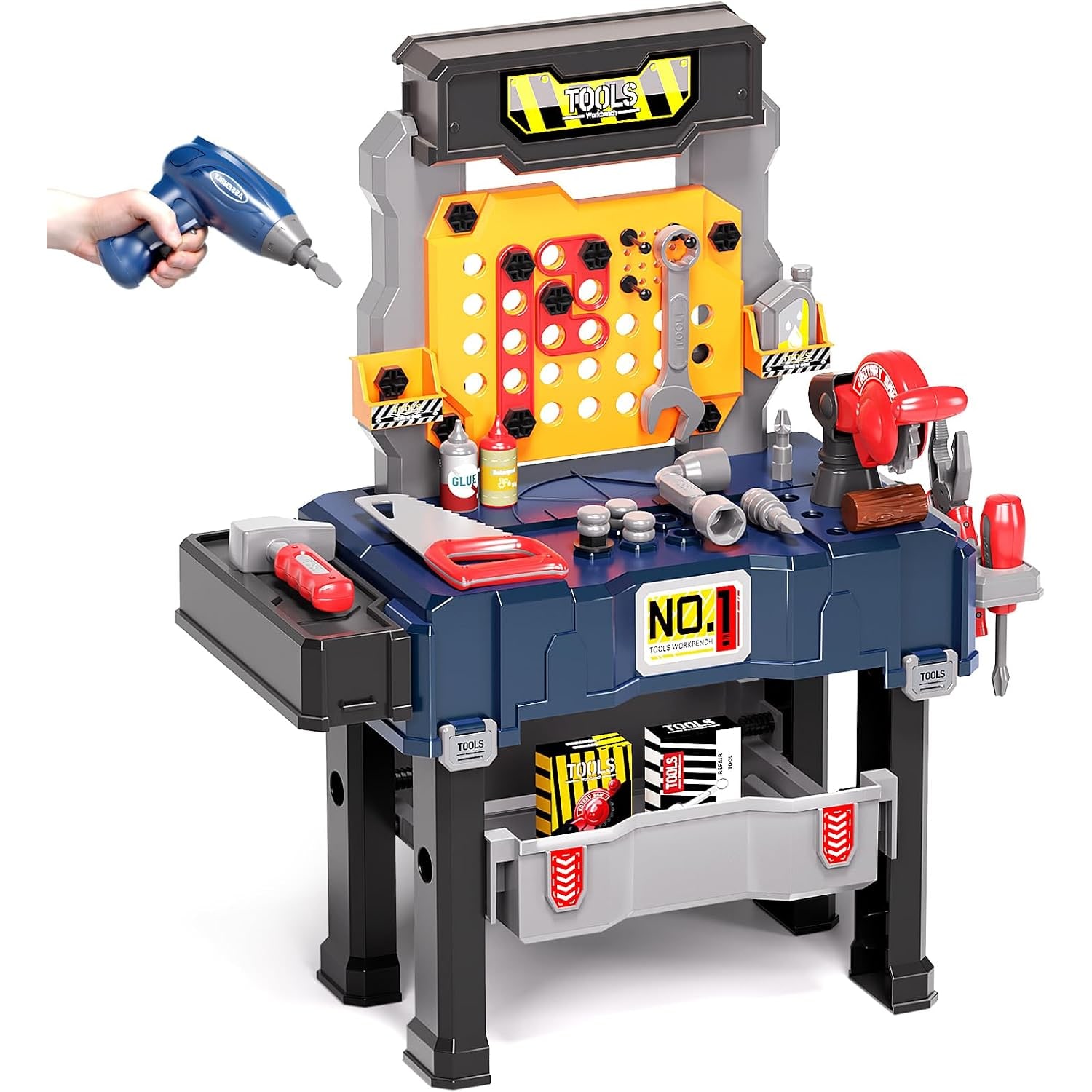
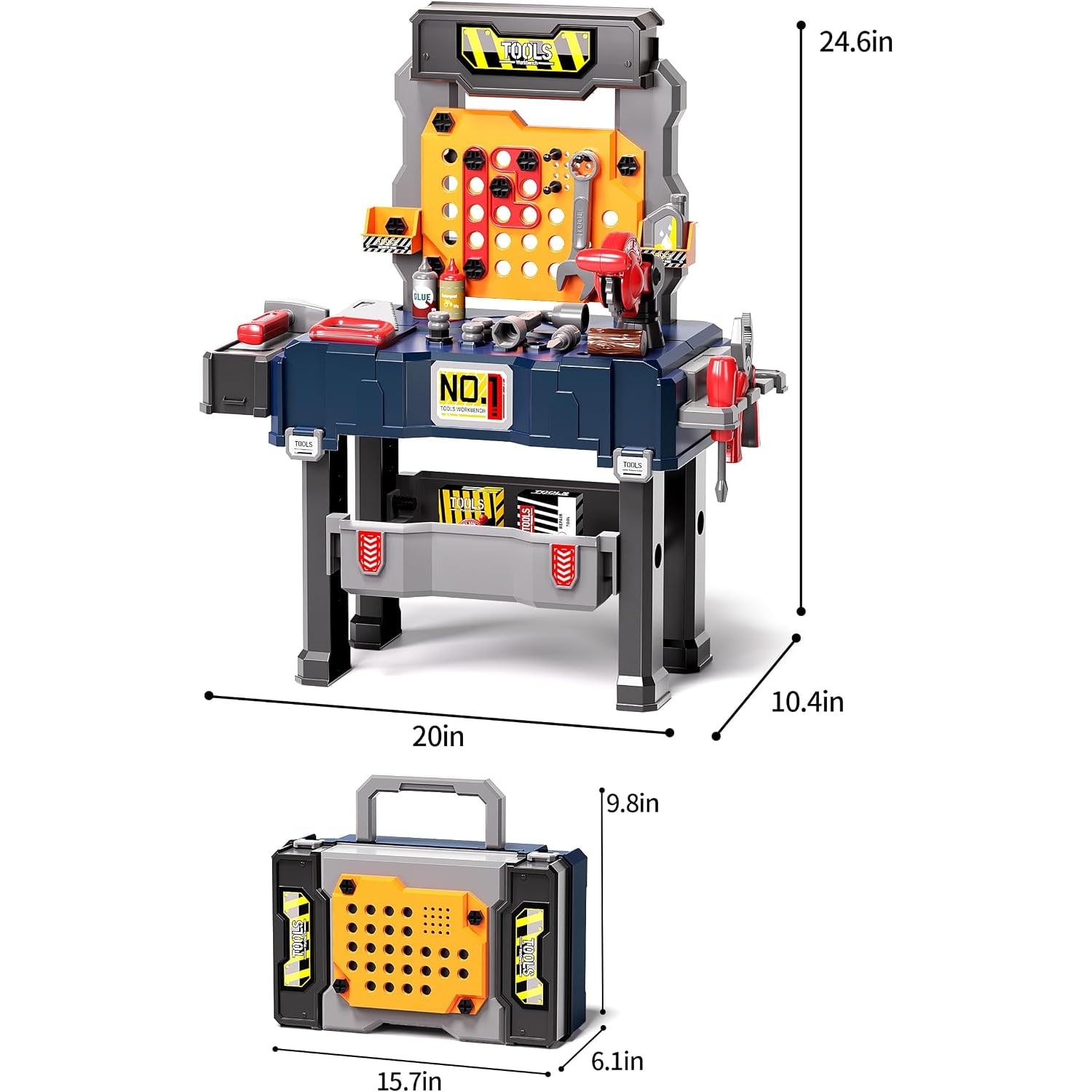
This set approaches it from the other end. It starts as a toolbox with a handle. You assemble it into a standing workbench when it is time to build, and when play is over you take it apart and it folds back into a case that carries everything inside it. The bench is the temporary state. The toolbox is home.
How the 2-in-1 design works
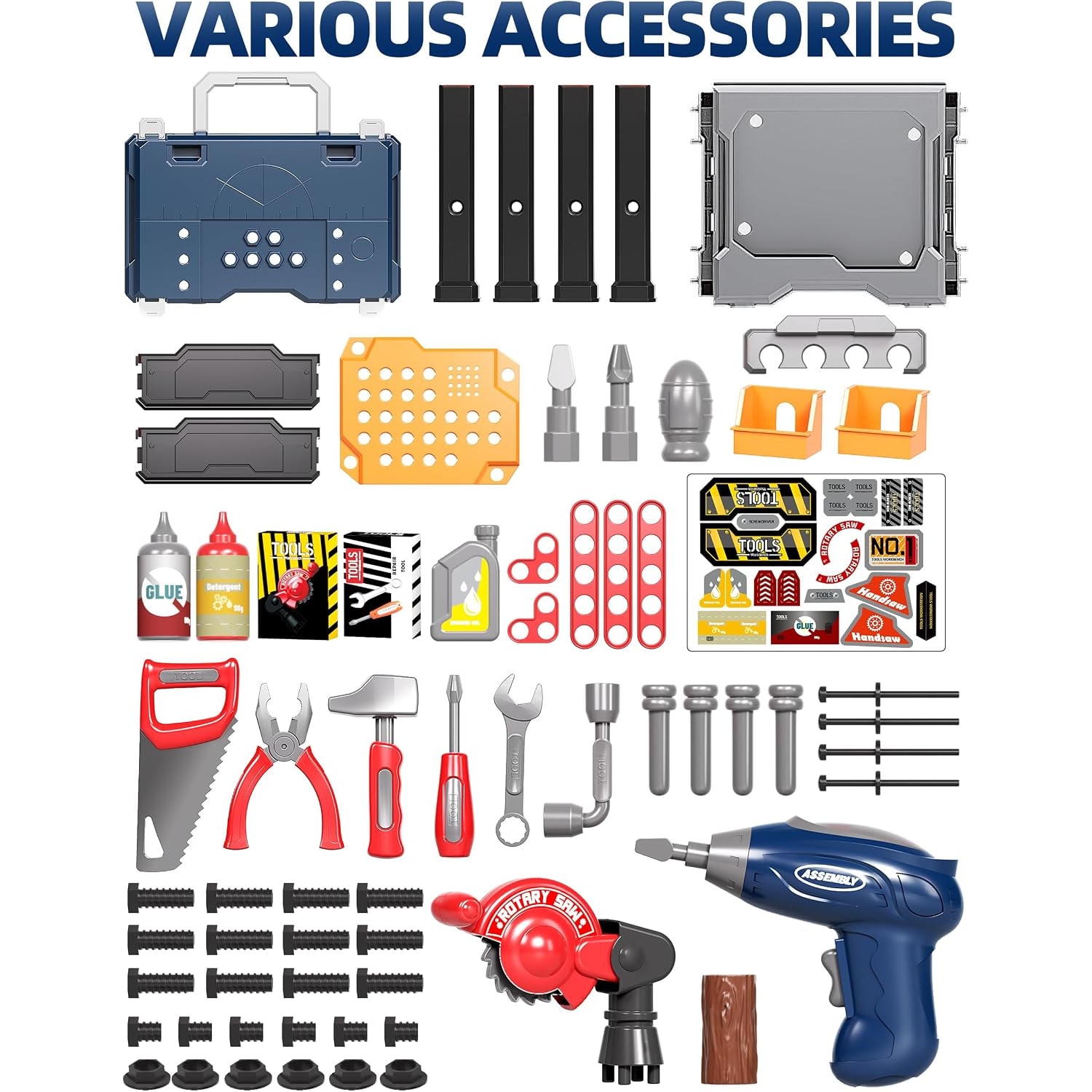
The case is the structure. The panels and legs that make the bench are the same parts that make up the box, so there is no separate frame to store somewhere else. Assembly is required out of the box, and most families find an adult should do it the first time, partly to understand how the parts lock and partly so they can show the child.
Once it is up, there is a bench surface to work on and a large tray underneath. That tray matters more than it sounds. It is deep and wide enough to take every loose piece in the set, which is the difference between a five-second tidy-up and a floor search. Screws and bolts have a home. When they have a home, they stay in the set.
Pack-down reverses the process. The tools go in, the panels come together, the lid closes, and what was a workbench thirty seconds ago is a case a child can pick up. At 1.76 kg, that is genuinely within reach for most children in the age range.
What is in the tool line-up
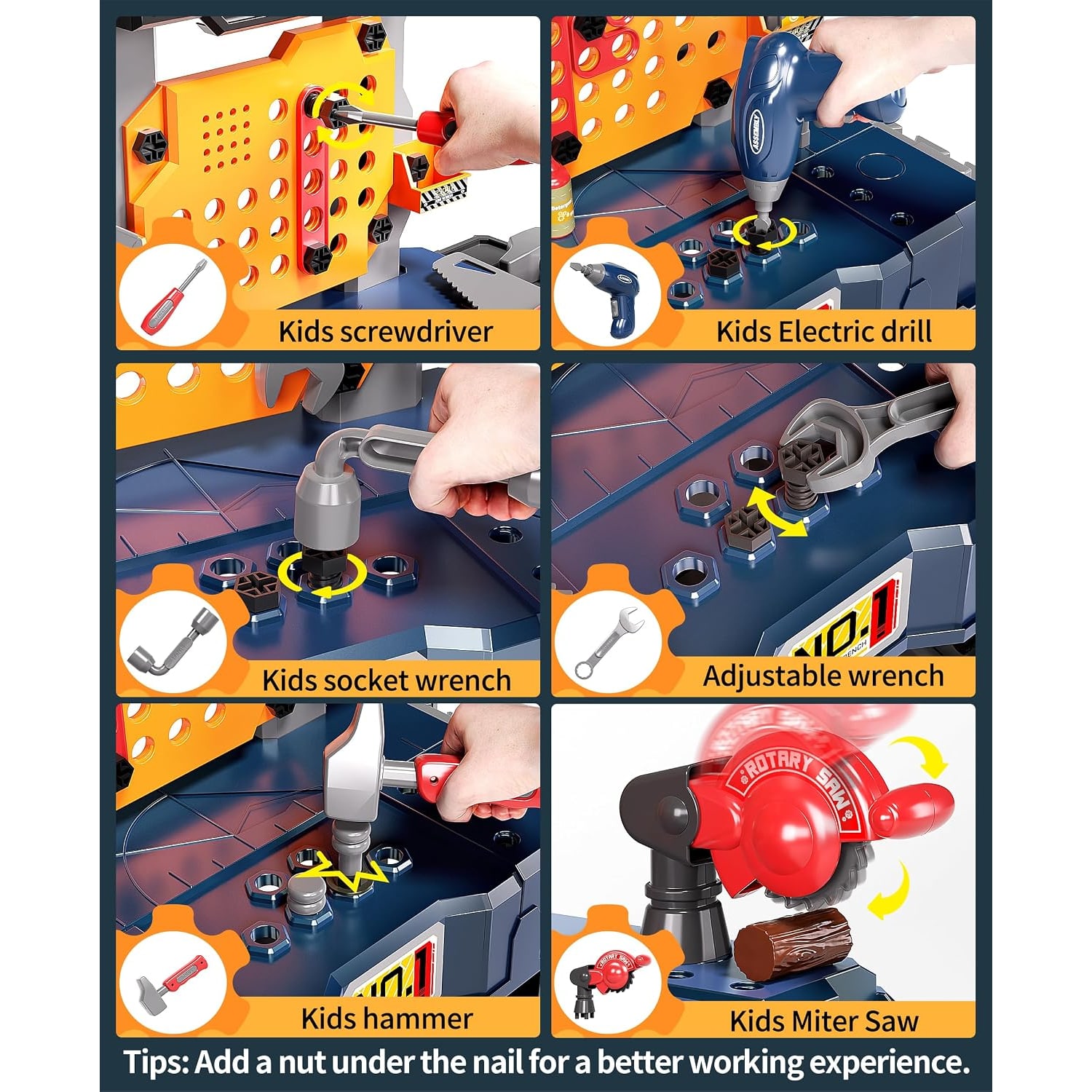
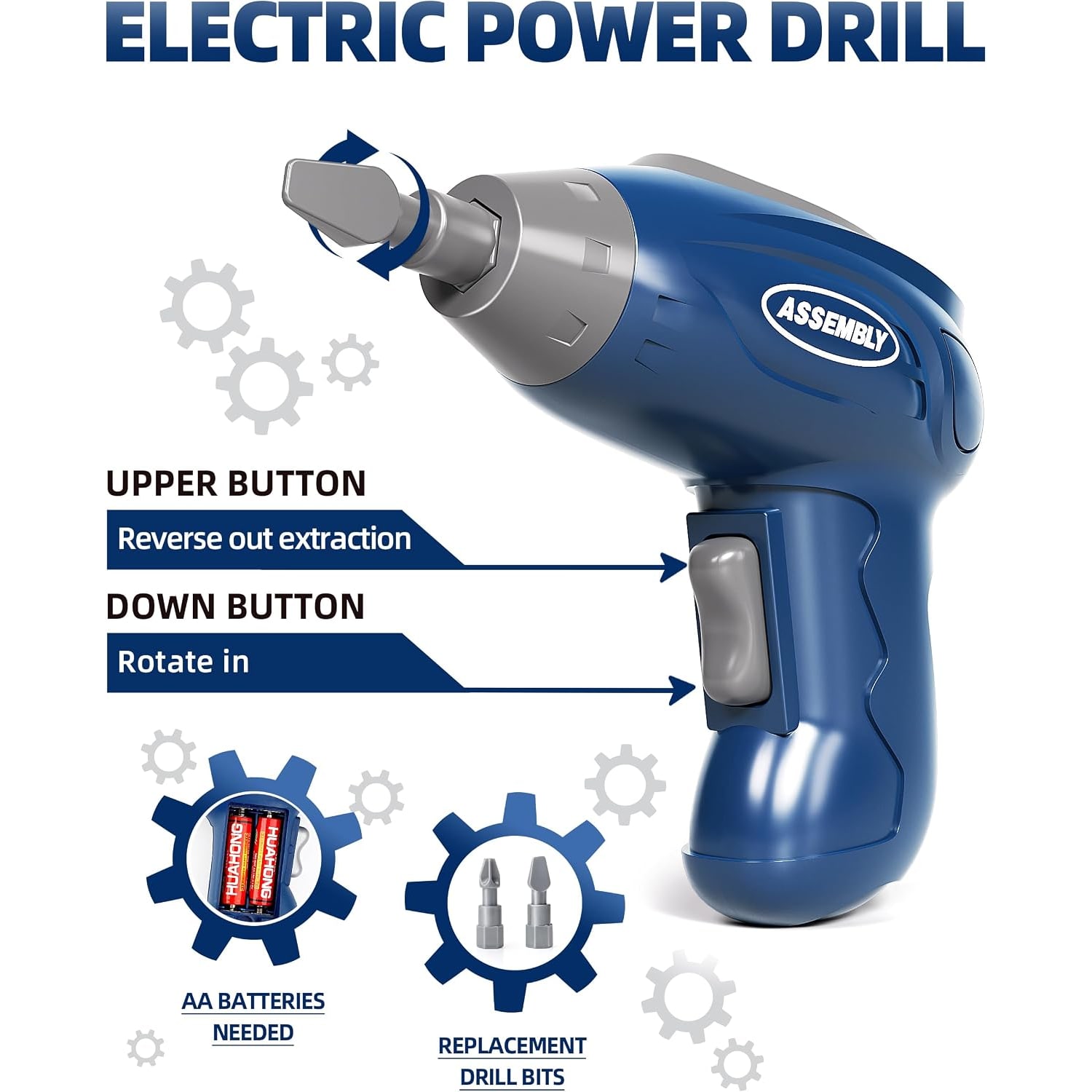
The tool selection is reasonably generous for a set this size. There is a hand drill with different heads that swap in and out, which is usually the headline piece for children and the thing they go to first. There is a mechanical mitre saw that pivots the way a real one does, plus a separate hand saw for straightforward cutting motions.
Beyond that you get a claw hammer, a screwdriver, pliers, and a few different spanners. The fixings are the quiet hero: screws, nuts and bolts that are made to actually be driven and tightened rather than just handed around. A toy drill set with nothing to drive gets dull fast. Having real turning and tightening to do is what keeps a child at the bench for forty minutes instead of four.
Everything is manual. No batteries, no charging, no motor noise, and nothing that stops working in the middle of winter because the AA pack ran out. The child supplies the power, which also means the toy works just as well in the car, in a tent or on a kitchen table.
Who this suits
It is made for ages 3 and up and is designed for one player. Two children can share it happily enough, but there is one bench and one set of tools, so expect some turn-taking rather than parallel building. If you have two children who both want their own, two sets is a more peaceful answer than one.
The set contains small parts, so it is not for children under 3. That is worth remembering if there is a younger sibling in the house, because the loose bolts are exactly the size that gets picked up. Packing the set down into the closed case between sessions handles most of that risk.
It is a strong pick for families who move toys around. Holiday houses, grandparents, apartments where every toy has to earn its shelf space, long drives. It is also a good second tool set for a child who already has a static bench, because it fills a different job: the one that travels.
How to choose between tool bench styles
If you are comparing options, it helps to decide which of three things you actually want.
A floor-standing bench is the biggest play surface and the most dramatic unboxing. It is also the one most likely to become furniture, because it cannot be moved and it usually has nowhere to put the pieces.
A flat tool tray or toolbox set is the cheapest and the most portable, but there is no bench, so the play is more about handling tools than building at a station.
A convertible toy workbench like this one sits in the middle. You get the bench when you want it and the case when you do not. The compromise is the assembly step each time, which takes a minute or two and which many children enjoy as part of the game anyway.
Also look at whether the fixings are functional. The single best predictor of how long a toy tool set for kids holds attention is whether the screws and bolts genuinely turn into something. Decorative moulded fixings look fine in photos and get abandoned quickly.
Materials, size and what the maker states
The set is made from ABS plastic. Power source and operation mode are both manual, assembly is required, and the set is listed for a single player.
A few things are simply not stated. The maker does not give a colour beyond the product name itself, does not state a country of origin, and does not list a brand. Where a detail is not stated, we leave it blank rather than guess, so the photographs are your best reference for the look of the set.
Living with it day to day
Care is straightforward. Wipe the case, bench and tools with a damp cloth, then dry them before packing away. Keep it out of the dishwasher and the washing machine, and keep it away from heaters and long spells in direct sun, since heat is what warps plastic over time.
The one habit worth building is counting the fixings back into the tray at the end of play. Children who do this once or twice usually keep doing it, because they can see the result: the set that is complete next time. A kids toolbox set that is still complete a year later is almost always one that had a tray and a lid.
Store it assembled as a toolbox with the lid shut. It takes up far less space than a bench, and it means the next session starts with a child carrying their own toolbox to wherever they want to work, which is a surprisingly good start to any game.
The short version
This is a kids tool bench that respects how toys actually live in a house. The tool line-up is full enough to be interesting, with a hand drill and swappable heads, a pivoting mitre saw, a hand saw, hammer, screwdriver, pliers, spanners and fixings that really turn. Everything is manual, so nothing dies mid-game.
The convertible case is the reason to pick it. Bench when you want a station, toolbox when you want the floor back, and a deep tray so the pieces stay with the set. It is for ages 3 and up, contains small parts so it is not for children under 3, needs assembly, and weighs 1.76 kg, which is light enough that the child does the carrying. If you have watched one workbench become furniture already, this is the style that tends not to.