
The complete guide
How to Choose a Wooden Chess Set That You Will Actually Play On
The problem with most chess sets
Almost everyone has owned a bad chess set. Thin cardboard board, hollow plastic pieces that fall over if you breathe near them, and a cloth bag that eventually loses a knight. You play twice, it goes in a cupboard, and chess becomes something you only do on a phone.
A good set fixes that quietly. It sits out on a table, the pieces feel like objects rather than counters, and setting up takes ten seconds because everything lives inside the board. The game gets played because the barrier to playing drops to almost nothing.
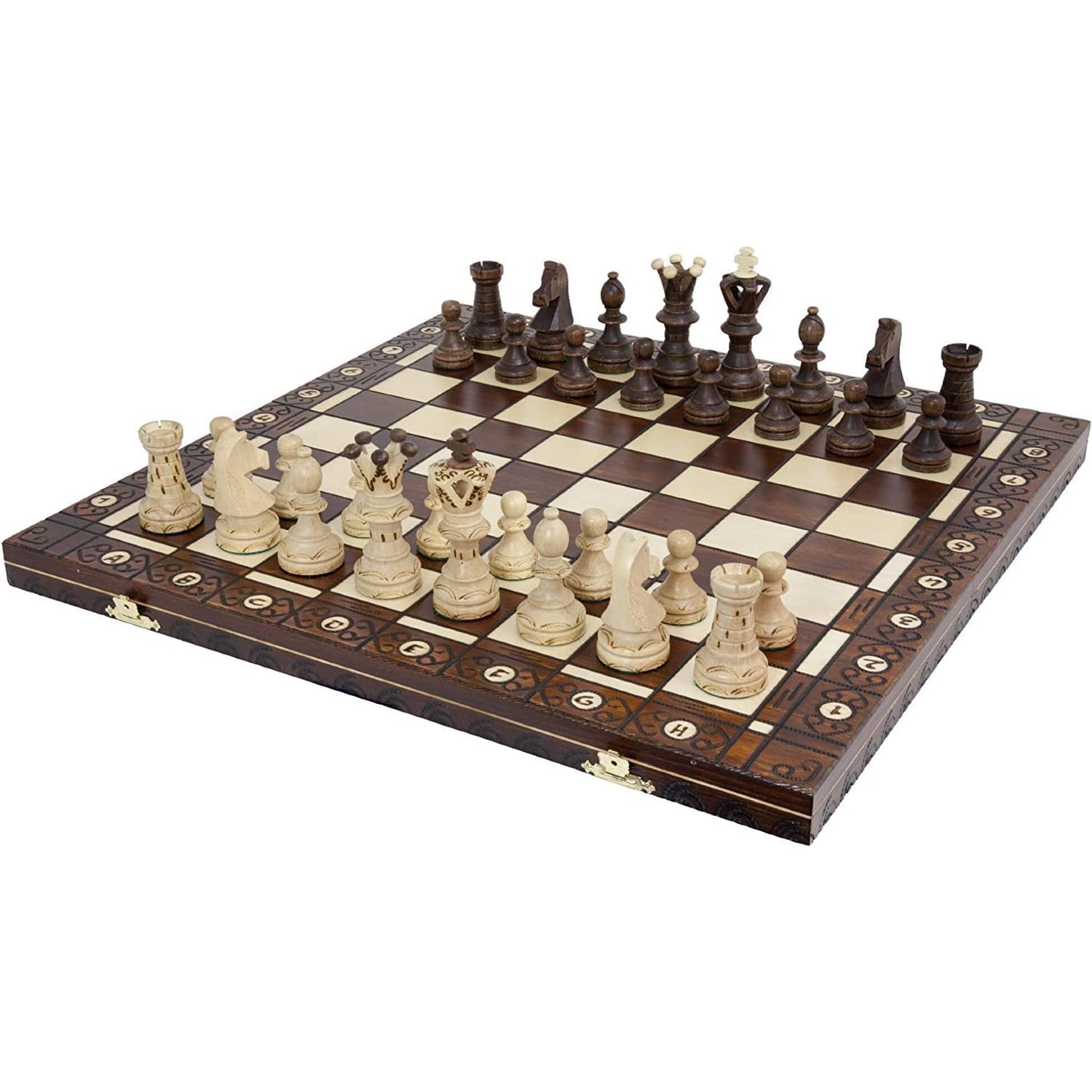
That is what a handmade wooden chess set with a folding board is for. This one is 55 x 55cm closed, weighs 2.1kg complete, and holds all 32 carved chessmen in formed compartments inside the board. Open it, set up, play, close it. That is the whole routine.
How the folding board works
The design is older than any of us and it has survived because it solves two problems at once.
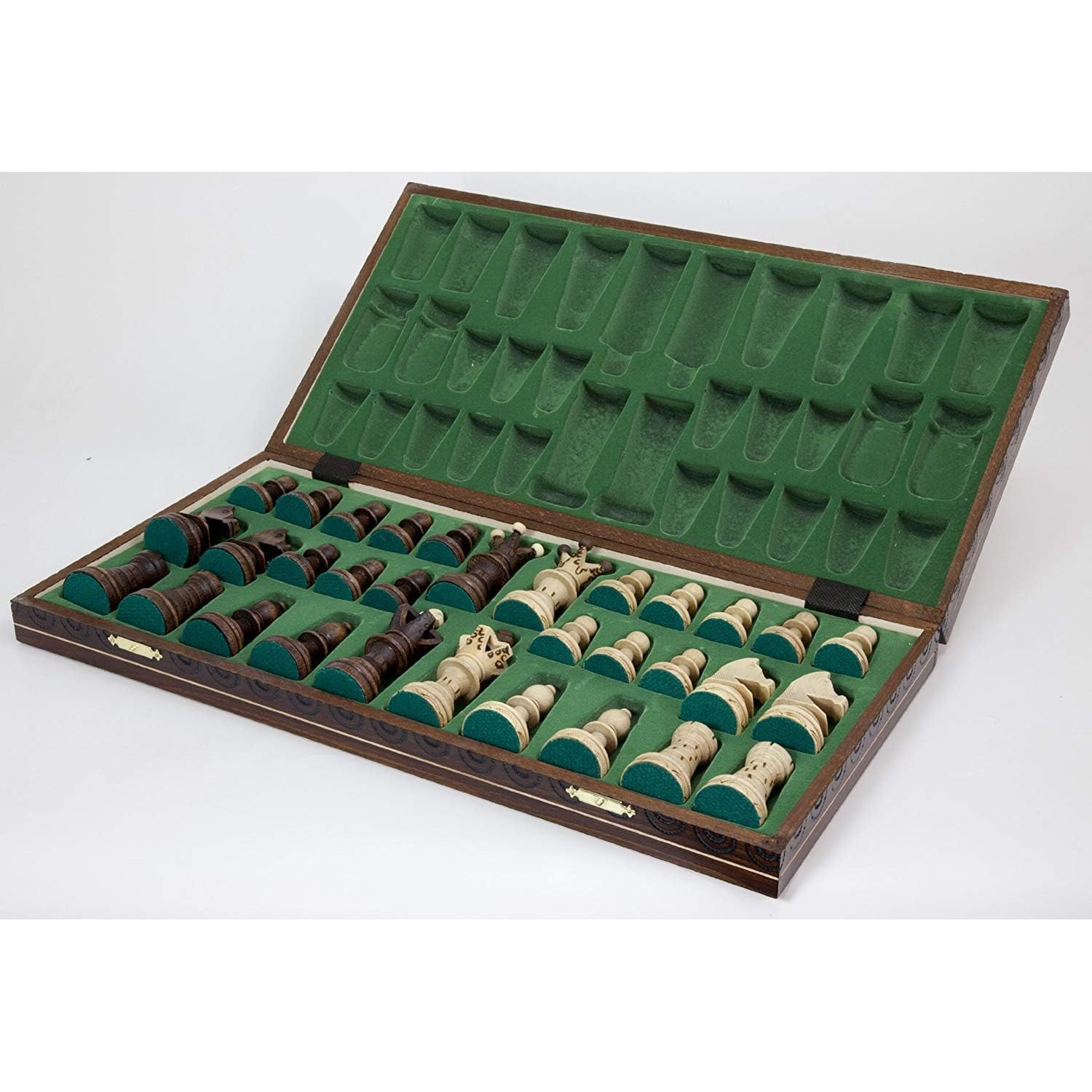
First, storage. The board hinges down the middle and each chess piece has its own shaped recess inside. Pieces do not roll around and knock chips off each other, and you can see at a glance whether anything is missing before you put it away. Two brass clasps hold the halves shut.
Second, portability. A folded board is roughly half its playing size and it carries like a slim case. You can take it to a friend's place, a club night or a holiday house without hunting for a box. Compared with a set that comes in a cardboard carton and a drawstring bag, it is far less likely to end up incomplete.
The trade-off worth knowing about is the centre hinge. Every folding board has a seam down the middle. On a well-made wooden board it is barely noticeable in play, but it is there, and purists who want a single-piece board will prefer a solid slab. Most players happily accept the seam for the storage.
Why weighted pieces change the game
Pick up a weighted chess piece and you can feel the difference immediately. There is heft in the base, so the piece stands firmly and does not tip when your sleeve catches it. Place it down and it stays exactly where you put it.
Felt on the bottom matters just as much. It stops wood grinding against wood, keeps the board surface clean, and softens the sound of play. Instead of a sharp clack you get a dull tap. That sounds like a small thing until you play a two-hour game.
Weighting also affects accuracy. When pieces are light, you tend to nudge neighbouring squares as you move, and in a tight position that gets annoying. Heavier pieces sit put. Anyone comparing options for the best weighted chess pieces is really looking for this: a set where the board stays tidy on its own.
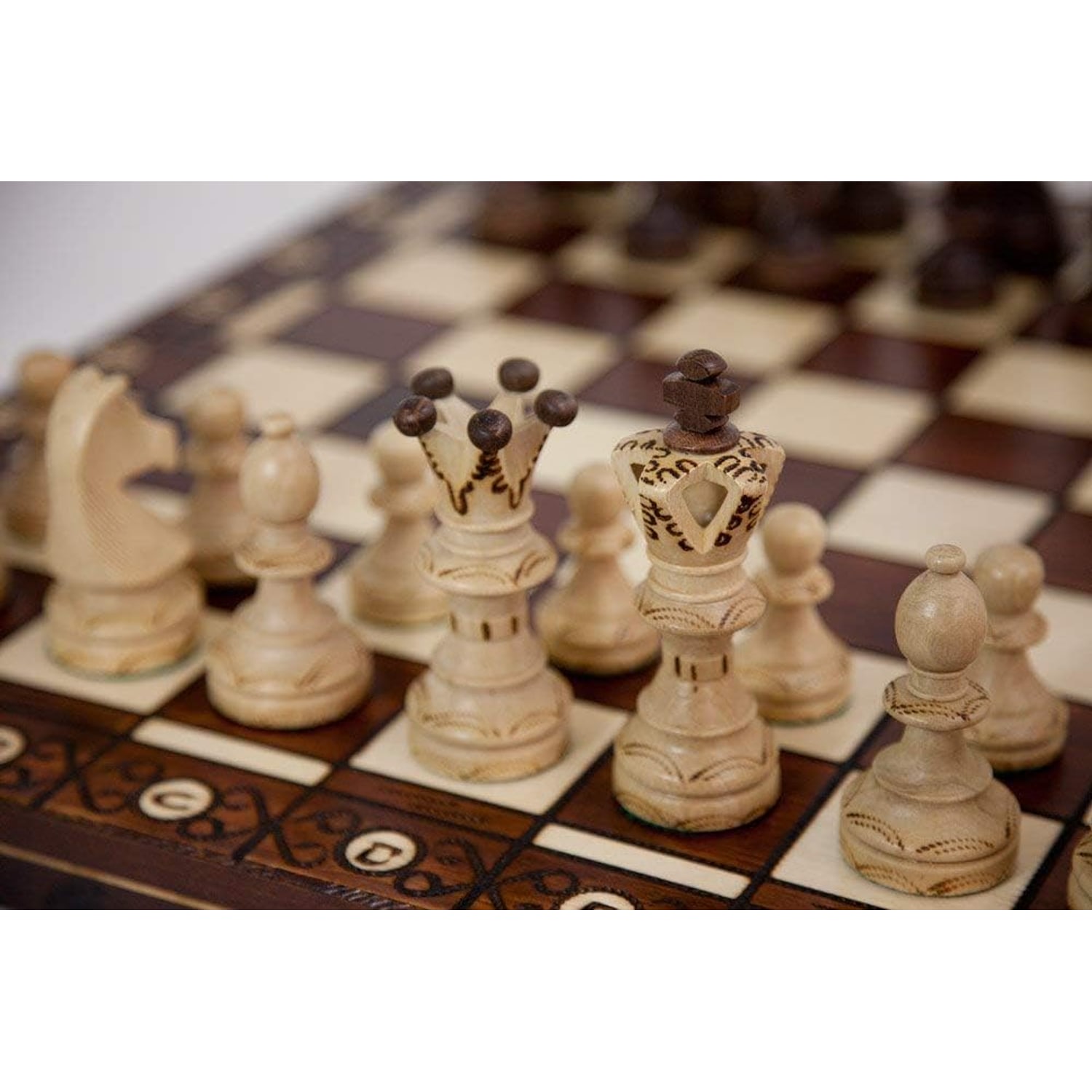
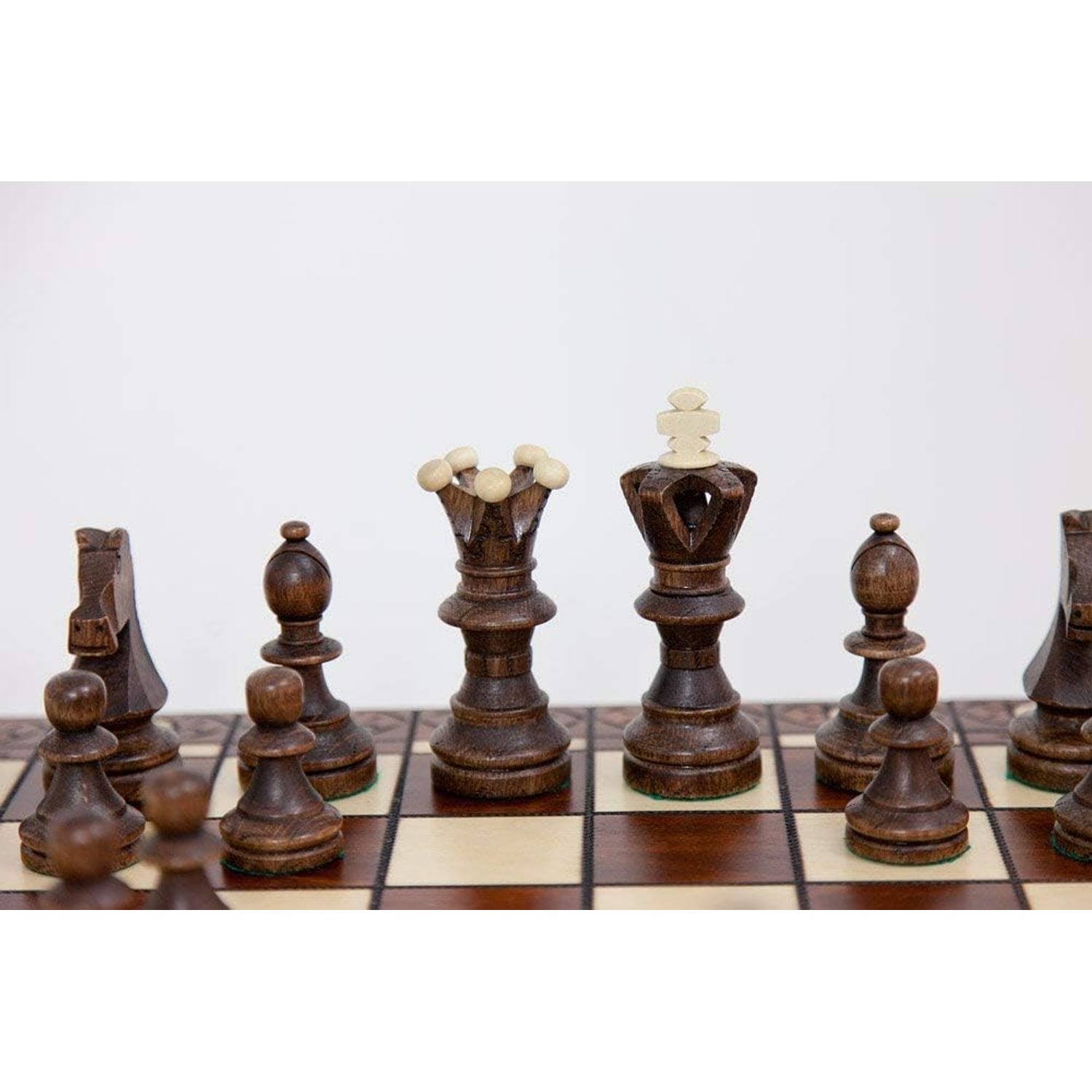
The chessmen here are carved and detailed, which is what people mean by carved chess pieces rather than moulded ones. Natural grain means no two sets look identical.
The case for coordinates
The letters and numbers around the border of this board are the single most underrated feature on it.
If you are learning, coordinates let you read any chess book, any puzzle, any online game and recreate it on the table in front of you. Notation like Nf3 stops being code and becomes a square you can point at. Without coordinates, a beginner spends half their study time counting squares with a finger.
If you already play, coordinates make analysis after a game far quicker. You and your opponent can talk about squares by name instead of saying "that one, no, the other one". Coaches rely on this constantly, which is why a coordinate board is considered one of the best chess board with coordinates formats for teaching at home.
They also help two players who learned the game in different ways get on the same page fast.
Who this set suits
A large wooden set like this works best for a few groups of people.
Households where someone is learning. The big board, clear piece shapes and printed coordinates make it one of the best chess set for learning setups you can put on a kitchen table. A child of seven or an adult picking the game up at forty both benefit from the same things.
Casual players who want the set visible. If chess lives in a cupboard, it gets played three times a year. If it lives on the coffee table looking good, people wander past and start a game. A wooden board earns its place on display in a way a plastic one does not.
Club and home-study players. Weighted and felted pieces on a coordinate board is the standard most clubs use, so practising at home on a similar set means no adjustment when you sit down for a real game.
It is less suited to tiny spaces where 55cm of table is hard to find, and it is not a pocket travel set. It also carries a small parts warning, so it is not for children under 3.
What to look for when you compare sets
A few things separate a set you keep from one you replace.
Storage. A board with internal compartments beats a bag every time. Ask where the pieces go before you ask anything else, because that answer predicts whether the set survives five years.
Piece weight and base. Weighted with felt is the combination you want. Unweighted pieces feel cheap no matter how nice the carving is.
Board size against your table. 55cm square needs a decent surface. Measure your coffee table before ordering if space is tight.
Materials. This set lists wooden, birch, birch wood and brass. Solid wood with brass hardware behaves predictably over time, which is more than can be said for veneered particle board.
Coordinates. Once you have used them you will not want a board without them.
Looking after wooden chess
Wood is forgiving if you keep it dry and out of harsh light.
Wipe the board and pieces with a dry or very slightly damp soft cloth, then dry straight away. Skip sprays, polishes with silicone and anything abrasive. Water sitting on a wooden surface is the main thing that causes trouble, so never soak a piece or rinse the board under a tap.
Store the set closed with both clasps fastened. That keeps the board flat and keeps dust off the playing surface. Avoid storing it on top of a radiator, in a conservatory or in a damp garage, since swings in heat and humidity are what warp timber.
If a felt base lifts after years of use, a dab of glue puts it right. That kind of small repair is normal for wooden sets and is part of why they outlast plastic ones.
Setting up for a better game
Two practical habits make any set more enjoyable.
Leave it out, set up, with white on the right-hand light square. A ready board invites a game. A packed board invites nothing.
And play on a surface with a bit of grip. A tablecloth or a wooden table is better than glass, which lets even weighted pieces slide. Good light helps too, especially for anyone reading coordinates across the board.
The short version
This is a handmade wooden chess set with a 55 x 55cm folding board, 32 carved and weighted chessmen with felt bases, algebraic coordinates along the border, and formed compartments inside the board so every piece has a home. It weighs 2.1kg, needs no assembly and no batteries, and is made for indoor play.
Buy it if you want one chess set that handles learning, casual evening games and sitting out on display between them. The storage is what keeps it complete, the weighting is what makes it pleasant, and the coordinates are what make it useful. That combination is why this style of set has stayed popular for decades.