
The complete guide
Choosing a Kids Sofa Bed That Actually Gets Used
The seating gap in most children's rooms
Walk into a typical kid's bedroom and count the places to sit. There is the bed, and there is the floor. That is usually it. The desk chair does not count because it is hard, it swivels, and nobody reads a book in it. So children end up draped over the end of the bed or sprawled on carpet, which is fine until they want to settle in with a book or a film for an hour.
The obvious answer is a small chair, but small chairs have a history of disappointing people. Beanbags lose their beans and give no back support. Plastic chairs are a novelty for about nine days. Proper armchairs scaled down for children tend to be expensive and still take up the footprint of adult furniture. A kids sofa bed 2 in 1 is a different approach. Instead of being a miniature version of grown-up furniture, it is a block of shaped foam that does two jobs, and it costs and weighs a fraction of the alternative.
How a foam convertible actually works
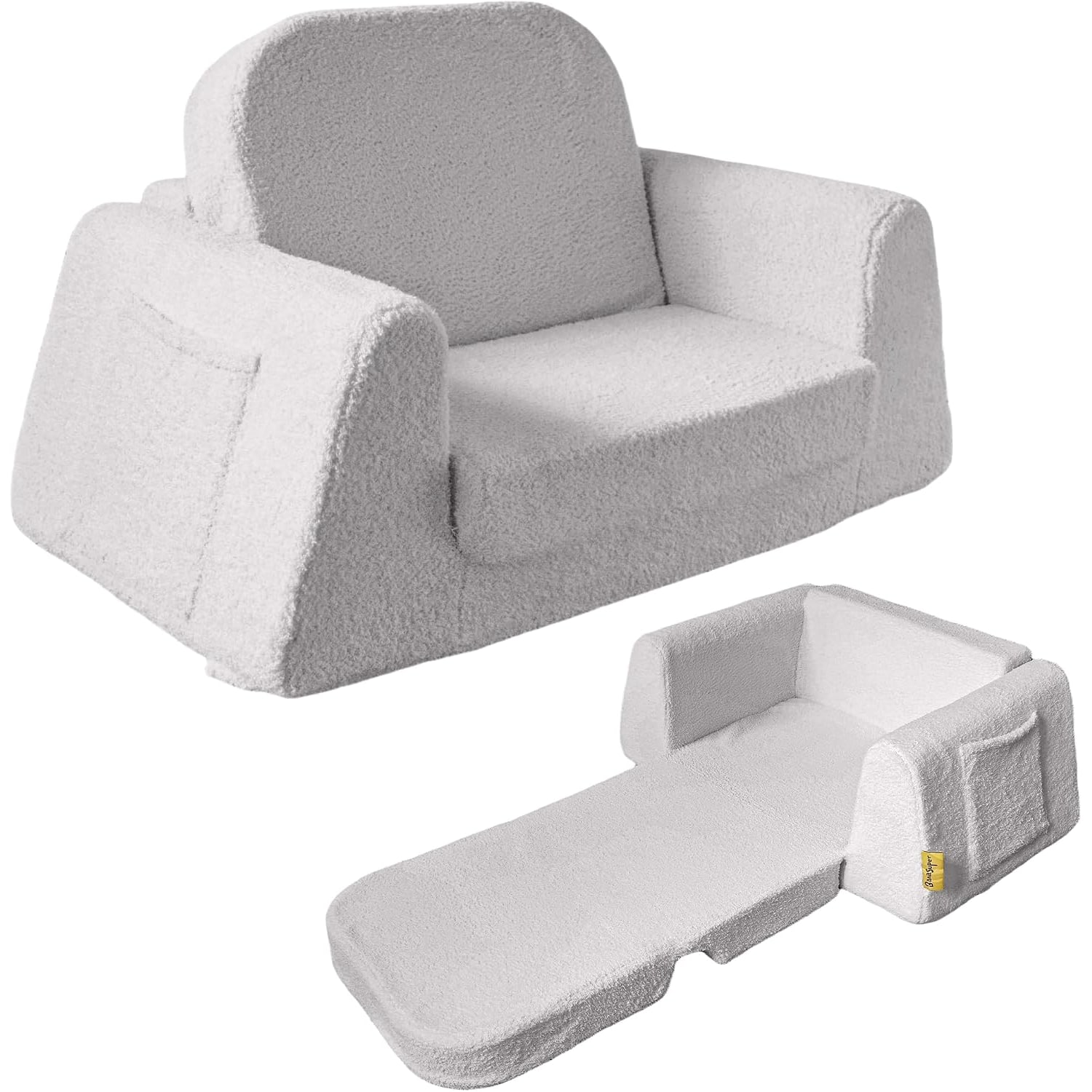
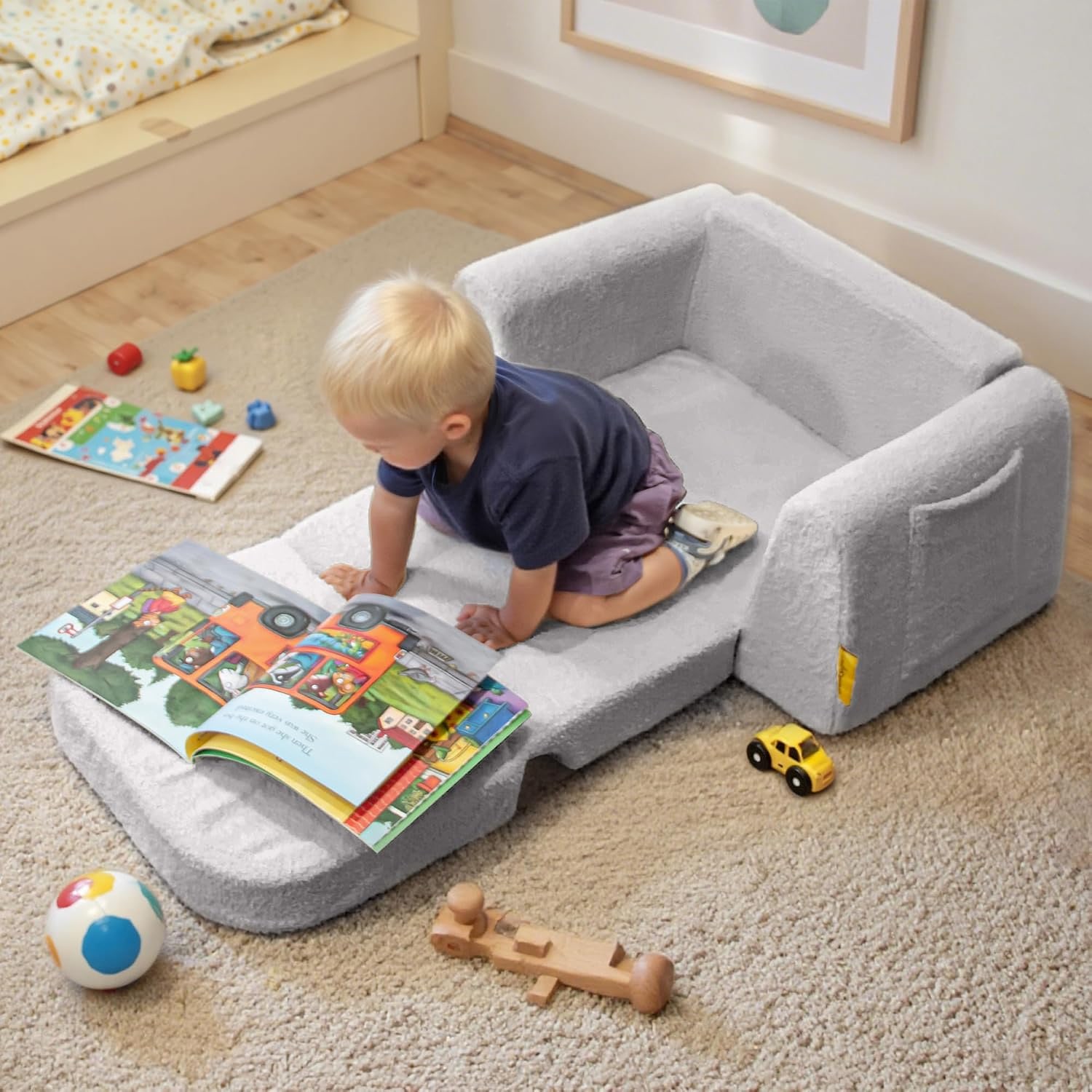
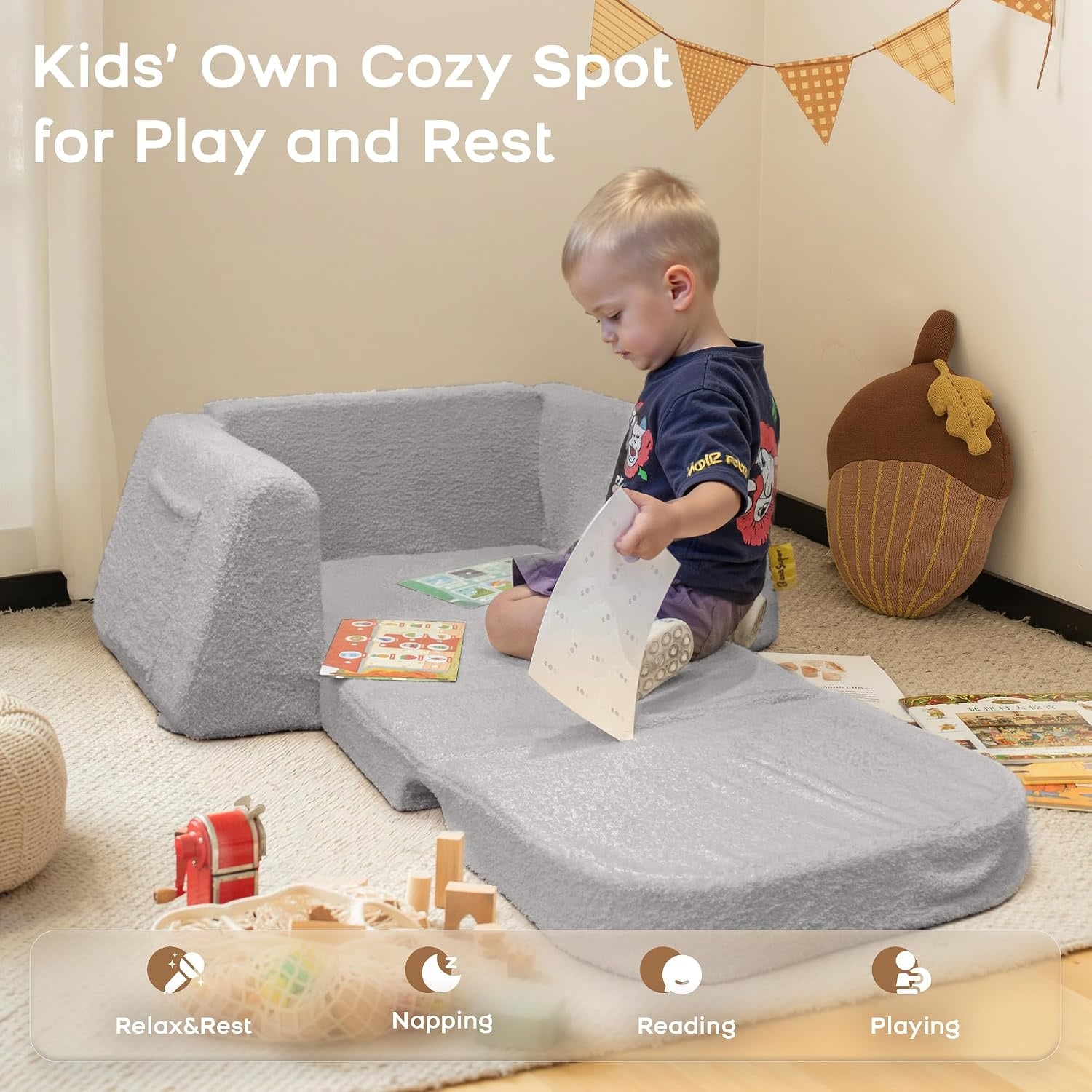
There is no clever engineering here and that is the strength of it. The whole chair is foam. The high-density memory foam is cut and shaped so that, folded, it forms an L: a seat, a back and two padded arms. Unfold it and that same piece of foam lies out flat as a low lounger. No hinges, no springs, no latches, nothing that can pinch a finger or wear out.
Because the frame material is foam rather than timber, the chair is light. A child can drag it from the bedroom to the lounge and back without asking anyone. That matters more than it sounds. Furniture children can move themselves gets used in more places and more often.
The foam is high density, which is the detail that separates a chair that lasts from one that goes soft in a term. Low-density foam compresses and stays compressed. Higher density foam pushes back. The seat here is listed as soft with soft back support, so it feels plush when you sit down, but there is body underneath so a child does not end up folded onto the floor.
Over the top sits sherpa. It is the fluffy looped fabric you see on winter jacket linings. Children like it because it is warm and soft against bare legs, and it photographs well in a tidy room, which never hurts.
Who it suits
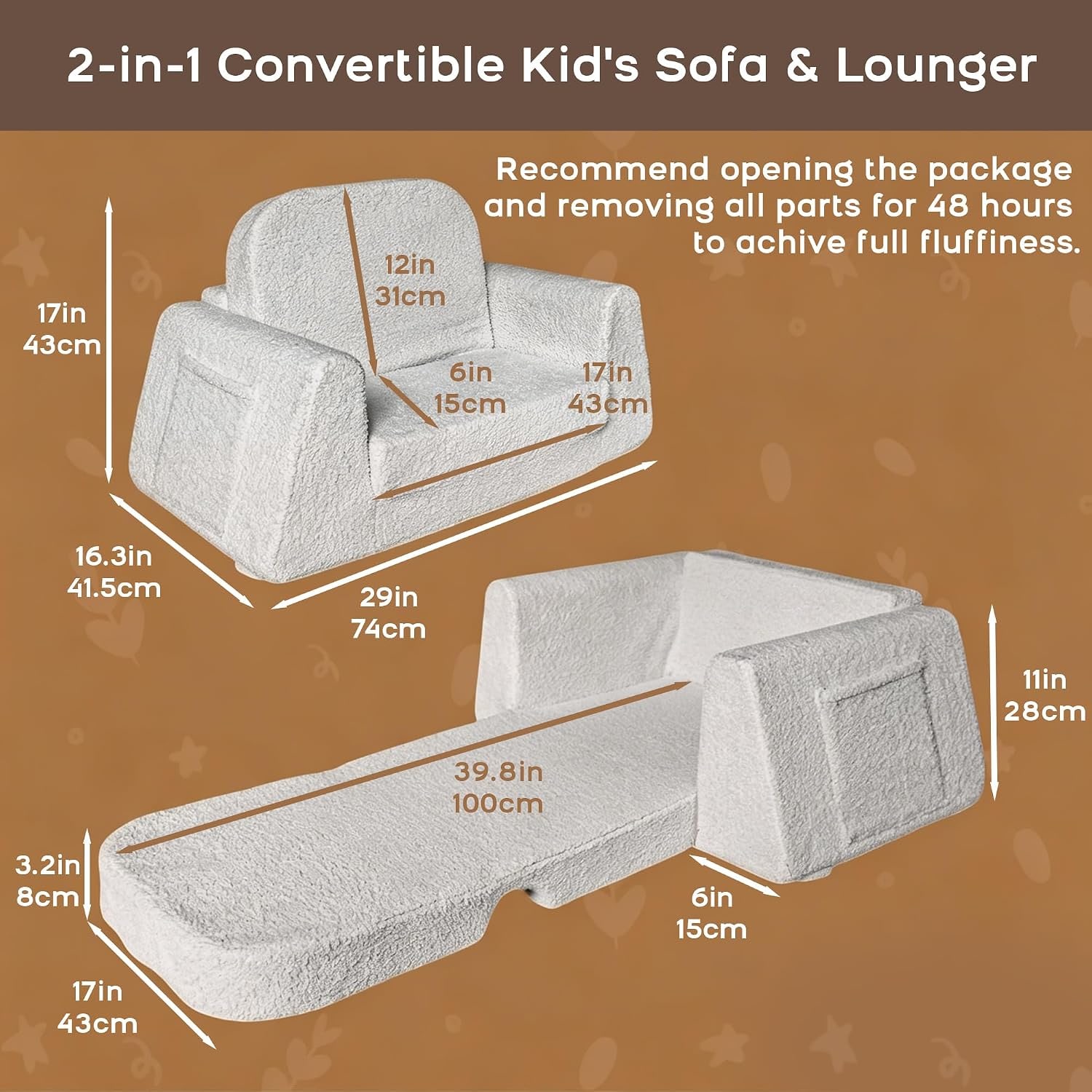
The practical numbers tell you most of what you need. Seat depth is 25.4 cm, seat interior width is 17 inches, arm height is 11 inches and seat back interior height is 12 inches. Those are child proportions. A primary-age child fits comfortably. An older child will still use it, though they will sit more on top of it than down in it, and will probably prefer it folded out flat.
Weight capacity is 100 kg and seating capacity is one. That limit gives plenty of headroom for a child, and an adult within it can sit down without worrying. It is not a two-seater though, so if you have siblings who share everything, two chairs beats one chair and an argument.
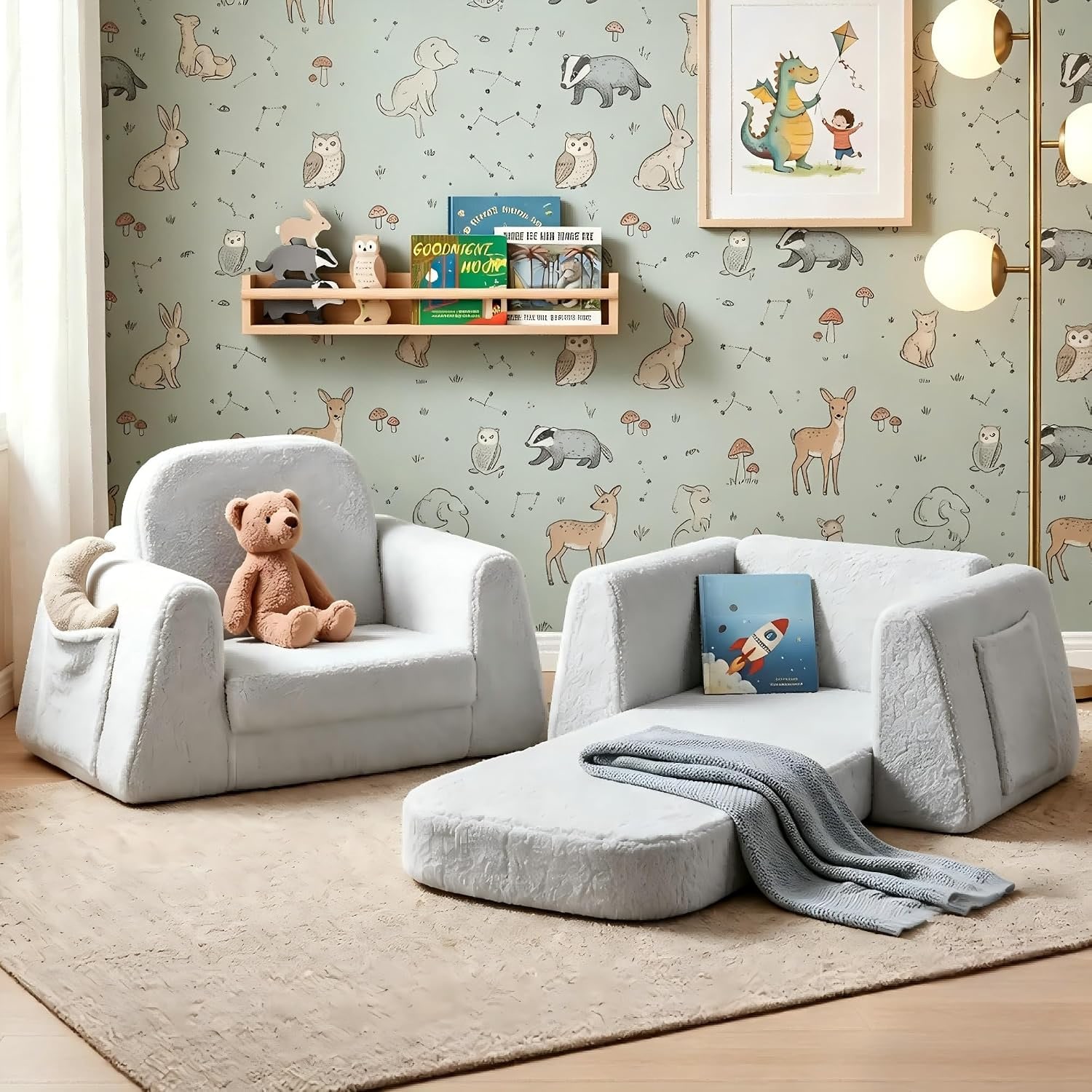
Overall footprint is 42 cm deep, 74 cm wide and 43 cm high. For context, that is narrower than most desks and lower than a dining chair. In a small bedroom you can put it in a corner and barely notice it. In a playroom it gives a defined spot to land, which is useful when you are trying to create a reading area without building shelving.
It is indoor only. Sherpa and foam both soak up moisture and neither dries quickly, so a covered patio is still a no.
What to look for when comparing options
If you are weighing up a few children's convertible sofas, four things decide whether you are happy in six months.
Foam density comes first. A chair described as high-density memory foam will hold its shape far better than one that just says foam. Price usually follows density, and it is the one place where paying a little more pays you back.
Second, check the cover comes off. A fixed cover on children's furniture is a short-term decision. This one has a hidden zip, is a removable seat cushion cover and is machine washable, which means the first spilled drink is an inconvenience rather than the end of the chair.
Third, look at the base. A narrow base on a light foam chair will skid and tip when a child flops onto it. This one has a wide stable base, which is why the footprint is 74 cm across even though the seat itself is narrower.
Fourth, assembly. Flat-pack children's furniture is a genuine evening of your life. This requires none. No connectors, no tools, one piece in one pack.
The first 48 hours
Foam seating ships compressed, because shipping air is expensive. When the parcel arrives, open it, take the chair out and set it where it will live. It will look slightly flat and slightly squashed. This is normal and not a fault.
It usually regains full shape within 48 hours. You can help by unfolding and refolding it a couple of times and giving the arms a gentle pull outward. Keep it out of a tight corner during that window so air can get around it. There may be a faint new-foam smell at first, which fades with airing.
Do not judge the chair, or start a return, before those two days are up. Nearly every complaint about a flat foam seat turns out to be someone assessing it on day one.
Keeping it looking decent
Children's furniture gets a hard life, so a short routine goes a long way.
Spot clean marks as they happen with a damp cloth and a little mild detergent, then blot dry rather than rubbing, which pushes stains into the pile. For a full clean, unzip and take the cover off, do the zip up before it goes in the machine so it does not catch, and wash cool. Air dry it flat or on a line. Heat is what wrecks sherpa, so skip the tumble dryer and do not park it on a radiator.
Between washes, brush the pile with a soft clothes brush now and then to lift it back up. Rotate the chair so the same patch is not always taking the weight, and keep it out of direct sun, which fades grey fabric faster than you would expect.
The foam core never goes in water. If it gets damp, stand it somewhere airy and let it dry fully before the cover goes back on.
Where it earns its keep
The best use for a chair like this is not the one you plan. You buy it as a reading chair and discover it is where homework gets done, where a friend sleeps over, where a child watches a film folded out flat on the floor in front of the television, and where the dog sits when nobody is looking.
That flexibility comes from the two shapes and the light weight. A chair that is fixed in place and heavy serves one purpose. A foam fold out chair for kids that a child can carry and reconfigure ends up in whatever room the family is in.
The short version
This is a grey sherpa kids fold out couch built from high-density memory foam, 42 by 74 by 43 cm when folded, with a 100 kg weight limit and seating for one. The cover unzips and goes in the machine. Nothing needs assembling, and the foam takes about 48 hours to reach full shape after unpacking. It is indoor furniture, scaled for a child, and it does two jobs with no moving parts to break. If your child's room has a bed, a floor and nothing in between, that is the gap this fills.