
The complete guide
How to Choose a Toy Storage Box with a Lid
The real problem is not the toys
Walk into most play spaces at the end of the day and the issue is rarely how many toys there are. It is that the toys have nowhere obvious to live. Shelves fill up with the things that look tidy, and the rest gets shoved under a bed or left in a drift along the skirting board.
A big lidded box solves this in a dull but effective way. It gives everything one destination. Nobody has to decide which shelf a stuffed rabbit belongs on, because it goes in the box. Tidying stops being a sorting task and becomes one sweep of the arm, which is why it actually gets done.
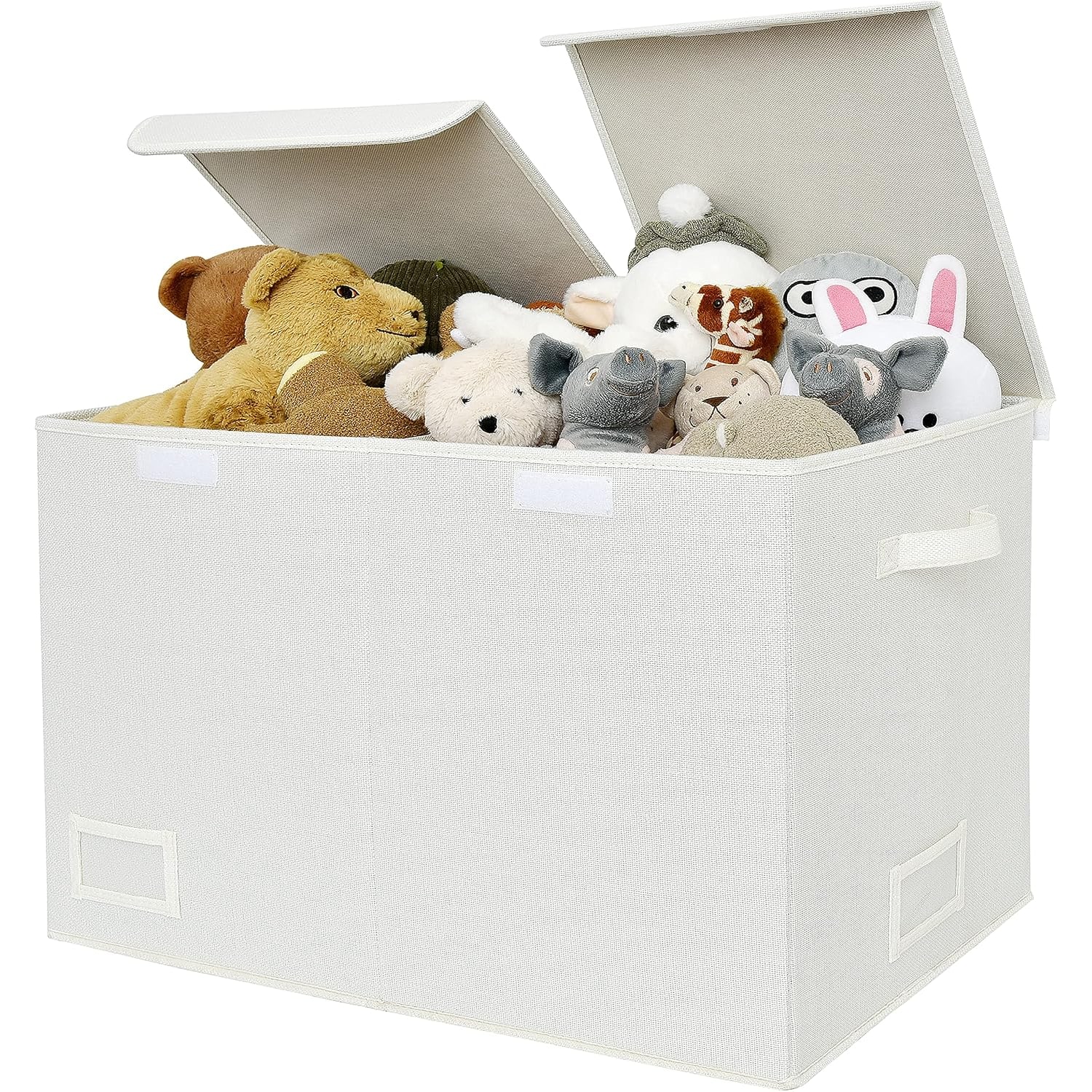
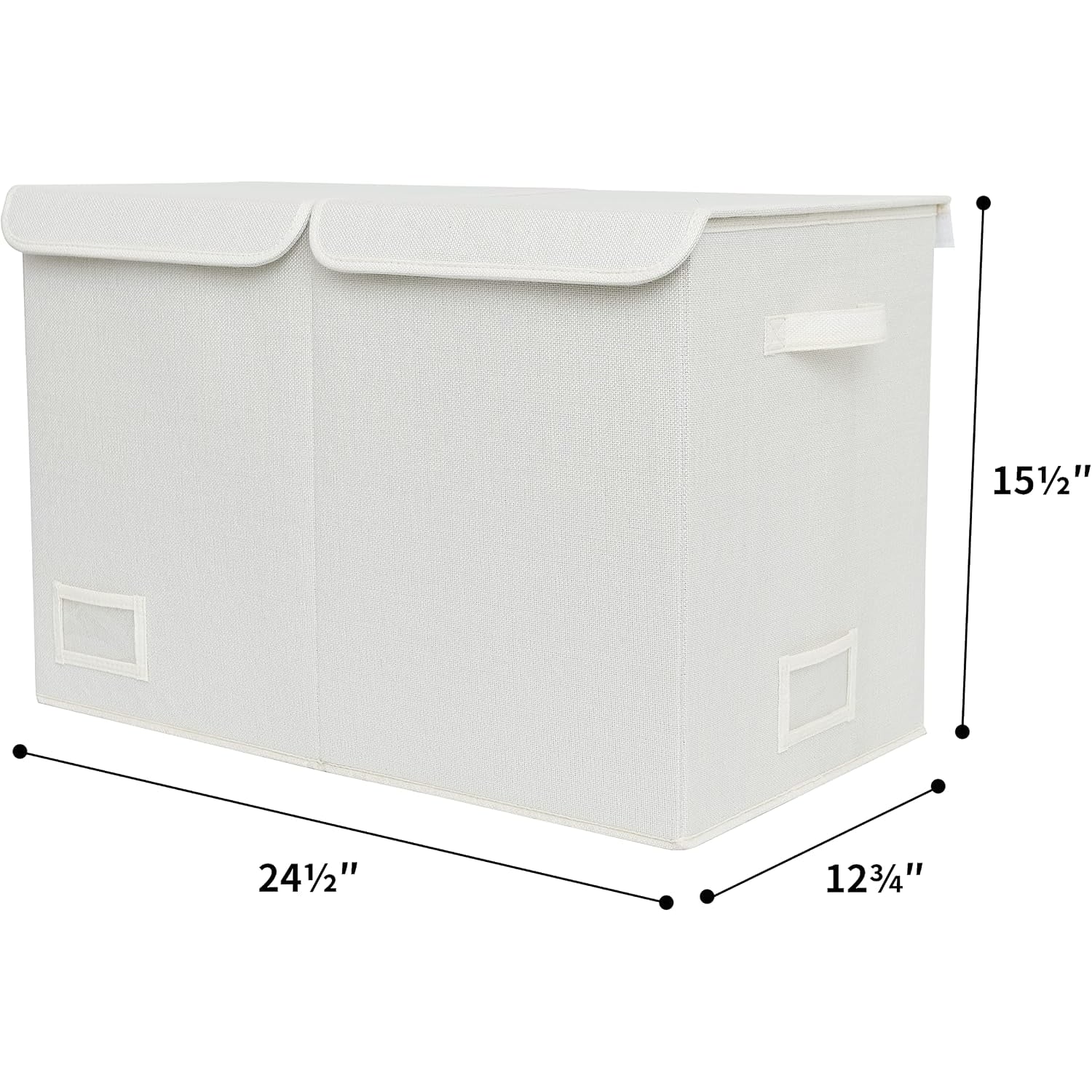
That is the job this 80 litre toy storage box with lid is built for. It is 62.5 cm long, 32.5 cm deep and 39.5 cm tall, which is large enough to matter and shaped to sit out of the way.
Why the shape is worth more than the number
Capacity is the number everyone compares, but the footprint is what you live with. A cube holds the same litres and eats far more of your floor.
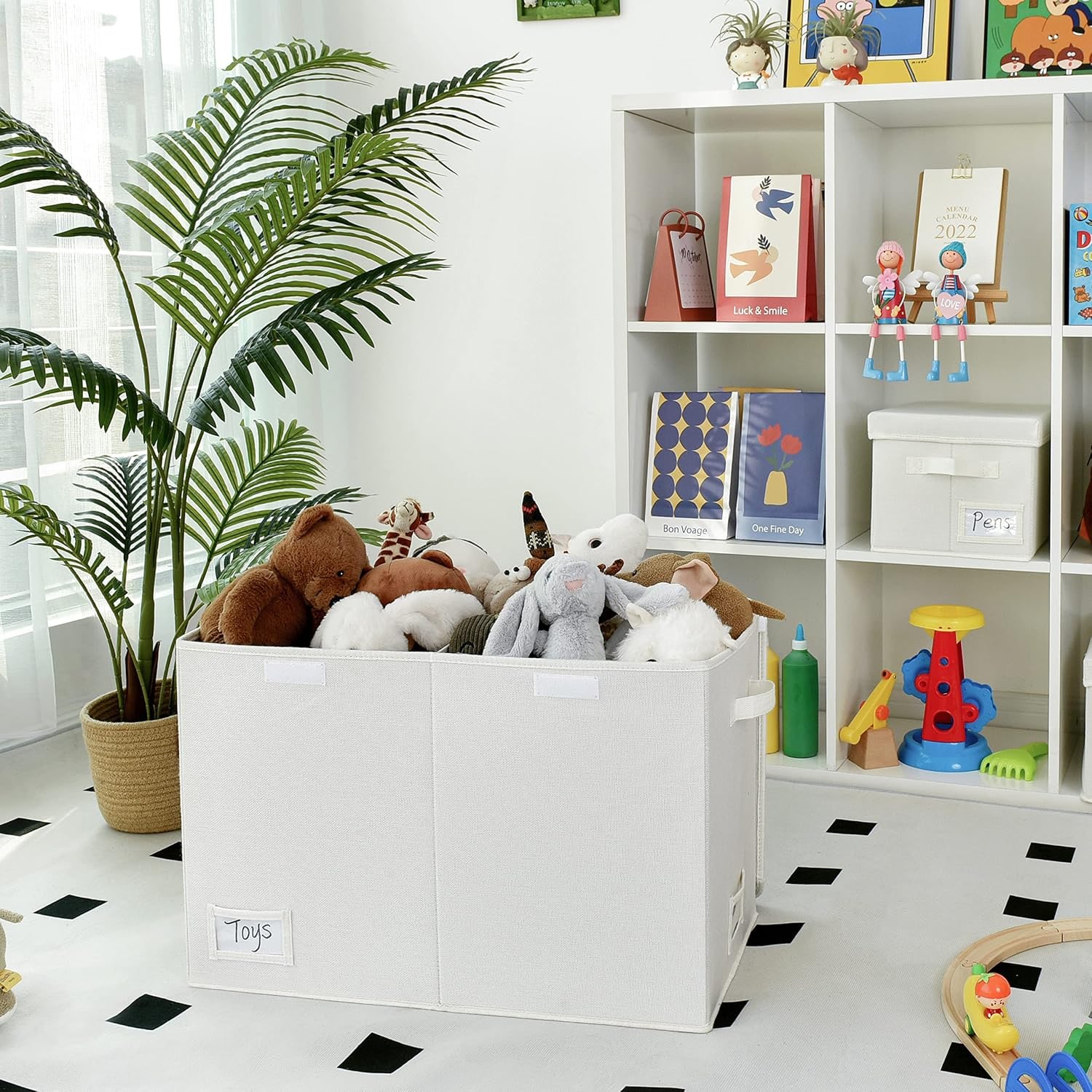
This one is a long rectangle. It slots along a wall, under a window, at the end of a bed, or beside a sofa without pushing into the walking space. At 32.5 cm deep it does not stick out past most skirting furniture. At 39.5 cm tall it clears the floor properly while still being low enough for a child to reach into.
Before you buy any playroom storage box, measure the gap you have in mind. Measure the width, then the depth, then check nothing swings into the space, like a door or a wardrobe panel. A box that nearly fits is a box you end up moving twice a week.
What the lid actually does
Lids split people. Some want an open bin so things get thrown in without thought. Others want the pile out of sight.
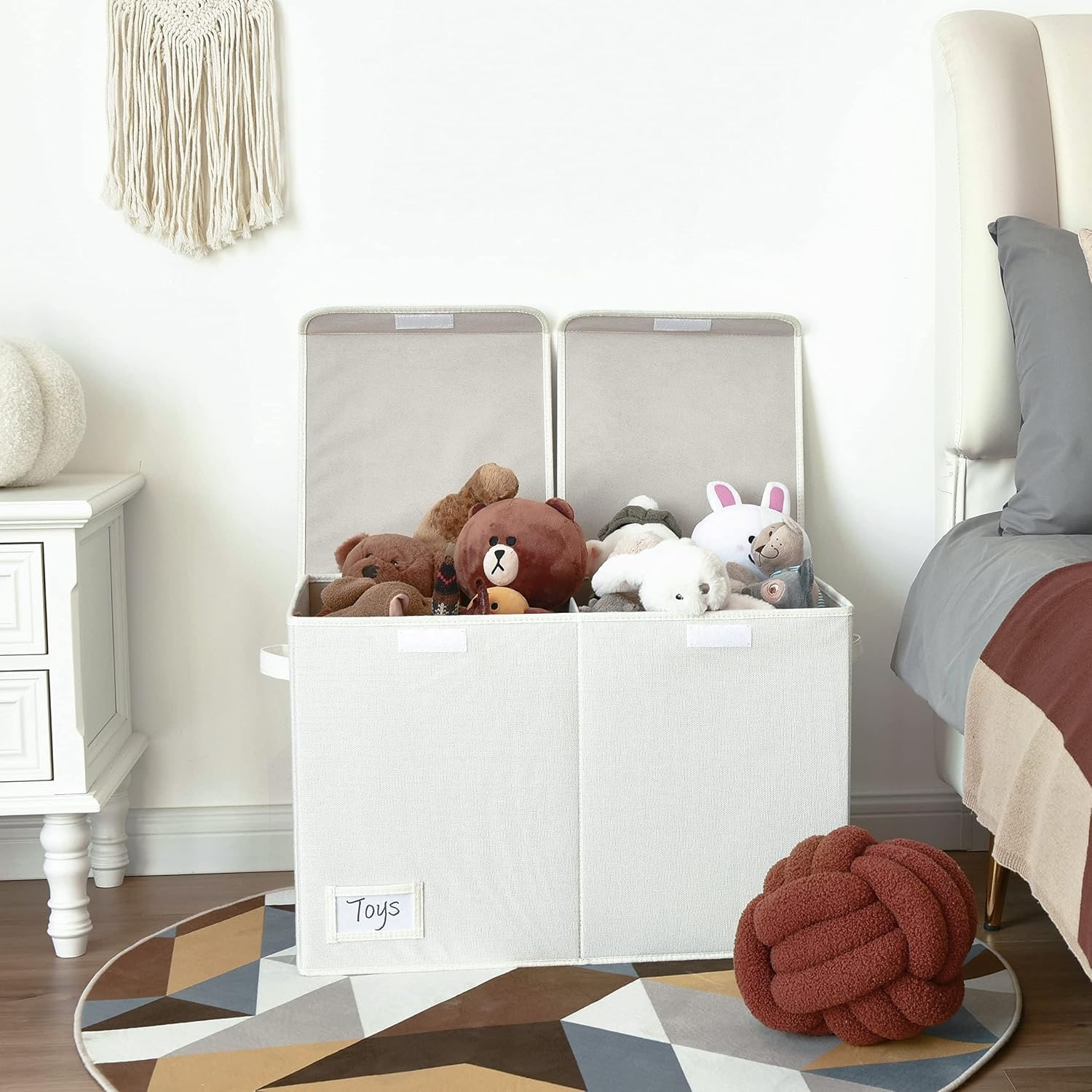
The lid here lifts off completely rather than hinging back. That sounds minor until you are holding a load of toys in both arms. A lift-off lid can be nudged aside with a knee or an elbow. A hinged one has to be held open.
The practical benefit is dust. Soft toys collect it, spare bedding collects it, anything stored for a season collects it. A lidded storage box for bedrooms keeps that off. For toys that come out daily, plenty of people take the lid off and store it flat behind the box. That works fine, and you can put it back when the room changes use.
The divider, and why it earns its place
Inside there is a removable divider that creates two compartments. This is the feature people underestimate.
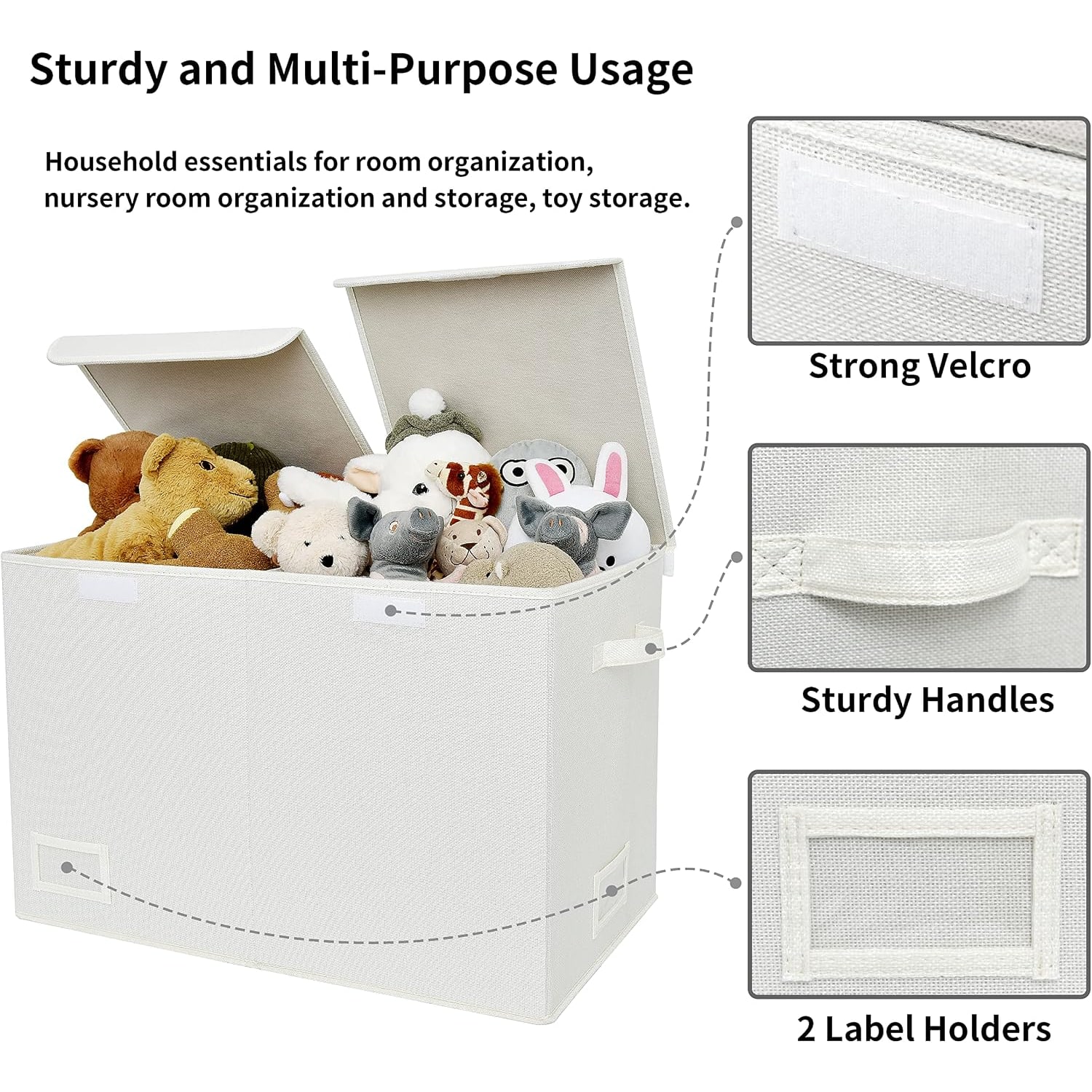
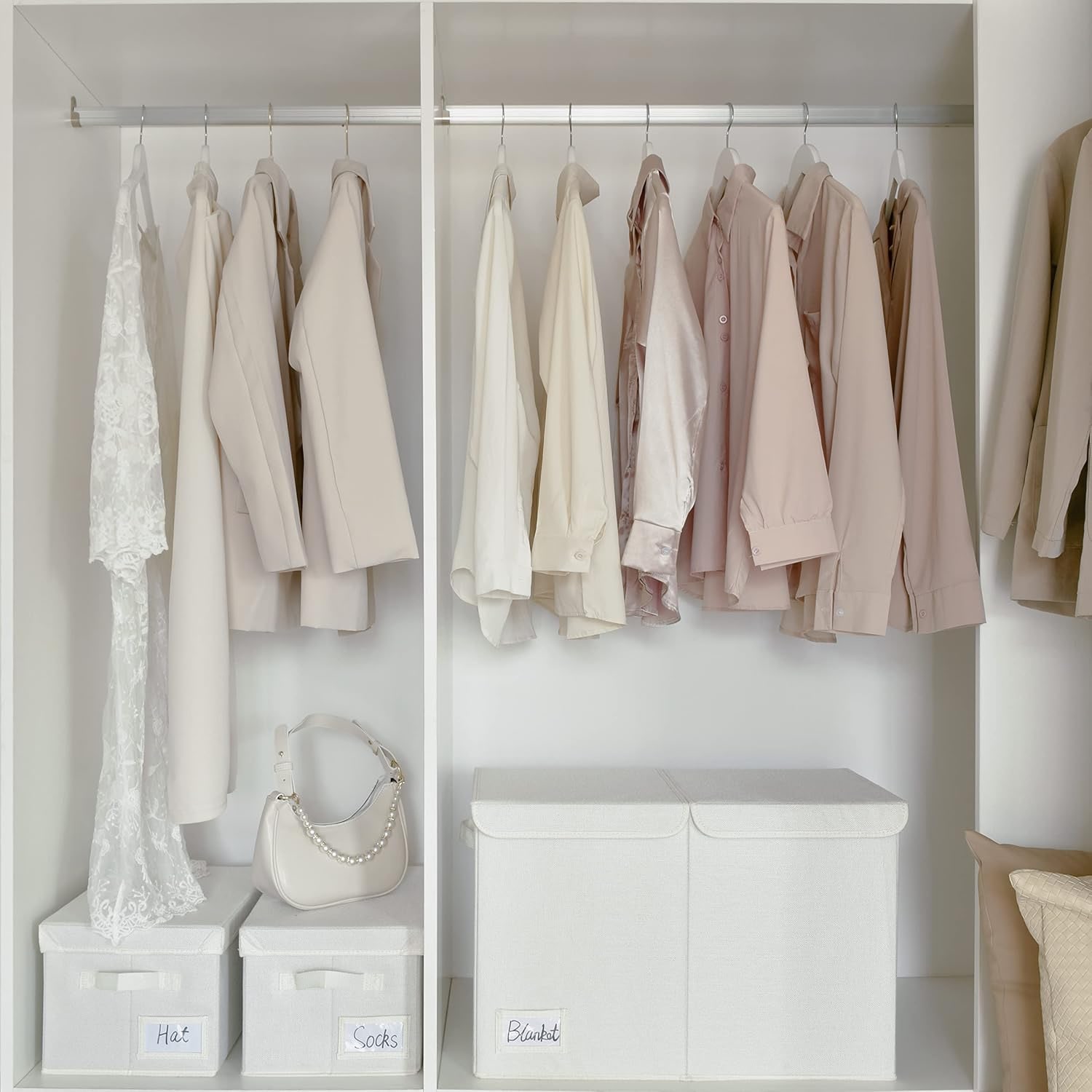
With the divider in, you get two zones. Blocks on one side, cars on the other. Craft supplies kept apart from everything else. Or in a shared room, one compartment per child, which cuts down on arguments about whose pile is whose. The two label holders on the front let you mark each section, so a visiting grandparent or a babysitter puts things back in roughly the right place.
Take the divider out and you have a single open 80 litre space. That is what you want for bulky things: play tents, folded blankets, large soft toys, dress-up clothes. Being able to switch between the two is what makes this a flexible toy box with divider rather than a fixed-purpose bin.
Handles, weight and moving it around
The box weighs 1.4 kg empty. Two reinforced handles are stitched to the short sides.
Handles on fabric storage do two jobs. They let you carry a full box between rooms, and they let you pull it out from under a shelf or cabinet without yanking on a side panel. That second job is the one that wears out cheaper boxes, because the fabric gives way where there is no reinforcement.
Be sensible about loads. Full of soft toys, a child can usually drag it. Full of hardback books, an adult should lift it. Books are deceptively heavy and 80 litres of them is a lot.
Fabric, care and where it should not go
The material is listed as fabric. The exact fibre is not stated by the maker, so we will not guess at it. What we can tell you is how to look after it.
It is not water resistant. Keep it indoors, away from laundry areas, damp walls and anywhere a wet towel might land. For cleaning, wipe the outside with a damp cloth and a little mild detergent, then let it dry fully before the lid goes back on. Do not soak it, do not machine wash it and do not put it anywhere near a dryer.
If something spills inside, empty the box first, blot, then sponge with a barely damp cloth and let it air out completely. Rushing that step is how fabric storage ends up smelling musty.
Folding it away
The body folds flat. This sounds like a throwaway feature until you hit the point where a child outgrows a phase and you suddenly have an empty box taking up a corner.
A collapsible storage box can go behind a wardrobe door, under a bed or on top of a cupboard until the next use. The lid stacks flat alongside it. We have seen these come back out for sports gear, winter bedding and, eventually, a different child's toys.
How to choose between one box and several
If you are working out how many to buy, think about who is doing the tidying.
One large box suits a household where the goal is speed. Everything goes in, the lid goes on, the room looks clear. Two or three identical boxes in a row suit a household where sorting matters, because each box gets a category and the label holders do the explaining. A row of matching white boxes along a wall also looks deliberate rather than improvised, which is a fair reason on its own.
For a lounge where storage has to blend in, one box with the lid on is usually the right answer. The minimalist white and pearl pattern reads as ordinary furniture rather than a toy chest, which is exactly what you want in a room adults also use.
A few honest limits
It is fabric, not timber. It will not take the weight a wooden chest will, and we would not stack a heavy second box on top of a full one. The sides can lean a little when the box is nearly empty, which keeping the divider in helps with.
It is also not water resistant, so it is an indoor product only. And it ships as a single box, so if you want a matching set you need to order the quantity.
None of that is a flaw so much as the trade you make for something light, foldable and easy to move.
The short version
This is a large, plain, well-shaped box that holds 80 litres, splits into two compartments when you want it to, keeps dust off with a lift-off lid, carries by two reinforced handles and folds flat when it has done its job.
Measure your gap first. Decide whether you want the lid on daily or stored flat. Then pick one box for speed, or a few for sorting. The rest looks after itself.