
The complete guide
How to Choose a Bubble Machine That Actually Keeps Going
The problem with a pot of bubbles
Every parent knows the sequence. You buy a bottle of bubble mix with a little plastic wand. There is about four minutes of delight, then someone tips the pot over, and then there is a soapy patch on the path and a child who is already bored. The whole thing cost a few dollars and lasted less time than it took to open the packet.
The issue is not the bubbles. Kids love bubbles. The issue is supply. A hand wand gives you maybe five or six bubbles per dip, and if there are three children, two of them are standing there waiting for a turn. The fun is rationed.
A machine removes the rationing. It makes bubbles faster than children can pop them, which is the exact condition under which a group of kids goes genuinely feral in the best way. That is why a decent kids bubble machine earns its keep over a summer, and why a cheap hand wand does not.
How these machines actually work
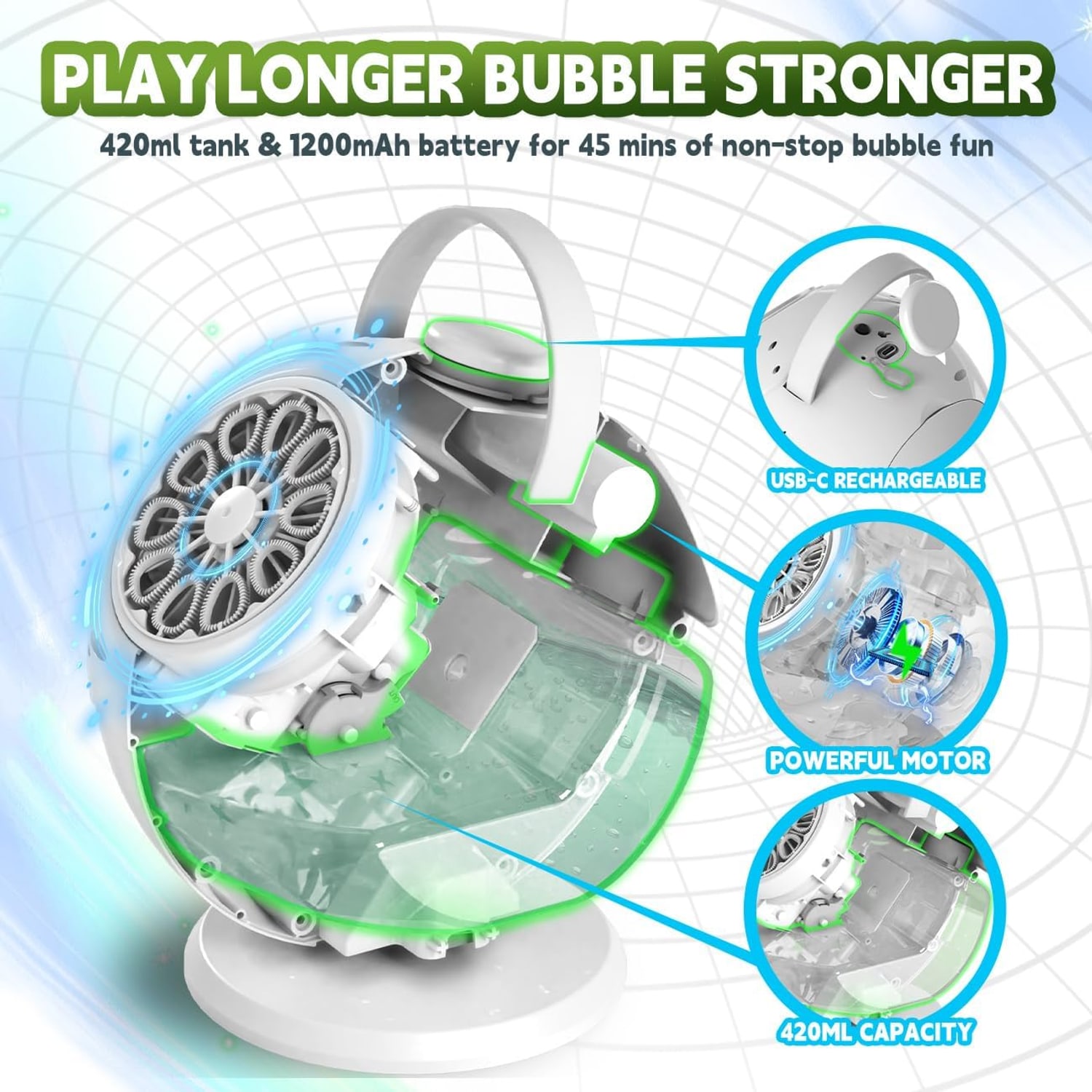
The mechanics are simple, which is good news because simple things break less. Inside the housing there is a small tank holding the bubble solution. A motor turns a wand through that tank so the holes pick up a film of liquid. A fan then blows air through the wet holes, and that film stretches into a bubble and lifts away.
The number of holes on the wand is the main thing that decides how many bubbles you get. A wand with two or three holes produces a sparse trickle. This one uses a ten hole design, which is why the output reads as a stream rather than a scatter. More holes also means the bubbles come out in overlapping waves, which looks more impressive than the same number spaced out.
The second factor is tank size. A machine with a tiny reservoir will empty in a few minutes and then you are refilling while the party waits. The 420ml tank here is generous for the size of the unit, and that is the difference between a toy that keeps running and one that keeps interrupting.
Why rechargeable matters more than you think
Battery powered bubble machines used to run on four or six AA cells. Anyone who owned one remembers the pattern. The bubbles slow down, you discover the pack of spare batteries is empty, and the machine goes in a cupboard until someone remembers to buy more.
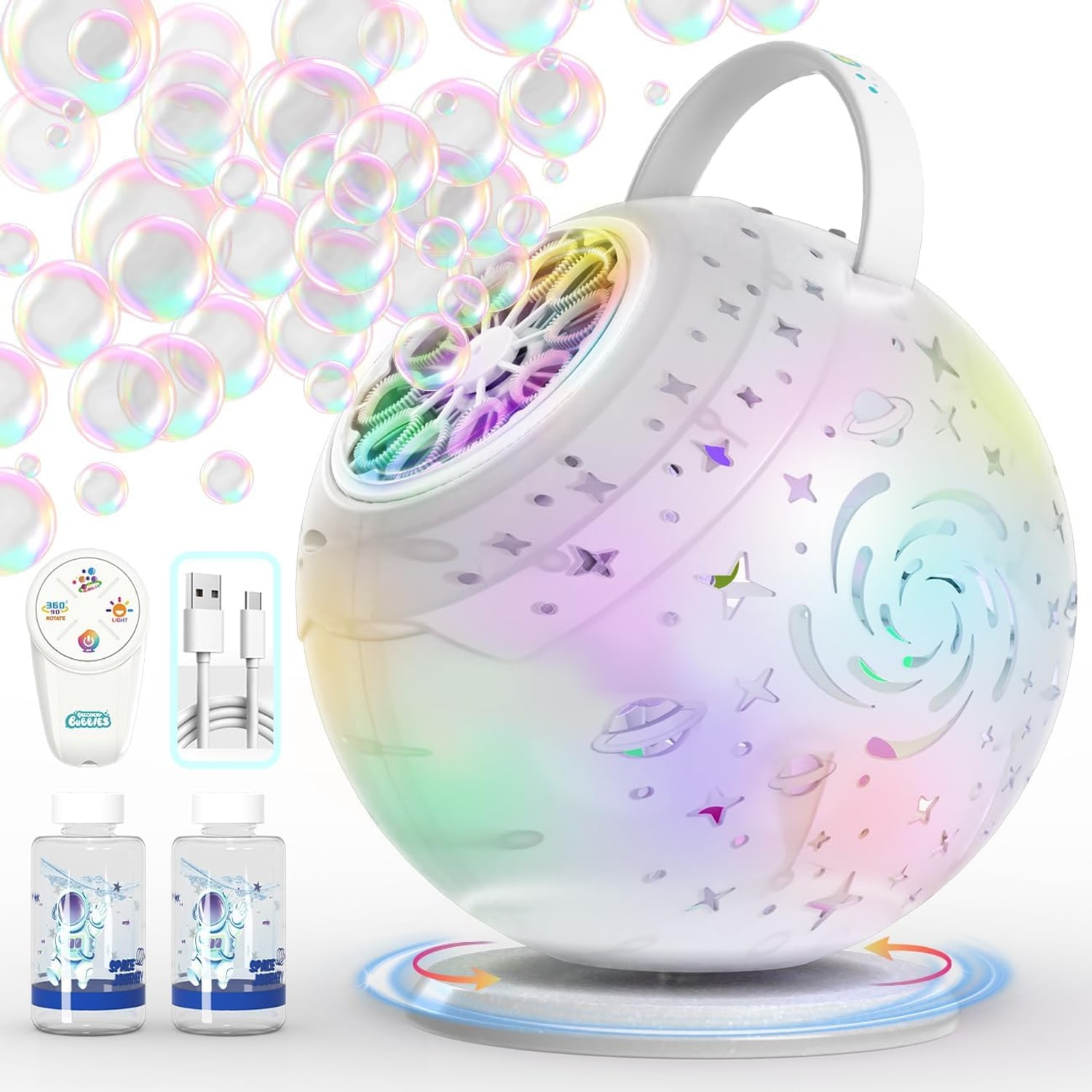
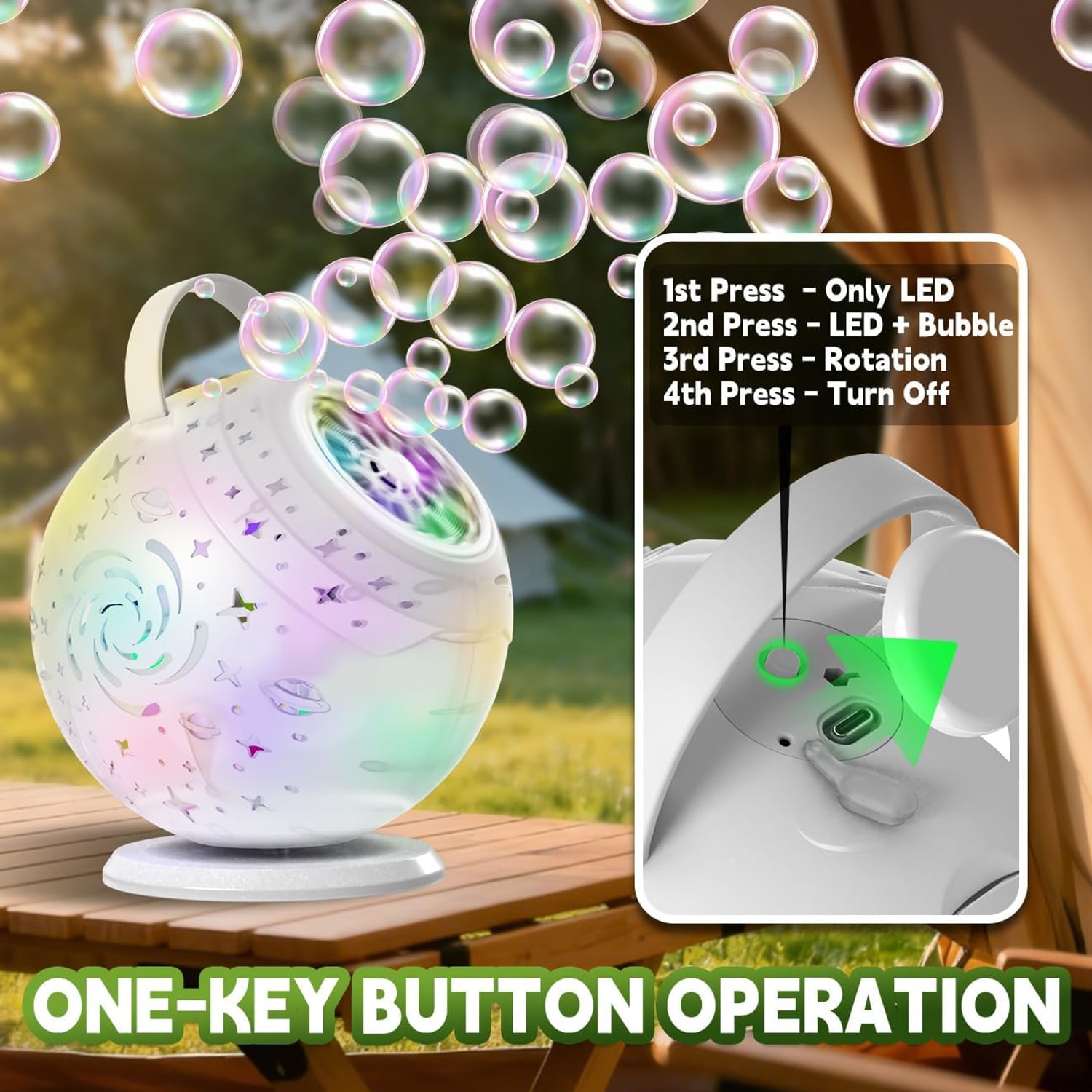
A built-in rechargeable lithium-ion battery solves that. This one charges over USB-C, so the cable is the same one you already use for a phone, a tablet or a games controller. Two USB cables are supplied, which is thoughtful, because the cable is always the thing that goes missing.
Being cordless is also what makes the machine properly portable. There is no hunting for a power point and no extension lead snaking across wet grass. You can put it in the middle of a lawn, at the far end of a park, on a deck rail or next to a paddling pool. For camping or a picnic, a cordless bubble machine is the only type that makes sense.
The trade-off is that you have to remember to charge it. Make it part of the party prep, the night before, alongside filling the esky.
Rotation, lights and the remote
Two features separate a basic blower from something that holds attention longer.
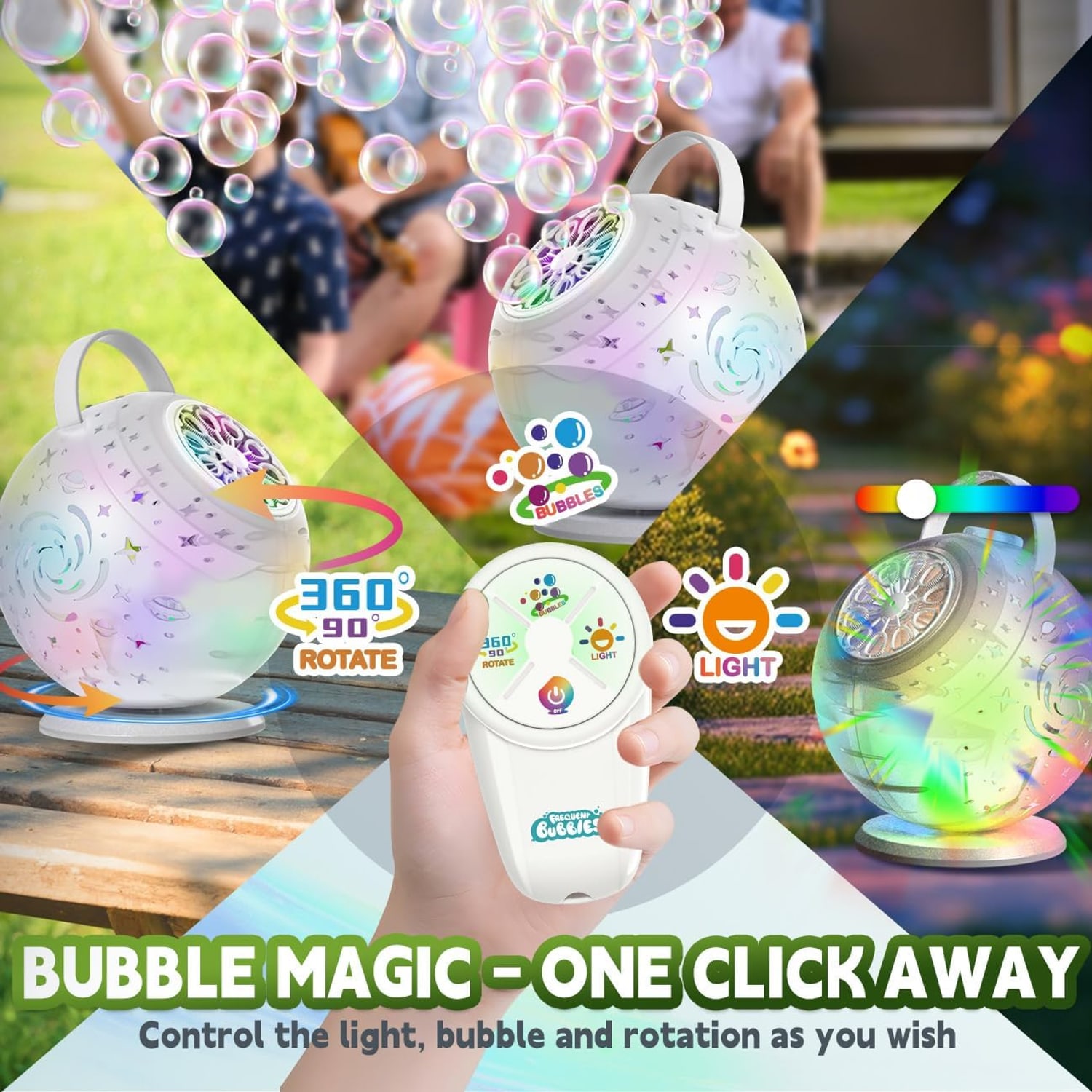
The first is rotation. A fixed-head machine sends every bubble in one direction, so you get a dense cloud in one corner and nothing anywhere else. This unit has a 90 degree sweep and a full 360 degree spin. The sweep works when you want to aim bubbles down a lawn toward a group of running children. The full circle is better when the machine sits in the middle and kids form a ring around it. Having both means you can match the setup to the space rather than the other way round.
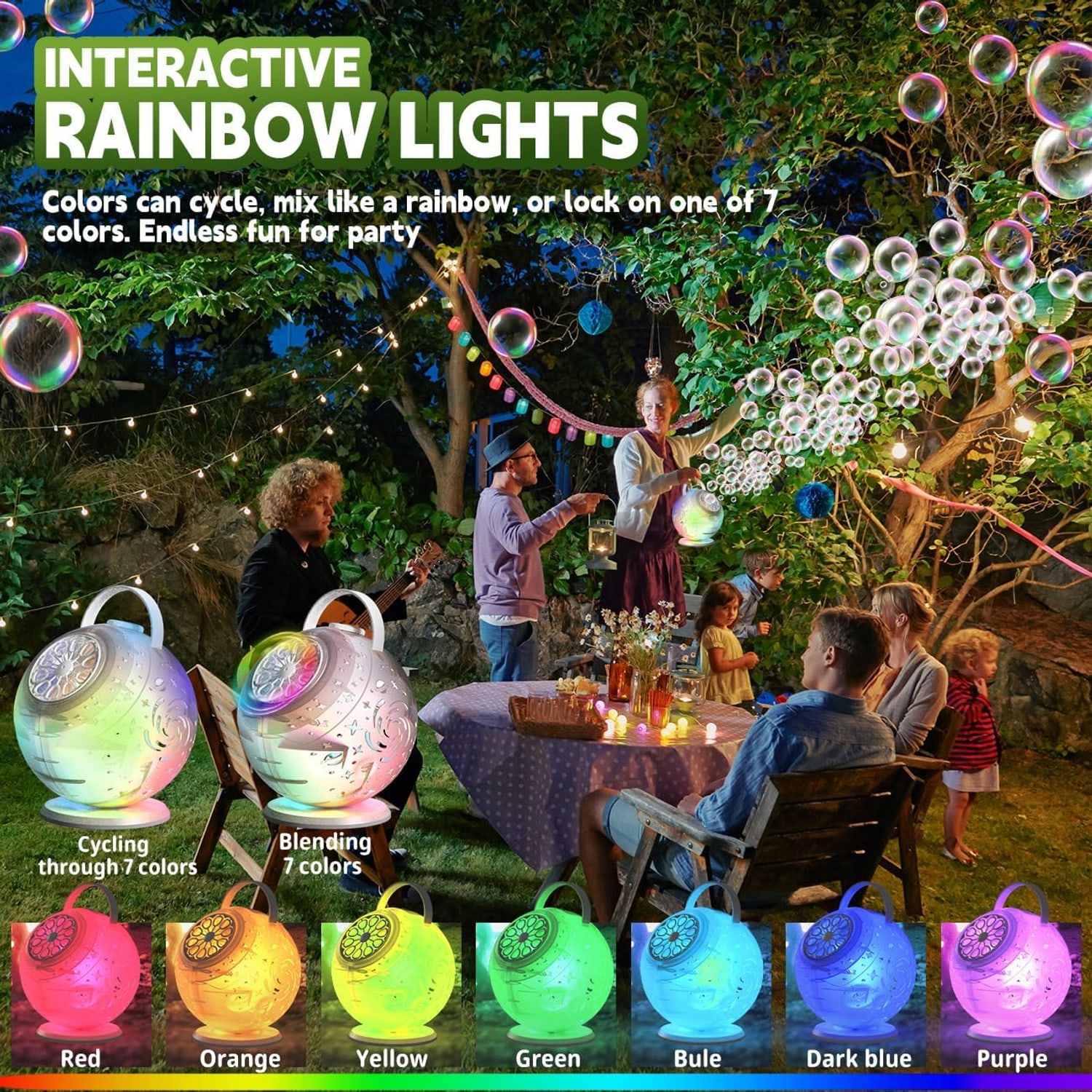
The second is the lighting. Nine colour cycling LEDs sit inside the housing and shine up through the bubble stream. In daylight you barely notice them. After sunset, they turn drifting bubbles into little floating lanterns, and it changes the mood of a back garden evening completely. If you are hosting a birthday that runs into the evening, this is the feature that gets the most comment.
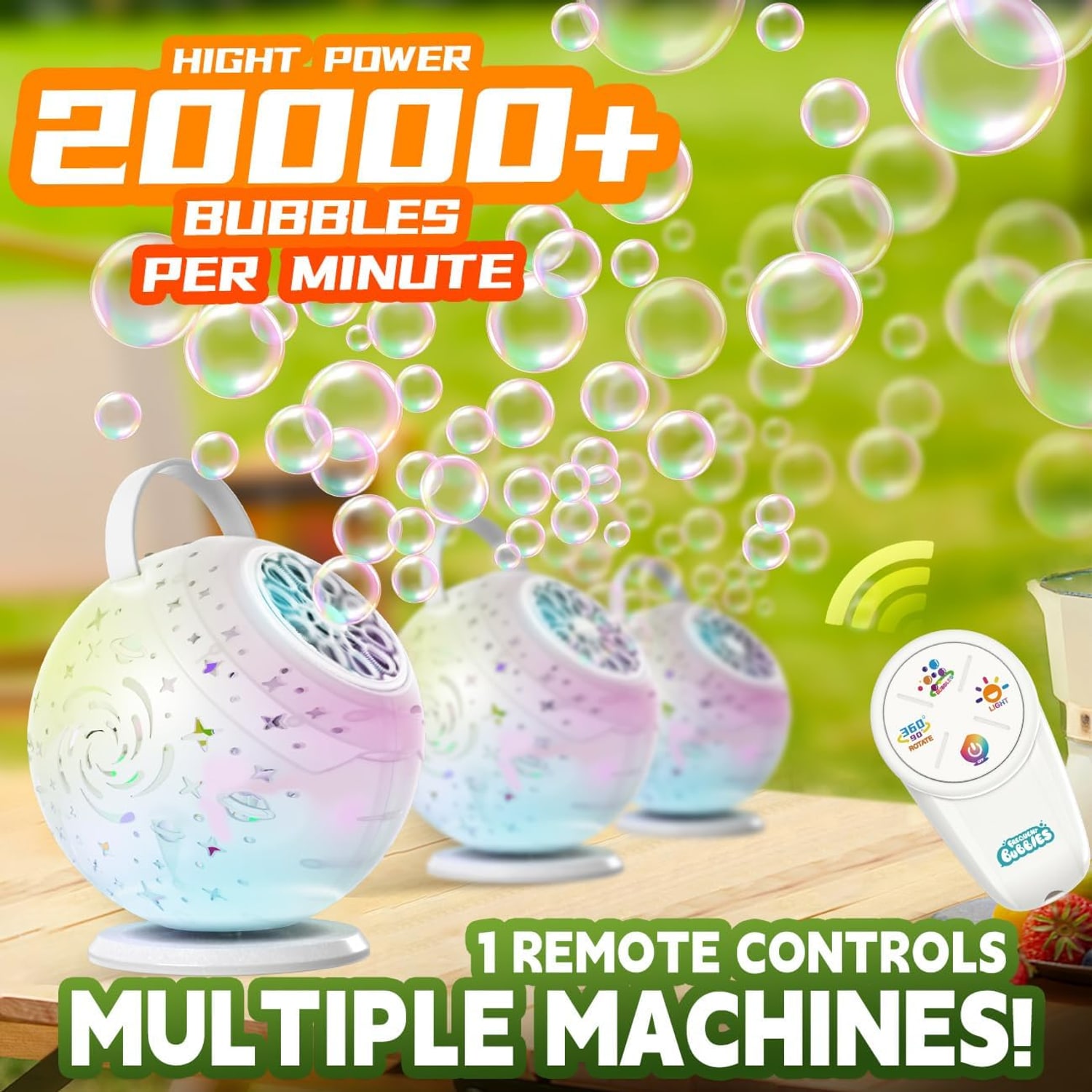
The remote ties both together. You can start and stop the machine from across the garden, flick through the light modes and switch between the rotation settings without walking over and crouching down. There is also a single button on the unit itself, so a child who just wants bubbles can press that and go. Two AA batteries for the remote are included.
Who this suits
This is a toy for ages 3 and up. It is not for children under three, because of the small parts and the liquid solution, and an adult should handle the mixing and charging regardless.
Beyond that, it suits a wide range of situations. Birthday parties are the obvious one. School fairs and community days work well because the machine draws a crowd without anyone having to run it. Family picnics and camping trips benefit from the cordless design. Plenty of people also use one for evening atmosphere at an adult gathering, where the LED lights do most of the work.
If you have a very small indoor space and no outdoor area at all, think carefully. Bubble solution leaves a slick film on hard floors, and that is a genuine slip risk on tiles or polished boards. A garage, a covered deck or a patch of lawn is the right home for it.
How to choose and how to set up
When you compare models, look at three numbers before anything else. Count the holes on the wand, because that drives output. Check the tank capacity, because that drives run time between refills. Check how it is powered, because that drives whether it works where you want to use it. A big bubble machine with a four hole wand will still produce fewer bubbles than a compact one with ten.
Setting up well makes a surprising difference. Mix the concentrate with water as directed and let it sit for a few minutes before pouring, so the foam settles. Place the machine with its back to any breeze, slightly above ground level if you can, on a step, a crate or a small table. Bubbles rise and drift, so starting them a bit higher gives them longer in the air.
If you are covering a large space, two units at opposite ends beat one unit cranked up. Keep them far enough apart that the streams meet in the middle instead of crossing paths.
Looking after it
Care is not complicated but it does need doing. Wipe the outside with a dry cloth. After each session, tip out the leftover solution rather than leaving it to sit, then rinse the tank with clean water and let it dry. Dried solution on the wand holes is the single most common reason a machine stops producing properly, and a thirty second rinse prevents it entirely.
Keep water away from the motor and the battery area. It is an outdoor toy, not a waterproof one, so bring it in from rain and keep it clear of sprinklers.
For storage, dry it out, pack the remote and both cables in the same box, and keep it indoors away from direct sun and frost. If it is going away for the winter, give the battery a top-up charge every few months so it does not sit flat.
The short version
A hand wand gives you minutes. A machine with ten holes, a 420ml tank and a rechargeable battery gives you an afternoon, and then another one next weekend. The rotation spreads bubbles where the kids actually are, the LED lights carry it past sunset, and the remote means you are not crouching in the grass every time someone wants a different colour.
Charge it the night before, mix the solution in advance, point it downwind and let it run. That is genuinely the whole technique.