
The complete guide
How to Choose a Large Four in a Row Game
The problem with "family game night"
Most games fail for the same two reasons. They take too long to set up, and the rules need a reader and a referee. By the time you have found the instruction booklet, sorted the cards and explained the scoring, half the table has drifted off to a phone.
Four in a row solves that in about ten seconds. Two colours. Drop a disc. Make a line of four. Everybody at the table already knows how to play, including the people who claim they do not like board games.
The catch with the standard version is size. Small grids and small discs make a game that is fiddly rather than fun. Pieces are hard to pick up, the grid is hard to read from across the table and bits disappear into the carpet. A large four in a row game fixes that by scaling everything up to a size that hands and eyes actually enjoy.
How this one works
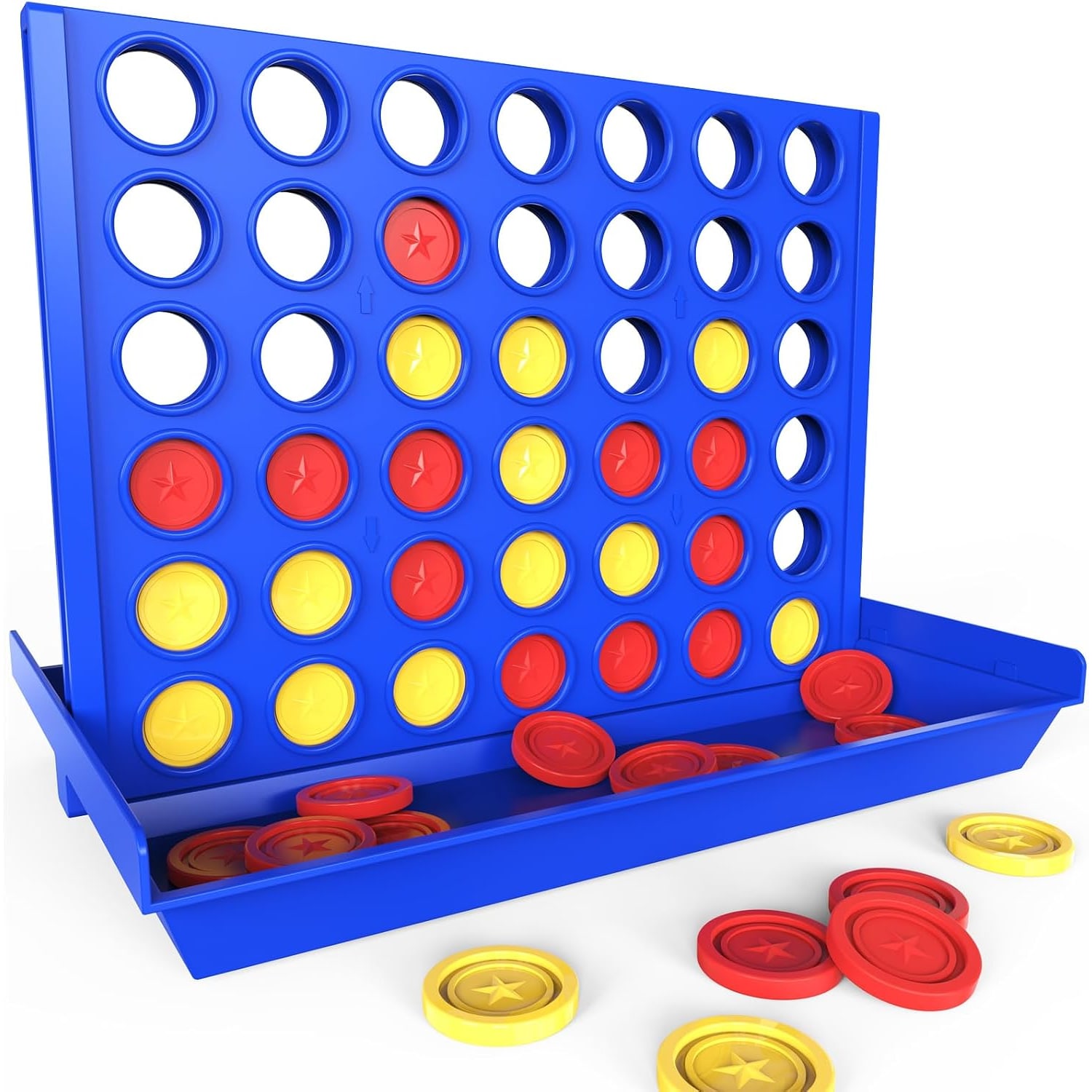
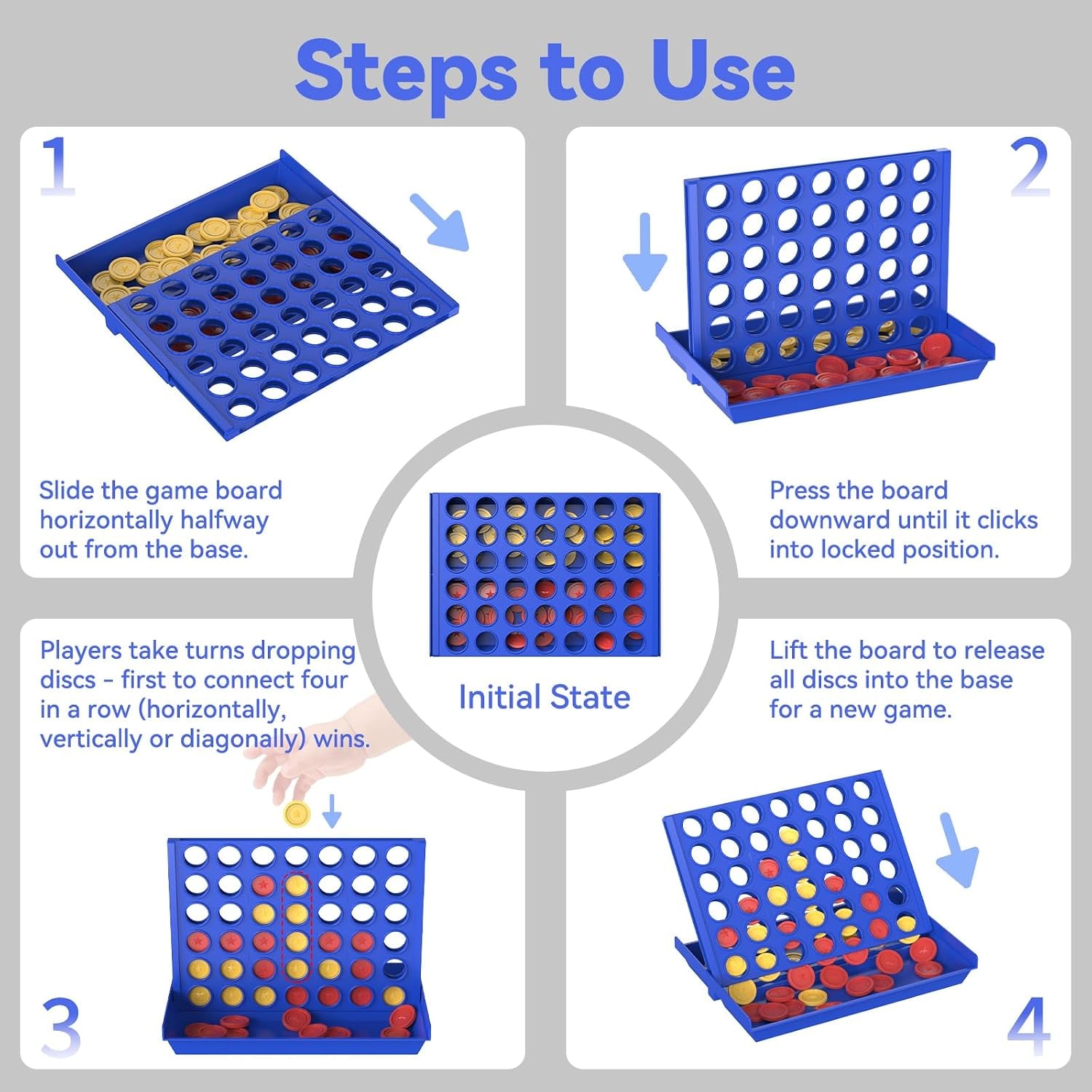
The set is one grid with a tray, plus six spare discs. The grid stands upright on a flat surface and has open columns running down it. Players take turns dropping a disc into any column they choose, and it falls to the lowest empty slot in that column. You cannot place a disc wherever you like, which is exactly where the strategy comes from.
The aim is four of your colour in a straight line. Across, up and down, or on a diagonal. First one there wins the round. If the grid fills with no line of four, it is a draw and you clear it out and go again.
There is no assembly, and the power source is listed as manual, which is a formal way of saying it runs on people. Nothing charges, nothing beeps and nothing updates.
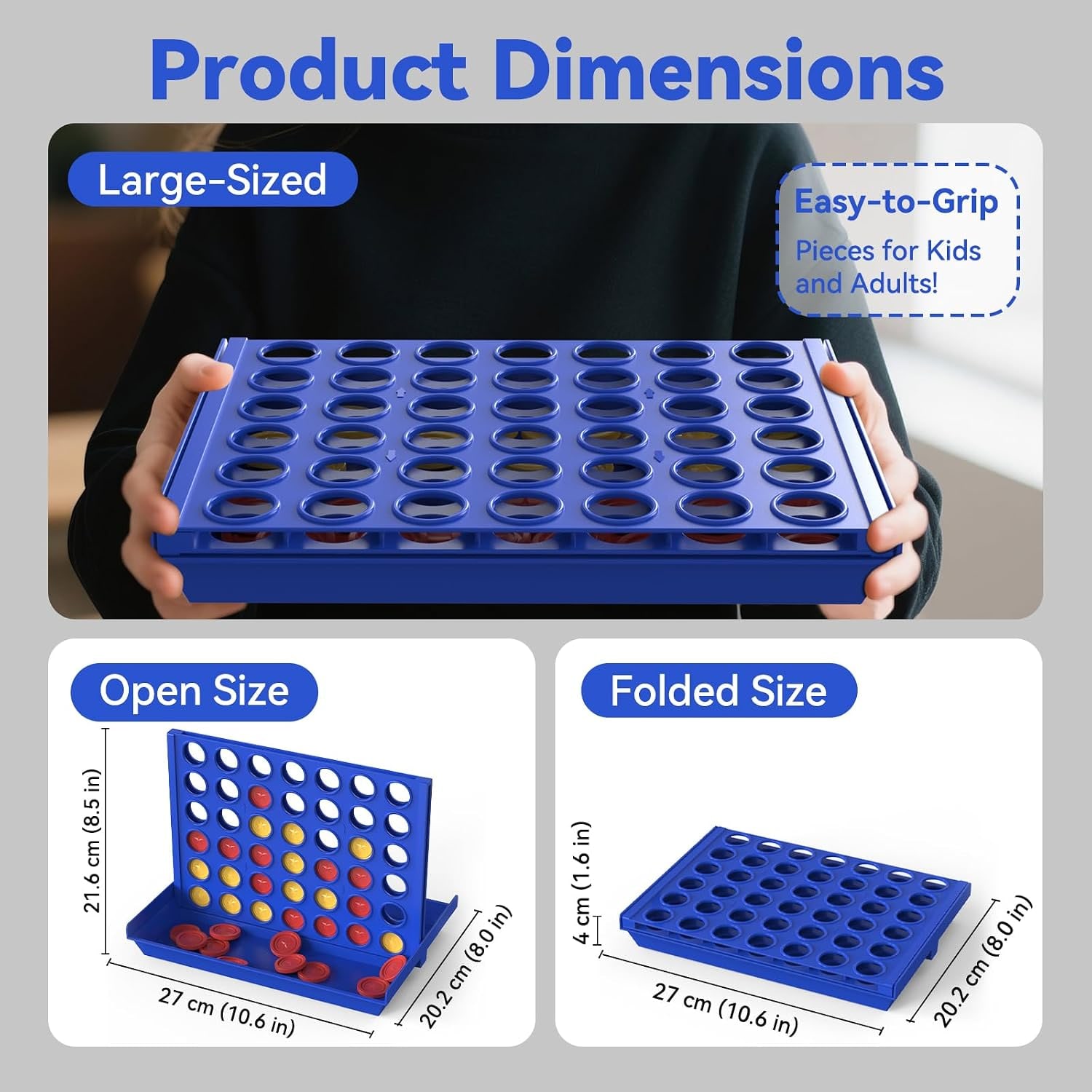
The set measures 20 x 25 x 20 cm packed and weighs 390 g. The material is plastic with smooth edges, and the maker describes it as portable with all-in-one storage.
Who it suits
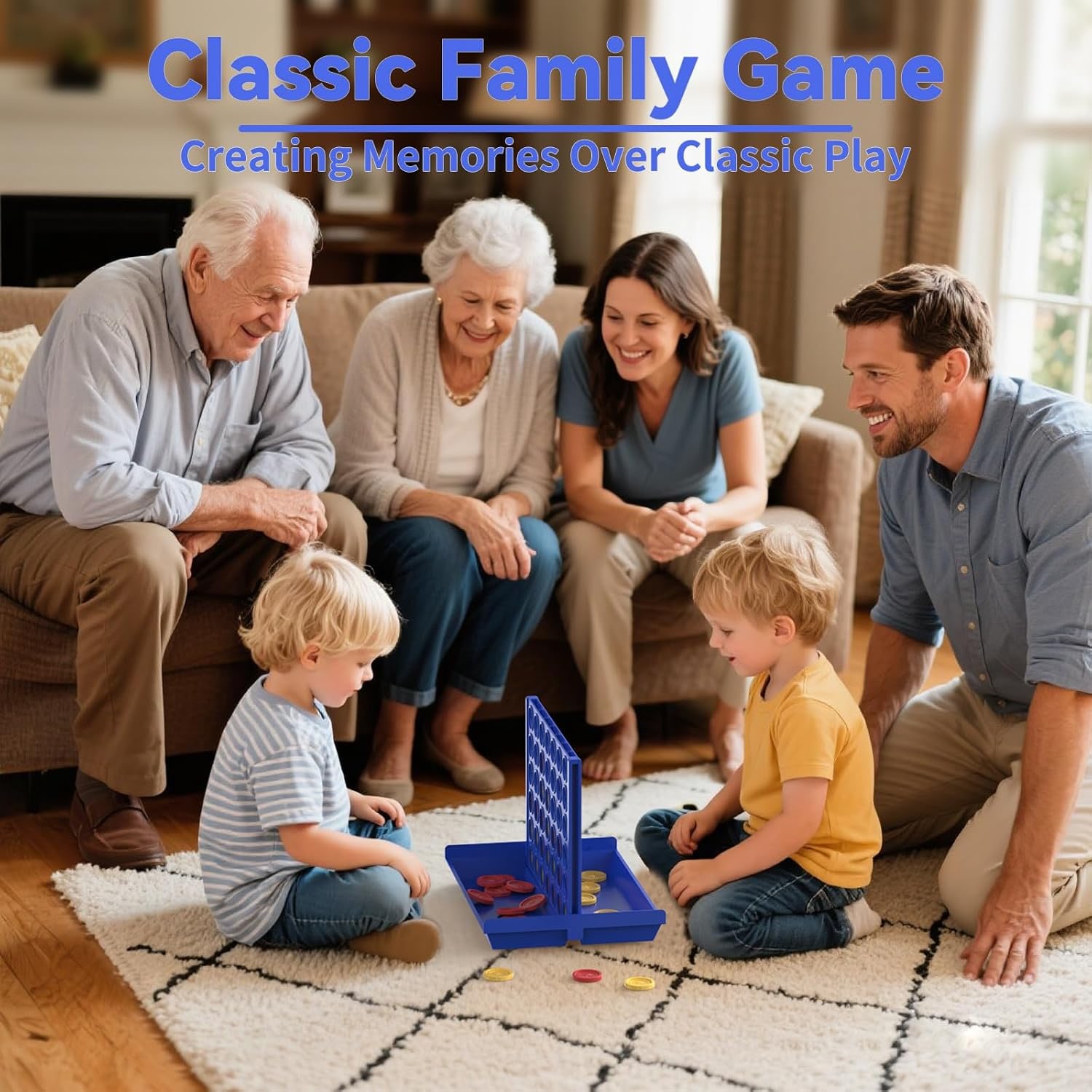
Mixed-age households. This is where it earns its keep. A five-year-old and a grandparent can play the same game on roughly even terms, because the kid is playing a colour-matching game while the adult is playing a two player strategy game. Both are having a good time and neither feels patronised.
People who want short games. A round lasts a few minutes. That sounds like a drawback until you realise it means you can play five rounds while dinner cooks, or one round before school, or best-of-three while waiting for a ferry.
Travellers and campers. At under 400 g it does not fight for space in a bag. It makes a good camping game for families and a sensible picnic table game, because it does not need a flat screen, a power point or good weather at the exact right moment.
Classrooms and clubs. As a classroom recess game it is hard to beat. Two students, a corner table, no supervision needed beyond the usual, and the game resets itself in seconds.
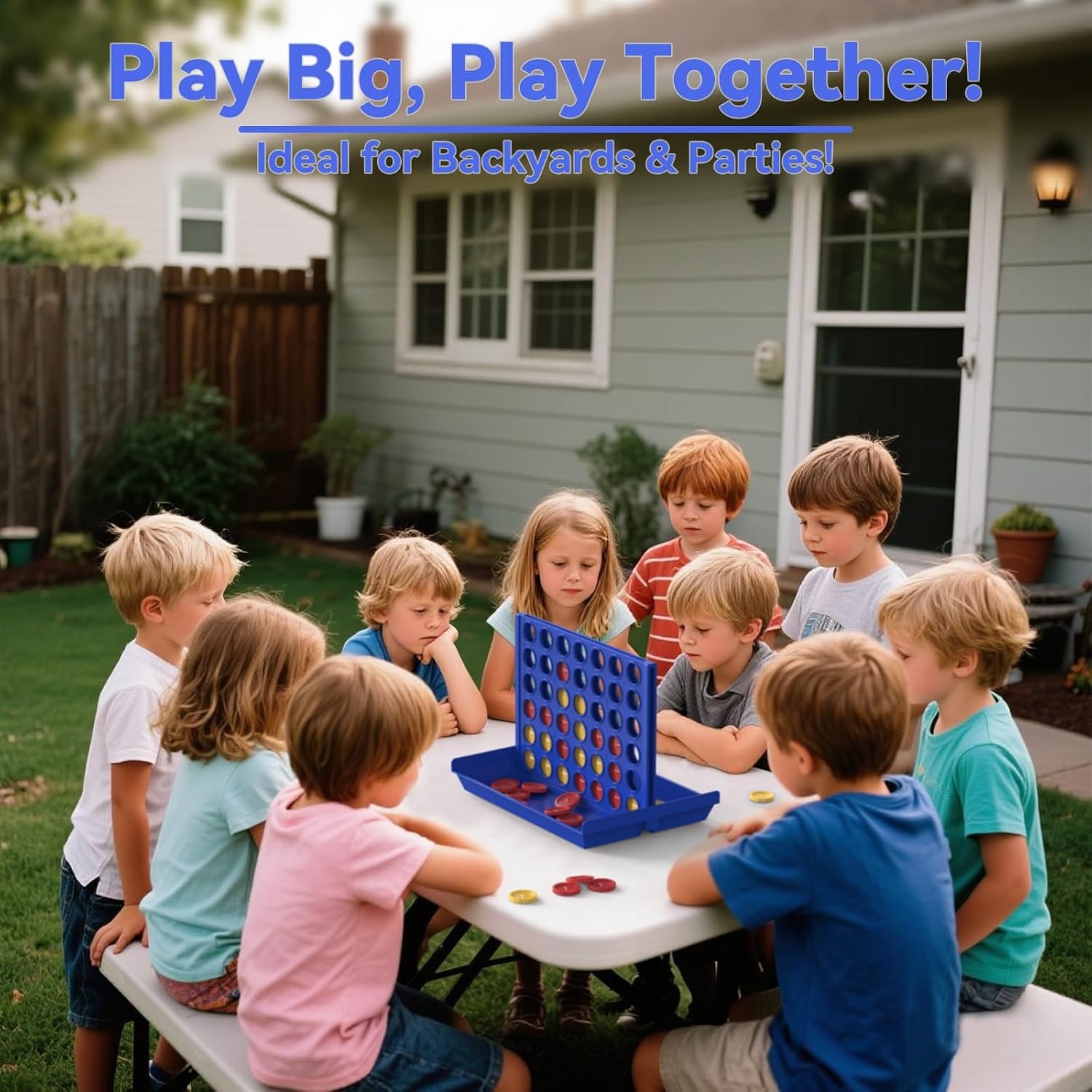
Hosts. Leave it out as a party game for adults and watch how quickly a quiet corner turns into a rolling challenge ladder. The short rounds mean nobody gets stuck.
What to look at when you are choosing
Size of the grid and discs
This is the main thing. A bigger format means you can see the whole board from your seat and pick up discs without pinching. If you are buying for a household that includes young children or anyone with less dexterity in their hands, go bigger rather than smaller. The large four in a row game format exists for exactly this reason.
How it packs away
A game you have to hunt for is a game you do not play. All-in-one storage, where the discs live in a tray attached to the set, is worth more than any clever feature. This one keeps the grid and tray together, which is the difference between a game that stays in rotation and one that ends up at the back of a cupboard with half its pieces gone.
Spare pieces
Six spare discs is a quietly practical inclusion. Over a year of real use, a couple of discs will go missing. Without spares, that is the end of the game. With them, it is a shrug.
Weight and portability
If you want a portable travel board game rather than a cupboard game, weight matters. 390 g is light. You can hand it to a child to carry and not think about it again.
Surface requirements
A standing grid needs a flat, steady surface. Kitchen table, coffee table, deck table, camp table. On soft grass or an uneven picnic blanket it will not sit well, so plan for a hard surface wherever you intend to play.
Getting better at it
Four in a row looks like a children's game and plays like a puzzle. A few things worth knowing.
Start in the centre columns. The middle of the grid takes part in more possible lines than the edges, so an early centre disc is worth more than an early corner one.
Count before you drop. Because discs fall to the bottom of a column, placing one often hands your opponent the slot directly above it. Check what you are building for them, not just for yourself.
Make two threats at once. The winning move in most games is creating two separate three-in-a-rows that both complete in the same turn. Your opponent can only block one.
Block early. If you see three of their colour with an open end, deal with it now. Waiting one turn to finish your own line usually loses the round.
Care and keeping it complete
Care is simple. Wipe the grid and discs with a soft damp cloth after sandy or sticky sessions, then dry them before putting the game away. Skip harsh cleaners, and keep all parts out of the dishwasher.
The real maintenance task is not cleaning, it is counting. Get into the habit of clearing the grid straight into the tray at the end of a session. Do that and the set stays complete for years. Skip it and you will be finding discs behind the fridge in 2029.
Store it somewhere out of direct sun and away from heaters. Plastic holds up well, but long heat exposure is not kind to anything.
A note on gifting
It is an easy present. The box needs no wrapping heroics, the recipient does not need batteries on the day, and there is no learning curve. Within two minutes of opening it, people are playing. That is rarer than it should be.
It also works well for a shared household gift, the sort where you want one thing that several people will actually use rather than one thing that one person stores.
The short version
If you want a family board game for kids and adults that sets up fast, packs down small and gets played more than once, this is a sensible pick. It is a two player game, made of plastic, 20 x 25 x 20 cm packed, 390 g, with one grid and tray plus six spare discs. No assembly, no batteries.
The appeal is not complexity. It is that the rules fit in one sentence, the rounds fit in a few minutes, and the box fits in a bag. Suitable for ages 3 and up.