

The complete guide
Choosing a Tabletop Easel with Drawer, A Practical Buyer's Guide
The problem with painting at the kitchen table
Very few people who paint at home have a studio. What they usually have is a bit of the dining table, a desk that also holds a laptop, or a corner of a bedroom. And the problem is never really the lack of room. It is the setup time.
You want to paint for half an hour. First you find the brushes, which are in two different jars and one pencil case. Then you prop the sketchbook against a stack of books so it sits at some kind of angle. The paint tubes roll. Someone needs the table at six. By the time you have everything arranged, the half hour is gone.
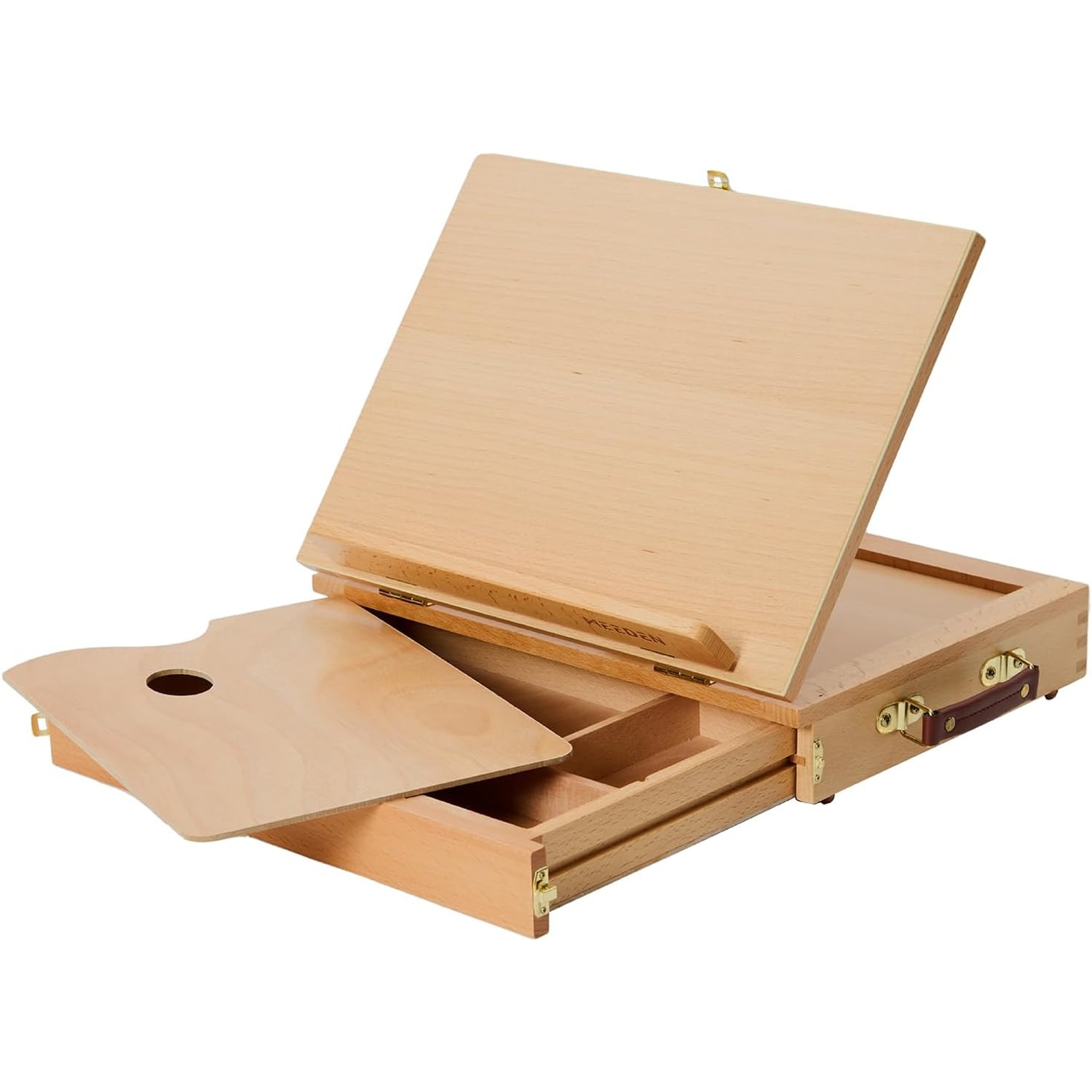
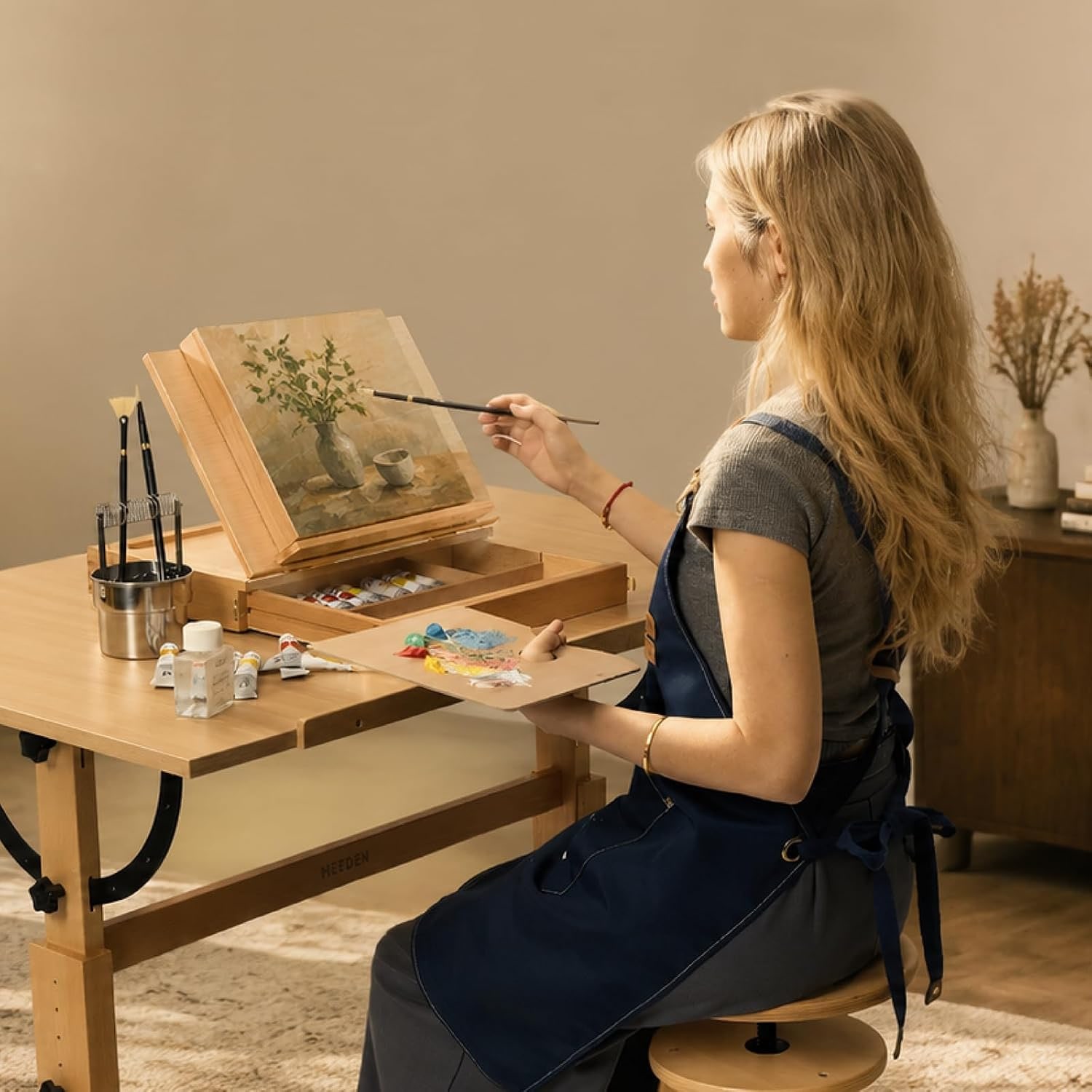
A tabletop easel with drawer solves the small, annoying version of that problem. The angle is already built in and adjustable. The supplies live under the easel in a divided drawer. You lift the lid, you work, you fold it away. That is the whole pitch, and for a lot of people it is enough to turn "I should paint more" into actually painting more.
How this one works
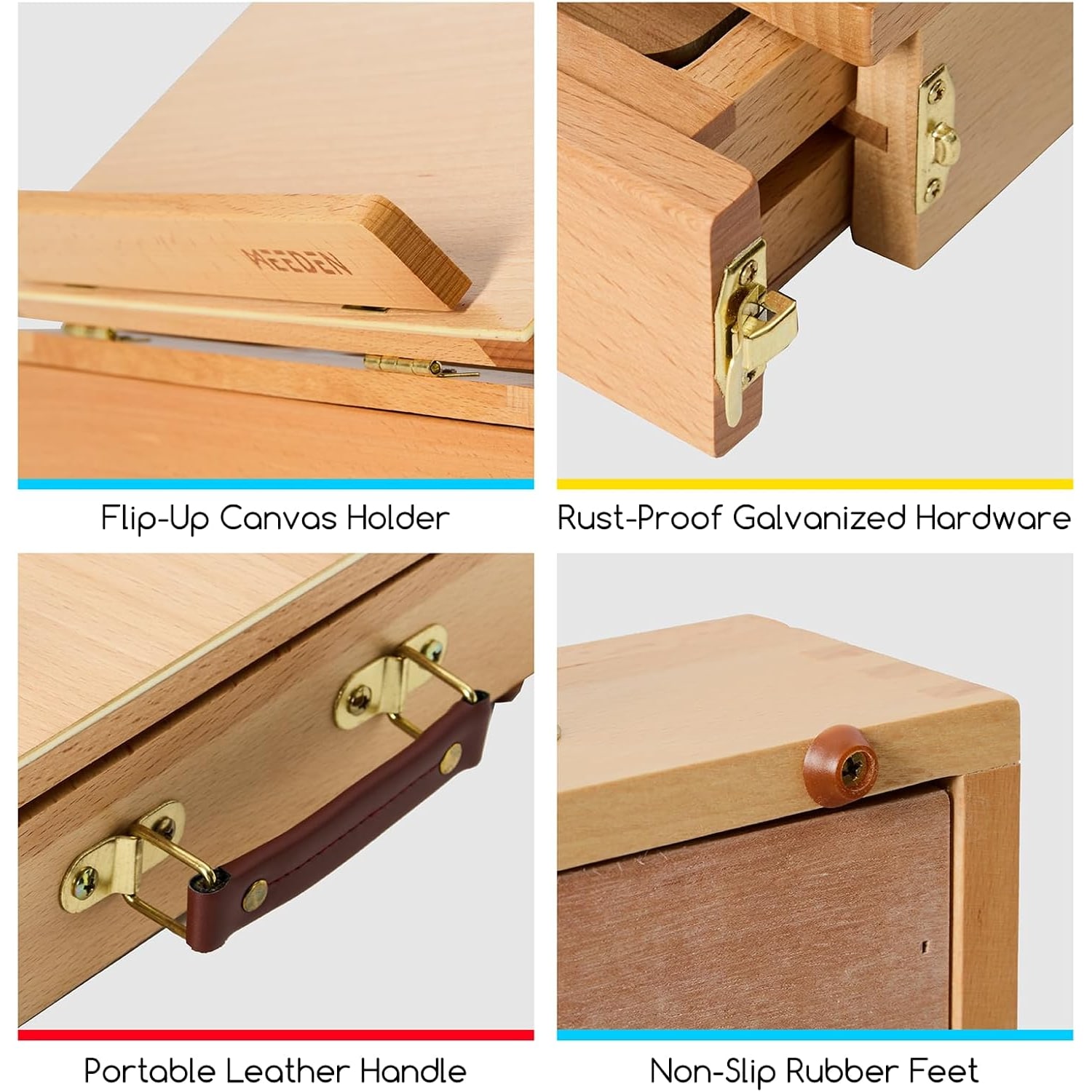
The frame is beech, a hardwood with a tight grain that machines cleanly and holds screws without stripping. It is the same timber that gets used for chair legs and tool handles, which tells you something about how it handles repeated stress. The joints are reinforced and the hardware is anti-rust, so the hinges and the mast should stay tight rather than developing play after a few months.
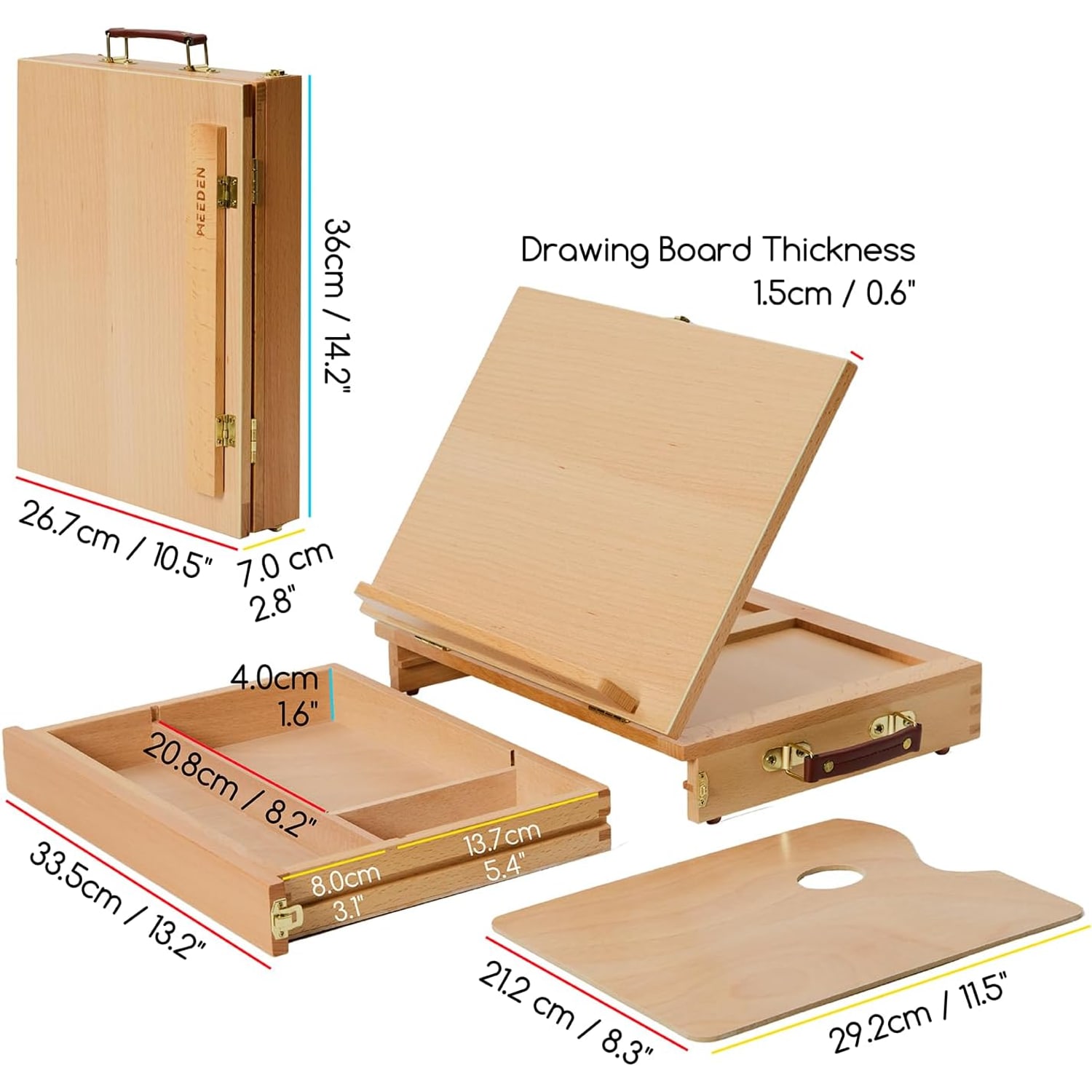
Dimensions are 33.7 cm deep, 26 cm wide and 5.1 cm high when it is closed. That 5.1 cm figure is worth noticing. Folded, this is thinner than most hardback books, so it slides onto a shelf, into a cupboard, or flat into the bottom of a tote bag. Weight is 1.68 kg, which is comfortable to carry in one hand using the leather handle on the side.
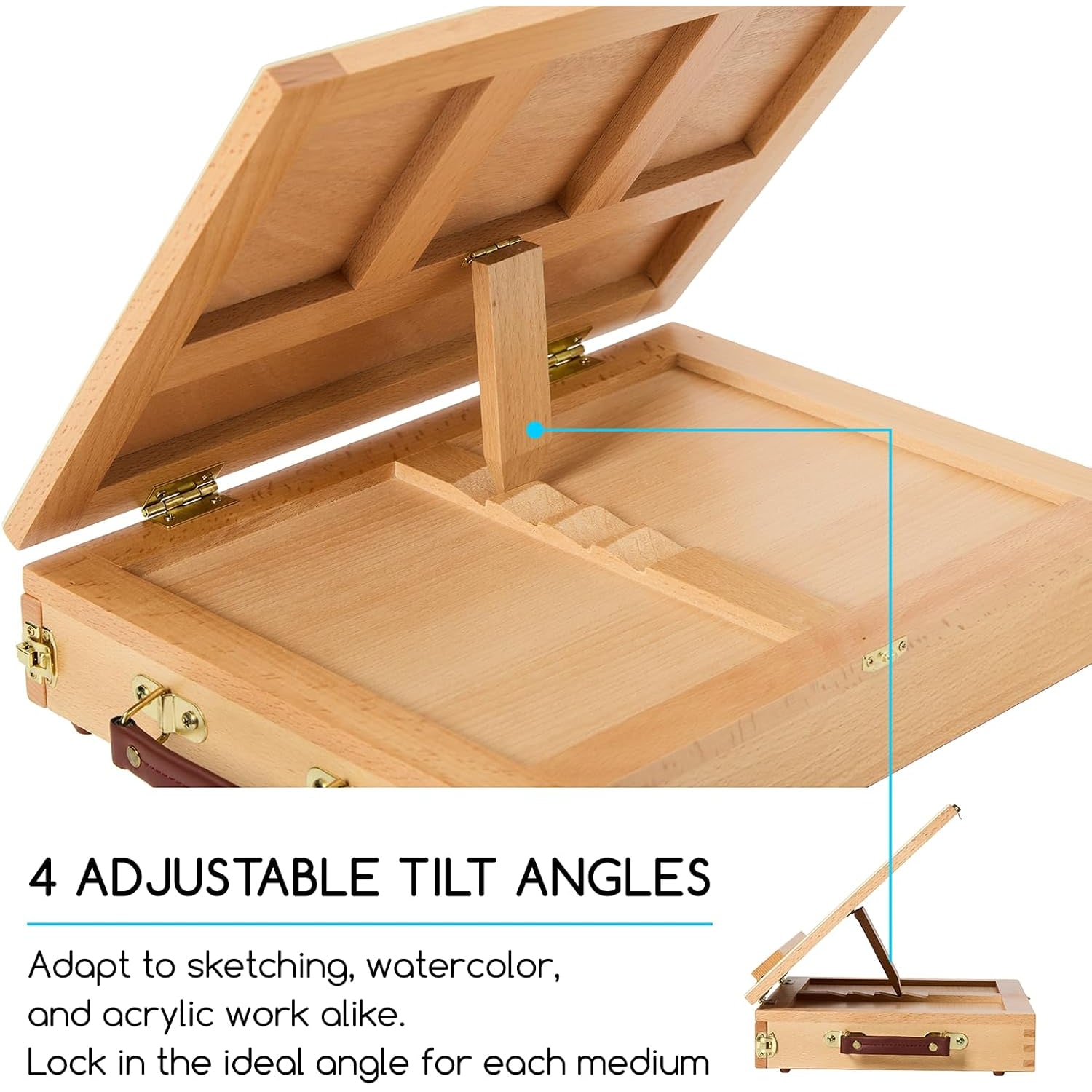
There are four tilt settings. In practice you use them like this. The flattest setting is for watercolour, because a shallow angle gives you control over how a wash spreads before gravity takes over. The middle settings suit general drawing and mixed work. The steepest setting brings the surface close to vertical, which is what you want for sketching and acrylic painting, since a near-vertical surface keeps your eye square to the work and stops you unconsciously compressing the perspective.
The canvas support slides up and down to take different heights, so a small stretched canvas, an A4 sketchbook or a rigid art panel all sit securely. Rubber feet on the base stop it creeping across the table.
Underneath is the drawer. It is divided inside, so tubes sit in one section and brushes in another instead of all sliding into a single corner. A wooden palette with a thumb hole comes in the box and tucks into the drawer when you are done. Nothing needs assembling. You open the box, set your angle, and start.
Who it actually suits
People short on space. If your painting surface doubles as somewhere you eat dinner, a floor easel is not realistic. A table model that folds to 5 cm is.
Beginners putting a first kit together. Starting out is already a long shopping list. Having the palette included, and having a tidy place for everything else, removes two decisions. Anyone hunting for the best easel with storage drawer as a first purchase is usually after exactly this combination.
Students who move between places. The handle and the folding frame mean it goes to class and comes home again. Your supplies travel with the easel rather than in a separate bag you forget.
Anyone who paints in short sessions. This is the real audience. If you paint for three hours at a stretch on a Saturday, setup time barely matters. If you paint for twenty minutes here and there, setup time is the whole battle.
It is less suited to anyone working large. A table easel has a sensible ceiling on canvas size, and once you go past roughly A2 you want a floor easel so you can step back and see the whole thing from a distance.
How to choose between table easels
A few things separate a good table easel from a frustrating one.
Does it have storage, and is the storage divided? Plenty of basic table easels are just a frame. They work, but your supplies still live somewhere else. A drawer changes the habit. Divided storage is better again, because an undivided drawer becomes a jumble within a fortnight.
How many angles, and how do you change them? Two angles is limiting. Four covers the realistic range from flat watercolour work to near-vertical sketching. Check that changing the angle does not require tools.
What is it made of? Pine is cheaper and lighter but dents and strips screws more readily. Beech costs more and lasts longer. For something you fold and unfold constantly, the harder timber earns its place.
Does it fold, and how thin? Some easels that claim to fold still end up a bulky wedge. A folded thickness of 5.1 cm is genuinely flat.
Are there non-slip feet? This sounds minor until you are pressing a brush against a canvas and the whole easel walks towards the edge of a glossy table.
Is anything included? A matched palette saves a purchase and, more usefully, saves a decision.
Looking after it
Beech is tough, but it is still timber. Wipe it with a dry or barely damp cloth and dry it immediately. Never soak the frame or leave it sitting in water or solvent.
Clean the palette while the paint is wet if you can. Dried acrylic bonds hard to wood and removing it tends to take some of the finish with it. A quick wipe at the end of each session is far less work than a scrape later.
Keep the easel out of direct sunlight and away from heaters and radiators. Dry heat is what causes timber to shrink and joints to loosen. Store it folded somewhere dry rather than in a damp garage or shed.
Every few months, check the hinges and the hardware. If anything has worked loose, a quarter turn with the right screwdriver puts it right. Doing that occasionally is the difference between an easel that lasts years and one that develops a wobble.
If you paint with oils, lay a cloth under the easel. Solvents and raw timber do not get along, and a drip you did not notice will leave a mark.
Table easel or floor easel
Worth settling this before you buy. A floor easel gives you height, takes large canvases, and lets you work standing with room to step back and assess. It also occupies a permanent square metre of your home and is awkward to move.
A table easel gives you an adjustable surface at desk height, packs away in seconds, and travels. The trade-off is canvas size and the fact that you are mostly sitting.
If you are painting large and you have a dedicated room, buy the floor easel. If you are painting small to medium, sharing the space with other household life, or you want something that goes to a class, the table easel is the better tool. Plenty of people eventually own both and use the table one far more often than they expected.
The short version
This is a beech tabletop easel, 33.7 by 26 cm and 5.1 cm thick folded, weighing 1.68 kg. It has four tilt angles, a divided storage drawer, a wooden palette included, non-slip rubber feet and a leather carry handle. It arrives assembled.
What it is really for is removing the friction between wanting to paint and actually painting. The angle is set. The brushes are in the drawer. The whole thing folds flat when dinner needs the table. If that sounds like the specific obstacle standing between you and more finished work, this is a sensible thing to have on the shelf.