
The complete guide
How to Choose a Collapsible Storage Box with Lid and Divider
The pile that never quite goes away
Every home has one. A corner of the lounge, the foot of a bed, a strip of hallway where things collect. Soft toys, library books, a blanket, half a costume. You tidy it on Sunday and by Wednesday it is back, because the things that live there do not have a proper home. They have a floor.
That is the problem a lidded storage box solves, and the reason it works is boring but real. People put things away when putting them away is easy. If the answer is "carry it upstairs, open the wardrobe, move two things, slot it in", the answer is actually "leave it on the floor". If the answer is "lift the lid, drop it in", things get put away.
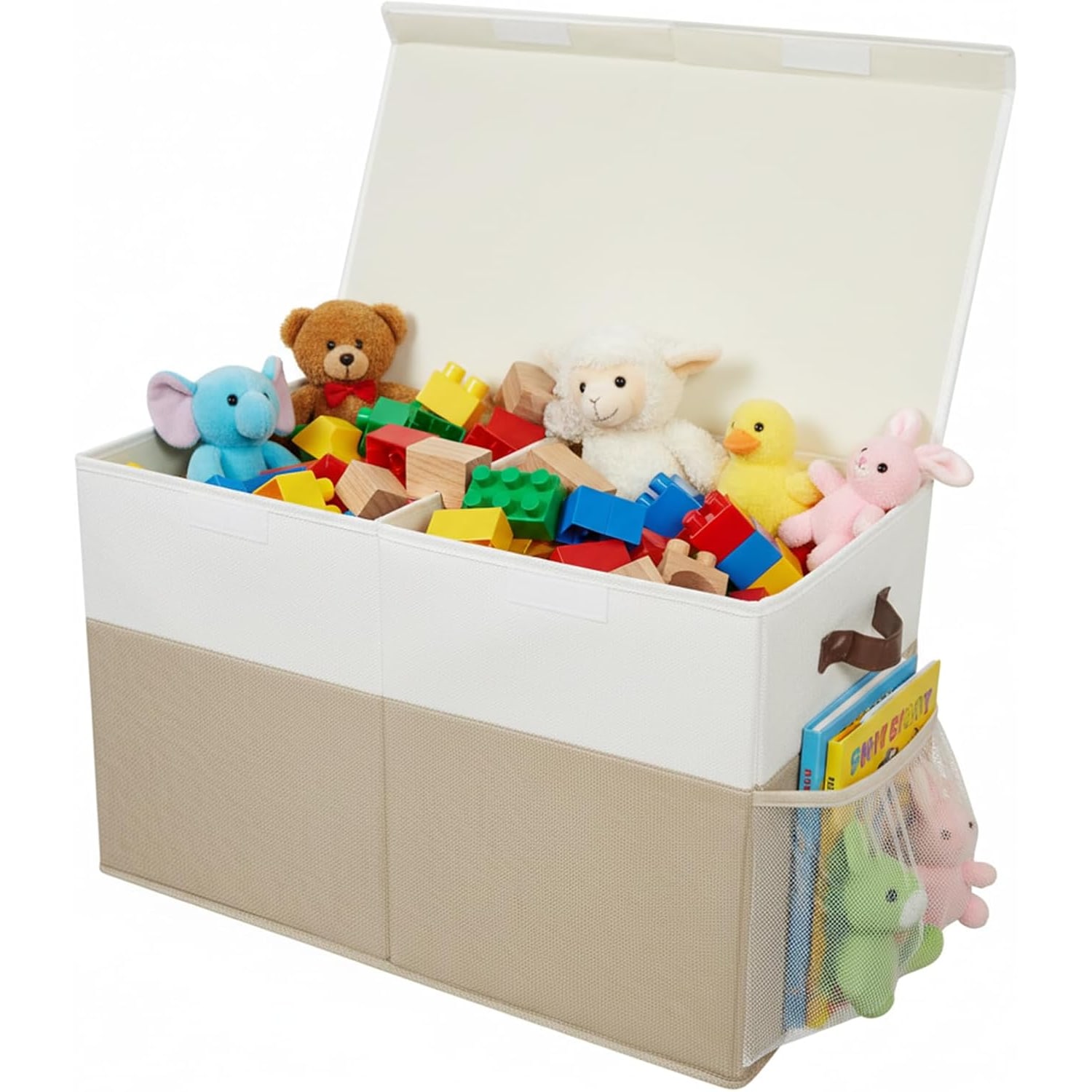
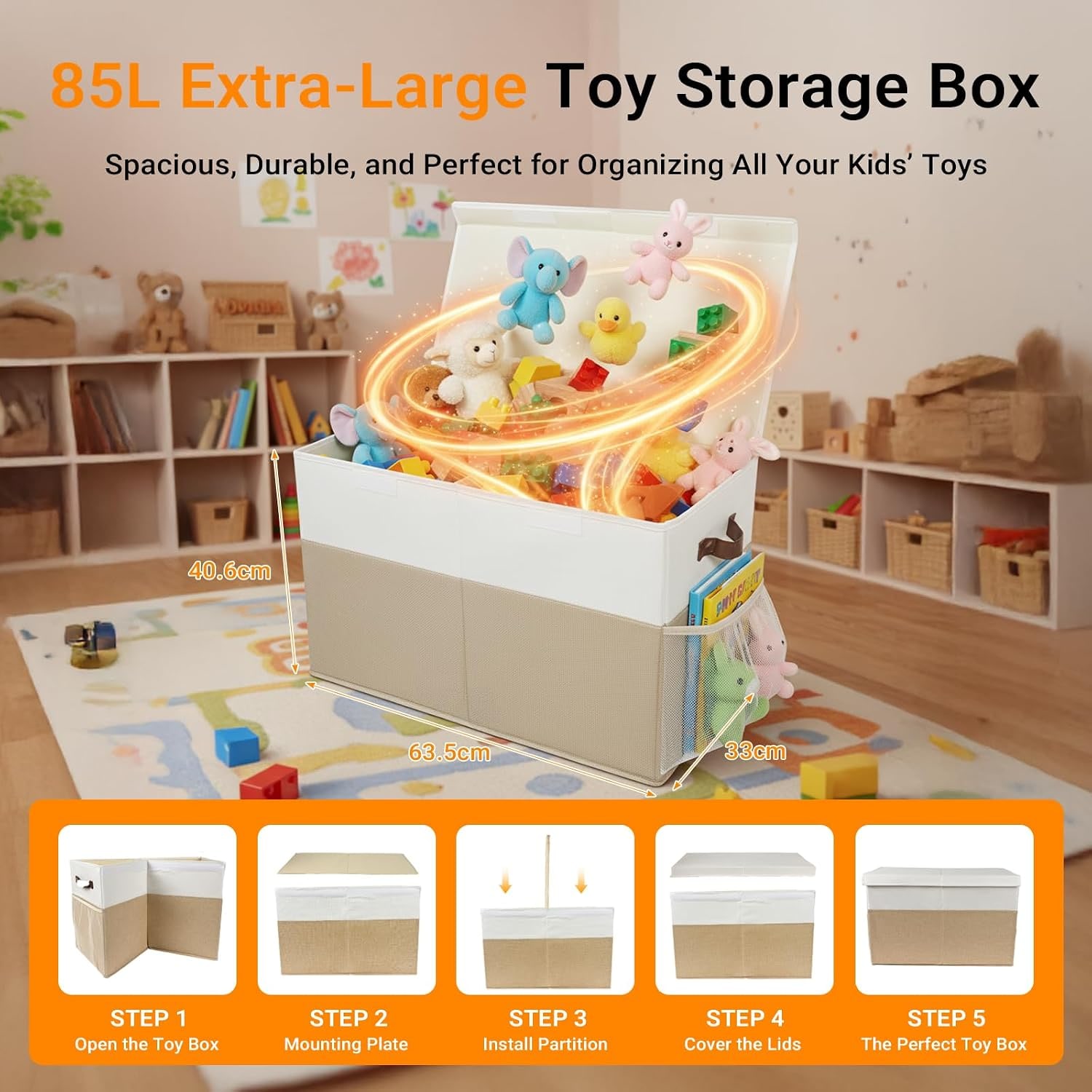
An 85 litre box with a lid and a divider is big enough to matter. It takes a whole evening's worth of mess in one sweep, closes, and the room looks sorted. That is a different experience from an open basket, where you can still see everything you just tidied.
What the divider actually does
A single big box has one flaw. Everything ends up at the bottom in a tangle, and finding one specific thing means emptying the lot onto the floor, which undoes the tidying you just did.
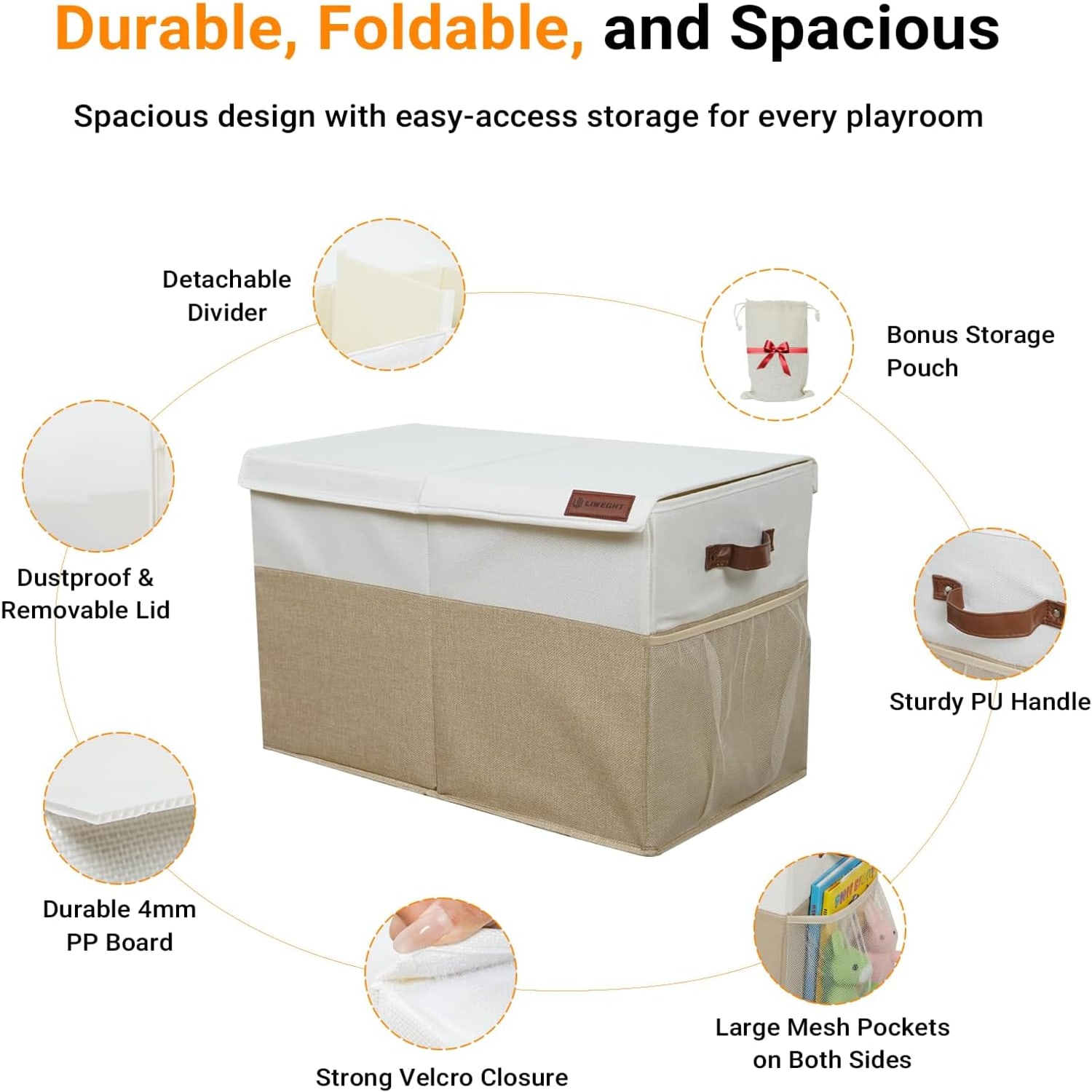
The divider in this box creates three compartments, one large and two middle sections. That changes how the box behaves day to day. The large section takes the bulky, soft, forgiving stuff: plush toys, a spare throw, dress-ups. The two middle sections take the things you want to find again: books, a set of blocks, hair things, chargers, craft supplies.
It also makes the box easier for children to use. "Soft things on this side, books on that side" is a rule a five-year-old can follow. A single open bin has no rule, so nothing gets learned and you end up doing the sorting yourself every time.
If you need one big open space instead, the box comes apart and reconfigures, so the divider is not a permanent decision.
Why folding matters more than people expect
Storage that cannot be stored is a strange thing to own. Plenty of rigid boxes, crates and wooden toy chests do a fine job until the day you do not need them, and then they sit there taking up as much room empty as they did full.
This one folds flat to 42 by 5 by 33 centimetres and weighs 1.25 kilograms. Five centimetres thick is nothing. It slides behind a wardrobe door, under a bed, down the side of a dresser or into the back of a cupboard.
That matters in a few specific situations. If you rent and move every year or two, flat-packing your storage is a genuine relief. If your storage need is seasonal, holidays, a visiting cousin, winter blankets, you can bring the box out and put it away again. And if you are buying two or three and are not sure you need all of them yet, the spares cost you almost no space while you decide.
Choosing a size and a quantity
Capacity numbers are hard to picture, so here is a rough translation. 85 litres is about the volume of a large suitcase. In practice that is a generous armful of soft toys, or a couple of folded single duvets, or a serious stack of picture books with room left over.
For most rooms, one box handles the daily clutter. Two makes sense when you want to separate by owner (one child's things in each) or by type (toys in one, linen in the other). Because the colouring is plain beige and white, two sitting side by side look like a deliberate pair rather than a pile of bins.
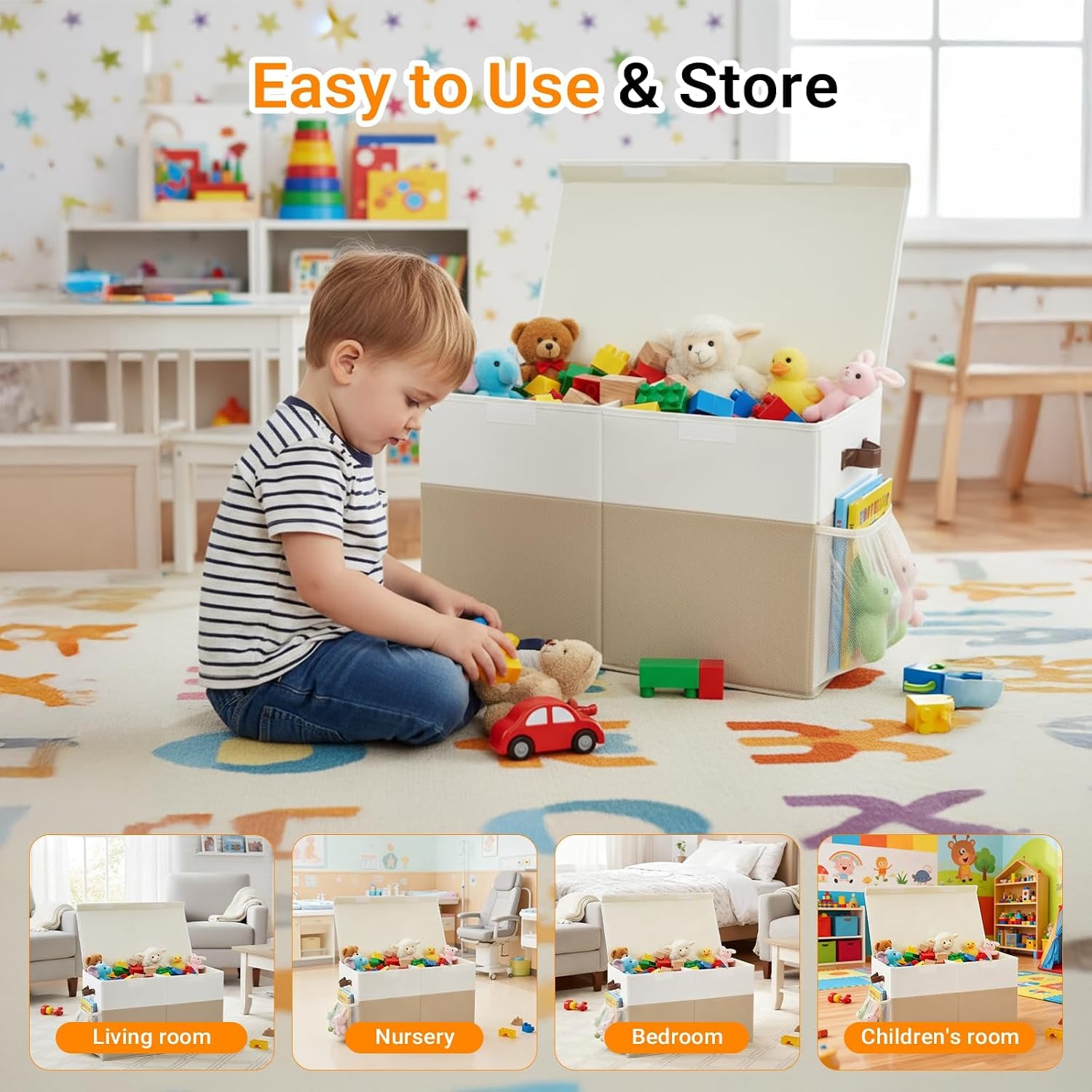
Think about where it will sit before you order. Along a wall under a window, at the end of a bed, in the base of a wardrobe and beside a sofa are all common spots. Measure the gap. If the space is narrow, two boxes in a row down a hallway often works better than one in the middle of a room.
Where it suits, and where it does not
It is an indoor box. The material is polyester and it is listed as not water resistant, so a garage floor, a covered patio, a laundry next to a washing machine or a damp basement are poor homes for it. Steady damp is worse than a one-off spill, since fabric and board hold moisture.
Good spots are the ones you would expect. Lounges, bedrooms, hallways, home offices, wardrobes, spare rooms, study nooks. Anywhere dry and indoors where you want the clutter closed off rather than on display.
On the look of it, beige and white in a solid pattern is a safe choice precisely because it is quiet. Bright primary-coloured bins announce themselves and date quickly. Neutral fabric reads as furniture. That is why this kind of box ends up in adult rooms as often as children's rooms, used for the best wardrobe storage box job (rotating seasonal clothes) or holding craft supplies in a study.
Living with it
The lid lifts off rather than hinging, which is a small design choice with a real effect. A hinged lid can swing shut on fingers and gets in the way when you are loading up. A lift-off lid comes away, sits on the floor or a chair while you fill the box, and drops back on when you are done. It also means the lid stays flat and square rather than slowly bending at a hinge point.
The side handles are the other everyday feature. A loaded box is heavier than an empty one, obviously, but the point of handles is control rather than strength. You can lift it clear of the carpet instead of pushing it, which saves the fabric base and your skirting boards.
The mesh side pocket is the kind of small thing you only appreciate after a week. Small loose parts, the bits that come with a larger toy, a remote, a pack of cards, all have somewhere to live instead of sinking to the bottom of the main compartment.
Keeping it in good shape
Care is simple. Wipe the outside with a damp cloth and a little mild soap, then let it dry properly before you refill it. Do not soak it and do not put it through a washing machine, since there are board panels inside the fabric that will not survive that.
If something spills inside, empty the box, blot rather than rub, and leave it open to air. Keeping it in a dry spot does most of the work of looking after it.
When you fold it away, take the lid off first and store the box flat rather than leaning it on edge under weight. That keeps the panels from creasing where you do not want a crease.
The short version
If your main problem is visible mess in a room you also want to look reasonable, a lidded box beats an open basket. If your problem is that everything gets lost at the bottom, the divider is the feature to pay attention to. If you move house, rent, or only need the storage part of the year, the fact that it folds to five centimetres thick is worth more than it sounds.
Buy one and see how fast it fills. Most people come back for a second.