
The complete guide
How to Choose Cube Storage Bins for Toys, Clothes and Everything Else
The real reason the playroom never stays tidy
Most tidying systems fail for the same quiet reason. There is nowhere obvious for things to go. A shelf with loose toys on it looks like a job, and jobs get put off. A child standing in front of that shelf has no idea where the dinosaur belongs, so the dinosaur stays on the floor.
Cube storage bins solve this by turning a vague instruction into a specific one. "Tidy up" is hard. "Put the cars in the red bin" is easy, and a four-year-old can do it without supervision. Six bins means six categories, which is about as many as most households actually need.
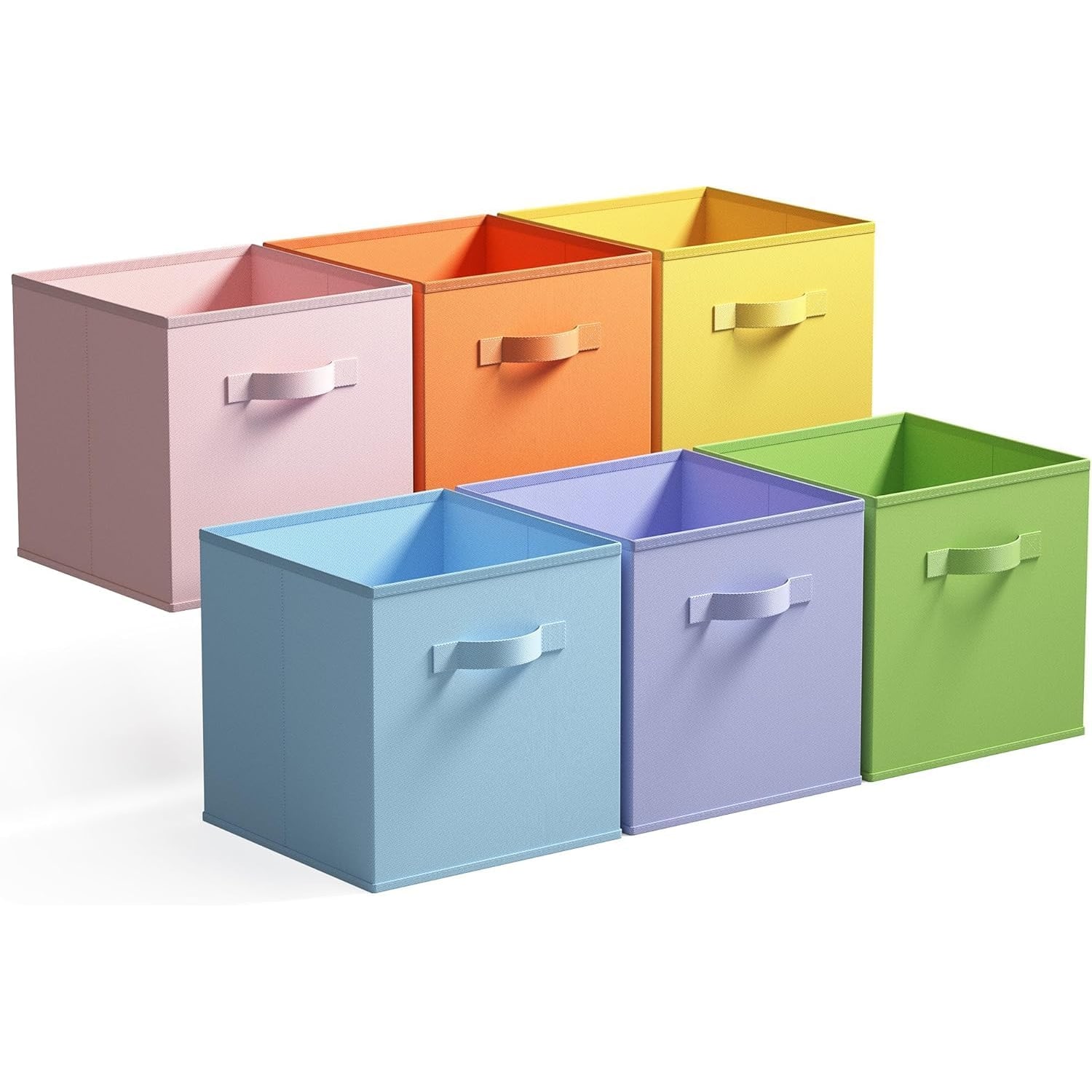
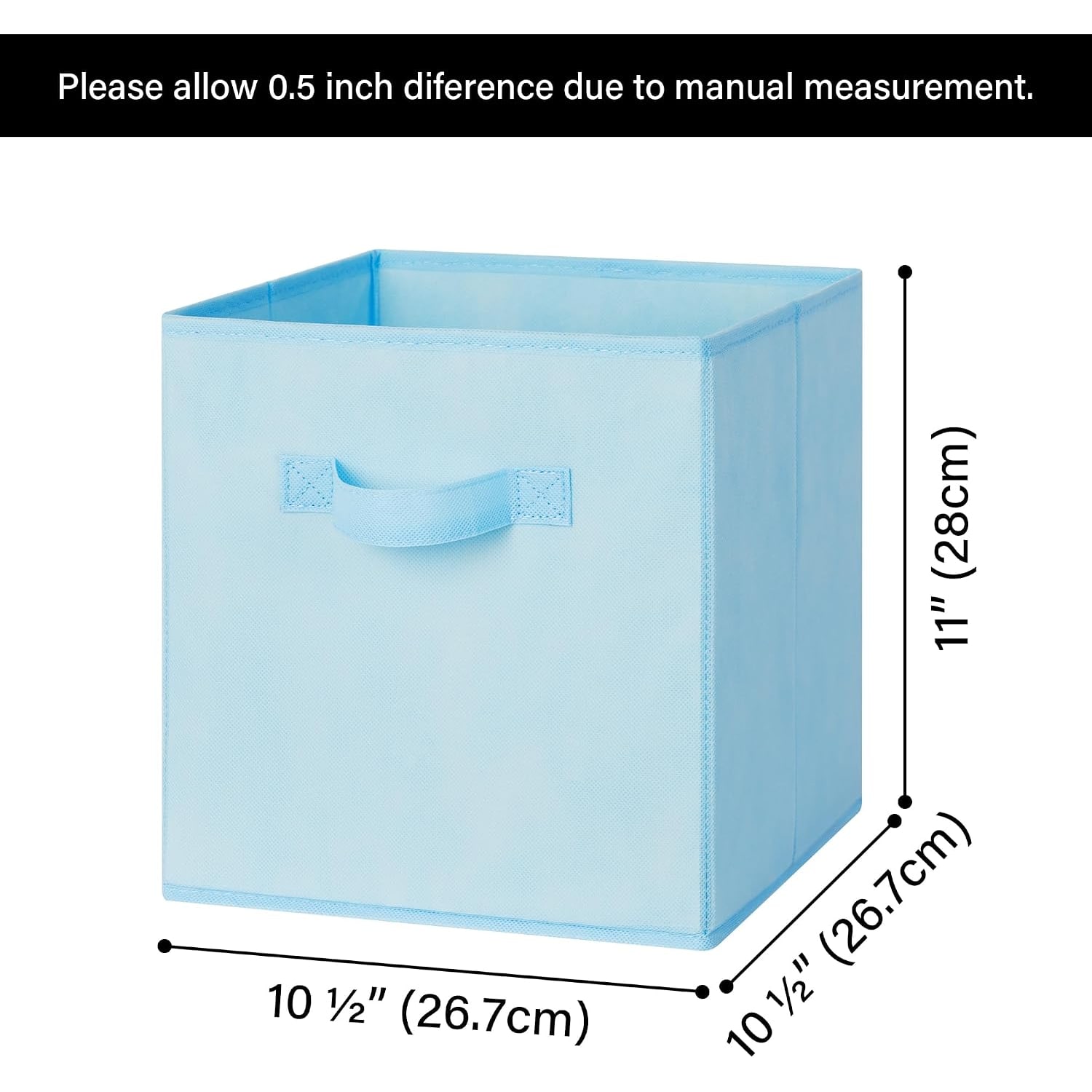
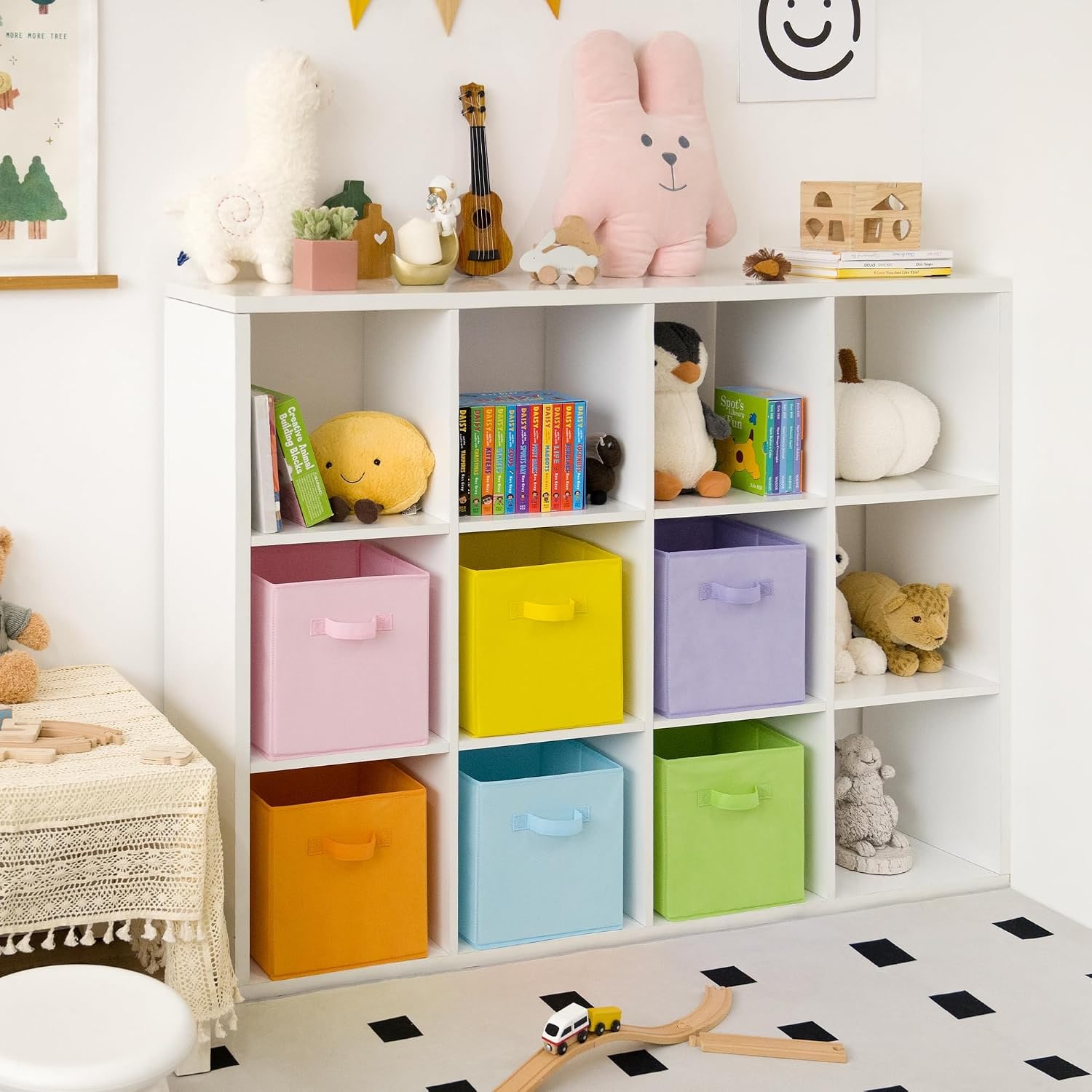
This set gives you those six in a 27 cm square format with a height of 27.5 cm. That size is not random. It is the size cube shelving was built for, which means the bins slide in flush and the shelf stops looking like a dumping ground.
How the bins work on a shelf
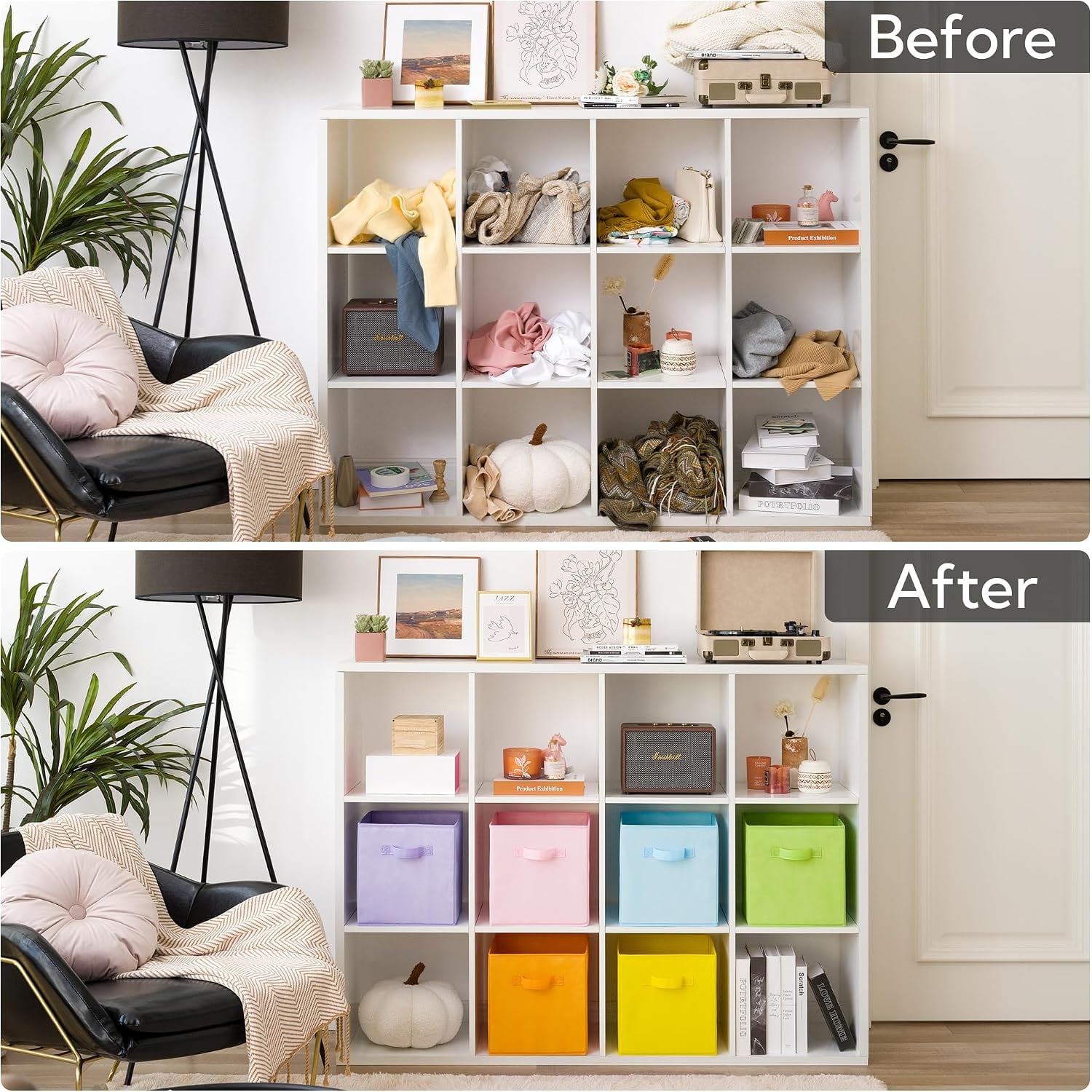
Cube shelving usually has internal openings around 30 cm square. A 27 cm bin sits inside that with a small margin on each side, so it goes in and out smoothly without sticking or needing a shove. Flush fronts matter more than people expect. When every bin sits at the same depth, the whole unit reads as tidy even if the inside of each bin is chaos.
The side handles are the second half of the system. Each bin has a sewn-in handle, which lets a child grip and pull rather than scrabbling at the rim. Once the bin is out, it travels. A child carries the bin to the rug, plays, then carries it back. Nothing gets spread across the floor because the bin itself is the container for the activity.
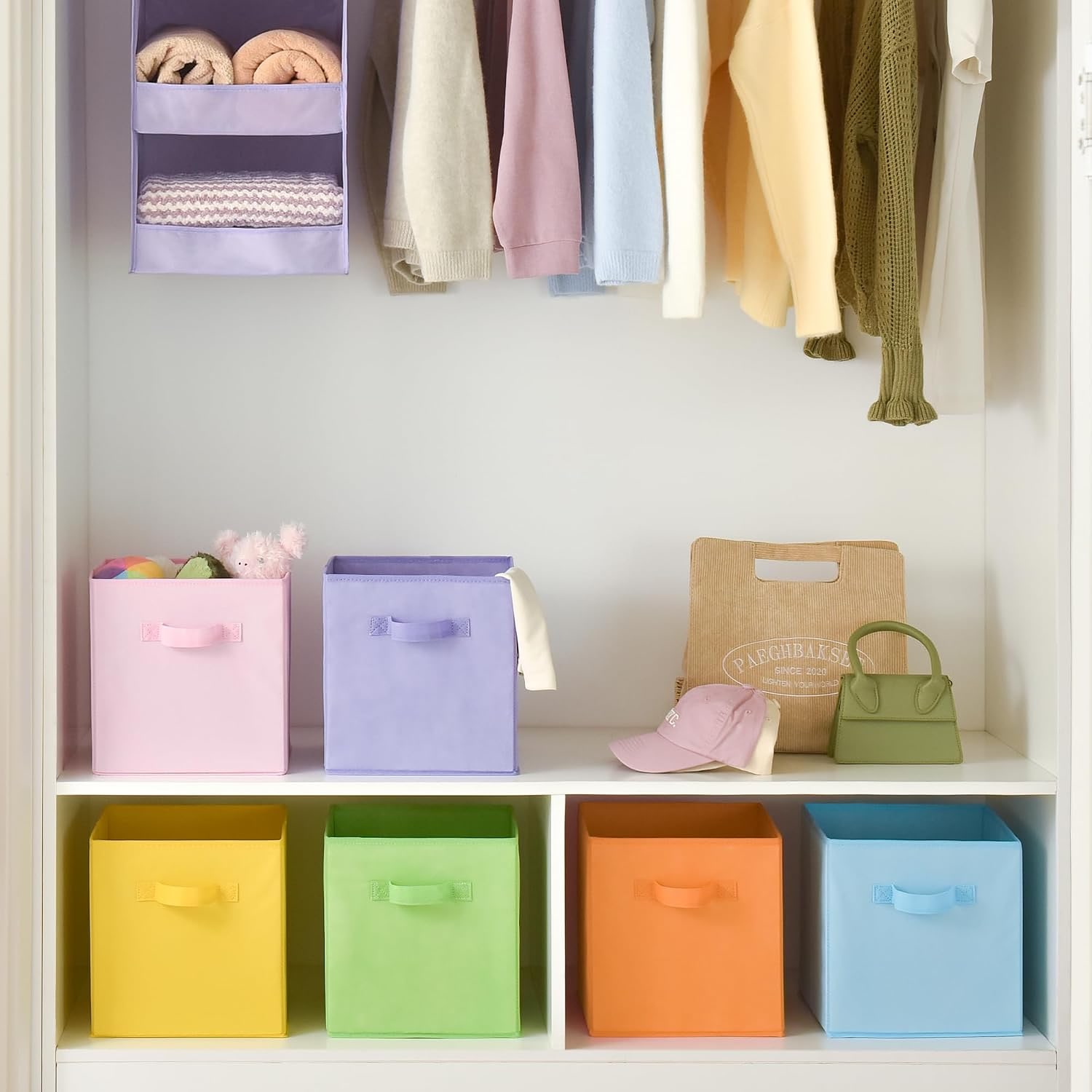
That same handle earns its keep for adults. Lifting a full bin of folded clothes down from the top of a wardrobe is much easier when there is something firm to grab.
Who these suit
The obvious use is a playroom or bedroom, and that is where most people start. Toys sort naturally into groups. Construction in one, vehicles in another, soft toys in a third, dress-up bits in a fourth. Give each group a colour and the system runs itself.
Wardrobes are the next most common use. Fabric sides let air move around whatever is inside, so jumpers, scarves, spare sheets and shoes do not sit sealed in. A sealed plastic tub traps moisture and smells. A fabric cube does not.
Craft tables and home offices are a quieter win. Pens, paper, yarn, tape and half-finished projects go into separate bins and come out as a set when someone wants to work. Plenty of people looking for the best playroom storage ideas end up using the same approach at their own desk.
Classrooms and shared spaces work for the same reason. If children can reach the bin and lift it themselves, materials get returned. If they cannot, materials end up on a bench.
Sizing and capacity, plainly
Each bin measures 27 cm long by 27 cm wide by 27.5 cm high. Stated capacity is 4.99 kg per bin. The whole pack weighs 1.81 kg.
That capacity is a useful number. Five kilograms covers a deep load of building bricks, a stack of picture books with covers facing out, or a season of folded clothes. What it does not cover is tins, tools, heavy sports gear or anything with hard corners that will push against the fabric from the inside. For those, use a rigid box.
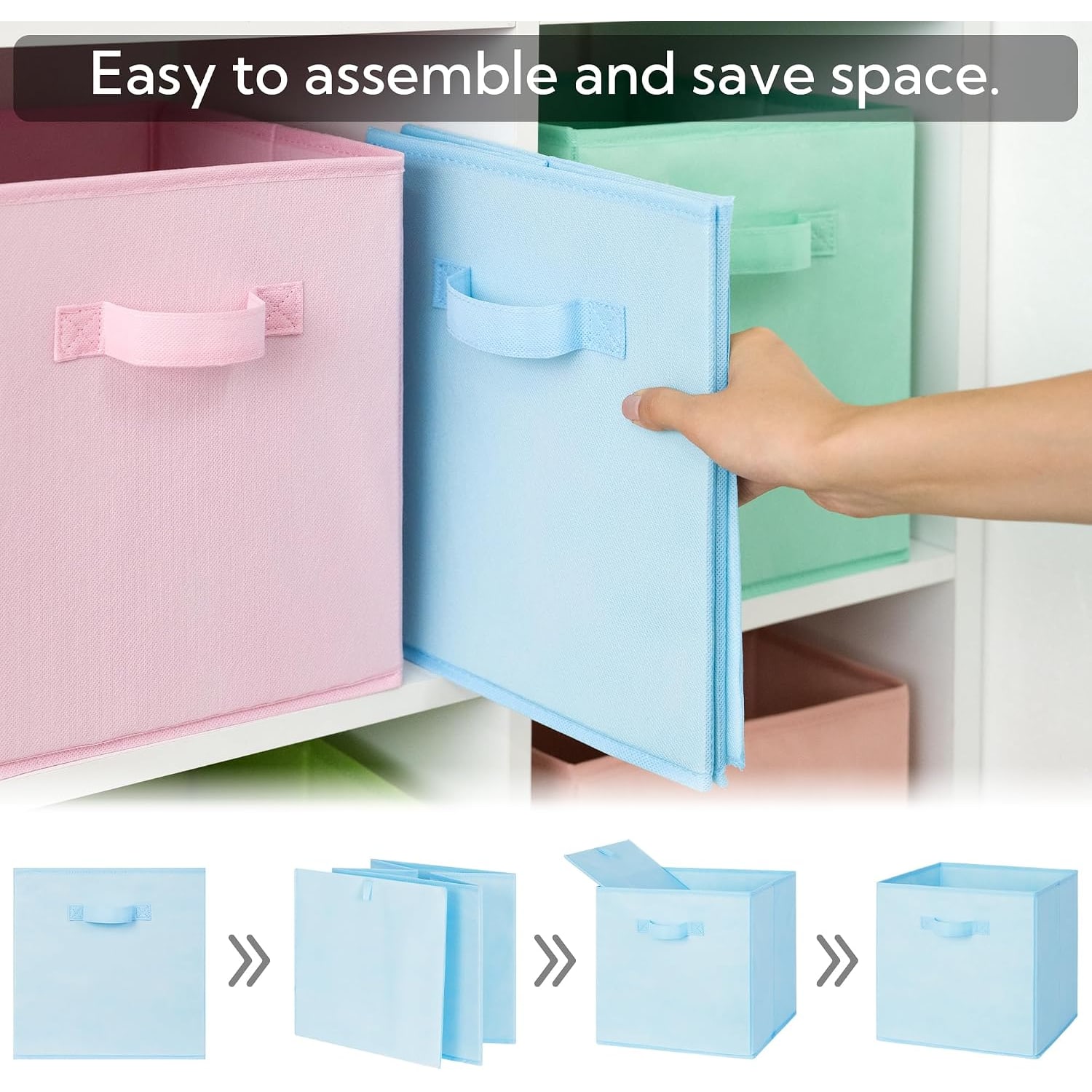
The 27.5 cm height is worth noting too. Set up, these bins are too tall for most under-bed gaps. Folded flat, they slide under a bed without any trouble, which is handy if you only need all six during school holidays.
Before you order, measure the inside of your shelf opening. Not the outside of the unit, the opening itself. Anything from about 28 cm upward will take these comfortably. Below that and the fit will be too tight to be useful.
Setting up a system that lasts
The mistake most people make is sorting too finely. Twelve categories sounds organised and lasts about a week, because nobody can remember which bin the small plastic animals go in. Six is a good number precisely because it forces broad groupings.
Start by emptying everything onto the floor. Sort into piles first, bins second. You will almost always find one pile is far bigger than the others, which tells you it needs two bins or a cull.
Then assign a colour to each pile. Colour is the fastest labelling system there is, and it works before a child can read. Red for cars, blue for blocks, and so on. If you want written labels, a tied tag on the handle is tidier than a sticker on the fabric.
Put the bins a child uses most at the bottom of the shelf and the ones you control at the top. Dress-ups at knee height, spare batteries and craft glue up high. This one decision prevents a lot of arguments.
Finally, leave one bin half empty. New things arrive constantly, and a system with no spare room breaks the first time somebody gets a birthday present.
Looking after them
Fabric bins need very little. Spot clean with a damp cloth and a small amount of mild soap, then let the bin dry fully before putting anything back in. Do not machine wash, do not tumble dry, and do not put any part through a dishwasher. The details confirm they are not dishwasher safe.
The base is stiffened to keep the bin square. Keep it away from standing water, since a soaked base loses its structure. If something spills inside, empty the bin straight away and let it dry out properly.
Lift by the handle rather than the top edge. Handles are sewn in and designed for the load. The rim is not. Dragging a loaded bin across a rough floor is the fastest way to wear a corner, so lift it instead.
When a bin is not in use, empty it and fold it down. Fabric stored flat keeps its shape better than fabric stored propped open and empty for months.
A note on colour
Bright bins divide opinion. Some people want storage to disappear into the room, and for those, neutral tones in a living space make more sense. But in a children's room or a classroom, colour is doing a job. It sorts, it signals and it makes the shelf feel like it belongs to the child rather than to the adult who built it.
If you want both, use the colourful bins in the playroom and keep the living room shelves neutral. There is no rule that says every room needs the same system.
The short version
Six fabric cubes, each 27 cm square and 27.5 cm tall, holding up to 4.99 kg apiece, with sewn side handles and the ability to fold flat. They fit standard cube shelving, they work just as well on the floor or in a wardrobe, and they give toys, clothes and craft supplies a place to live.
Measure your shelf opening first. Sort into broad groups rather than fine ones. Use colour as your labelling system. Then enjoy the fact that tidying up has become something a child can actually do without you standing over them.