
The complete guide
Four in a Row: A Buyer's Guide to the Classic Two Player Grid Game
The gap this game fills
There is a particular stretch of time that is hard to fill well. Fifteen minutes before dinner. A ferry crossing. The hour at a holiday house after the rain sets in and before anyone feels like cooking. Too short for a long board game, too long to just sit there, and the default is usually a phone.
A four in a row game fits that gap almost perfectly. The rules take ten seconds to explain. The setup is lifting a lid. A round lasts a couple of minutes, which means you can play one, or seven, depending on how much time you actually have. And when you stop, everything goes back into its own tray.
That is the honest pitch. It is not a deep campaign game and it does not pretend to be. It is a reliable, portable, two person contest that works when nothing else quite fits.
How the game works
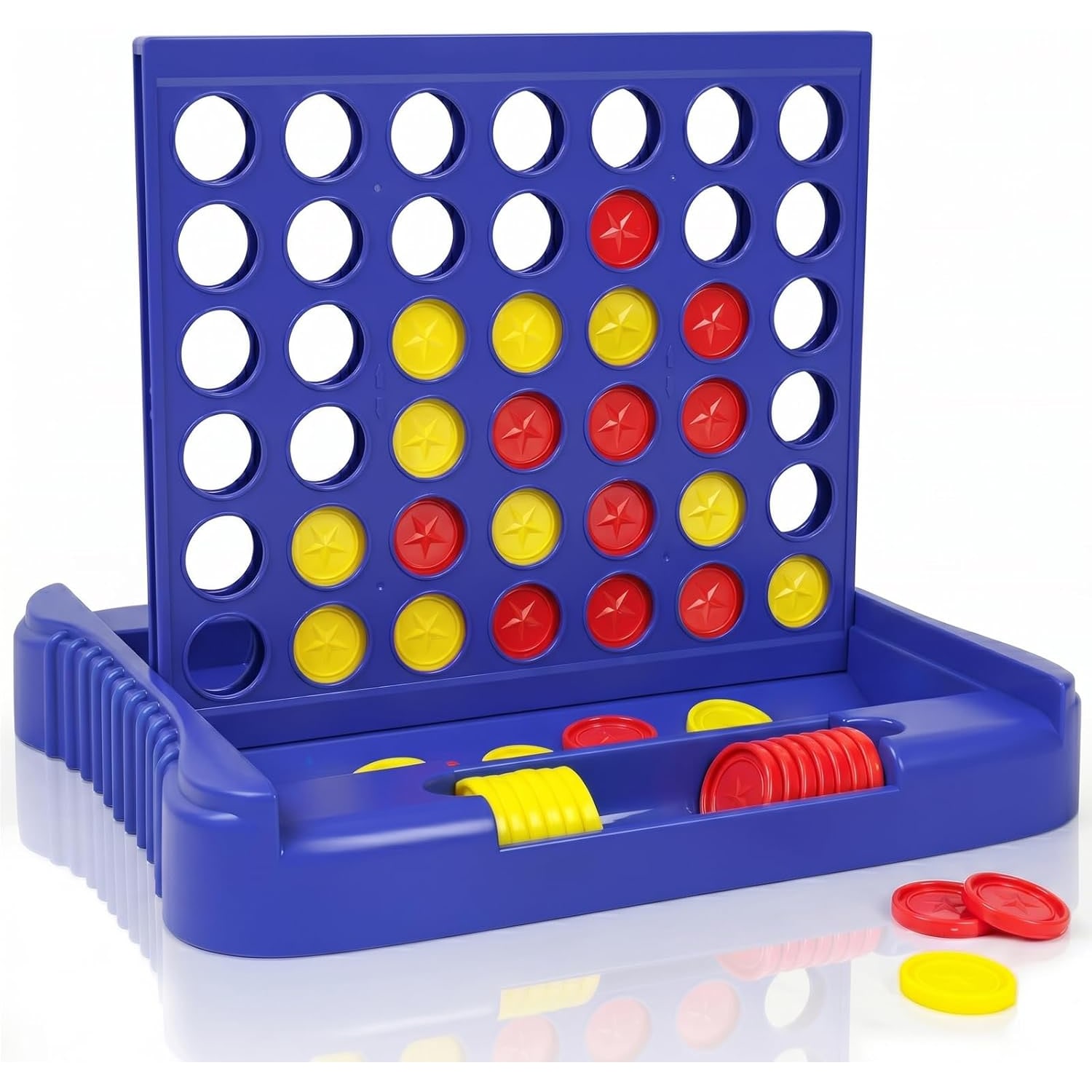
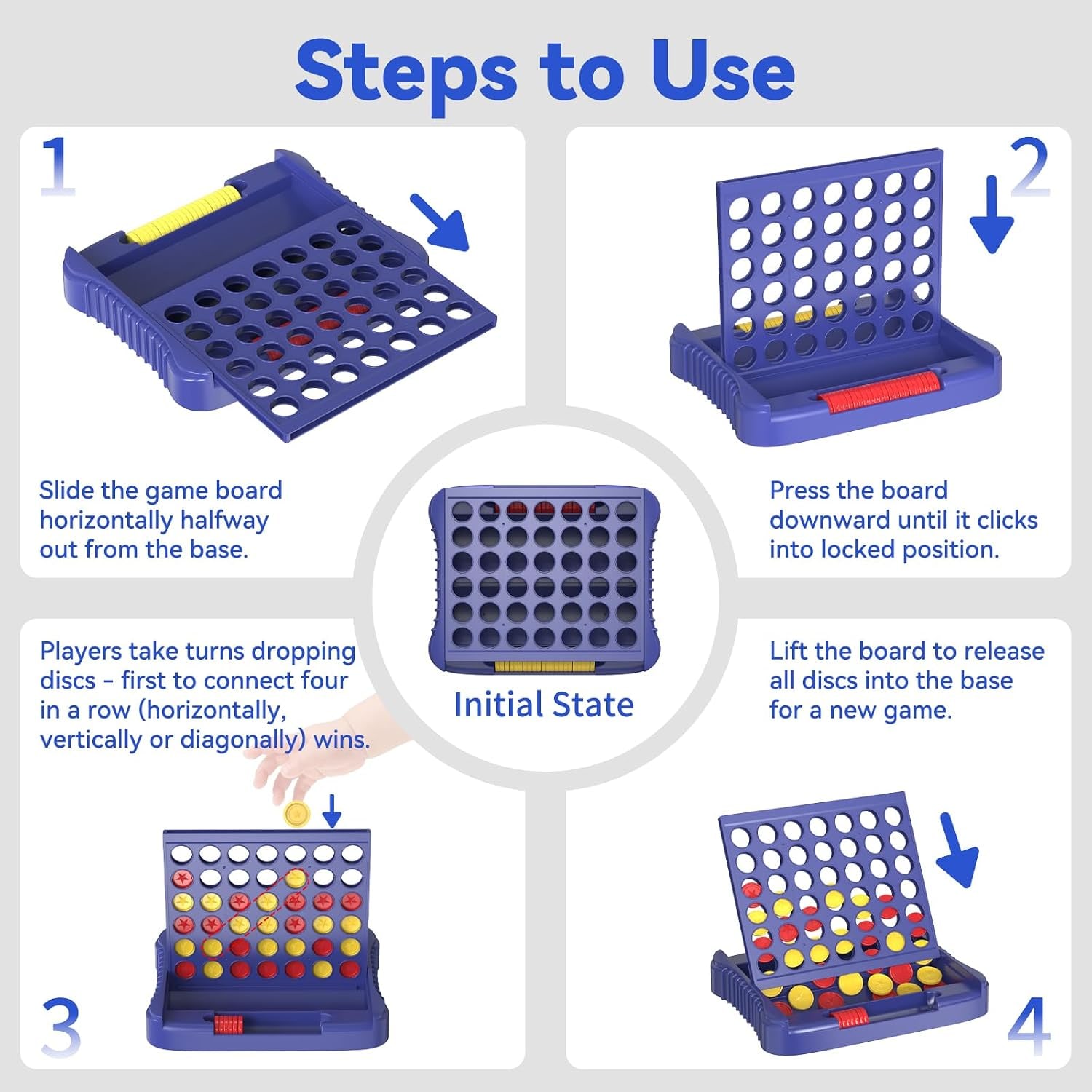
The grid stands upright in a tray. Each player takes a colour and takes turns dropping a disc into any column they like. Gravity does the rest, so the disc lands in the lowest free slot of that column. You cannot place a disc wherever you want, only on top of what is already there, and that single restriction is where all the thinking comes from.
The goal is four of your discs in an unbroken line. Across, down or diagonal, all count. The first player to make that line wins the round.
Beginners play greedily. They build their own line and ignore the other side of the grid. They lose, usually to a diagonal they never noticed. After a few rounds the habit shifts and players start scanning the whole board before each drop, checking what the other person is one move away from.
The real skill arrives later. You stop trying to make one line and start trying to make two at once, so your opponent can only block one of them. Setting up that fork, three or four moves ahead, without being obvious about it, is where this classic strategy game gets genuinely interesting. Experienced players also learn to think about the columns themselves, because every disc you drop changes the height of a column and hands your opponent a new slot at a new level.
What you actually get
This set includes one grid with a built-in tray, 42 playing discs and 6 spare discs. Everything is plastic.
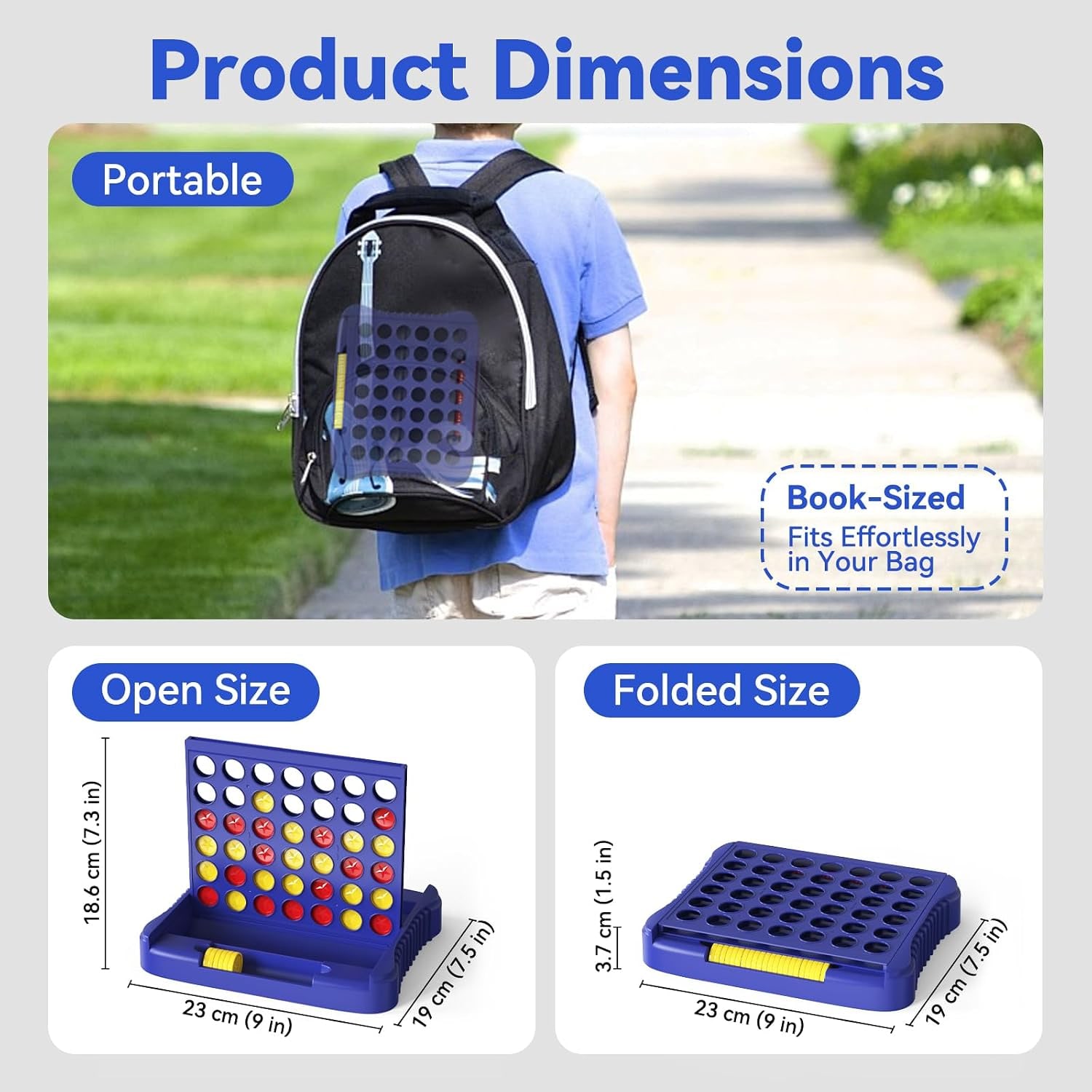
The whole unit measures 22.9 x 17.8 x 3.5 cm and weighs 265 g. No assembly is required and the operation mode is manual, which is a technical way of saying it has no electronics in it.
The six spare discs are a more useful detail than they look. Discs get lost. They slide under car seats, drop into couch cushions and vanish into the pile of things at the bottom of a beach bag. On a set with no spares, three missing discs can genuinely unbalance a game. Here you have a buffer.
Who it suits
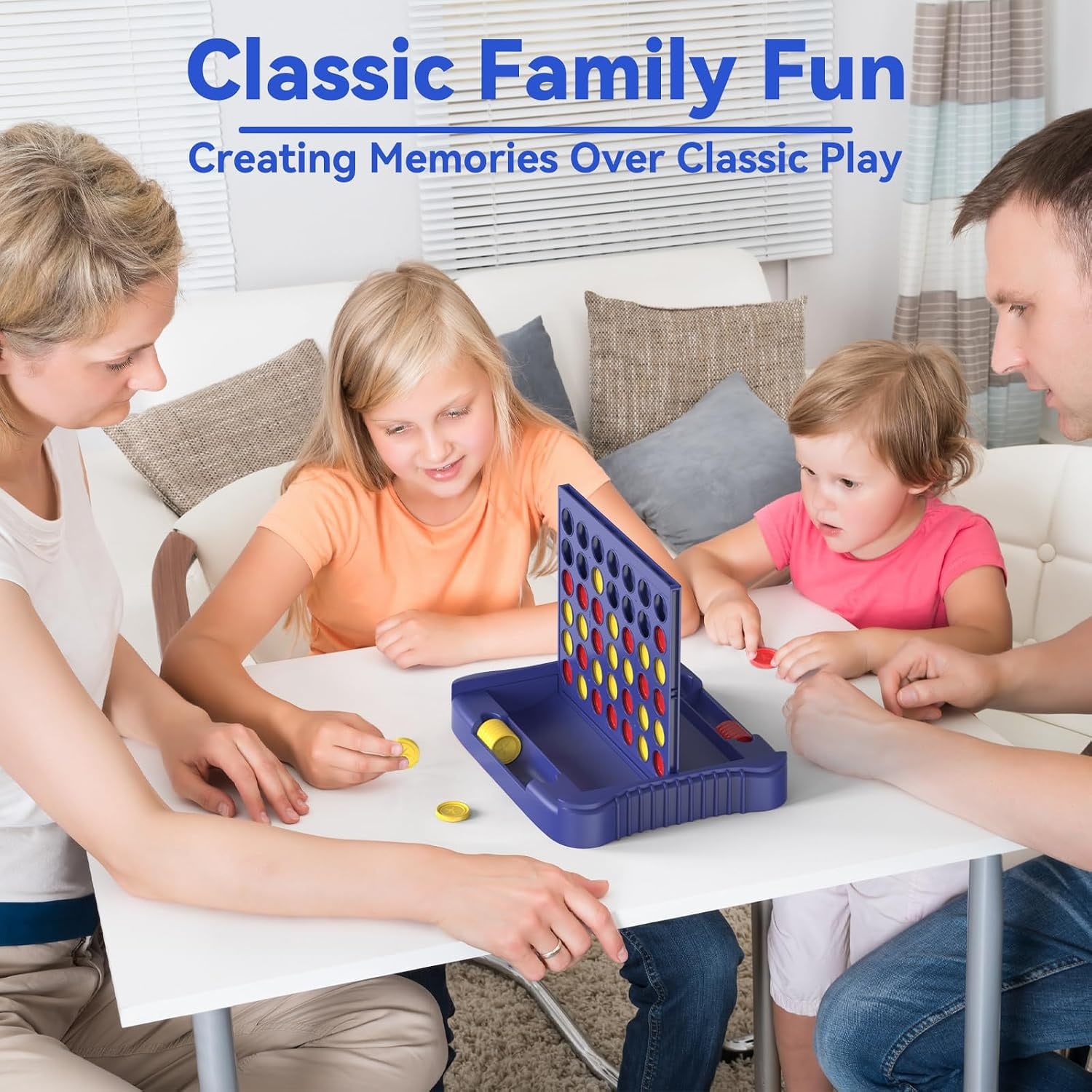
Pairs, mostly. This is listed for two players and that is how it plays best. Two kids, a parent and a kid, two adults waiting for a table, two grandparents who have been beating each other at this for years.
Families with a wide age spread get good value from it, because the entry point is so low. A five year old can play a real game against an adult without any handicap rules, and will sometimes win on a diagonal the adult did not look at. That is rare in two player board games and it is why this format keeps turning up in family cupboards.
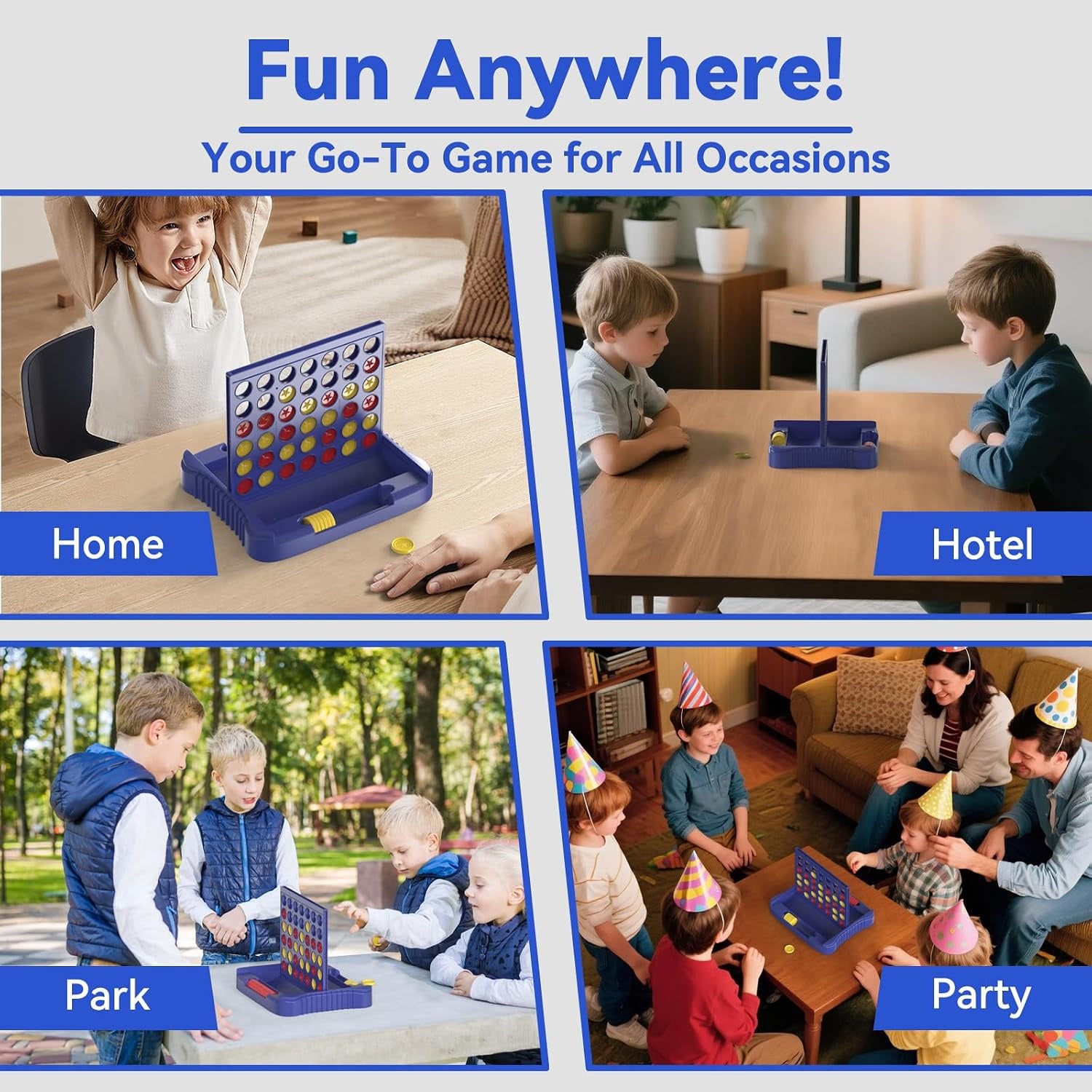
It also suits anyone who travels and wants something to do that is not a screen. A folding board game that stores its own pieces is in a different category to a cardboard box that spills. Campsites, caravans, trains and long waits all suit it.
Small parts are included, so it is not for children under 3. The recommended age for this set is 3 and up.
Choosing between versions
If you are comparing different line up four game sets, a few things actually matter and a few do not.
Storage matters most. A set that folds and holds its own discs will get played. A set that comes apart into a loose frame and a bag of pieces tends to sit in a cupboard after the second time someone has to hunt for a missing disc. This one folds flat with a tray that holds the pieces.
Size matters next, and it cuts both ways. A big floor-sized grid is impressive at a party and useless in a backpack. At 22.9 x 17.8 x 3.5 cm this is in the travel and tabletop bracket rather than the party bracket. If you want something to set up on a lawn for a crowd, this is not that product. If you want something for the kitchen table and the car, it is well suited.
Spare pieces matter more than people expect. Six spares is a sensible number.
Theme and colour are the parts that matter least to play. This one is blue with a train theme, which reads as cheerful rather than childish, but it has no effect on how a round goes.
Looking after it
Plastic is easy. Wipe the grid and discs with a soft, slightly damp cloth, then dry them before you close it up. Skip the dishwasher and skip strong solvents, both of which can dull or mark plastic surfaces.
Heat is the thing to actually watch. A folding plastic frame left on a sunny windowsill or on a dashboard through a summer afternoon can warp, and once a hinge or a frame distorts, discs stop sliding cleanly. Store it flat, in a drawer or on a shelf, somewhere dry and out of direct sun.
Get into the habit of tipping the discs back into the tray at the end of a session and giving them a quick count. It takes fifteen seconds and it is the single best way to keep a portable game complete over years rather than months. If a disc does go missing, use one of the spares and carry on.
The hinge on any foldable game is its weak point. Open it to its natural stop and do not force it further. Treated normally it will handle a lot of rounds.
Making the most of it
A few things make the game better once you have played a while.
Play short matches rather than single rounds. First to five wins gives the losing player a chance to adjust, and adjusting is the fun part. Alternate who goes first each round, because the first player does have a small edge.
Try talking through your thinking occasionally when you play with a younger player. Saying "I am blocking you here because you have three in a row going diagonally" teaches more than winning quietly does. After a handful of games you will not need to.
And if you are playing on a soft surface like a bed or a picnic rug, put a book or a tray underneath. The grid stands in its base, but it likes a flat foundation.
The short version
This is a plastic folding four in a row game for two players, with a grid and tray, 42 discs and 6 spares. It measures 22.9 x 17.8 x 3.5 cm, weighs 265 g, needs no assembly and needs no batteries.
What you are buying is not complexity. It is availability. A game that is always ready, always fast and always in reach is a game that actually gets played, and that is worth more than a shelf full of boxes nobody opens.
Small parts are included, so it is not for children under 3. Orders are sent by tracked courier from Australian warehouses and most arrive in 5 to 10 working days. Delivery is free NZ-wide on orders over NZ$175 and NZ$20 under that, and returns are accepted within 14 days of delivery if the game is unused and in its original packaging.