
The complete guide
How to Choose a Collapsible Toy Storage Basket That Actually Gets Used
The floor is not a storage system
Anyone who lives with children knows the pattern. Toys come out in the morning, spread through the day, and by evening the carpet has disappeared under blocks, cars, crayons and half a dozen soft toys. You tidy. The next day it happens again.
The usual response is to buy more storage. But most storage fails for one reason: it is not fast enough. If putting a toy away takes more than a second or two, it will not happen. Lids that clip, drawers that stick, bins that are too far away, all of it adds friction, and children have very little patience for friction.
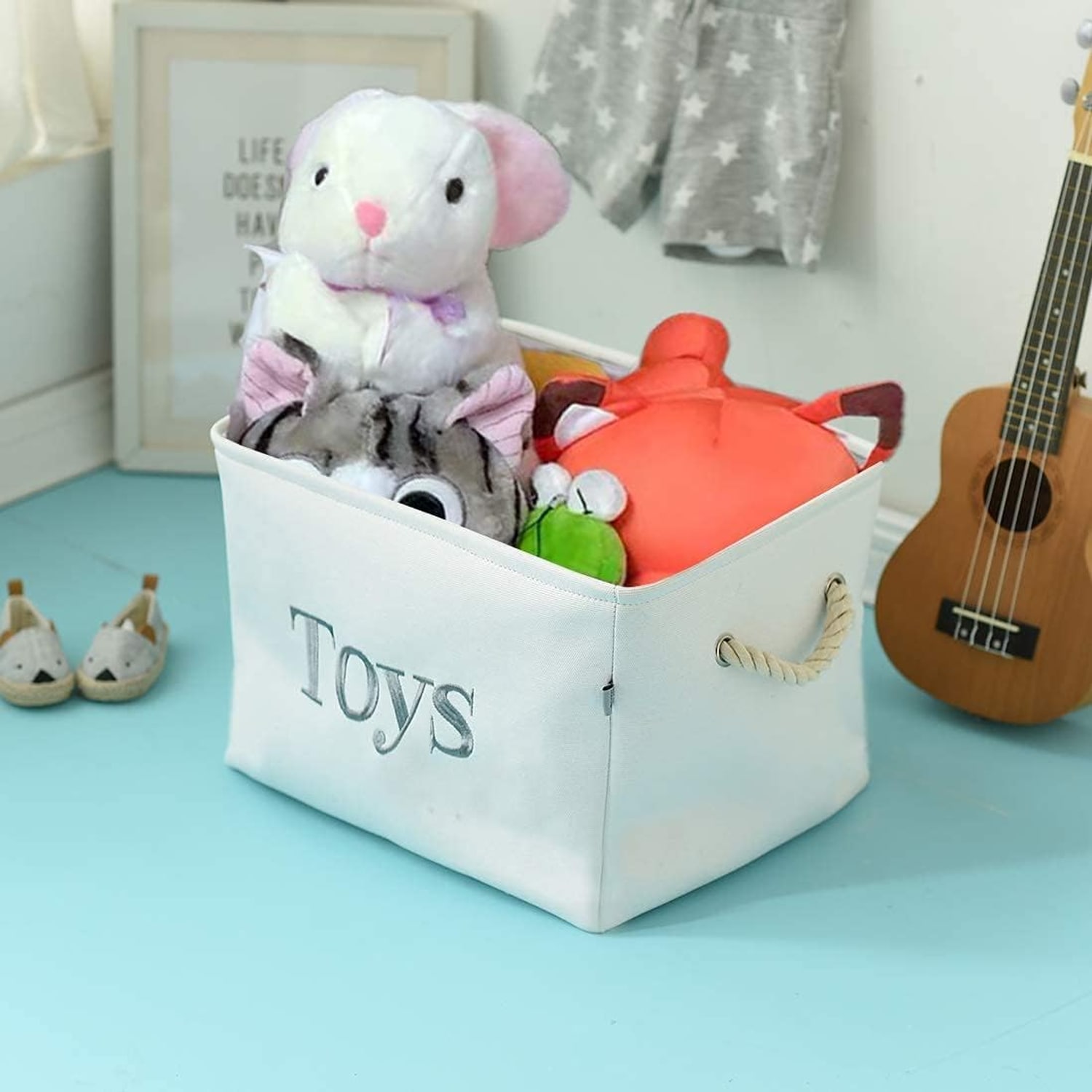
A fabric basket solves this by being blunt. It is a big open mouth you can drop things into. No sorting, no lifting a lid, no fitting the toy into a compartment. That is why the humble toy basket outlasts so many cleverer systems.
What this basket actually is
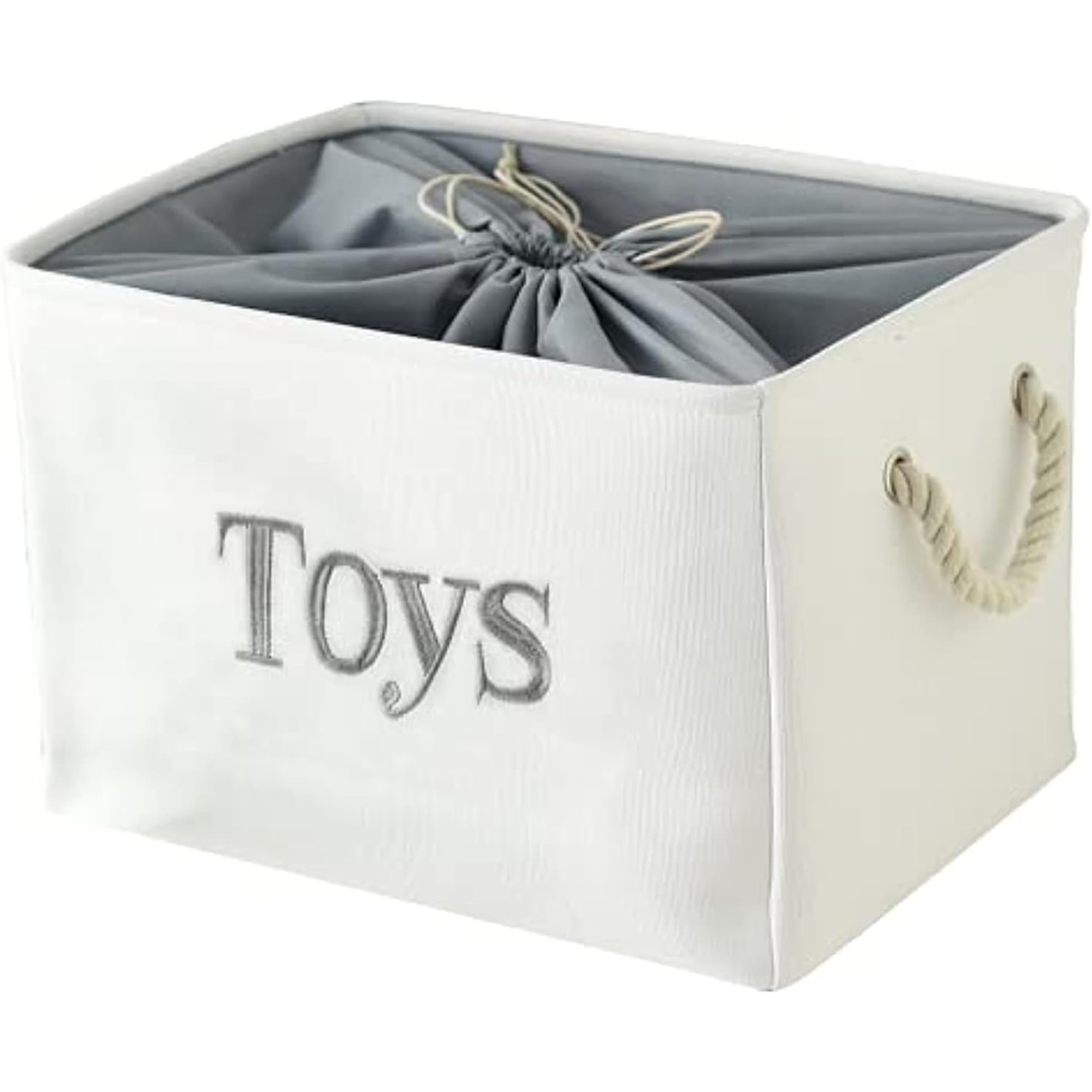
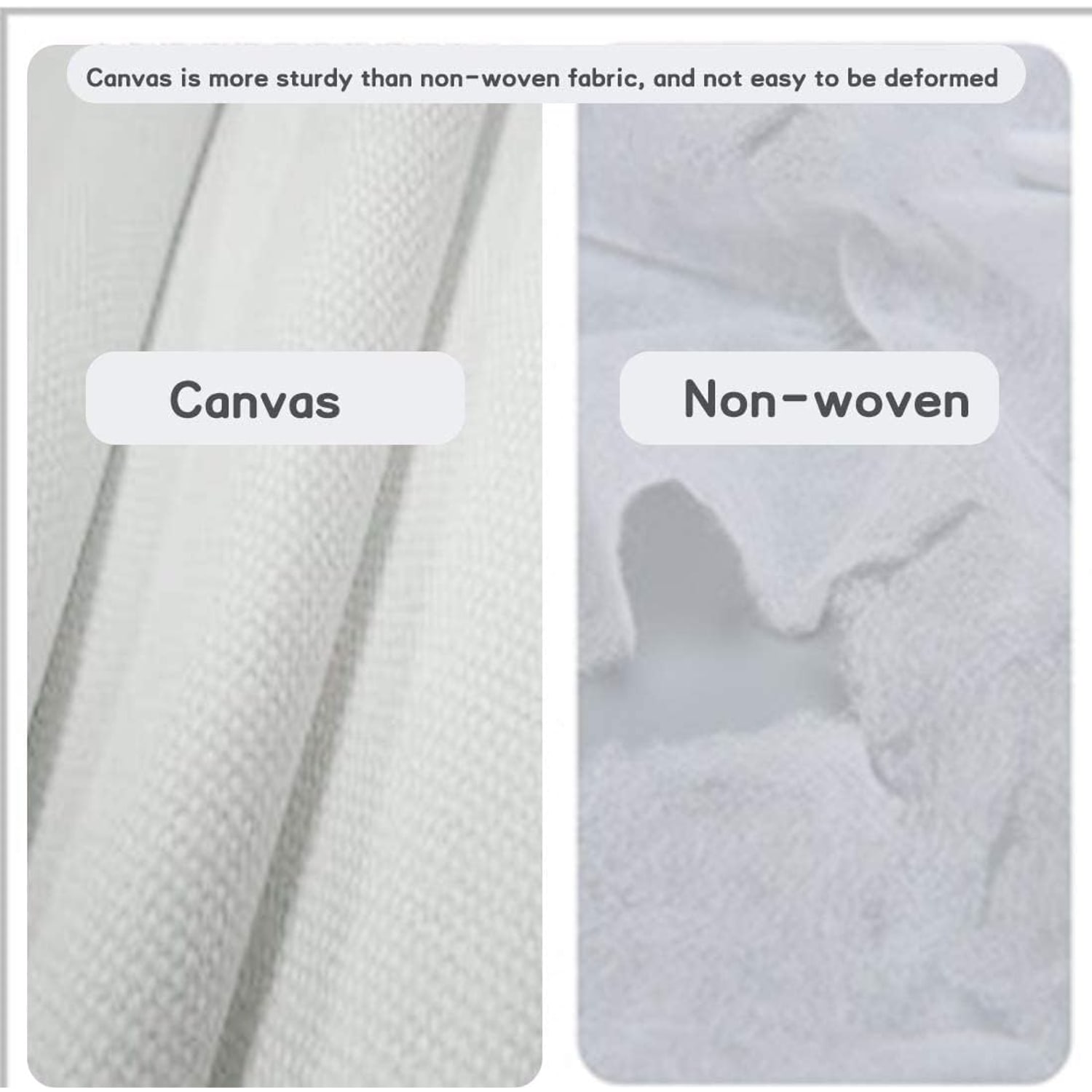
This is a collapsible toy storage basket measuring 41 cm long, 31 cm wide and 21 cm high, with a stated capacity of 10 litres. It weighs 454 g on its own. The material is listed as plastic cotton with an unfinished surface, and it is not dishwasher safe.
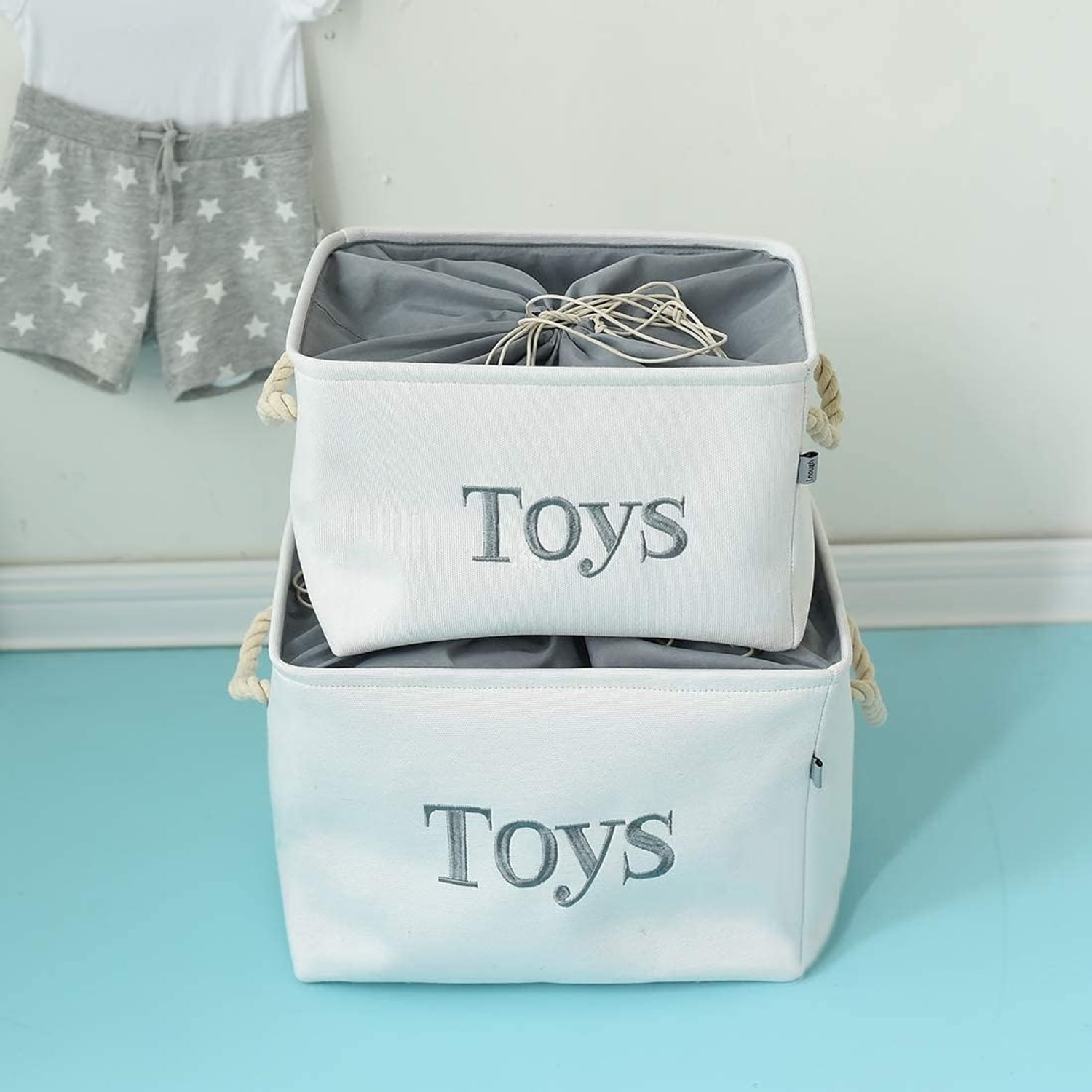
Two features do most of the work. The first is the set of six metal rods built into the side walls. Those rods are the difference between a basket and a sack. They hold the walls upright so the basket stays open while it is being filled, half empty, or sitting in the corner waiting. A floppy bag collapses the moment you stop holding it, and a child cannot use it one-handed.
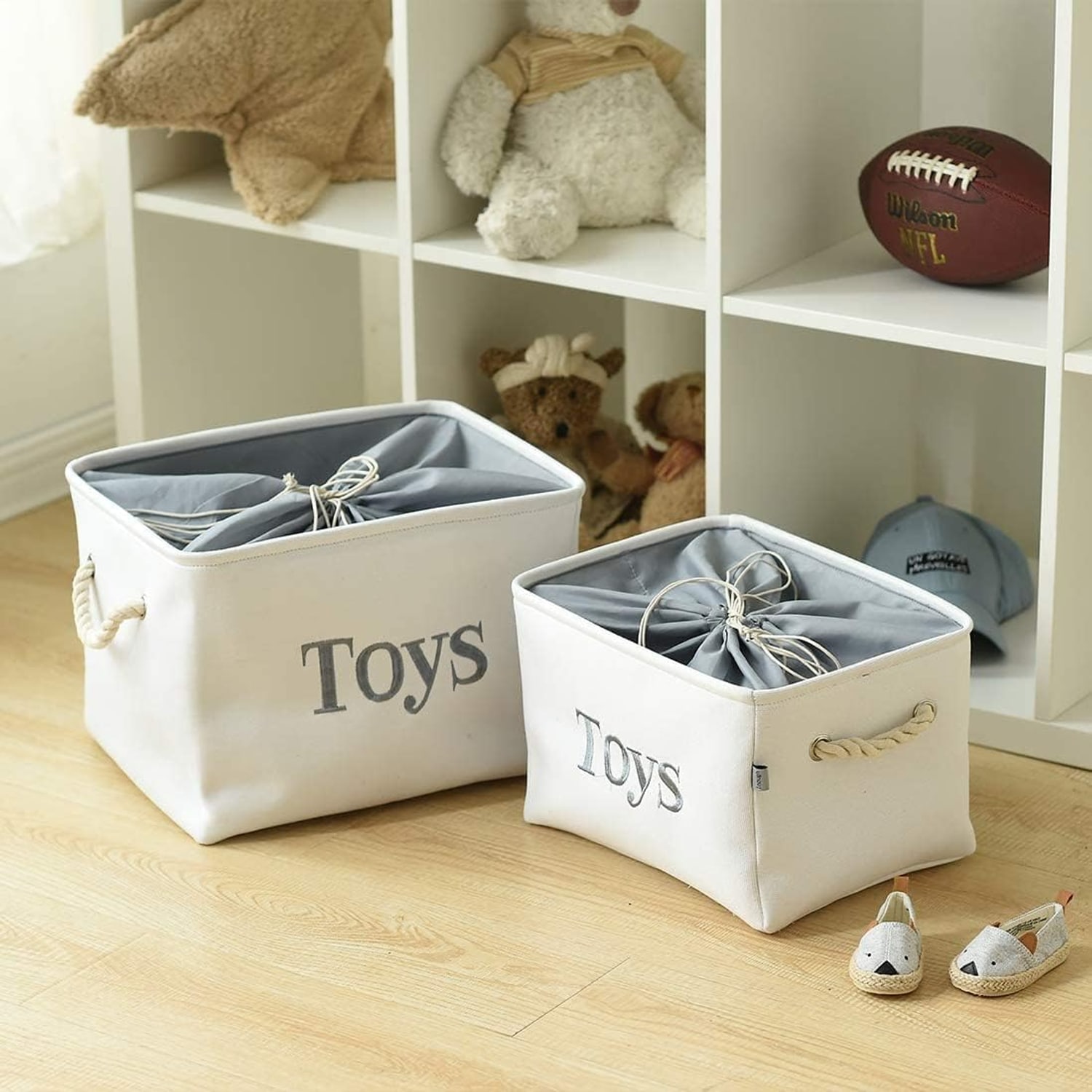
The second is the cotton drawstring around the top. Pull it and the basket closes over. That matters for two reasons. It keeps dust off whatever is inside, which is useful for soft toys and fabric items. It also takes the visual noise out of a room in a second, which is handy if the playroom doubles as a lounge.
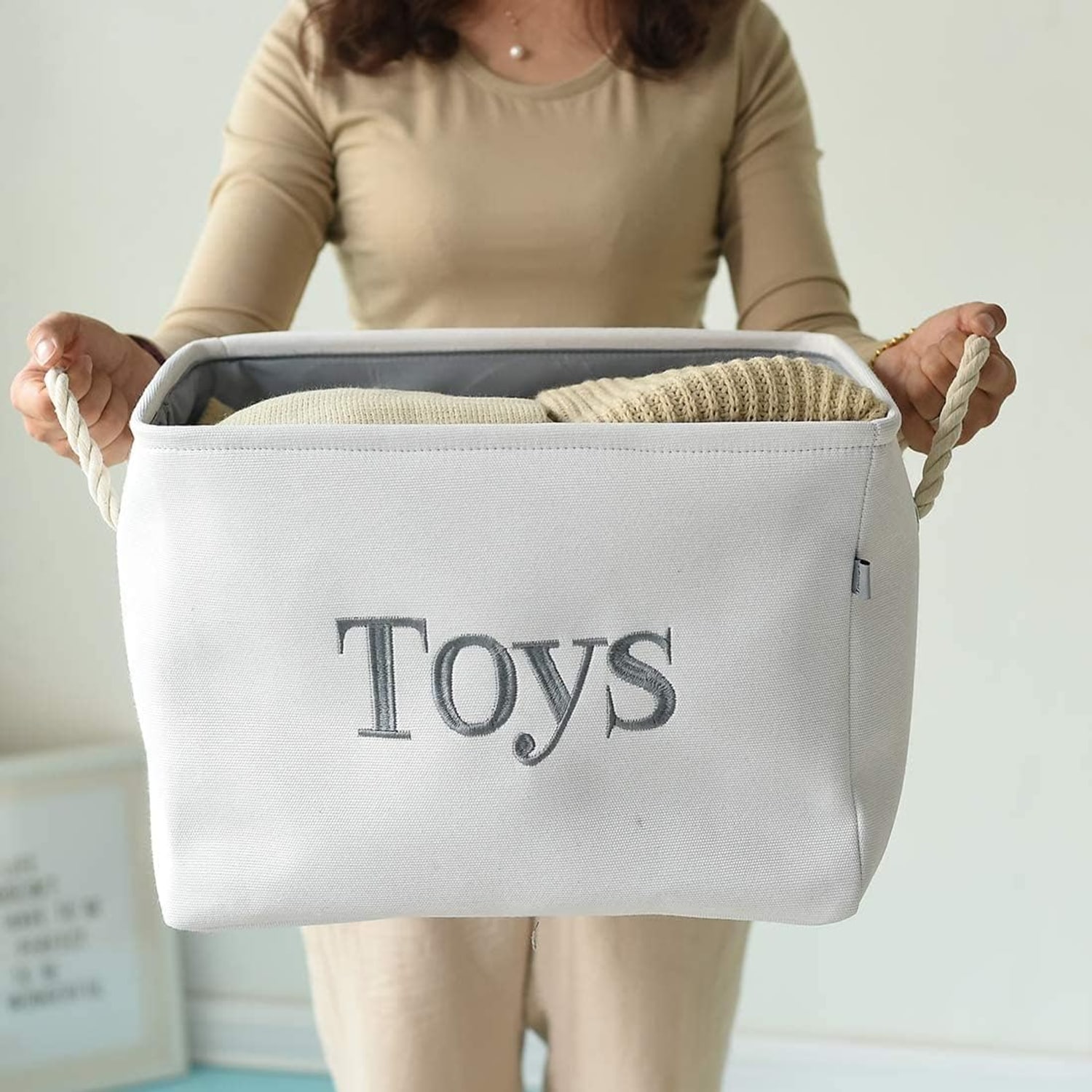
Rope handles on each side round it out. They make the basket portable, so you can move the whole collection rather than carrying toys one armful at a time.
Why collapsible matters more than it sounds
Storage containers have a nasty habit of becoming clutter themselves. A rigid plastic tub that is not in use still takes up the same cubic space as a full one. You end up stacking empty boxes in a garage.
A basket that folds flat does not have that problem. When the toys are packed away, or the season changes, or you need the corner back for a visitor, it goes behind a wardrobe door and takes up almost nothing. That flexibility is worth more than it seems, especially in a smaller home where every square metre is doing a job.
It also makes the basket easy to put into storage between children, or to pass on. Flat-packing it for a move is trivial.
Who it suits
Families with a shared living space get the most from it. If your lounge is also your playroom, the drawstring top is the feature you will use daily. Five seconds of sweeping toys in, one pull on the cord, and the room reads as an adult space again.
It also works well in bedrooms. The 41 x 31 cm footprint fits at the end of a bed, under a window, or beside a wardrobe without dominating the floor. As a bedroom storage basket for kids it is big enough to be useful but not so big that it becomes a dumping ground you never empty.
Shared rooms are another good fit. Give each child their own basket and you avoid most arguments about whose toys are whose. Matching baskets also keep the room looking deliberate rather than accidental.
And it does not have to be a kids toy bin at all. The same shape works for laundry, bathroom towels, craft supplies, pet toys or spare linen. If the children outgrow it, the basket finds another job.
How to choose the right size and number
Think in terms of categories, not volume. The most common mistake is buying one enormous bin and tipping everything into it. That basket becomes a pit. Children dig through it, dump the contents on the floor to find one thing, and you are back where you started.
Two or three medium baskets beat one giant one every time. One for soft toys, one for building sets, one for books and odds and ends. At 10 litres each, this size is well matched to that approach. A child can actually see what is in a basket this deep without emptying it.
In a bedroom, one basket is usually enough. In a playroom, start with two and add a third if a category keeps overflowing. Overflow is the signal, not a guess made in advance.
Also think about where it will live. A basket by the door of a room gets used. A basket in a cupboard does not. Put it where the mess happens.
Getting children to use it
A few things help. Keep the basket in sight and within reach, not on a shelf. Make the rule simple, one basket per type of toy, and say what goes in each one out loud for the first week or two. Pictures taped near the basket help early readers, though the rope handles are also a fine spot for a small tag.
Tidying is easier as a timed burst than an open-ended chore. Three minutes, everything in the basket, done. The open-top design is what makes that pace possible. A container with a hinged lid or a tight opening slows the whole thing down.
And leave the drawstring open during the day. Closing it is an end-of-day action, not something a child should have to do every time they want a block.
Care and getting the most life from it
Fabric baskets are low maintenance, which is the point. Wipe the outside and the lining with a damp cloth and a little mild soap when it needs it. Let it dry fully in the air before you fold it away, because a damp basket in a cupboard will smell within a week.
It is not dishwasher safe and should not go through a washing machine. The metal rods in the sides rule that out. Spot cleaning is the right approach.
Two habits extend its life. Empty the basket before lifting it by the handles if it is heavily loaded, since rope handles take vertical load far better than a sharp yank. And avoid dragging it across rough concrete or paving, which wears the base faster than anything else.
The short version
A collapsible toy storage basket works because it removes friction. It is open, it is light, it stands up on its own thanks to the rods in its sides, and it moves between rooms by the handles. When the day is over, the drawstring closes it and the mess stops being visible.
At 41 x 31 x 21 cm it is a sensible middle size, big enough to be worth using, small enough to stay tidy. It weighs 454 g empty and folds flat when you do not need it, so it never becomes part of the problem it was bought to solve.
If your floor is currently doing the job of a toy box, this is the simplest fix available.