
The complete guide
How to Choose Wooden Kids Chairs That Actually Get Used
The problem with giving a child an adult chair
Watch a child at a full-size dining chair and you see the same routine. They kneel. They slide forward. They hook a foot under them. Their legs dangle, so there is nowhere to brace, and within a few minutes they are wriggling off the edge or asking to get down.
None of that is bad behaviour. It is a furniture mismatch. A chair built for a 175 cm adult puts a child's feet 30 cm off the ground and their chest below the table line. Sitting still becomes work.
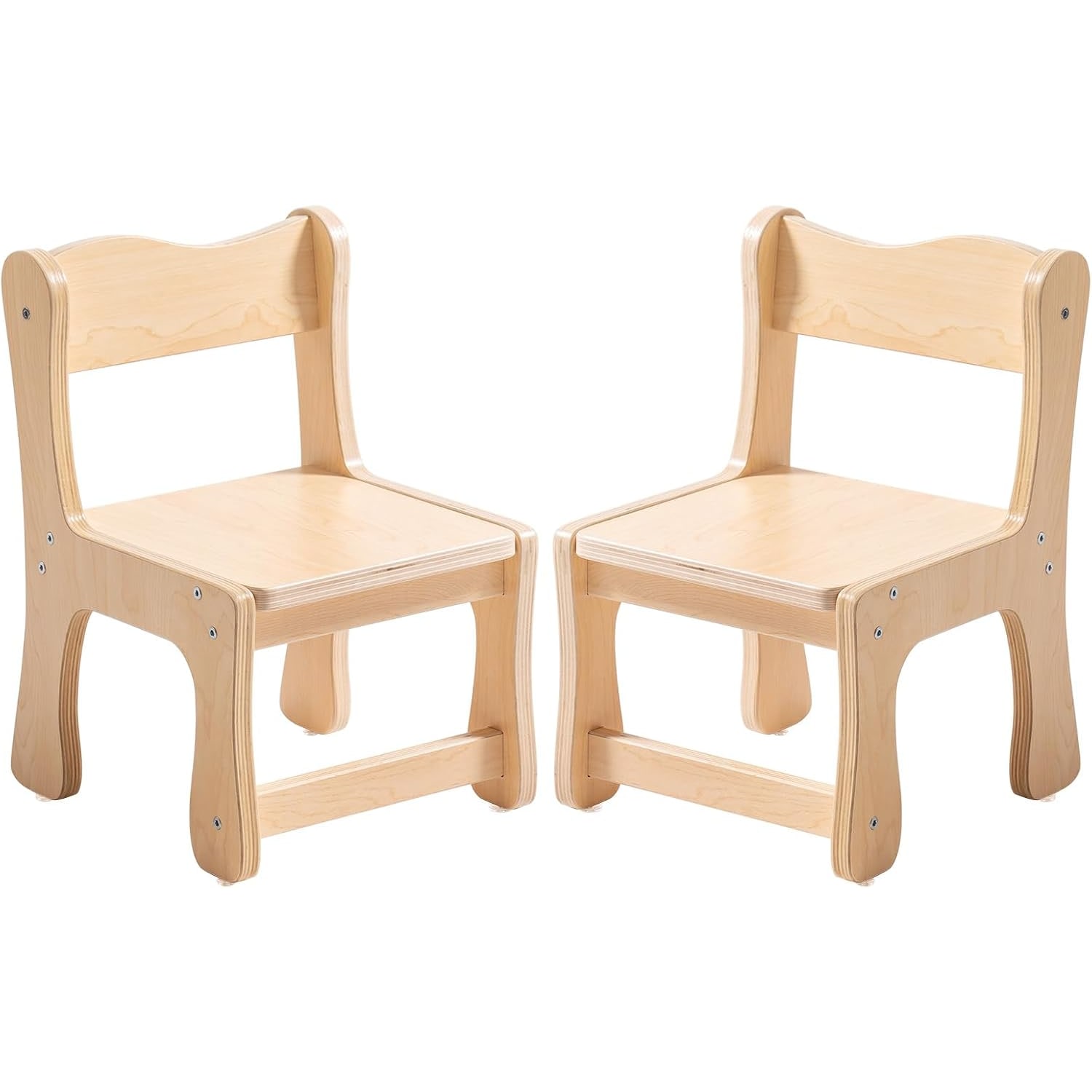
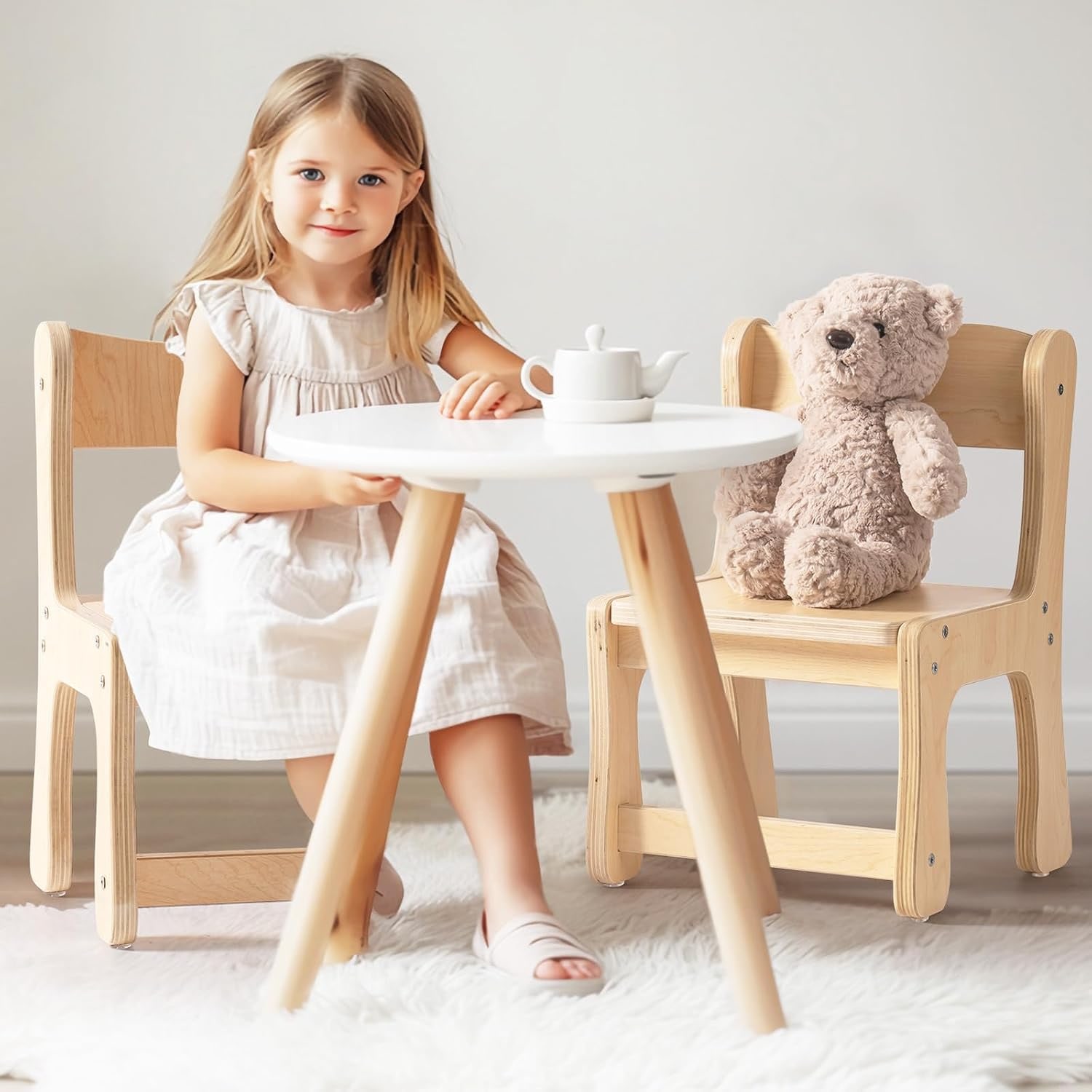
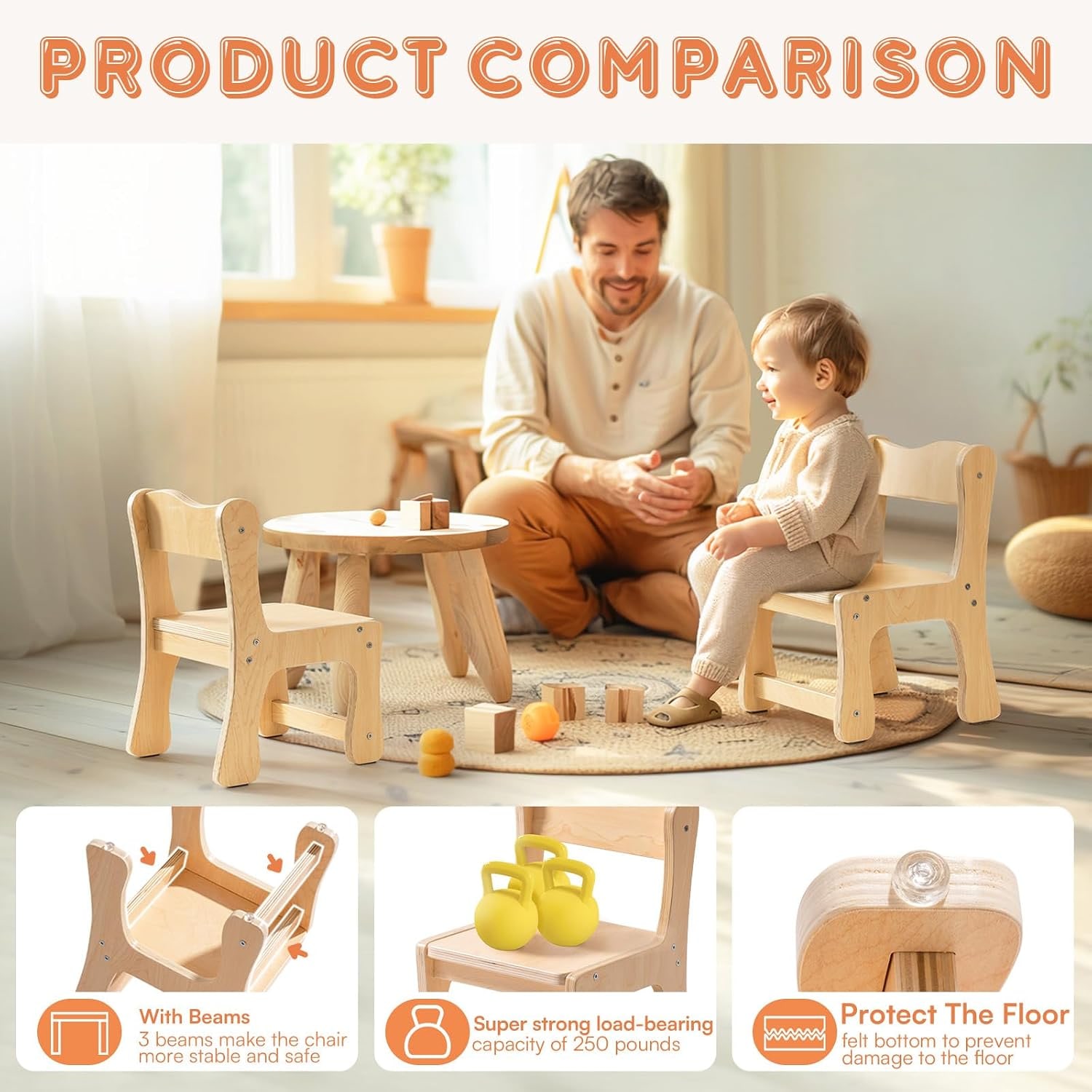
A wooden kids chairs set of 2 solves the problem at the source. The seat sits low enough that feet reach the floor, the back is at a height a child can actually lean against, and the whole thing weighs little enough that they can move it themselves. That last part matters more than people expect. A child who can carry their own chair over to the window will sit in it far more often than one who has to ask for help.
What you are looking at
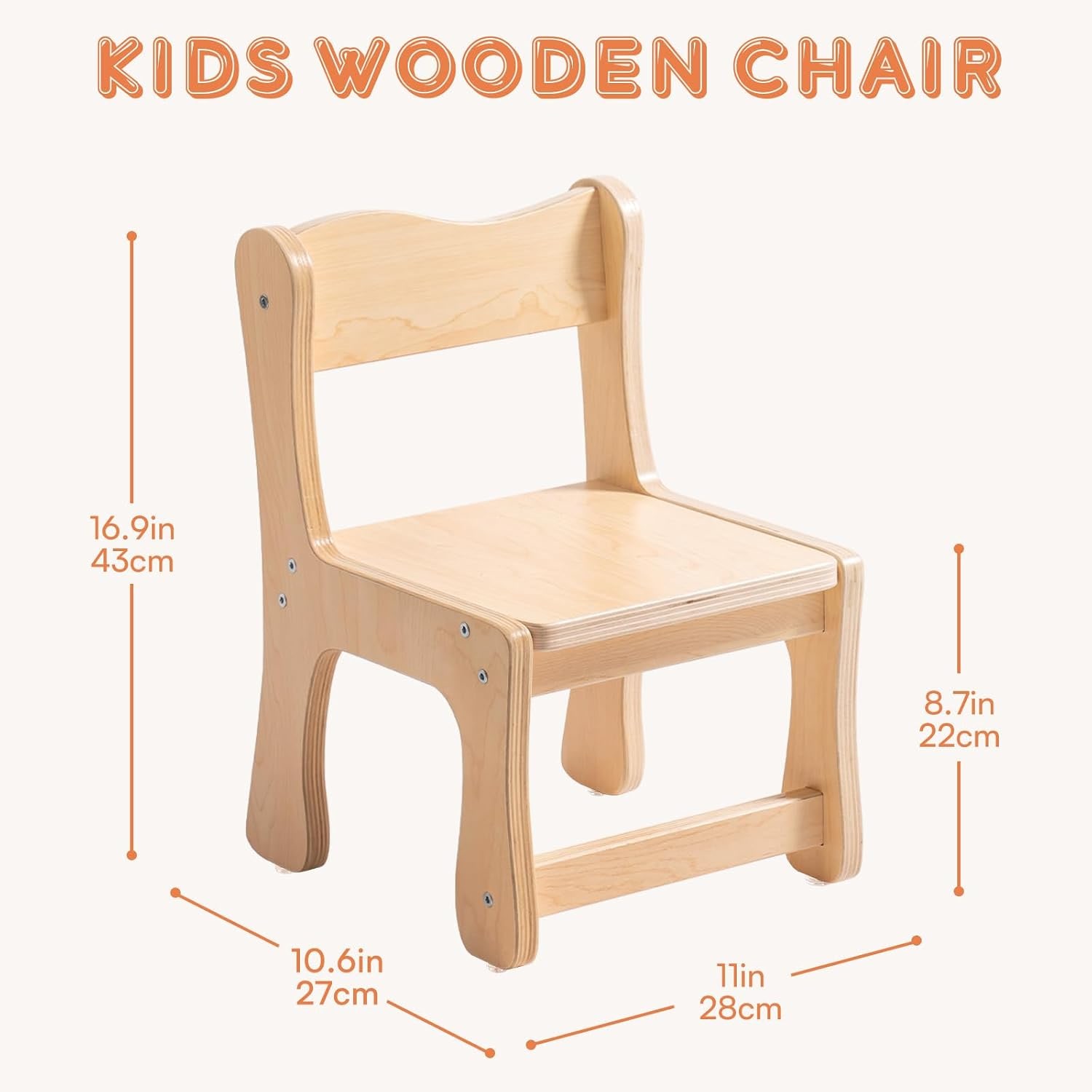
Each chair in this pair measures 27 cm deep, 28 cm wide and 43 cm high. That is the overall outer size. The shape is curved and armless, the style is listed as contemporary and the pattern is solid.
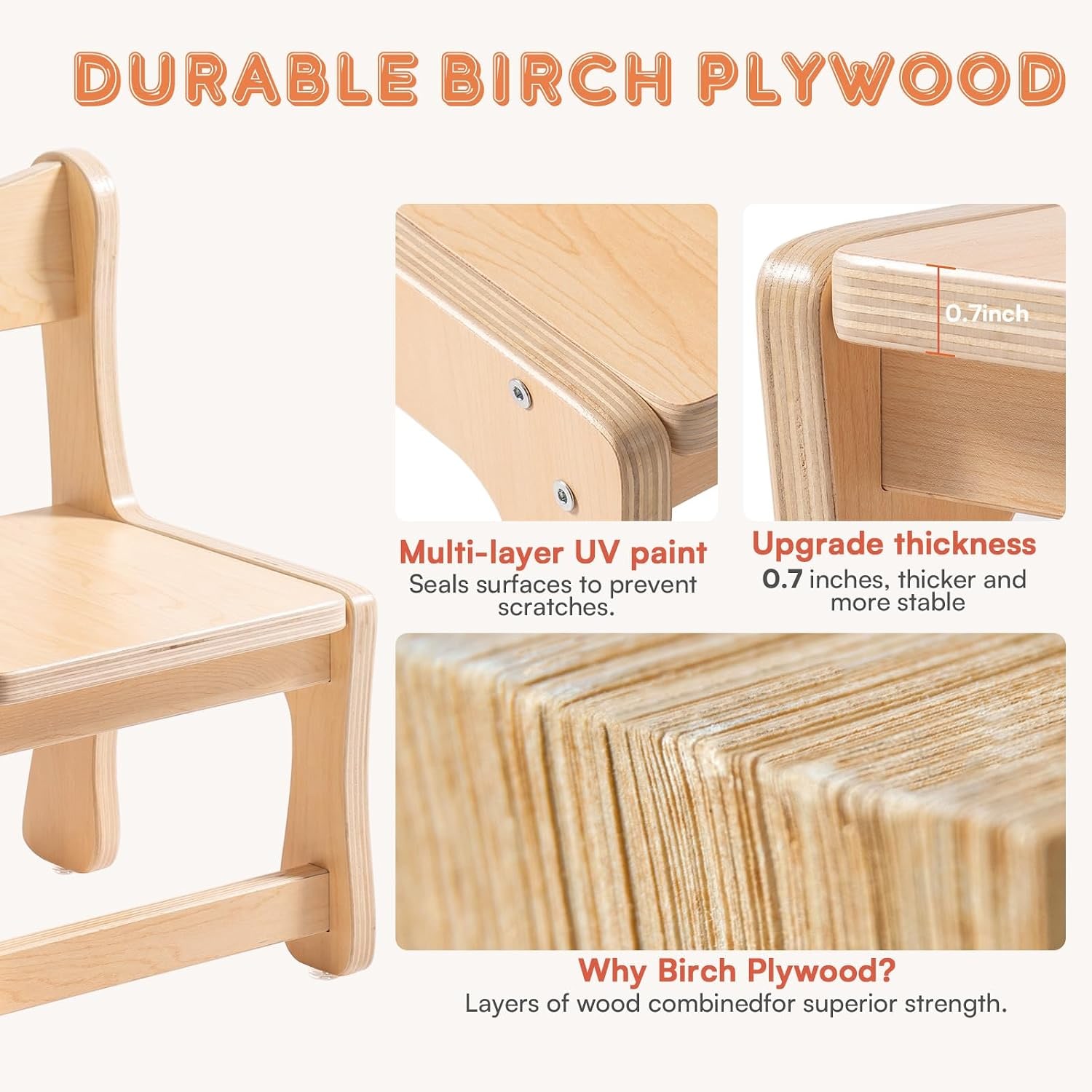
The material is wood throughout. The frame is wood, the seat is wood, and the overall material type is wood. There is no upholstery, no foam and no fabric to deal with. The set ships as a 2-pack at a combined 1.81 kg, and assembly is required.
Some details are simply not stated by the maker. Colour, the specific timber species, the finish, the weight capacity and the country of origin are all unlisted, and we are not going to guess at them. Judge the chairs on what is confirmed, which is the size, the wood construction, the armless curved shape and the fact that you get two.
Why timber rather than plastic or foam
Plastic kids chairs are cheap and light, and they have their place. They also crack at the stress points, go chalky in sunlight and tend to look tired within a year.
Soft foam seating has the opposite issue. It is comfortable at first, but foam compresses. After a few months of being bounced on, a soft seat holds a permanent dent and no longer supports the child the way it did.
Timber does neither. It does not sag, it does not flatten, and the knocks it picks up read as wear rather than damage. A wooden chair that gets scuffed still looks like a wooden chair. That is a big part of why solid wood children's furniture tends to get handed down between siblings instead of thrown out.
Wood is also heavier than plastic in a useful way. A chair with a bit of mass stays where it is put. It does not skate across the floor when a child leans back.
Who the set suits
Two chairs is a deliberate number. One chair is a solo seat. Two chairs make a space where things happen together.
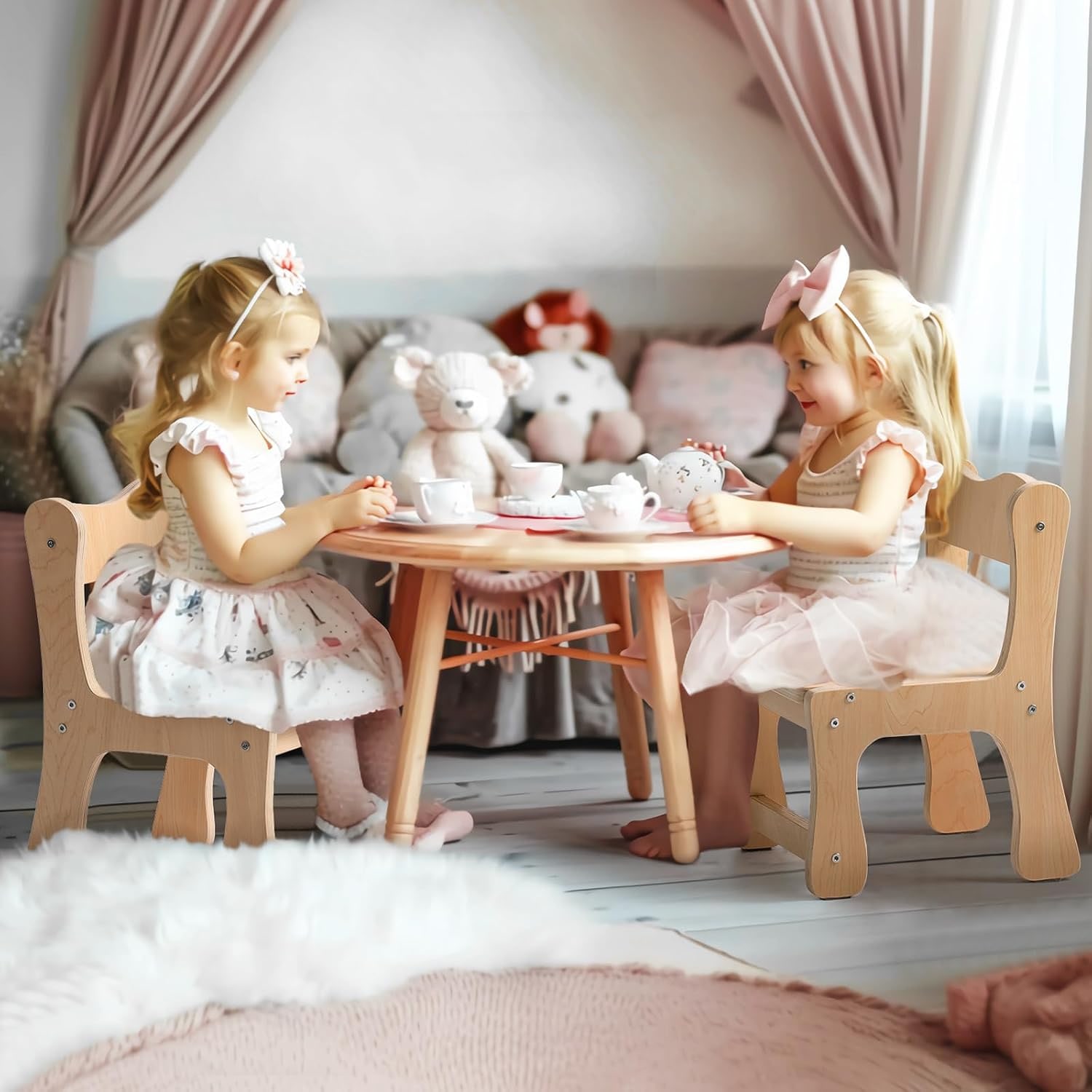
That covers a few common situations. A sibling pair who both need a seat at the craft table. A single child who regularly has a friend over. A reading corner where one chair holds the reader and the other holds the books and the soft toys. A low table in a lounge that doubles as a snack spot.
They are listed for indoor use, so think playroom, bedroom, kitchen corner or the end of a hallway rather than a patio or a covered deck. Timber outdoors is a losing battle with damp.
If you already own a child-height table, measure the clearance underneath before ordering. These chairs are 43 cm tall overall. If your table apron sits lower than that, the chairs will not tuck fully under, which is fine for a craft station but annoying at a dining spot.
Getting the size right
Size is where most kids chair purchases go wrong, so it is worth two minutes with a tape measure.
Start with the table. Measure from the floor to the underside of the tabletop, then to the top of the tabletop. For comfortable drawing or eating, a child wants the tabletop somewhere around chest level when seated, and enough knee room underneath.
Next, measure the space. At 28 cm wide, two of these sit side by side in about 60 cm of wall with a small gap between them. A 27 cm depth means they barely stick out into a walkway. That compact footprint is exactly why children's chair sets work in rooms that are already full.
Finally, think about the child doing the sitting. A chair they can climb onto without a hand up is a chair they will use independently. Armless helps here, because they can get on from either side rather than having to go over the front.
Assembly, honestly
Assembly is required. There is no way around that with flat-packed timber, and it is the reason the pair ships at under 2 kg.
A few things make it painless. Lay a towel or the flattened carton on the floor and build on top of it so you do not scratch the finish. Lay out every part before you start and match them to the instruction sheet. Start every fixing loosely by hand, get the whole frame squared up, then tighten everything down in stages. Fully tightening one leg before the rest are in place is the classic way to end up with a chair that rocks.
Once built, sit the chair on a flat floor and press each corner. If there is any rock, loosen slightly, re-square and retighten. Then do the same for the second chair.
Put a reminder in your phone for three months' time to check the fixings again. Chairs that get dragged, climbed and moved between rooms will loosen eventually, and a two-minute check keeps them tight.
Keeping them looking good
Timber care is simple and mostly about restraint.
Wipe spills quickly with a soft, slightly damp cloth, then dry the surface straight away. Water sitting on timber is what causes marks and lifting, not the wipe itself. Skip the harsh solvents, bleach sprays and abrasive pads, which can strip or dull the finish.
Keep the chairs away from a radiator, a heat pump outlet or a sunny window where they will bake. Dry heat and timber do not mix well over a long period.
Felt pads on the feet are a cheap upgrade. They protect your floor, cut down the scraping noise and make the chairs slide rather than catch. If you have hard floors, fit them on day one.
A few things to ignore
Weight capacity numbers get quoted a lot in this category. We do not have a stated figure for these chairs, so we are not publishing one. Use common sense instead and treat them as children's seating, not a step ladder or a platform for a standing adult.
Ignore vague claims about what furniture does for posture or development too. A chair that fits is more comfortable than a chair that does not, and more comfortable usually means a child sits for longer. That is the whole story.
The short version
You get two wooden chairs, each 27 x 28 x 43 cm, armless, curved and made of wood throughout. They are for indoor use, they need assembling, and the pair weighs 1.81 kg.
If you want low, stable, child-sized seating for a craft table, a play corner or a reading nook, and you would rather have timber than plastic or foam, this set does that job without fuss. Measure your table clearance first, build them carefully, keep a cloth handy for spills, and retighten the fixings now and then.
Still unsure whether the height works with the table you already have? Send us the measurement and we will check it for you before you order.