
The complete guide
How to Choose a Mahjong Set That You Will Actually Keep Using
The problem with most cheap mahjong sets
Plenty of people buy a mahjong set, play twice, and then leave it in a cupboard. It is rarely the game's fault. Usually the set itself was the problem. Tiles too small to read comfortably. Faces printed with ink that smudges after a few sessions. A flimsy box that splits, so tiles start living loose in a drawer and two of them vanish forever.
A game that involves 144 pieces, four players and a lot of shuffling puts real wear on the components. Mahjong tiles get picked up, slapped down, stacked into walls and knocked over, again and again. If the set cannot take that, the game stops being fun. People squint at the faces, hands slow down, and somebody eventually suggests cards instead.
That is why tile quality is the first thing to look at, ahead of price and well ahead of looks. A set that reads clearly and feels solid gets played. A set that does neither becomes shelf decoration.
What makes a tile hold up
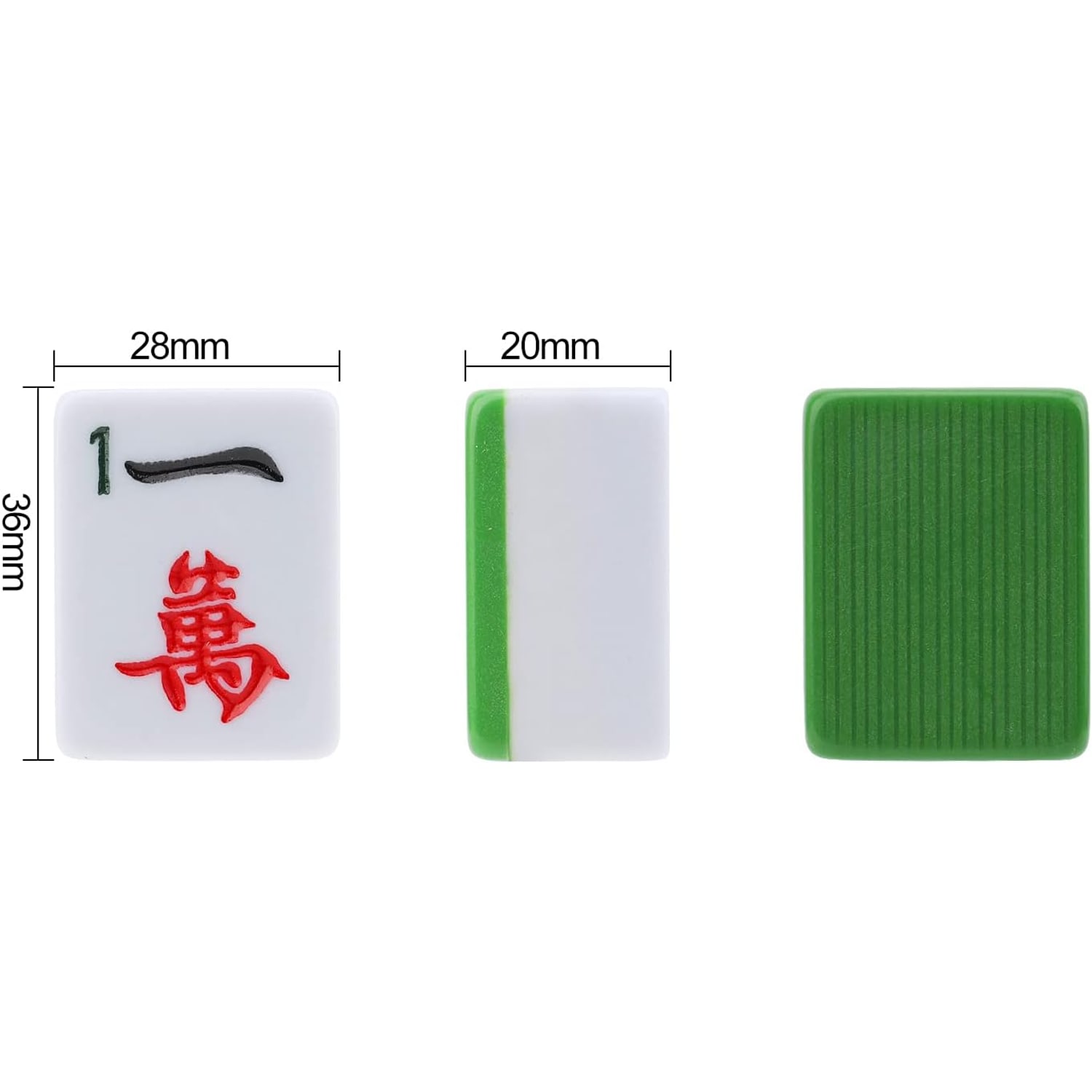
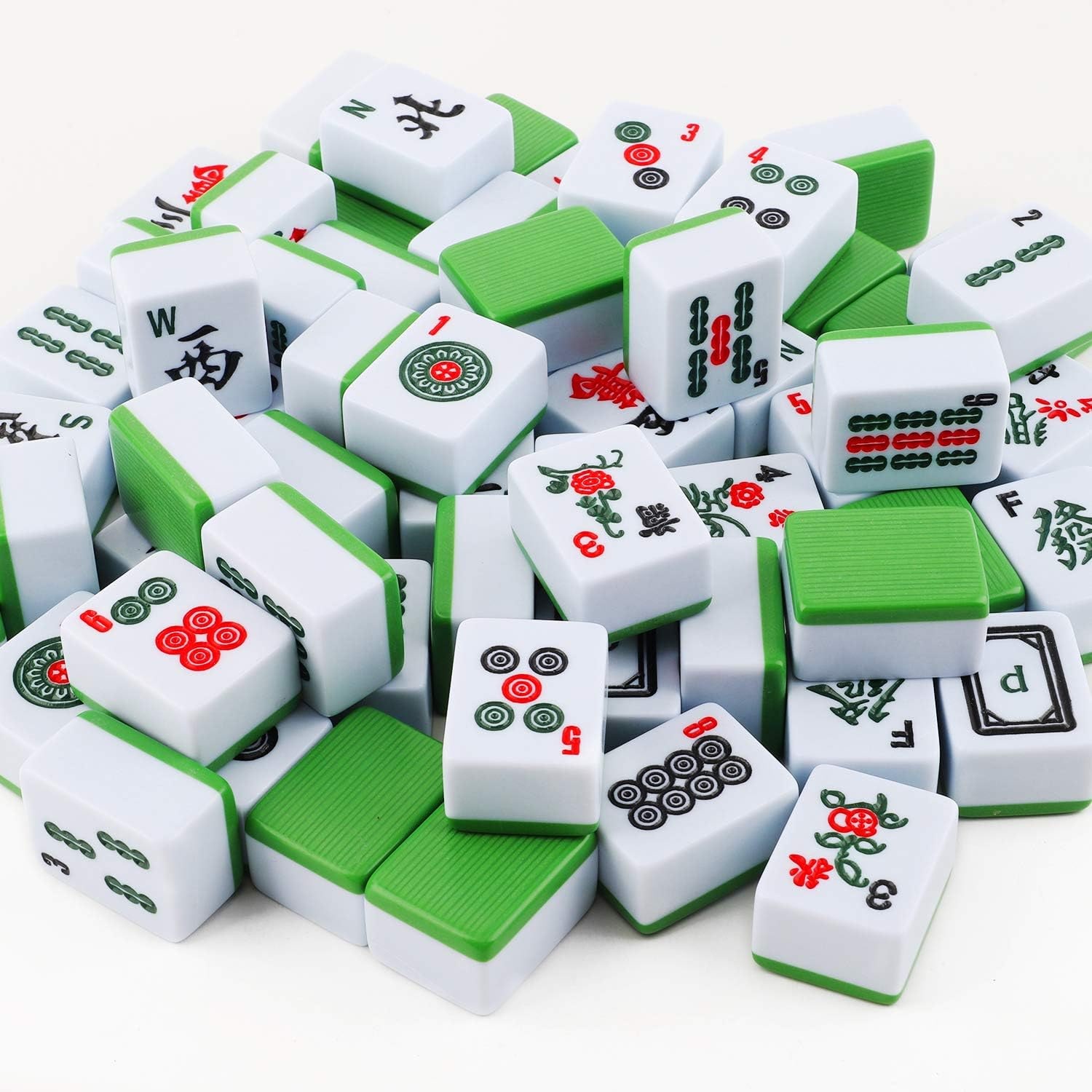
This set uses resin tiles with the numbers and characters carved into the face rather than printed on top. The difference shows up over months rather than days. A printed face sits on the surface, so every shuffle rubs it slightly. Carved faces sit below the surface, with colour filled into the recess, so the shape stays sharp even when the surface has been handled thousands of times.
Resin is a sensible middle ground for tiles. It is denser than hollow plastic, so the tiles have some weight and make the clacking sound regular players expect. It is also easy to keep clean, which matters more than people realise. Tiles get handled constantly during a game, often alongside snacks and drinks. A quick wipe with a damp cloth is usually enough.
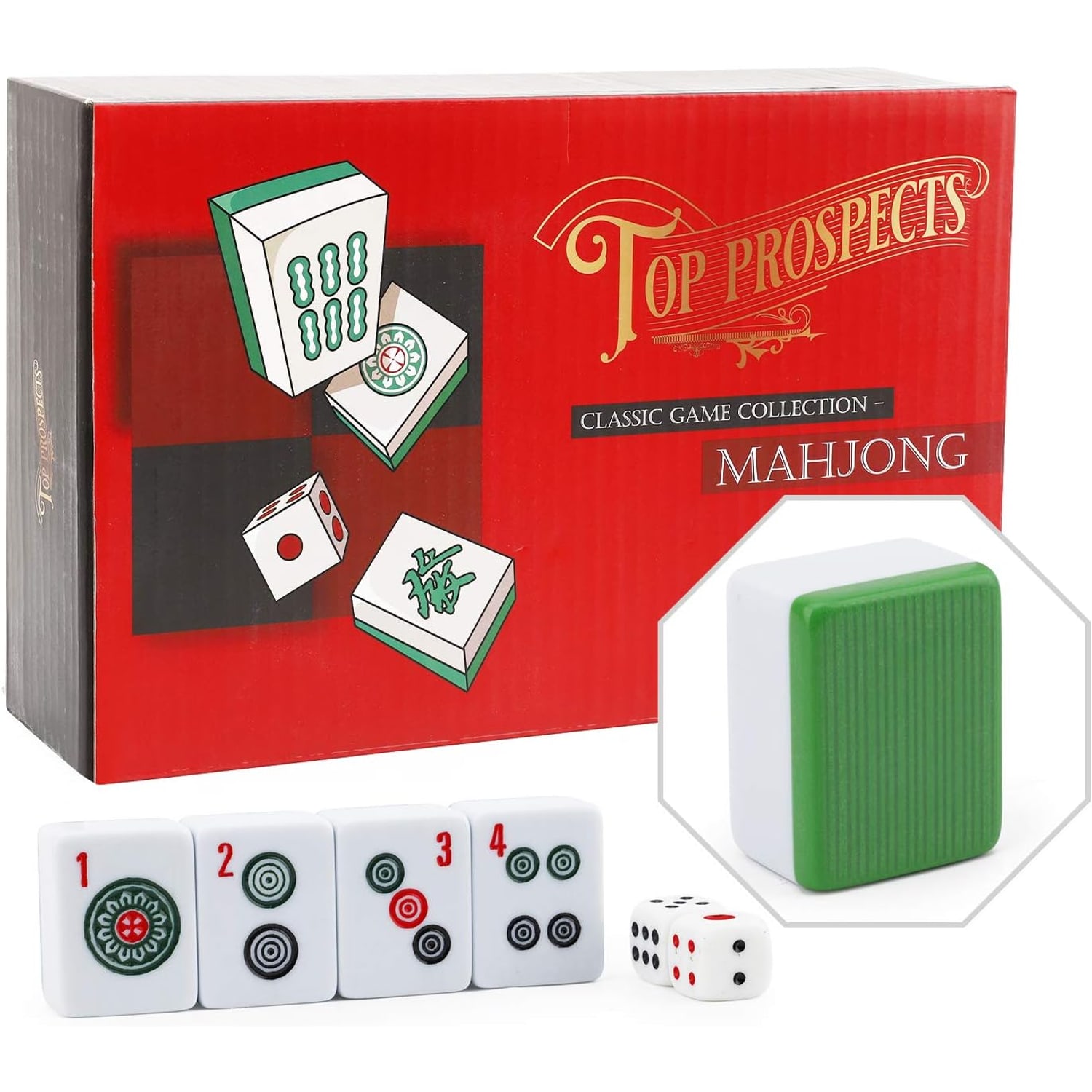
Size is the other half of it. These are larger tiles, and the carved marks are easy to pick out from across a table. If you have ever played on a travel set with tiles the size of a fingernail, you will know how much mental effort goes into just reading your own hand. Bigger tiles free you up to think about strategy instead.
Who this suits
Four players is the standard mahjong table, and this set is built around that. If your household plays regularly, or you have a group of friends who meet for games, a full-count set of this size is the right choice. It is also a reasonable pick for someone learning, because the clarity of the tiles removes one of the main frustrations beginners hit.
It suits older players too. Hands that struggle with small, slippery pieces tend to get on much better with chunky tiles that have a bit of grip. The same goes for anyone whose eyesight is not what it was. One of the quiet reasons people look for the best large mahjong tiles is simply that they want to keep playing comfortably.
It is less suited to very young children. There are 144 small parts in the bag, so it is not for children under 3. Older kids who can sit through a turn-based game often enjoy learning mahjong with an adult, though expect the first few sessions to be mostly teaching.
Reading the tiles
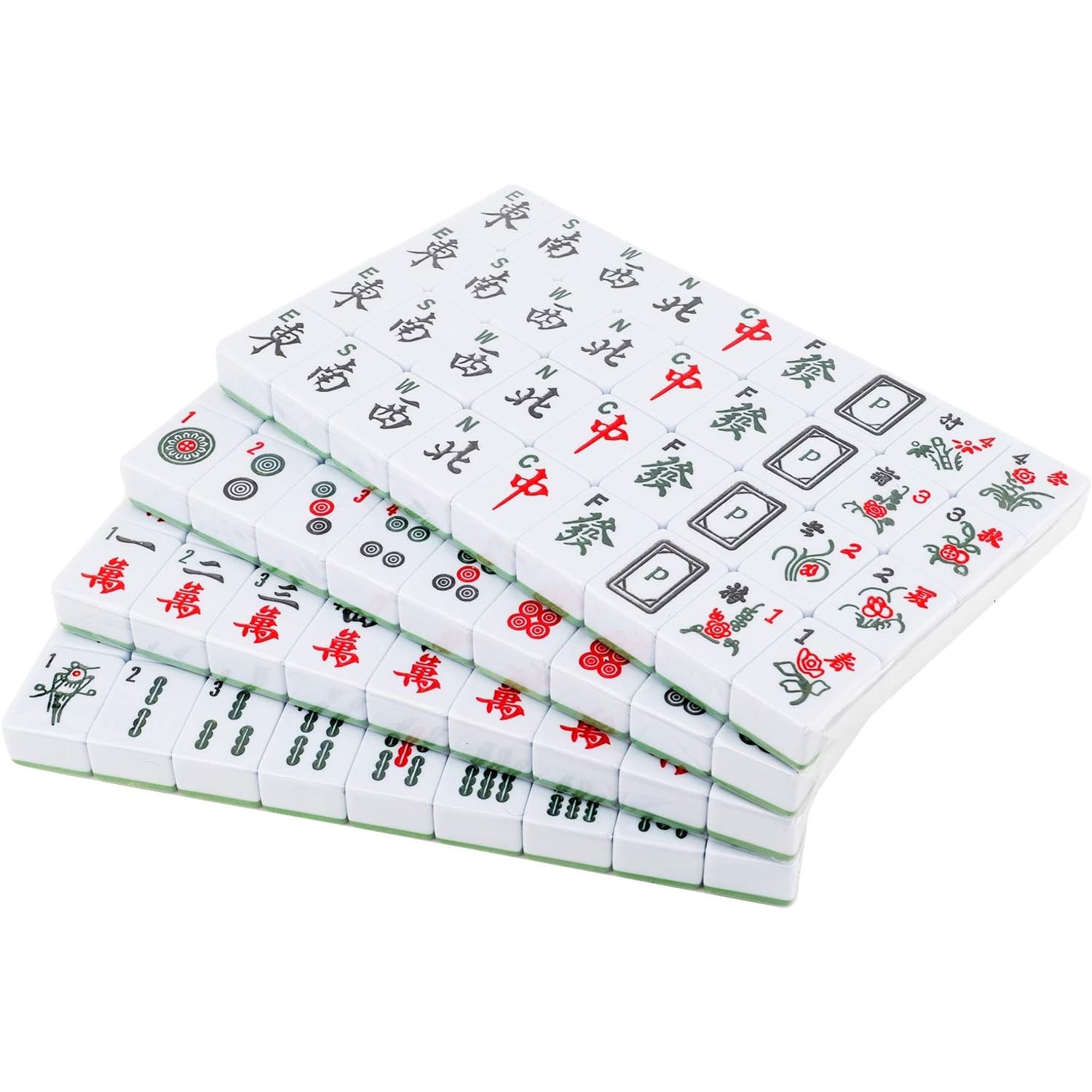
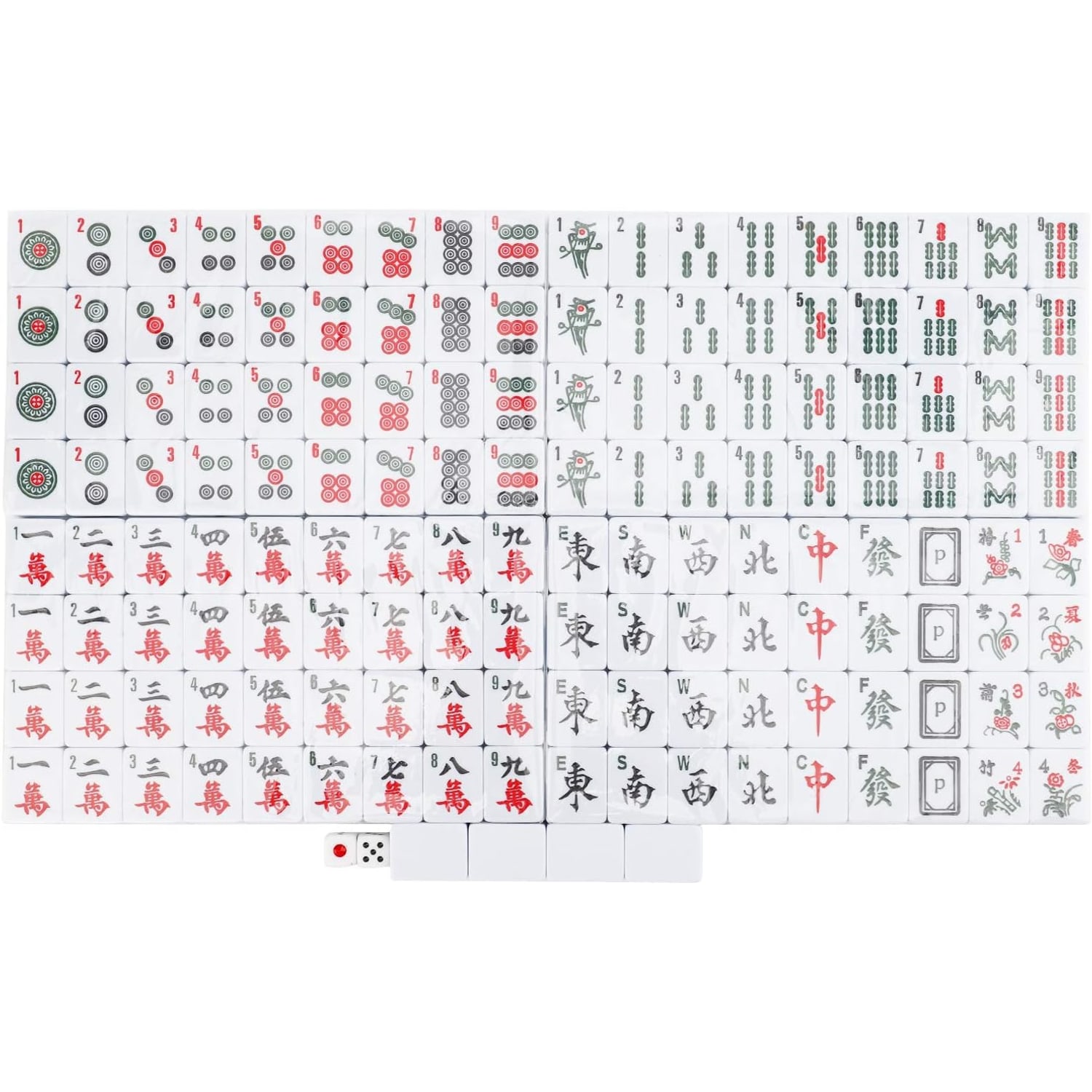
The tiles are marked in Chinese, which is the traditional format. That sounds intimidating if you have never played, but it is a much shorter learning curve than it looks. There are three suits: circles, bamboo and characters. Circles and bamboo are picture-based and you can count them at a glance. Only the character suit needs you to recognise numerals, and there are just nine of them to learn.
On top of the suits sit the honour tiles: four winds and three dragons. Then there are bonus tiles, usually flowers and seasons, which most rule sets set aside and replace when drawn. Within one evening, most people stop having to think about which tile is which.
If you are shopping for the best mahjong set for learners, do not be put off by Chinese markings. They are the standard, nearly every tutorial online uses them, and learning them means you can sit down at anyone's table later.
Practical things to check before you buy
Count matters. 144 tiles is the full Chinese set. Some budget sets ship with fewer and leave out the flowers and seasons, which limits which rules you can play. This one has the full count.
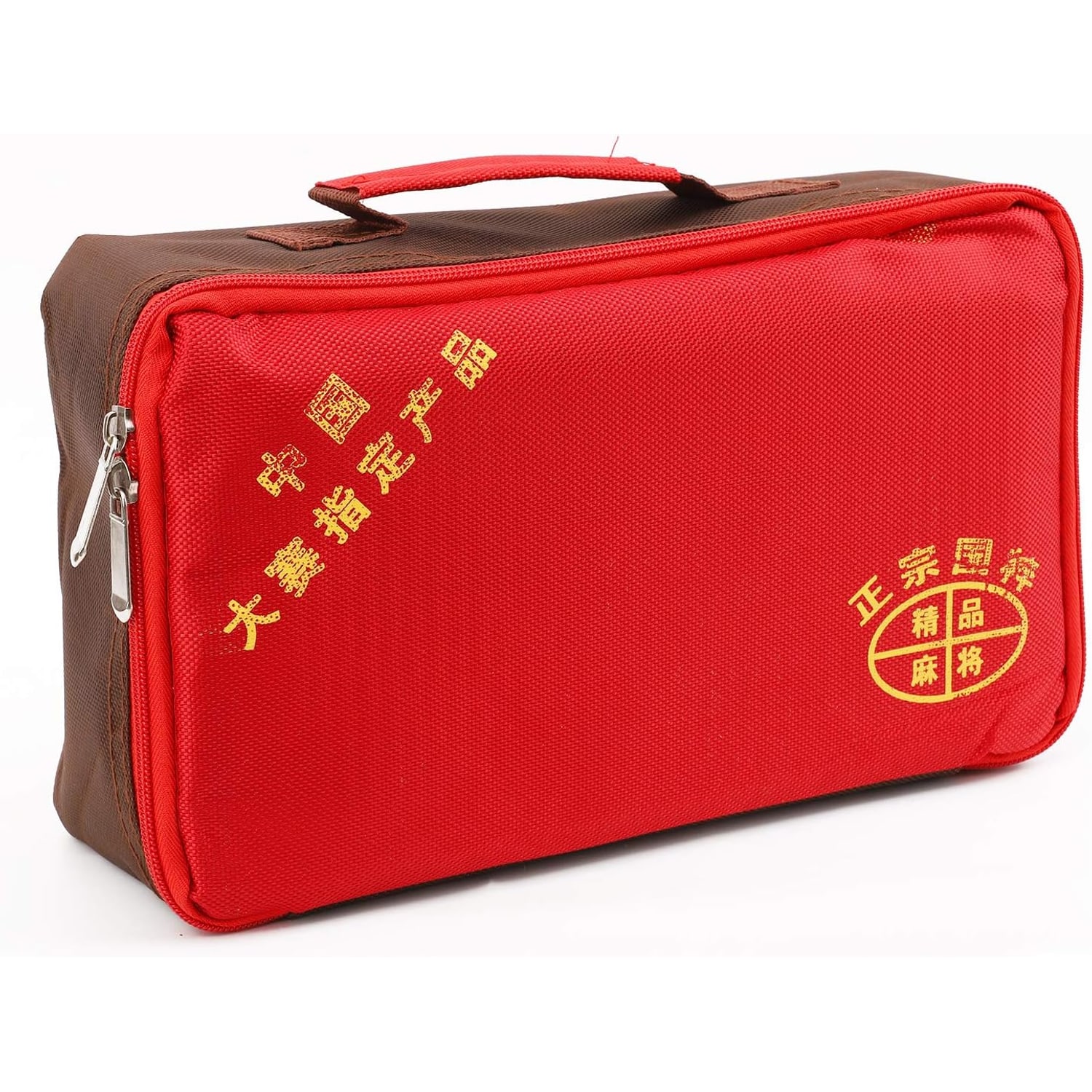
Storage matters almost as much. This set comes in a bag with an overall packed size of 29 x 19 x 10 cm. That is compact enough to slide onto a bookshelf or into a weekend bag, and crucially it keeps all the tiles in one place. The single biggest cause of a dead mahjong set is a lost tile. A zipped bag solves most of that problem on its own.
A few things the maker does not state, so plan around them. There is no confirmation that dice, racks or a scoring aid are included. Two ordinary six-sided dice will cover the dice requirement. Racks are optional and plenty of players never use them. For scoring, a notepad or a phone app works fine while you settle on a rule set.
Setting up at home
You do not need a dedicated mahjong table. A square dining table with room for four is enough. Many players lay down a felt mat or a tablecloth, which does two useful things: it protects the table surface from tile edges, and it takes the sharp edge off the noise. Shuffling 144 tiles on bare wood is loud.
Agree on a rule set before the first hand. Chinese, Hong Kong, Japanese and American rules all differ, mostly in scoring and which hands are allowed. The tiles work for all the Chinese-style variants, so the only decision is which scoring system your group wants. Pick one, play a few hands with it, and change later if you want.
Expect the first session to run long. Once everyone knows what they are doing, a hand usually takes five to fifteen minutes, and a full set of rounds fills an hour or two nicely.
Looking after the set
Care is simple. Wipe tiles with a soft, slightly damp cloth and dry them before packing up. Avoid solvents, bleach and abrasive scourers, all of which can dull the carved faces. Do not soak the tiles.
Keep the bag out of direct sunlight and away from heaters. Heat and UV are what fade colour and warp plastics over time. Store the tiles in their bag with the zip closed, ideally flat rather than tipped loose in a drawer where edges can knock together.
If a tile does get dropped on a hard floor, check it for chips before it goes back in the bag. A chipped edge can scratch neighbouring tiles during shuffling.
The short version
If you want a set that gets used rather than stored, look for three things: the full 144-tile count, carved rather than printed faces, and a container that actually keeps everything together. This set covers all three, in resin, in green, packed into a bag at 29 x 19 x 10 cm.
It is sized for four players, needs no assembly and has no electronics to fail. Add two dice and somewhere to keep score and you have everything a regular game night needs. Learn the three suits, pick a rule set, and the rest comes with playing.