
The complete guide
How to Choose a Kids Sofa Chair That Lasts Longer Than the Phase
The problem with where kids actually sit
Watch a child in their own room for half an hour and you will notice something. They sit on the floor, then on the end of the bed, then on the floor again with their back against a wall. Almost none of those positions are comfortable for longer than ten minutes, which is roughly how long a picture book lasts before someone gets restless.
The reason is simple. Everything in a house is built for adults. A dining chair is too high and too hard. A lounge sofa swallows a small body so the feet dangle and the back gets no support. A beanbag feels great for a minute and then slowly sinks until the child is folded in half. None of it is wrong, exactly, but none of it is built for a sixty-centimetre torso reading a book.
A proper kids sofa chair solves that by getting the proportions right. Low seat, shallow depth, arms at the correct height for small elbows, and a back that actually meets the shoulders. Once a child has somewhere that fits, they stay there. Parents notice it fast, usually because the floor is suddenly less crowded.
How this chair is built
The structure matters more than the look, so start there. This chair uses high density foam over a wood frame. That is the combination you want. The frame gives the chair a defined shape so it reads as furniture rather than a cushion, and dense foam resists the flattening that turns cheap kids' seating into a sad pancake by month three.
Low density foam and loose polyester filling both compress under repeated weight and do not spring back. You see it in budget chairs where the seat develops a permanent dent shaped like a child. Denser foam pushes back every time it is loaded, so the seat keeps roughly the same feel from week one to week fifty.
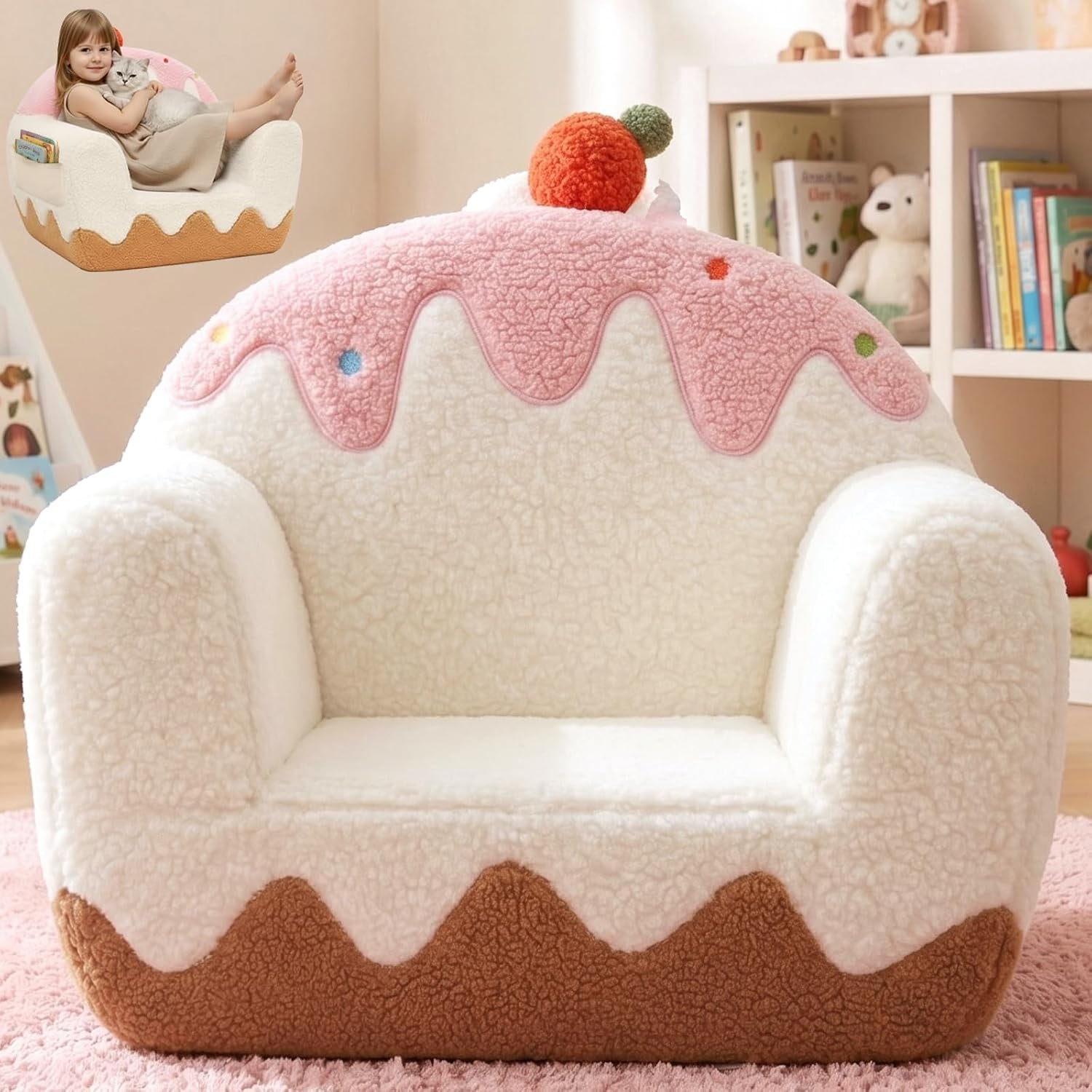
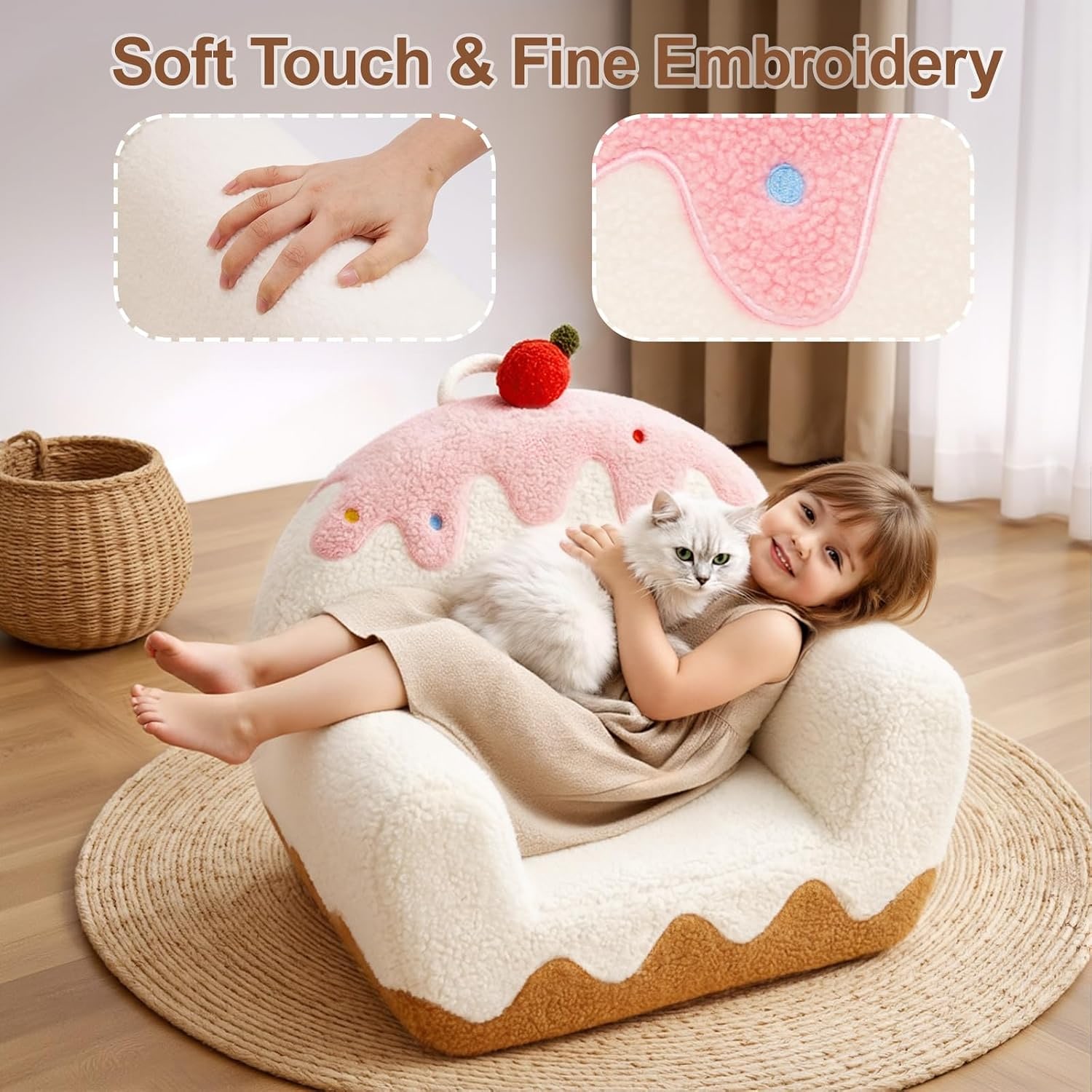
On top sits sherpa, a polyester teddy fleece with a looped pile. It is soft without being slippery, which matters when a child is wriggling. The Ice Cream colourway comes with a rainbow pattern and a textured finish.
The shape is described as L-shape with a pillow back, padded arms, head support and a sled base. In plain terms, that means a squared seat cushion, a soft back that a child can sink their head into, soft arm rests on either side, and a runner underneath instead of four separate legs.
The two details that decide whether it gets used
Plenty of kids chairs look lovely and end up as a laundry shelf. The difference usually comes down to small practical features, and this one has two worth noting.
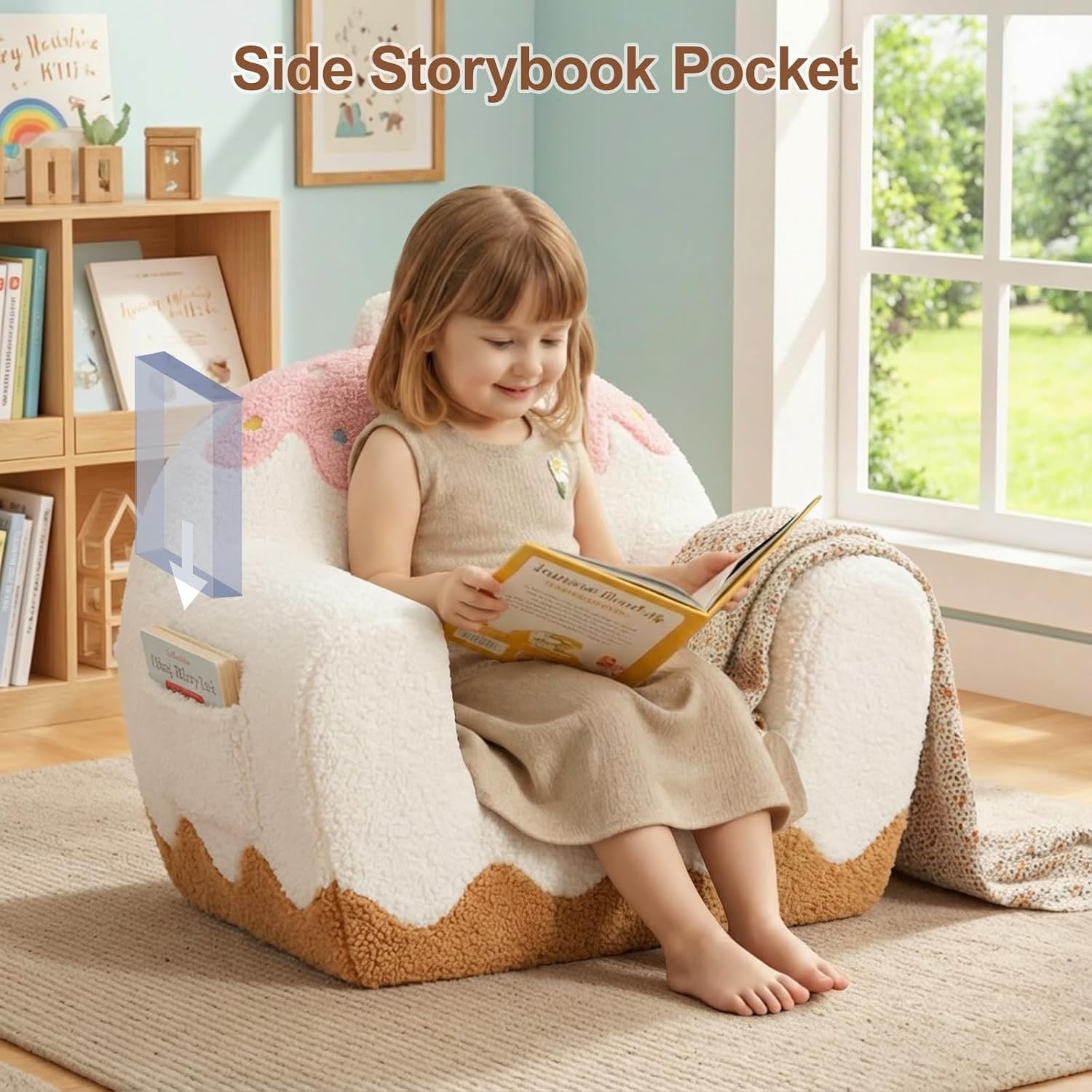
The first is the side book pocket. It sounds minor. It is not. A pocket within arm's reach of the seat means books, a soft toy or a tablet live beside the chair instead of on the floor. Children will use storage that requires no walking. Ask them to carry a book to a shelf across the room and the book stays on the carpet. That one pocket quietly shortens the nightly tidy-up.
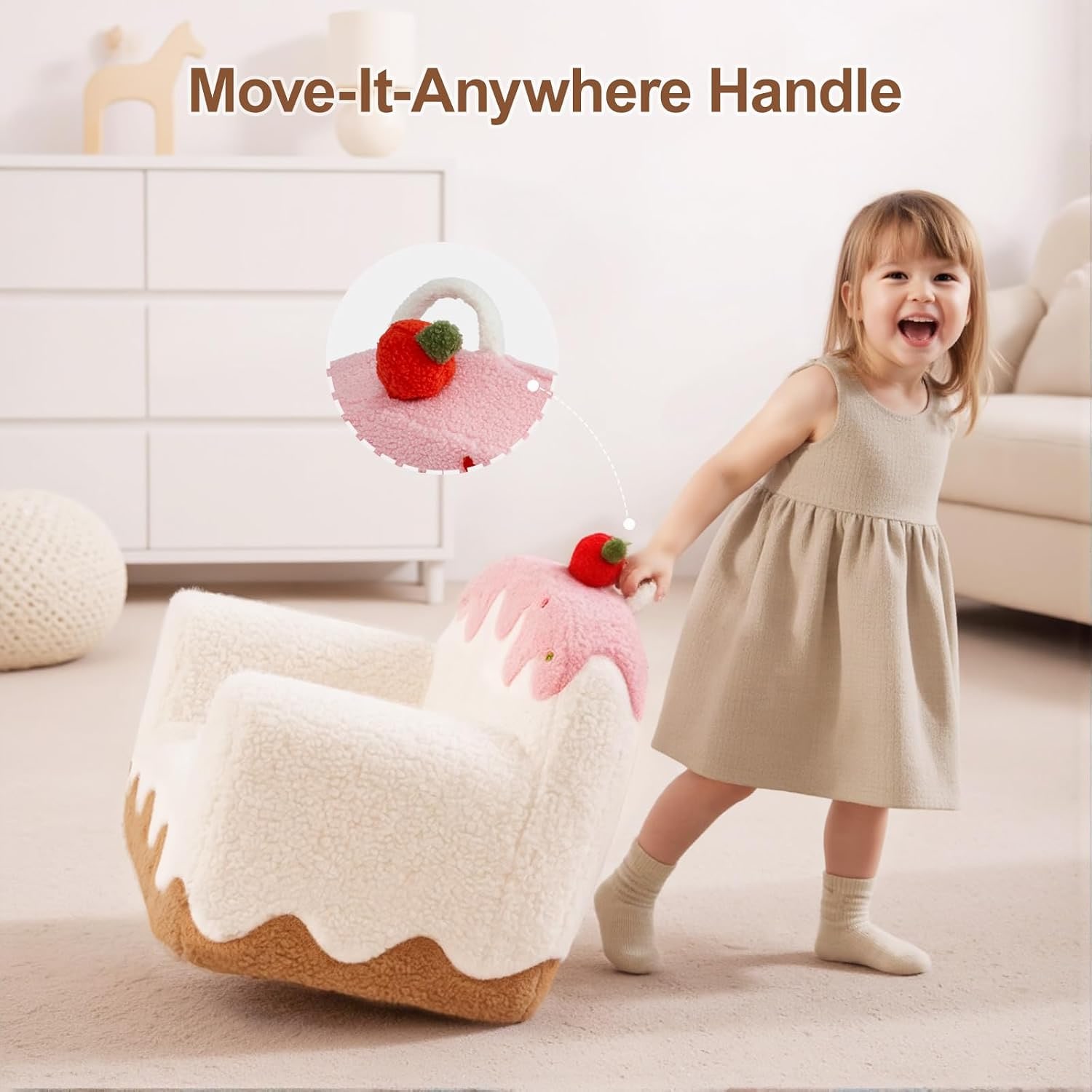
The second is the carry handle on the back, paired with the 2.27 kg weight. Combined, they mean the chair is genuinely portable for a child. It goes from bedroom to playroom to lounge for a film, then back again, with no adult involved. That sounds like a small thing until you realise a chair that can follow a child around gets used four times as often as one anchored in a corner.
Sizing and fit
The dimensions are 33.5 cm deep, 41.5 cm wide and 19 cm high, with a seat depth of 35.1 cm and a seat height listed as 5.9 inches. Read those carefully, because they tell you this is a low, close-to-the-floor seat.
That low height is deliberate in kids' furniture. When the seat sits close to the floor, a child's feet reach the ground, and feet on the ground is what stops a child sliding forward and slumping. A seat that is too tall leaves legs dangling and the child compensates by perching on the edge.
The footprint is small. At roughly 41.5 cm wide, the chair takes less floor space than most bedside tables. Measure your corner before ordering anyway. The most common sizing mistake is not the chair being too big, it is forgetting the clearance needed to swing a door or pull out a drawer beside it.
The maximum weight recommendation is 110 pounds. That covers normal sitting use for one child at a time. An ottoman is listed among the included components, which gives a footrest option.
Comparing it to the alternatives
The main competitors for the same corner are a beanbag, a floor cushion and a small wooden chair.
A beanbag is cheap and fun but offers no back support and no arms, and the beads compress over months until it sits flatter than you remember. It is a slouching product, not a reading product.
A floor cushion is even simpler and works well for brief sitting, but a child's back has nothing to rest against, so they either lean on a wall or curl forward. Neither is comfortable for a longer book.
A small wooden chair gives good posture and lasts forever, but it is hard, cold and rarely the thing a child chooses voluntarily. It is a desk chair, not a lounging one.
A foam kids chair with a sherpa cover sits between those. It has the structure of a real chair and the softness that makes a child want to climb into it. The trade-off is that fabric needs washing, which brings us to the next part.
Keeping it clean
This is where the removable cover earns its keep. Children eat where they sit. A chair that cannot be stripped and washed becomes a chair you are embarrassed by within a year.
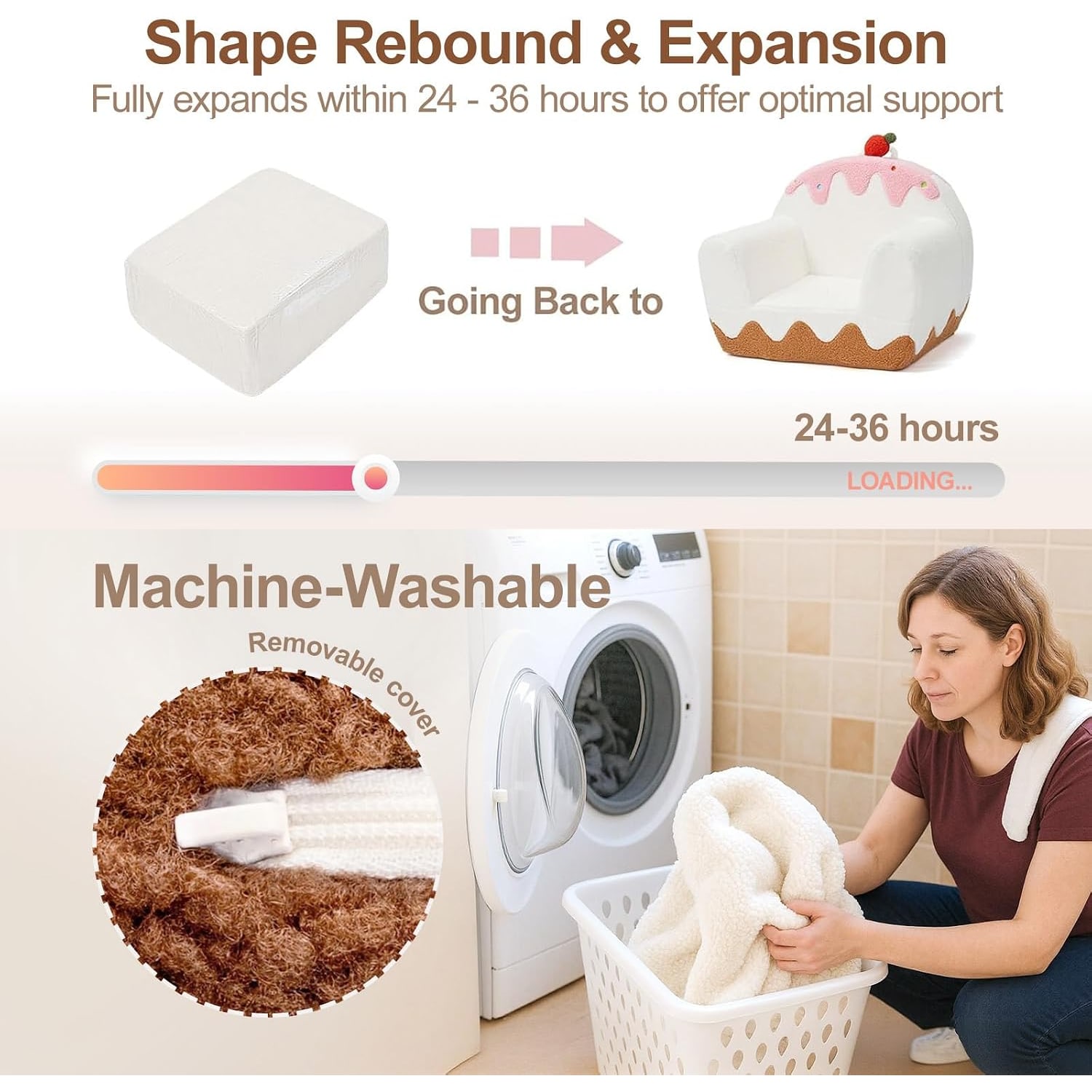
The guidance here is straightforward. Take the cover off and machine wash it. Use a cool cycle rather than hot, because high heat can mat fleece loops and shrink the fabric. Skip the fabric softener too. It coats the fibres and leaves sherpa feeling slightly waxy rather than plush. Air dry rather than tumble drying on high, and let it dry completely before refitting.
For the foam core, keep it dry. Spot clean with a cloth that is barely damp and mild detergent, then let it air out. Soaked foam takes days to dry properly and can hold moisture deep inside.
Between washes, a soft clothes brush lifts matted patches of pile and makes the chair look newer than it is. Fluff the pillow back by hand occasionally so the filling spreads evenly instead of settling at the bottom.
Keep the chair out of direct sunlight. It is listed for indoor use, and prolonged sun fades coloured polyester faster than almost anything else in a room.
Who it suits
This works best for a child who reads, draws or watches things sitting down, and who has a corner in a bedroom or playroom to claim. It is a single seat, so it suits one child rather than a shared space for siblings.
It also earns its place beside an adult lounge. A child with their own chair near the family sofa stops competing for a cushion, and the carry handle means the chair comes and goes as needed.
If you need seating for two, or something a child will grow into through their teens, this is not that product. It is sized and shaped for a specific window, and it does that one job properly.
The short version
You are buying a small, soft, properly structured seat that a child can move on their own. High density foam over a wood frame keeps the shape. Sherpa fleece makes it the spot they choose. The book pocket keeps reading material off the floor and the removable cover means spills are a wash cycle, not a disaster.
Check your measurements against 33.5 cm deep by 41.5 cm wide, note the low 19 cm height, and remember the maximum weight recommendation of 110 pounds. If those numbers work for your space and your child, the rest takes care of itself.