
The complete guide
How to Choose a Toss and Catch Game Set
The problem with most backyard ball games
Hand a five-year-old a bat and a ball and watch what happens. The ball goes past, they swing late, and then they spend thirty seconds walking after it. Do that four times in a row and the game is over, not because they stopped enjoying it but because almost nothing actually happened.
That gap between effort and reward is what puts a lot of children off outdoor games. The skill needed to make a bat-and-ball game fun is higher than it looks. You need to track a moving object, judge where it will be, and get a small striking surface to the same point at the same moment. That is a real coordination problem, and it takes years to get comfortable with.
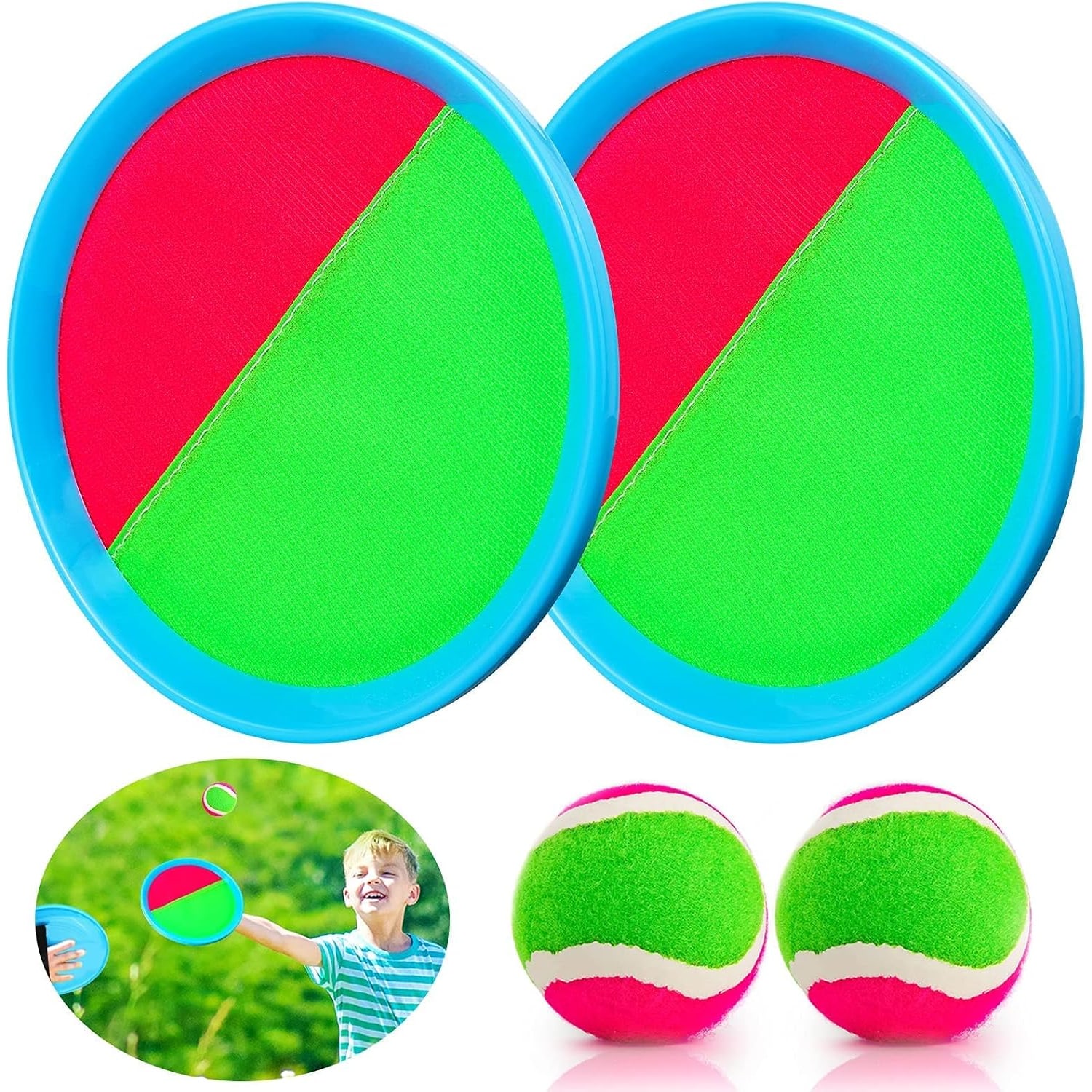
A toss and catch game set sidesteps the problem. The paddle is wide, the ball grips on contact, and the margin for error is generous. Get the paddle anywhere near the ball and you have made a catch. The feedback is instant, the ball is already in your hand, and you can throw it straight back. Five minutes in, a beginner is holding a rally. That is the whole trick.
How the grip actually works
The paddle face and the ball are both covered in a gripping surface that holds when the two meet. It is the hook and loop idea you already know from shoe fastenings and jacket cuffs, just applied to a game.
Pressing the ball onto the paddle is what sets the grip. A soft catch where the paddle gives slightly with the ball holds better than a stiff, flat block. Children work this out without being told within a few throws. Pulling the ball off takes a firm tug, which is part of the rhythm of the game rather than an annoyance.
The surface is also the part that needs the most looking after. Sand, dust, dry grass and pet hair all work their way into the grip and reduce the hold. A brush over the paddle face with your hand after a beach session, or a wipe with a damp cloth once in a while, is enough to keep it working properly.
Who this suits
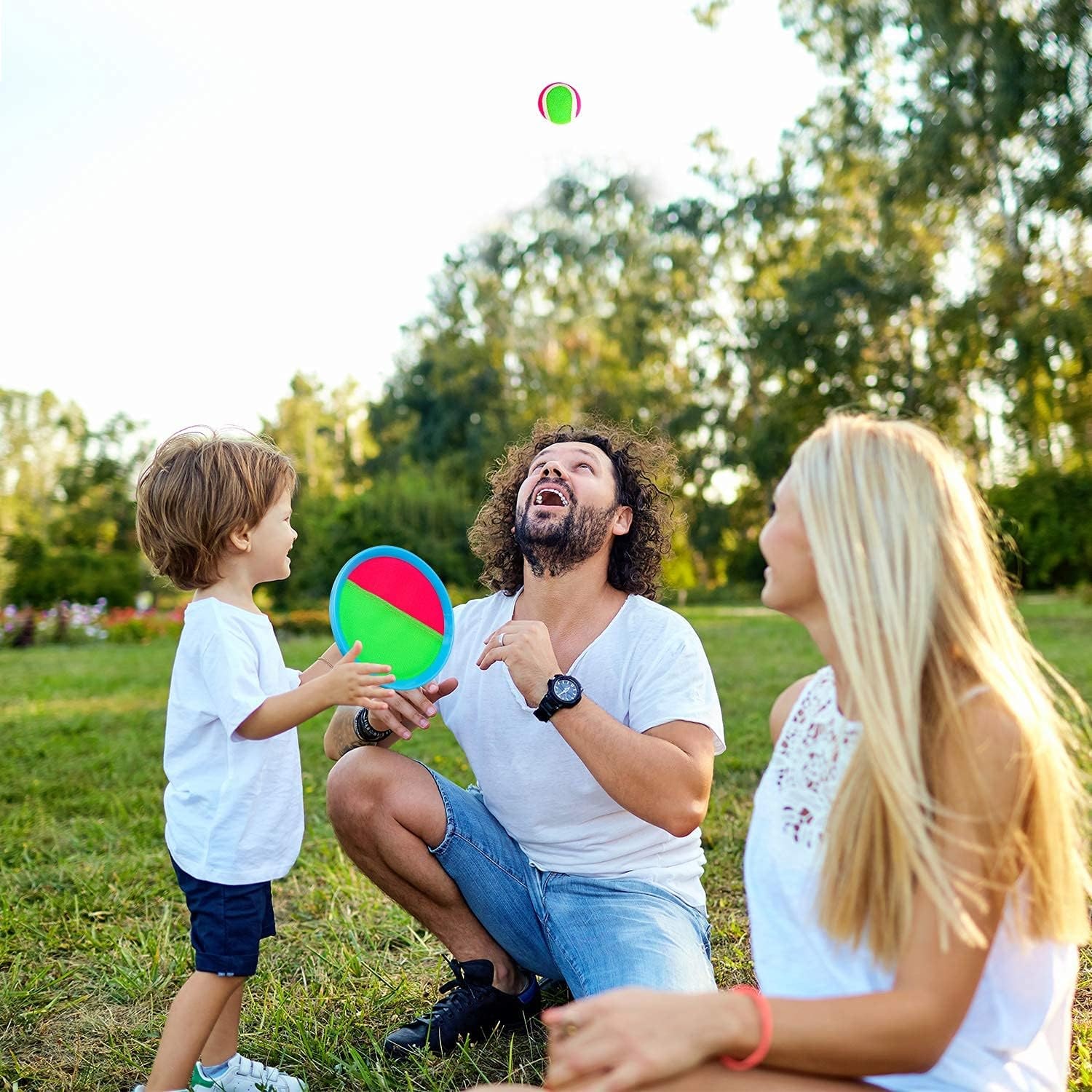
The set is listed for ages 3 and up, and the way it is usually played at the younger end of that range is an adult throwing and a child catching. One-directional play is still a game, and it gives a young player the catching side of the skill before they take on the throwing side.
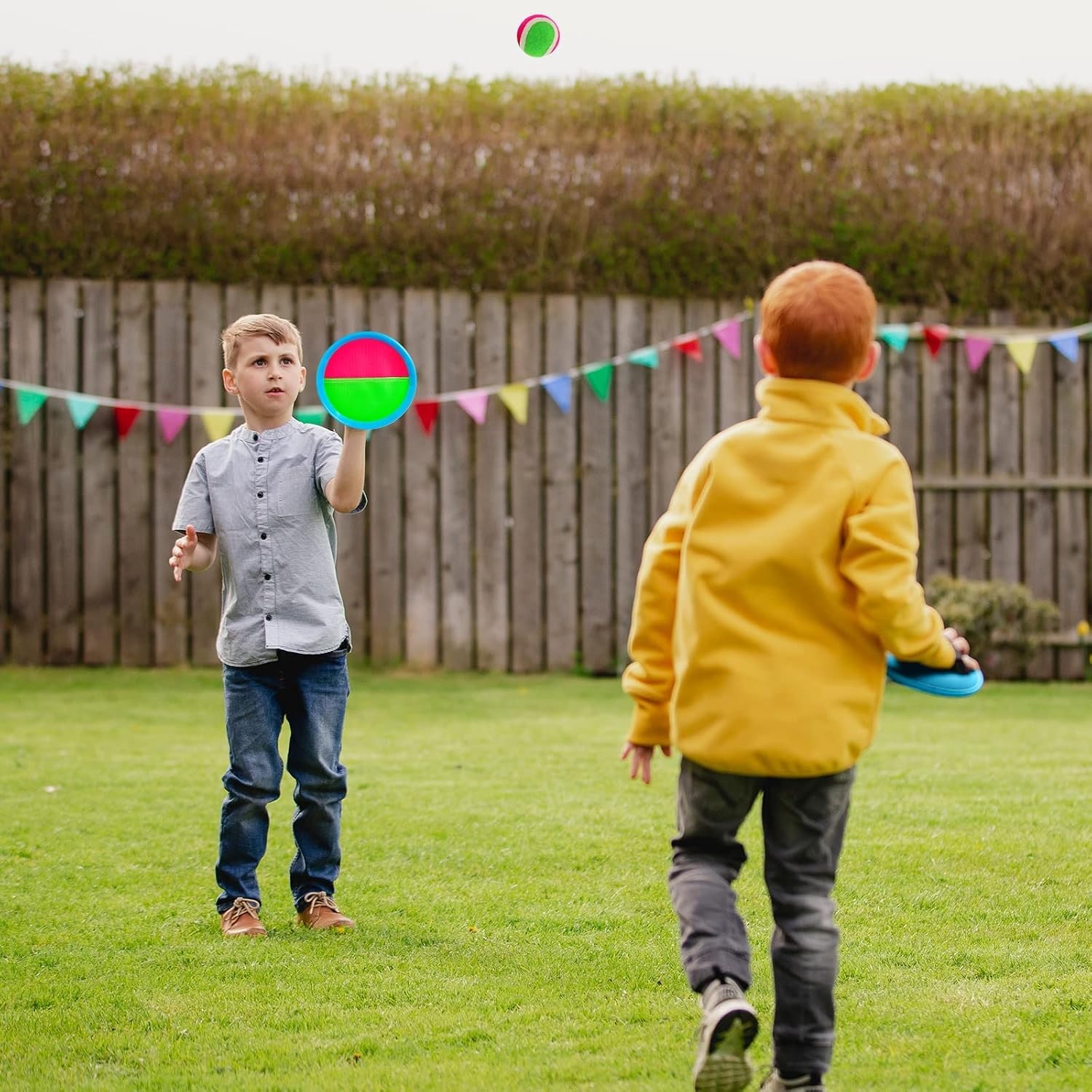
From around five or six, two children can run the game themselves with no adult involved. That matters on a long afternoon. A game that needs a referee is a game you end up running.
Older children and adults make it harder by choice. Step back further, throw faster, add a rule like left hand only or no moving your feet, and it stops being easy. Plenty of people use this as a genuine warm-up game rather than a children's toy.
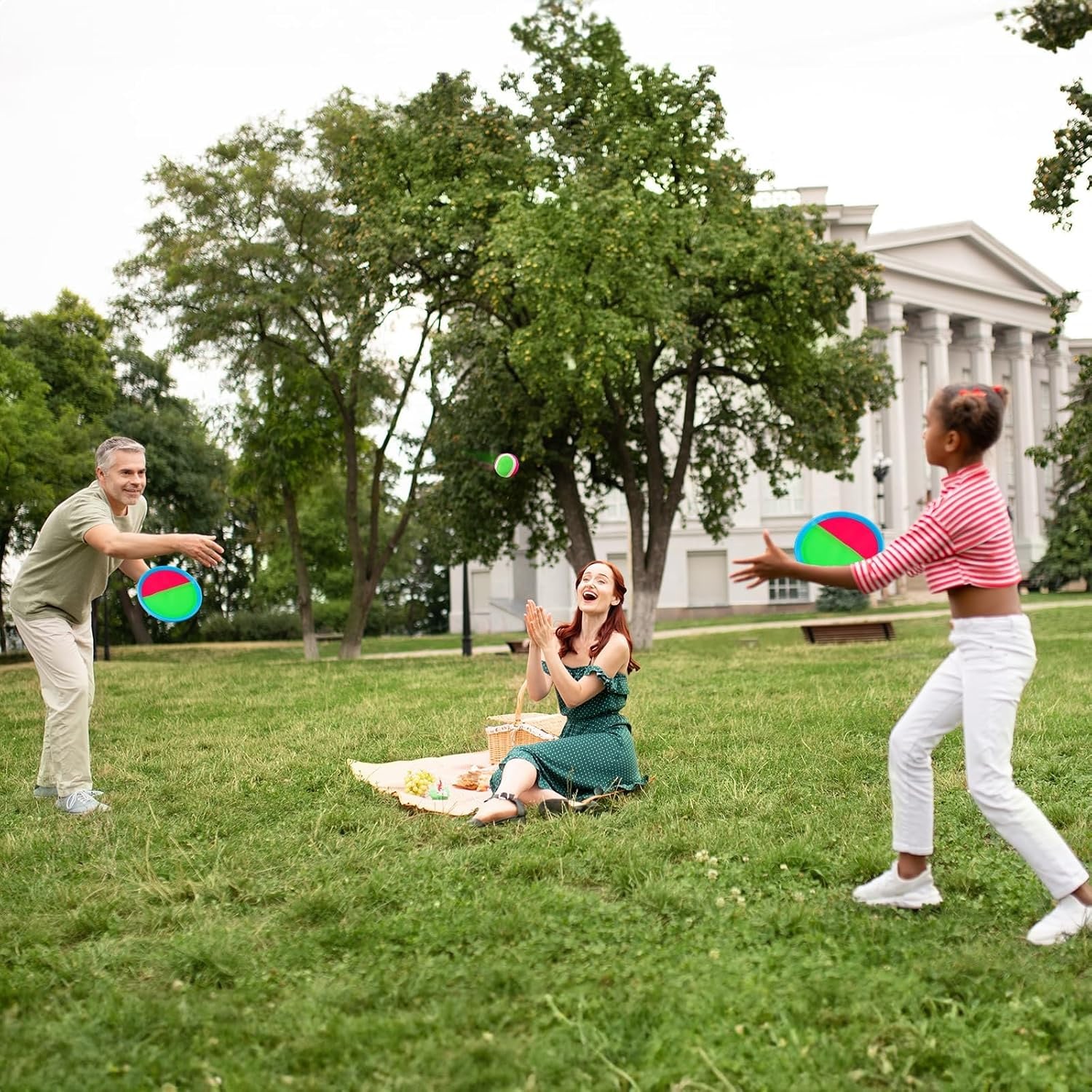
It also works nicely for mixed-age play. The adult moves back ten steps, the child stays close, and both are stretched without anyone having to go easy in an obvious way. That is harder to achieve with most games.
Where to play
The maker lists it for outdoor use. Grass is the most forgiving surface because a dropped catch lands softly and the ball does not roll far. Sand is just as good and has the added advantage that a missed throw stops dead rather than carrying on down the slope.
A flat driveway or a paved yard works, though the ball will skitter further when it is dropped, so leave a bit more space around the players. A park is ideal if you have one nearby, since you can set the players as far apart as you like.
Indoors is possible in a clear space with gentle underarm throws. A hallway suits it better than a lounge because the walls keep the ball contained. Move anything breakable out of the way before you start, which sounds obvious until someone does not.
Choosing between the sizes
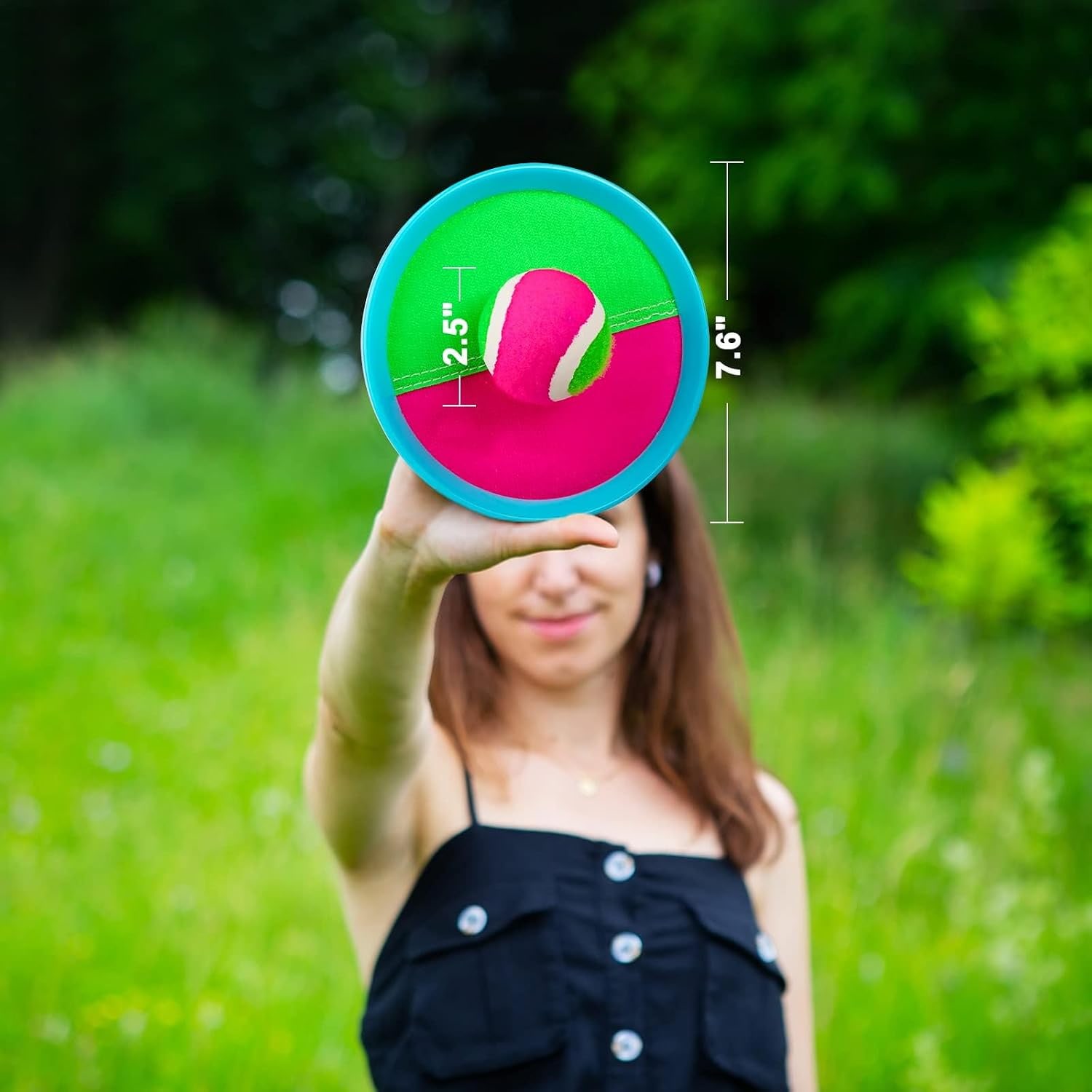
Two sizes are listed, medium and small. The maker does not publish exact paddle measurements, so the choice comes down to the players rather than the numbers.
Smaller paddles suit smaller hands and shorter arms. They are easier to hold at the right angle and lighter to swing for a long stretch, which matters more than catching area for a young player who is still building arm strength. The medium option gives a wider catching face, which helps when the throws are wild and suits older children and adults who are standing further apart.
If the set will be shared across a wide age range, the medium is usually the safer buy, since a slightly large paddle is easier for a small child to manage than a slightly small paddle is for an adult.
Four colours are listed, red, blue, green and yellow. Beyond personal preference, bright paddles are easier to find on a lawn at dusk, which is when they tend to get abandoned.
What is not stated
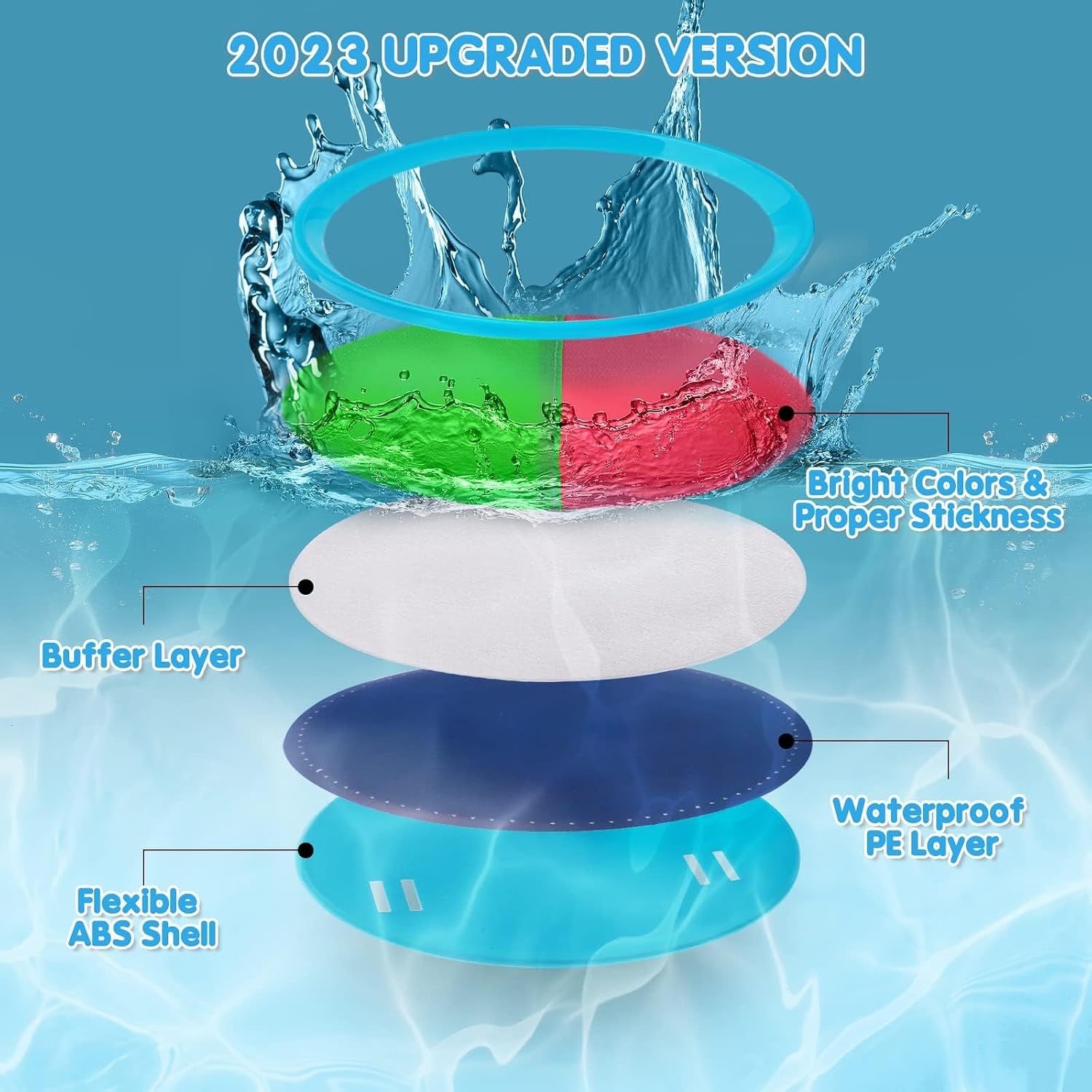
Being straight about this is more useful than guessing. The weight of the set is not specified, nor are the paddle dimensions beyond the medium and small labels. The brand and country of origin are not given either. What is confirmed is the foam construction, the two-player format, manual operation with no batteries, no assembly, and the included storage bag.
If an exact size is critical, for example because you are packing into a fixed space, the figures are not available and it is worth allowing some room.
Looking after it
Care is mostly about keeping the grip surface clean and the foam dry.
After a beach or park session, shake the sand and grass off before the set goes back in the bag. Debris trapped against the paddle face is the main cause of a ball that no longer holds well.
For a proper clean, use a damp cloth with a little mild soap on both paddles and the ball, then leave everything to air dry fully before packing up. Keep it away from radiators and direct heat, which is hard on foam, and skip the washing machine and the tumble dryer entirely.
Store the set in its bag somewhere dry. The bag is the reason the ball is still with the paddles in a year's time, so use it rather than leaving everything loose in a toy box.
Getting more out of it
A few variations keep a simple game interesting. Count consecutive catches and try to beat the product details from last time, which turns two players into a team rather than opponents. Move one step back after every successful catch and see how far apart you can get before the rally breaks.
Add a rule that the catching paddle has to be held in the non-dominant hand, which levels the field between an adult and a child instantly. Or play standing on one leg, which sounds silly and is surprisingly difficult.
None of this needs equipment beyond what is in the bag. That is really the point of a set like this. The best backyard ball game is the one that comes out of the cupboard regularly, and games come out regularly when they are quick to start and quick to pack away.
The short version
This is a two-player toss and catch game set with foam paddles, a gripping ball and a storage bag. No batteries, no assembly, nothing to set up. It is listed for outdoor use and suits grass, sand, a driveway or a park, with gentle indoor play possible in a clear space.
It is recommended for ages 3 and up, and it scales from an adult throwing to a young child right through to two adults standing well apart. Choose medium for mixed ages and wider throws, small for younger players and smaller hands. Keep the grip surface clean, let the foam dry before storing, and put it back in the bag. Do that and it will come out again next weekend, which is the only test that really counts.