
The complete guide
How to Choose a Kids Cleaning Toy Set That Gets Used
The problem with handing a child a real mop
Every parent hits this moment. You are mopping or sweeping, and a small person appears with their hand out, wanting a turn. You give them the handle. Within thirty seconds the mop head has hit a cupboard door, the handle is taller than they are, and the water bucket is now a hazard. You take it back, they get upset, and nobody has got any cleaning done.
The problem is not the willingness. Young children genuinely want to join in with household work, and that window of enthusiasm is worth using while it lasts. The problem is the equipment. Adult cleaning tools are built for adult arms and adult balance, and a child using them is working against the gear rather than with it.
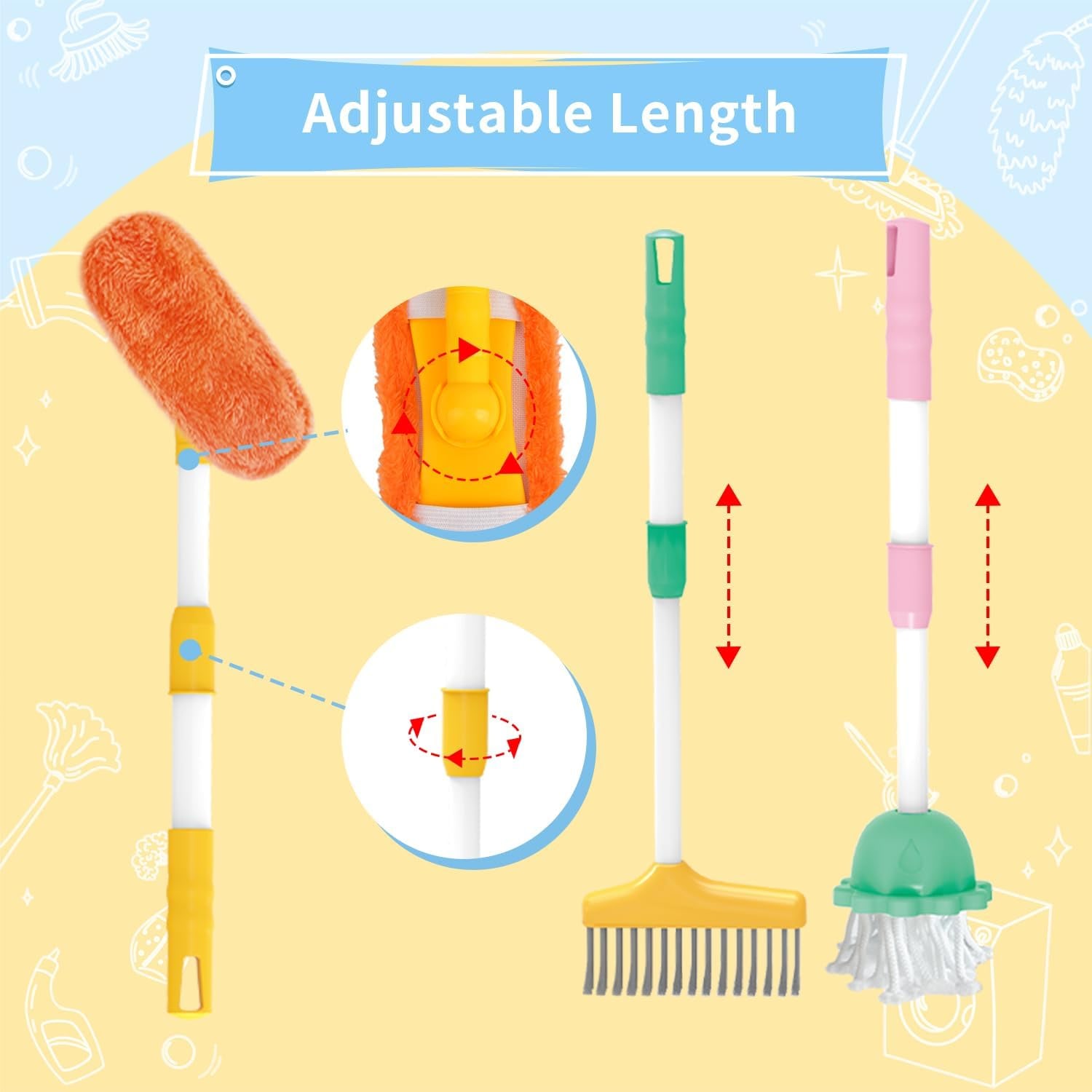
A kids cleaning toy set solves that by shrinking the tools instead of shrinking the job. The broom is short enough to steer. The bucket is small enough to carry without slopping. The mop handle extends to match whoever is holding it. Suddenly the child is doing the thing properly rather than struggling.
What is actually in a 15 piece set
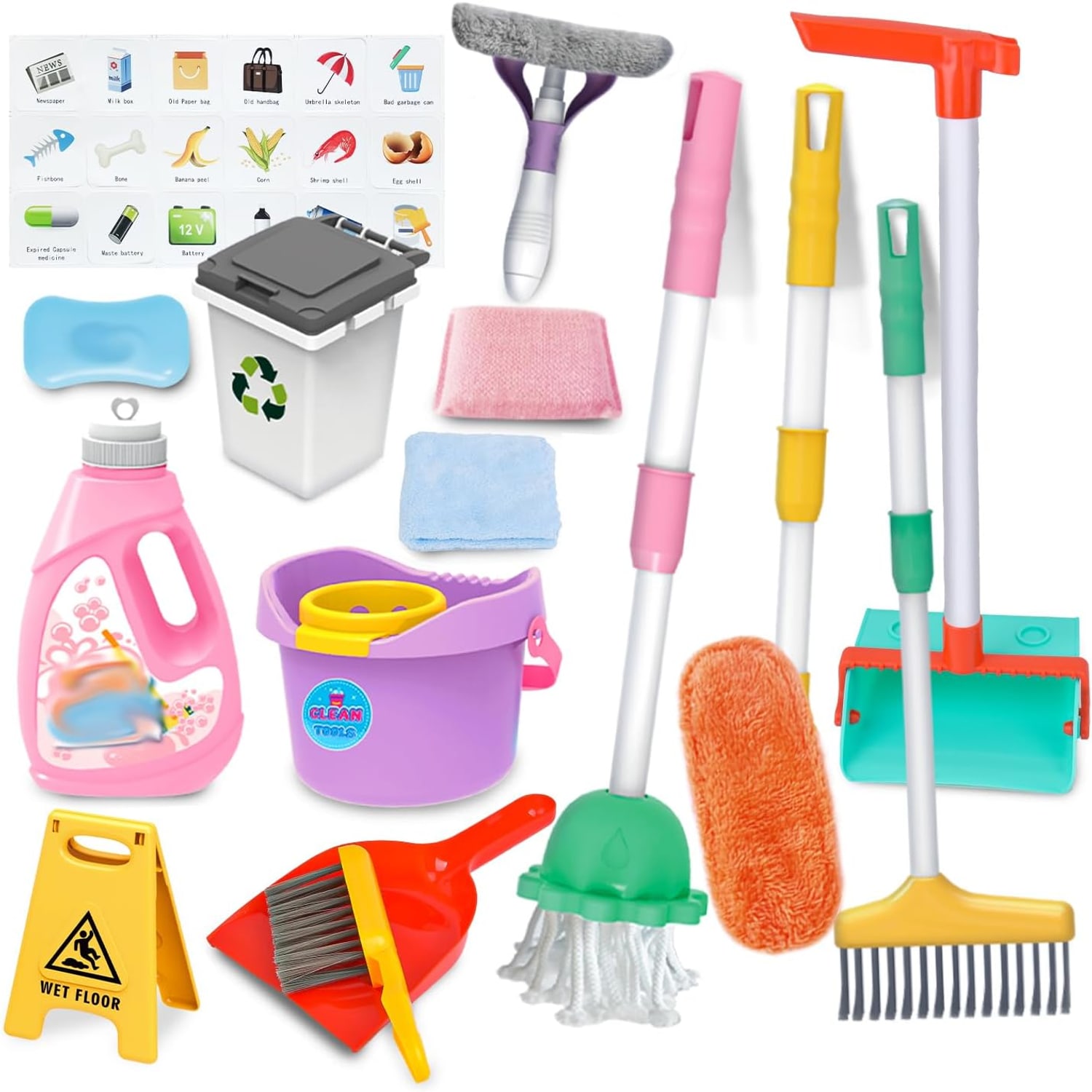
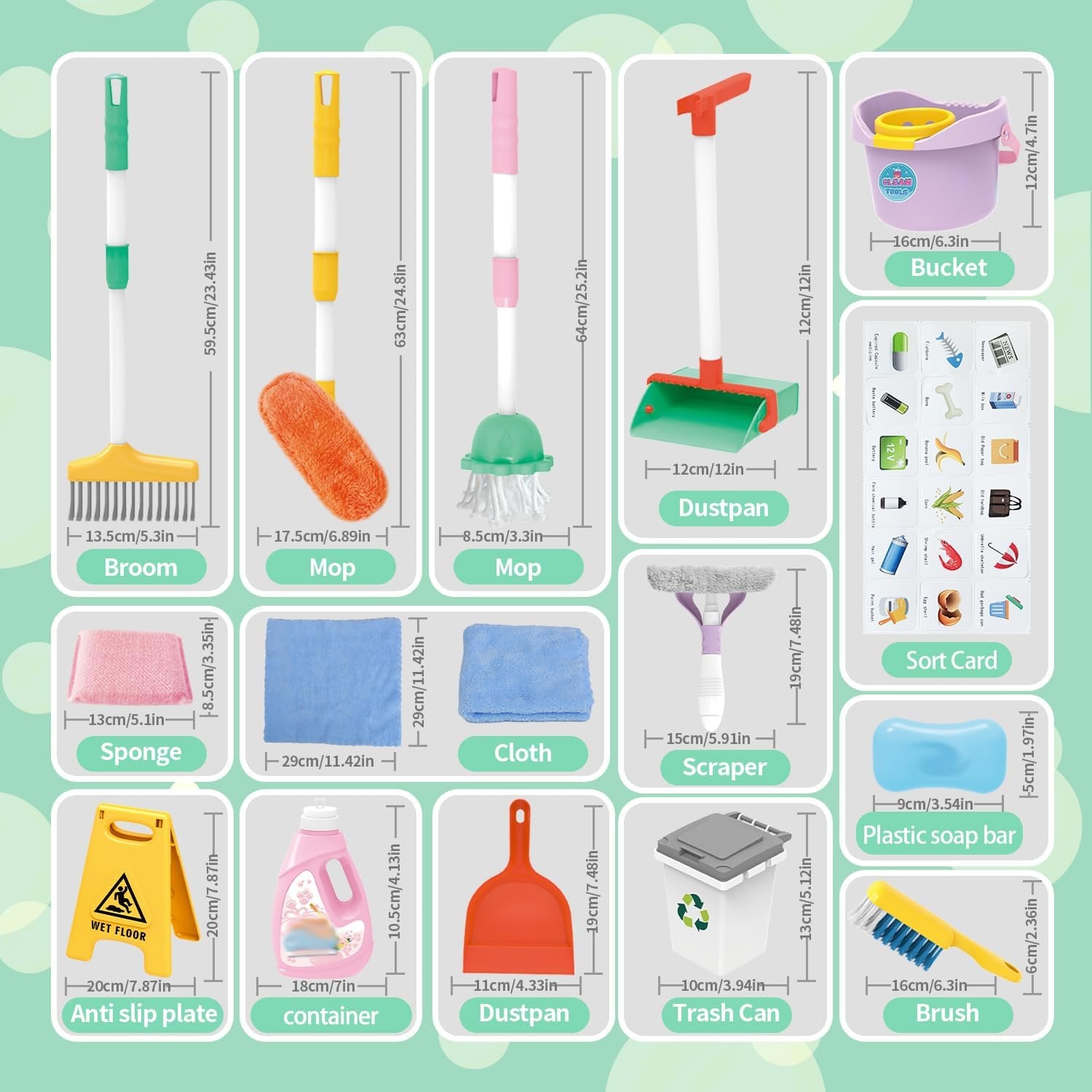
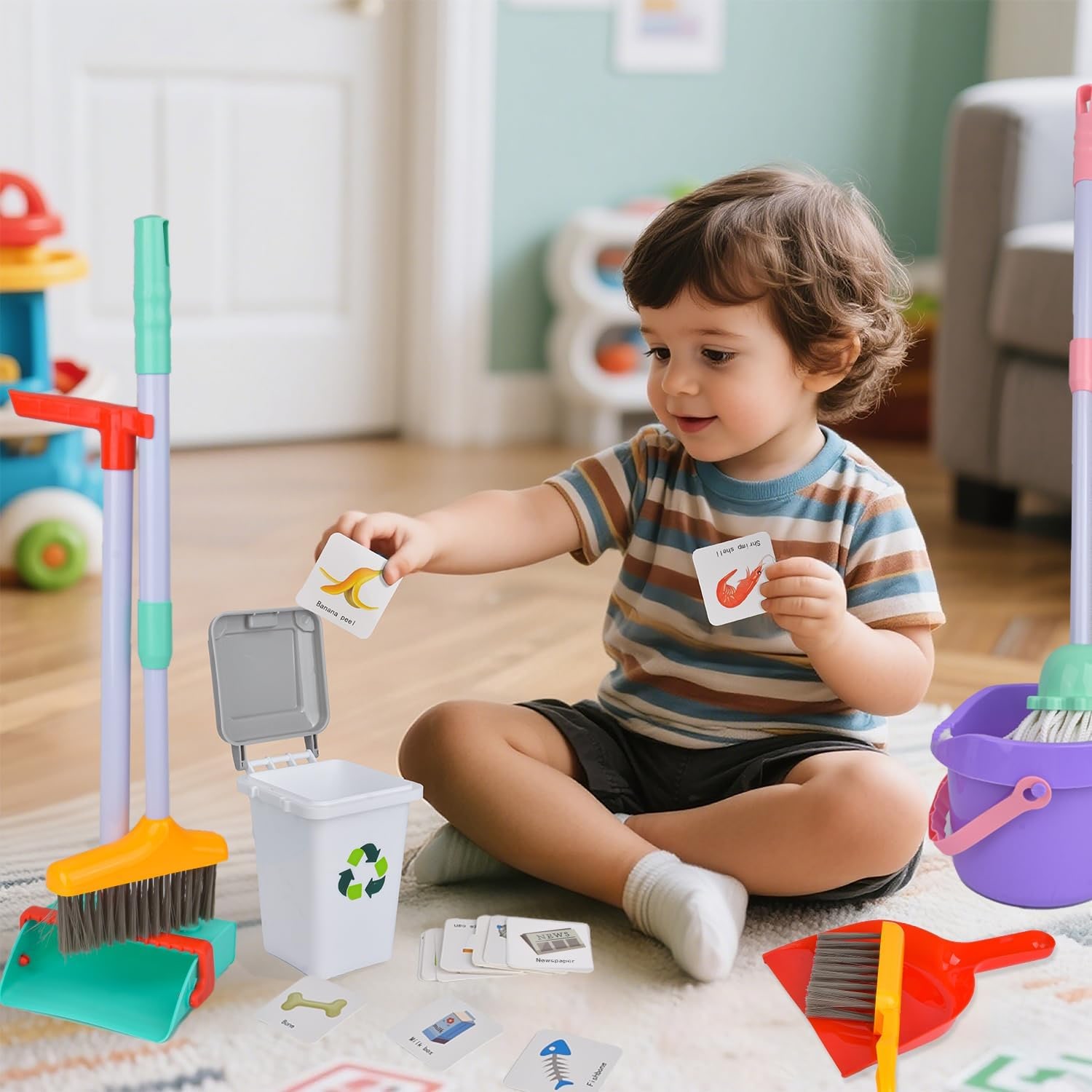
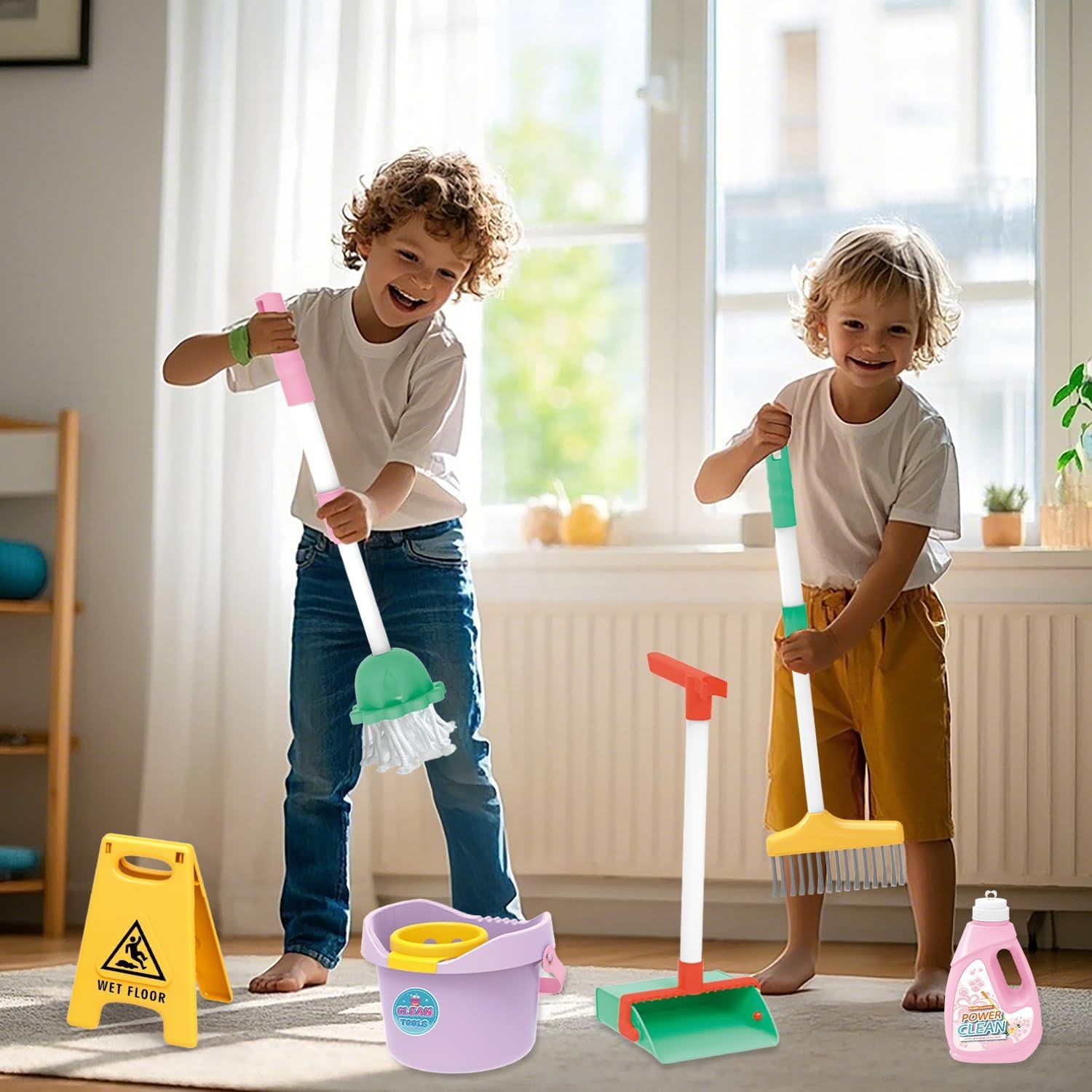
The number sounds like marketing until you lay the pieces out. This set includes a broom, a mop with an extendable handle, a dustpan, a brush, a bucket, a sponge, cloths, a sort card, a scraper, an anti-slip plate, a trash can and a second brush.
That spread matters more than the headline count. Each tool covers a different kind of mess, which means a child moves between actions rather than repeating one. Sweeping needs a wide push. The dustpan needs a steady hand and a bit of timing. The scraper handles stuck-on bits. The sponge and bucket bring in water. The trash can gives the whole sequence an ending, which is the part that makes a child feel like they have finished something.
Compare that to a single toy broom. It looks fine in the box and gets about four minutes of play, because there is nowhere for the dust to go. The best toy broom and mop set gives a child a complete loop, from mess to clean to emptied bin.
How the pieces are built
Everything here is moulded plastic in primary colours. That is the right material for the job. Plastic takes water without swelling, wipes dry in a second, and weighs almost nothing. The entire kit comes in at around a kilogram, so no single piece is a strain for a three year old to lift and carry across a room.
The pieces are detachable, which does two useful things. It means the set packs into a box 40 x 30 x 30 cm for storage, rather than two long handles permanently leaning in a corner. It also means a single damaged part does not write off the whole set, since you can pull it off its handle and carry on with the rest.
Bright colours earn their keep at pack-up time. A red handle that has rolled under the sofa is far easier to track down than a muted one, and when you are trying to get every piece back in the box before bed, that is not a small thing.
Who it suits
This set is for ages 3 and up. It contains small parts, so it is not for children under 3.
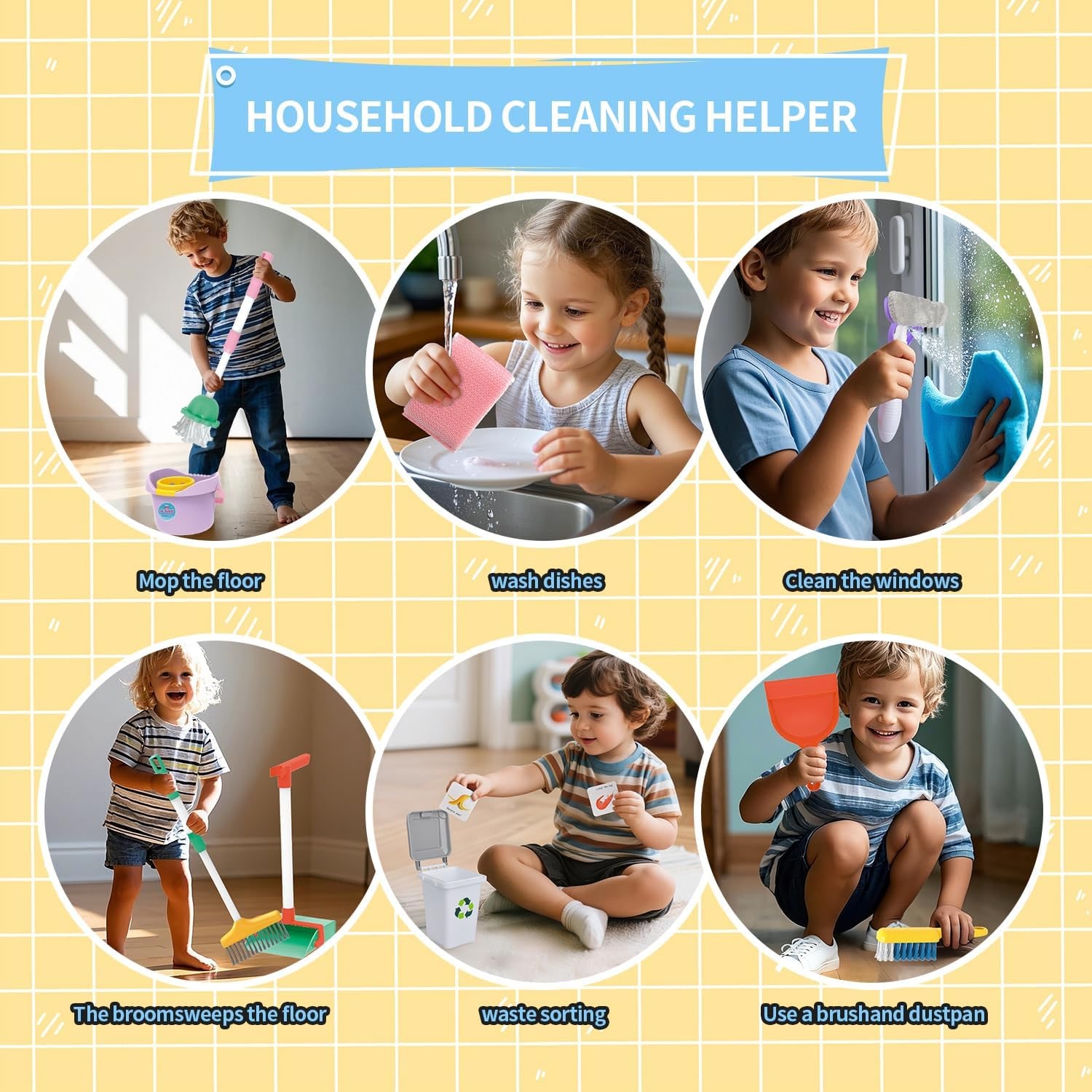
Within that range it works across a wide stretch of childhood. A newly three year old uses it as straight imitation, copying the sweeping they have watched a hundred times. A five year old will set up a sequence, cleaning one room then moving to the next with the bucket. Older children often turn it into a storyline, running a pretend cleaning service or taking on the kind of jobs you have assigned to them for real. Housekeeping pretend play scales up with imagination in a way a lot of single-purpose toys do not.
It also works for families with more than one child, because 15 pieces divide well. One child sweeps, another holds the dustpan, a third deals with the bin. Shared play around a common job tends to produce less conflict than two children wanting the same single toy.
Choosing between sets
If you are comparing options, here is what separates the ones that get used from the ones that get shoved behind a bookcase.
Check whether the tools do anything. Some play cleaning sets are hollow props with bristles that are more decoration than function. If the broom does not move dust, a child notices within minutes and loses interest. The maker here states these are real cleaning tools that can genuinely clean a child's room.
Check the handle length and whether it adjusts. A fixed handle at the wrong height makes a toy awkward from day one and useless within a year. An extendable mop handle stretches the life of the set by years, not months.
Count the pieces, but look at what they are. Five duplicates of the same cloth is not the same as five different tools. You want range, because range is what keeps the play going.
Think about storage before you buy. A kit that collapses into a box is a kit you will actually keep. Two full-length handles with nowhere to live tend to end up snapped or thrown out.
Last, think about your floors. Sweeping and mopping shine on timber, tile, vinyl and lino. If your home is mostly carpet, a child will get less visible payoff, and visible payoff is the whole engine of this kind of play.
Looking after it
The care routine is simple, which is just as well, because this is a toy that meets real water and real dust.
Wipe the plastic parts down with a damp cloth and dry them before they go back in the box. The sponge and cloths need more attention: rinse them in warm water, squeeze them out properly, and leave them somewhere airy until they are completely dry. A damp cloth sealed in a toy box overnight will smell by morning, and nobody wants to be the one who finds it.
Keep the handles stored flat or standing upright rather than leaning under weight, which can put a bend in thin plastic over time. Give the joins a push now and then if they start to feel loose from repeated assembly. And keep the set out of long stretches of direct sunlight, since UV eventually makes coloured plastic brittle.
Getting the most out of it
A few habits help. Give the set a real job rather than leaving it as free play, so a child has somewhere to aim. Sweeping under the kitchen table after dinner is perfect, because the crumbs are obvious and the result is immediate.
Keep the water small. Half a cup in the bucket is enough for a sponge and plenty for a mop head, and it saves you a second mopping job of your own.
Pair it with whatever else is in the room. A toy kitchen generates pretend spills that need wiping. A craft session leaves actual paper scraps that need sweeping. The best pretend play cleaning kit is the one that connects to the rest of the play rather than sitting separately in its box.
Do not hover too much. Half the appeal is doing the job without an adult correcting the technique. The floor will not be perfectly clean, and that is fine.
The short version
This is a 15 piece kids cleaning toy set in plastic, in primary colours, built at child scale, with a mop handle that extends as your child grows. The broom, mop, dustpan, brushes, bucket, sponge, cloths and bin give a child a full clean-up sequence rather than a single prop, and the maker states the tools genuinely clean.
It packs down to a 40 x 30 x 30 cm box and weighs about a kilogram. It suits hard floors best, it works well alongside a toy kitchen, and it shares nicely between siblings. It is for ages 3 and up, and because it contains small parts, it is not for children under 3.
If you have a child who keeps trying to take the mop off you, this hands them one that fits.