
The complete guide
Choosing a Toy Kitchen Appliances Set, A Buyer's Guide
The problem with a play kitchen that goes quiet
Most play kitchens follow the same arc. A bench arrives, there is a week of real excitement, and then the game slows down. The child opens the little oven door, closes it, stirs an empty pot, and wanders off. Parents usually blame the child for losing interest. It is almost never that.
What has actually happened is that the kitchen has run out of actions. A bench gives you a surface and a door. That is two things to do. Real cooking is a chain of small steps, and children copy chains, not surfaces. They want to press a button, wait, hear something click, then move the result somewhere else. A toy kitchen appliances set gives them that chain.
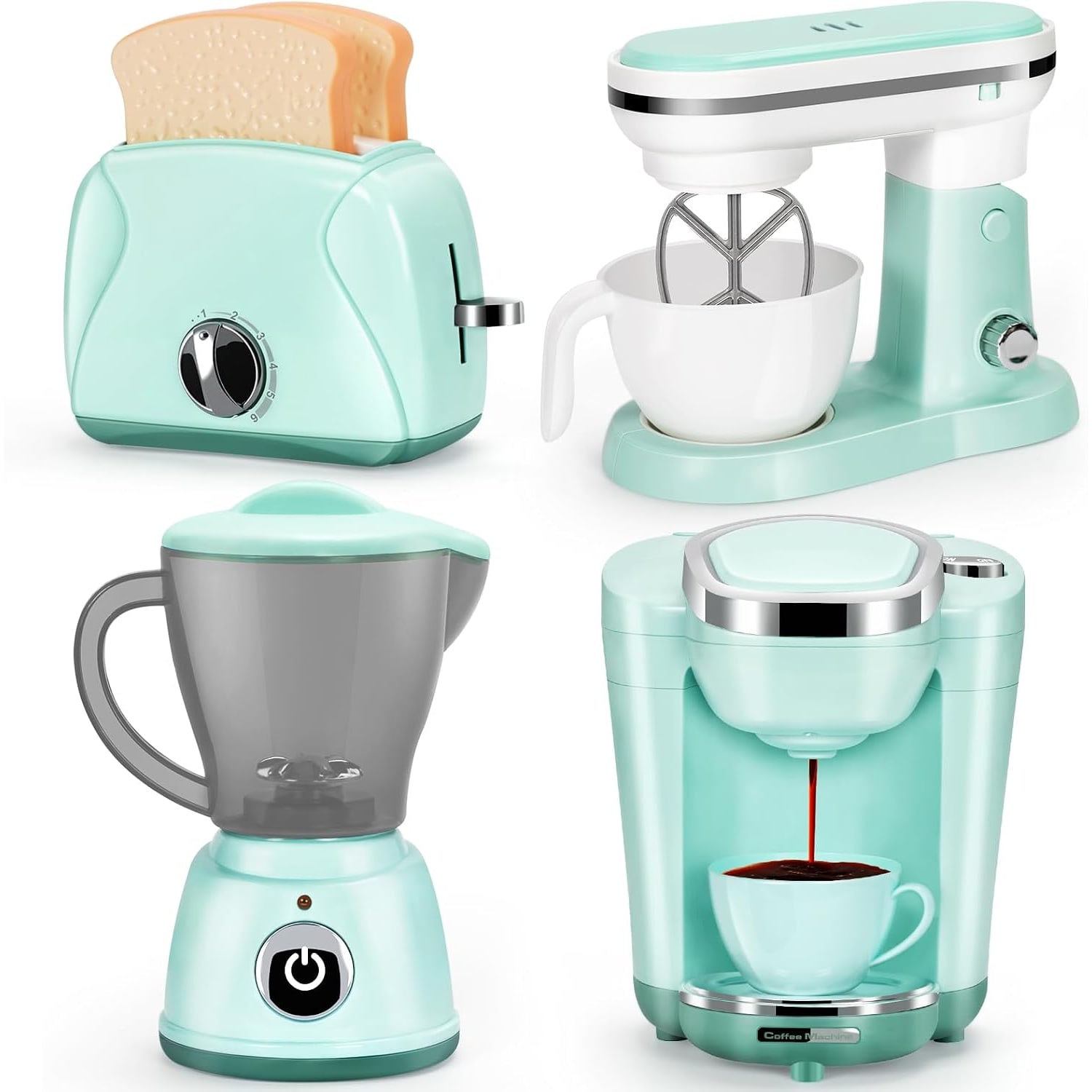
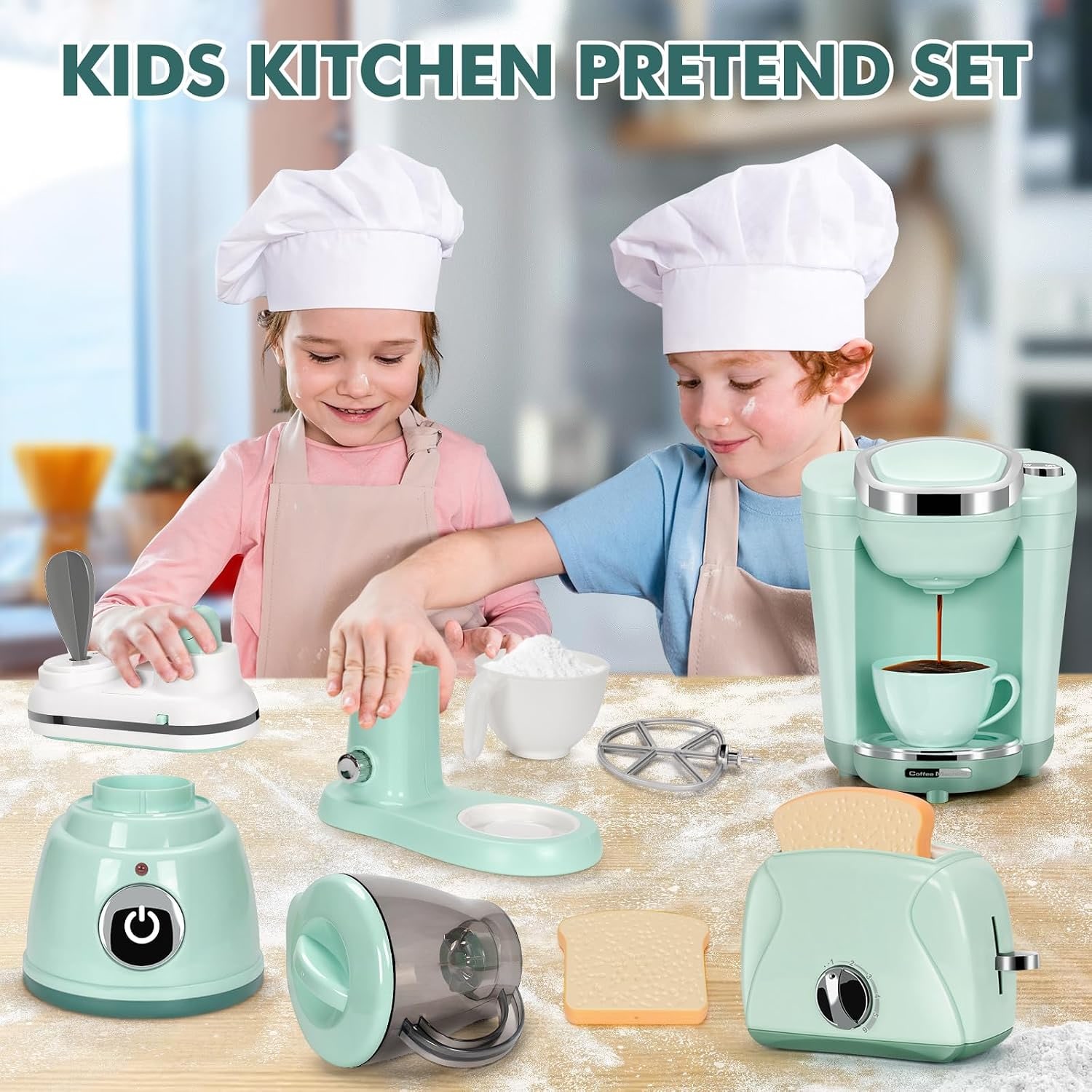
Four machines, four jobs. Grind the coffee. Whisk the batter. Drop the bread in. Blitz the fruit. Suddenly there is an order to things, and order is what turns messing about into a game with a beginning and an end.
How a four piece appliance set changes play
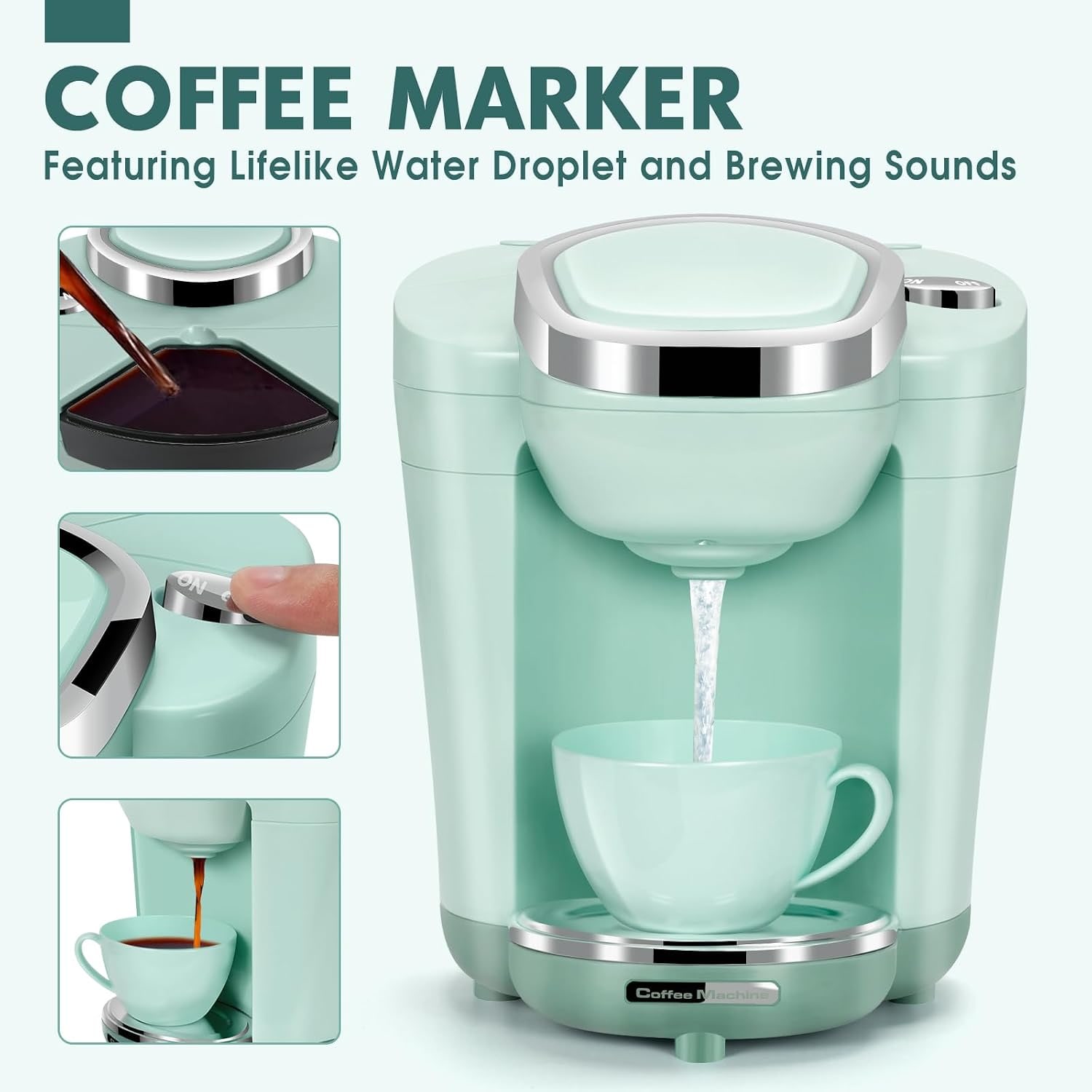
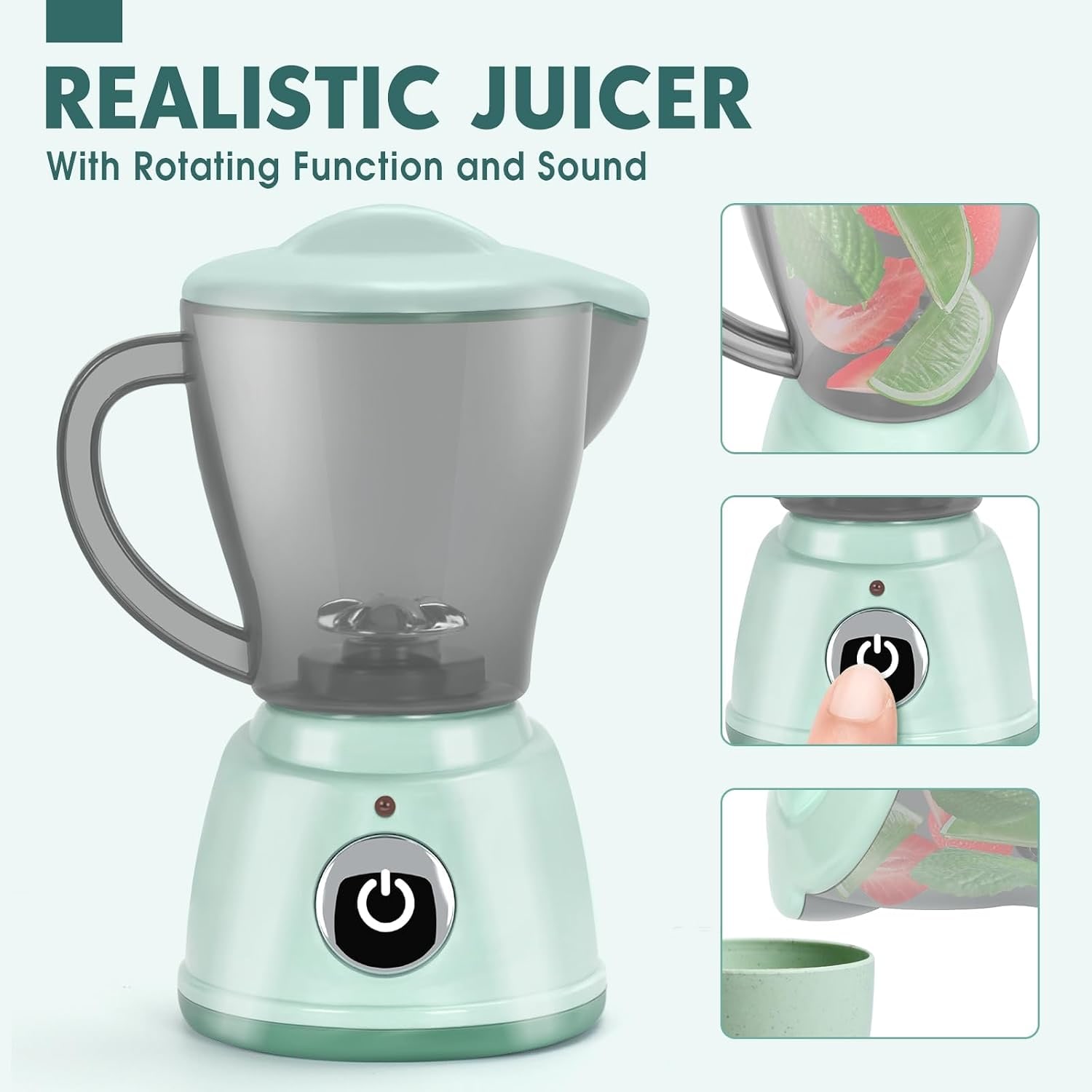
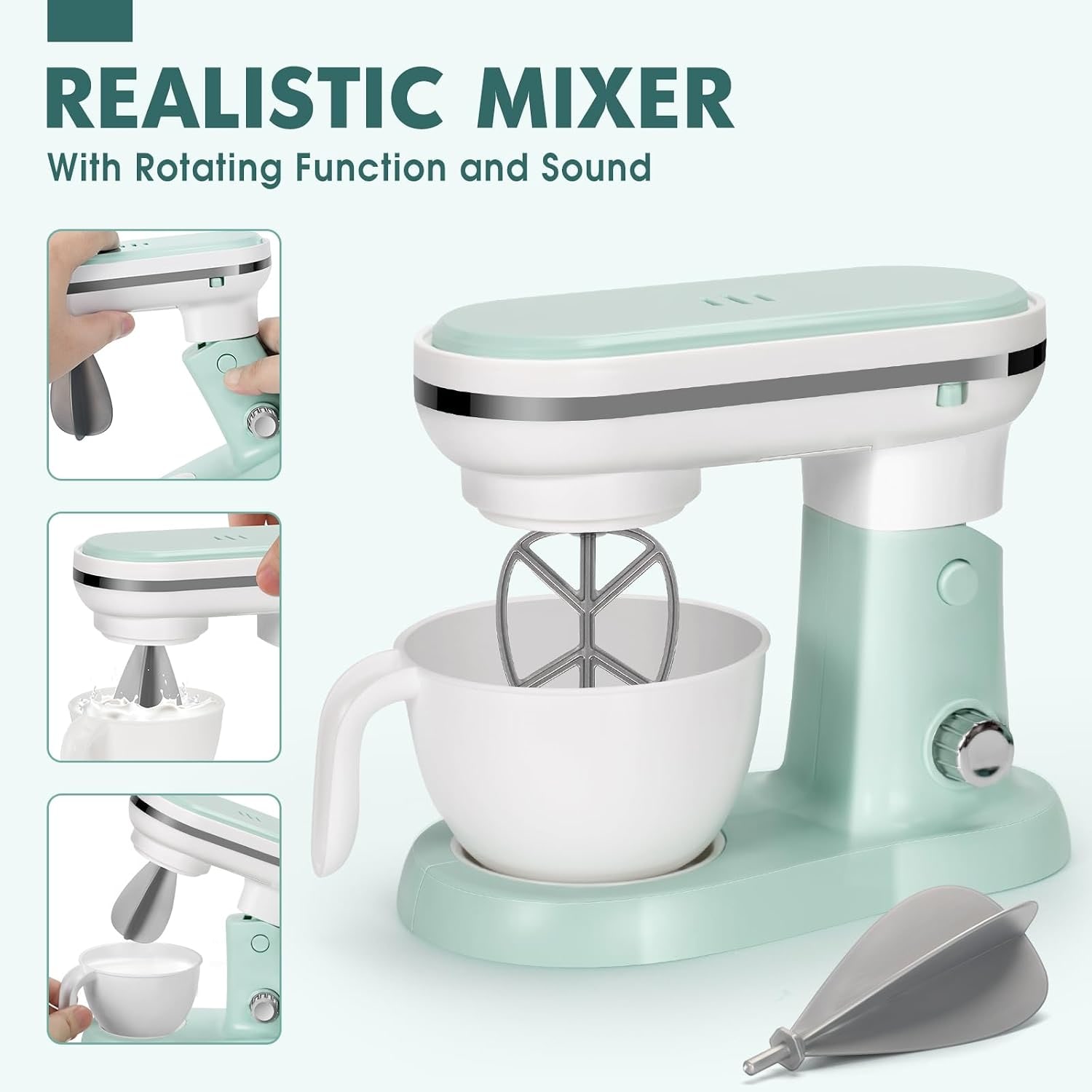
This set holds a coffee maker machine, a mixer, a toaster and a blender. Each one looks like a shrunken version of something the child has watched an adult use. That recognition does a lot of work. Children do not need instructions for a toaster. They have seen one every morning of their lives.
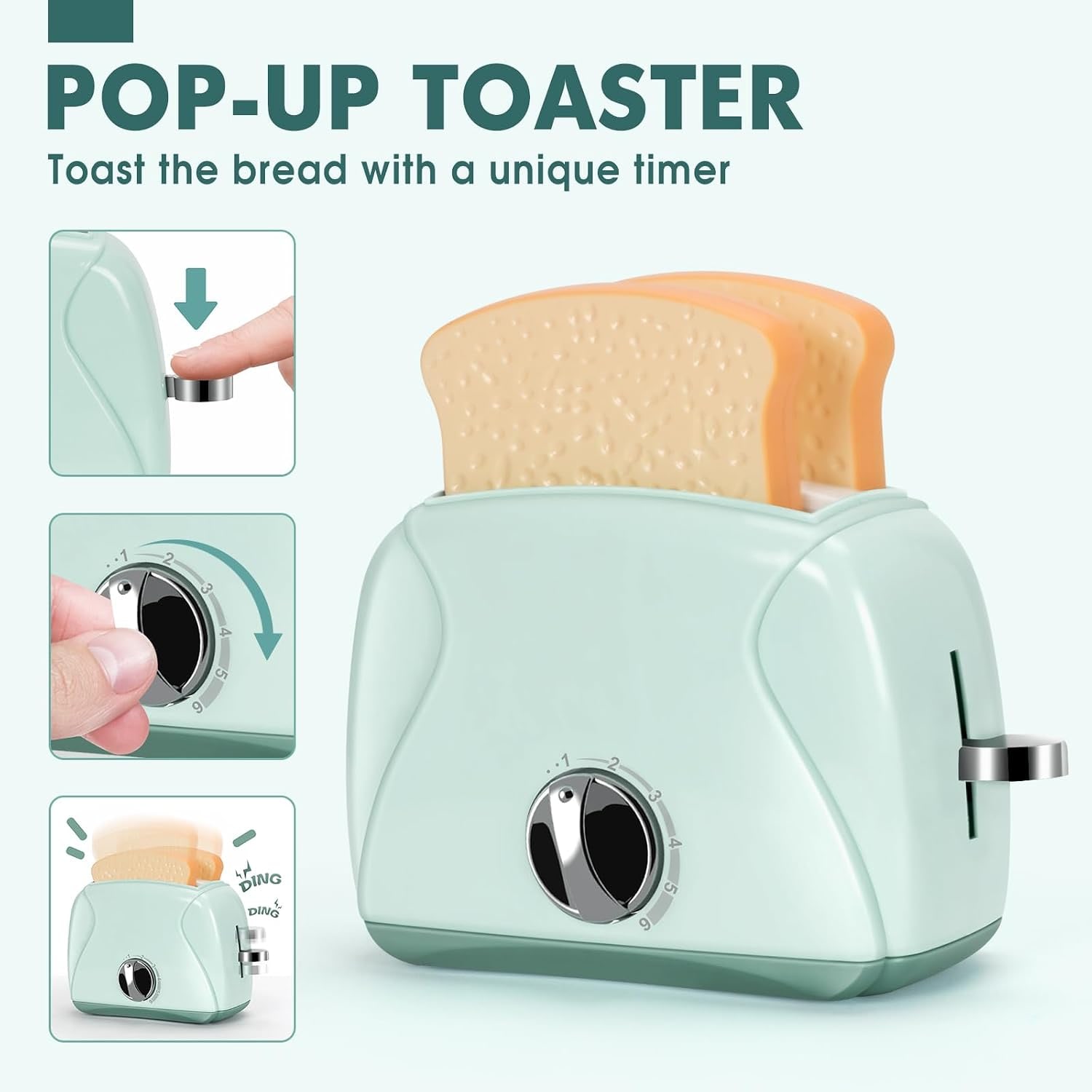
The machines have moving parts rather than being solid shapes. Levers press down. Parts turn. The toaster has a pop up action. Those small mechanical moments are what hold attention, because a child gets a response for doing something. Press, wait, pop. It is a tiny loop, and children will run it dozens of times without getting bored.
There is a second thing that happens with four machines instead of one. Play goes from solo to shared. One child takes the coffee station, another runs the toaster, and the game becomes a cafe with staff. That is a completely different quality of play from one child holding one toy. If you have two or three children in the house, or friends who visit often, the four piece format is the whole point.
Who this set suits
The recommended age is ages 3 and up. It is not for children under 3.
At the younger end of that range, most of the play is about cause and effect. Press the lever, see what happens, do it again. An adult sitting nearby usually gets drawn in as a customer. By four or five, children start building stories around the machines. Orders are taken. A menu gets invented. Someone becomes very bossy about the coffee.
Older children, around six and seven, often use the set differently again. They set up shops, charge imaginary money, and bring other toys in as customers. The machines become props in a bigger game rather than the game itself. That is a good sign, and it means a set like this stays useful for longer than the age range on the box might suggest.
It also suits households that already own a play kitchen bench and have noticed it going unused. Adding appliances is usually cheaper and more effective than replacing the whole kitchen.
What to look at when you compare sets
Count the machines. A lot of kitchen toy packs look generous in photos but contain one appliance and a pile of plastic cups. Four distinct machines is a different proposition. Read the included components line carefully before you compare prices.
Check the weight. This set is 1.26 kg for everything. Light sets are easier for children to carry between rooms and easier for adults to pack away, which sounds minor until you are doing it every night. Very heavy sets tend to stay in one spot, which limits where play can happen.
Check the footprint. The listed item dimensions are 20 x 10 x 5 cm. Measure the depth of your play kitchen bench, or whichever table or shelf you plan to use. Shallow benches are common and a machine that overhangs will get knocked off.
Look at the action features. A machine that only sits there is a decoration. Buttons, levers and pop up parts are what make the difference between a prop and a toy. If a listing does not say anything moves, assume nothing does.
Think about storage before you buy. Four pieces need somewhere to live. A shallow tub or an open basket near the play area works better than a deep toy box, where small items vanish to the bottom and are never seen again.
Colour and what the maker does and does not state
Colour is listed as blue, red, green or yellow. The maker does not state which one arrives in a given box. If you are matching a specific play kitchen colour scheme, it is worth knowing that upfront rather than being surprised.
A few other details are not provided. Brand is not stated. Country of origin is not stated. Battery requirements are not stated. The material type is listed simply as plastic, with no grade given. We would rather tell you those gaps exist than fill them in with guesses. If one of them is a dealbreaker for you, it is better to know now.
What is stated is clear enough. Four appliances, 1.26 kg total, 20 x 10 x 5 cm, plastic, kitchen theme, model TB-CFXJD, ages 3 and up.
Keeping the set in good shape
Plastic kitchen toys are easy to look after, which is part of why they suit this kind of play.
Wipe each piece with a damp cloth and dry it straight away. Do not soak anything and do not put any part in the dishwasher, because heat warps plastic and can loosen moving parts. A soft old toothbrush is handy for getting into the grooves around buttons and lever slots, where crumbs and bits of playdough end up.
Keep the set away from heaters, open fires and sunny windowsills. Sustained heat does slow damage to moulded plastic and the joints are usually the first thing to go stiff.
If any piece turns out to have a battery compartment, check it every few months. Flat batteries left sitting in toys cause more ruined machines than rough play ever does.
Store the set together. Pieces that get scattered through a toy box tend to drop out of the game, and then you are back to a quiet kitchen for the opposite reason.
Pairing it with what you already own
This set does not include food. That is worth planning for, because the machines are far more fun with something to put in them. Toy bread for the toaster, plastic fruit for the blender, a couple of small cups for the coffee maker. Most households with young children already have a few of these items in a drawer somewhere.
Playdough also works well, particularly with the mixer. It gives the machine something to actually move, and the clean up is manageable if you keep it off carpet.
Empty is fine too. Children are perfectly happy serving invisible coffee to a very patient adult. Do not feel you need to buy an accessory pile before the set earns its keep.
The short version
If your play kitchen has gone quiet, the bench is rarely the problem. Children run out of actions, not surfaces. Four working machines give them a sequence to follow and roles to share out, which is what keeps a game going past the first week.
This set gives you a coffee maker, mixer, toaster and blender in light plastic, at 1.26 kg for the lot, sized at 20 x 10 x 5 cm, for ages 3 and up. It is not for children under 3. Measure your bench, pull out whatever toy food you already have, and give it somewhere tidy to live between sessions.
Do that and you will get a cafe in the corner of the lounge, run by someone very short and extremely serious about the coffee.