
The complete guide
How to Choose a Beach Sand Toy Set That Actually Gets Used
The problem with most beach days
You arrive with a towel, a hat, sunscreen and good intentions. Twenty minutes later the children have dug one enthusiastic hole, attempted a tower that collapsed twice, and are now bored. It is not a lack of imagination. It is a lack of structure. Loose sand will not hold a vertical wall, and small hands cannot compact it hard enough to make one stand.
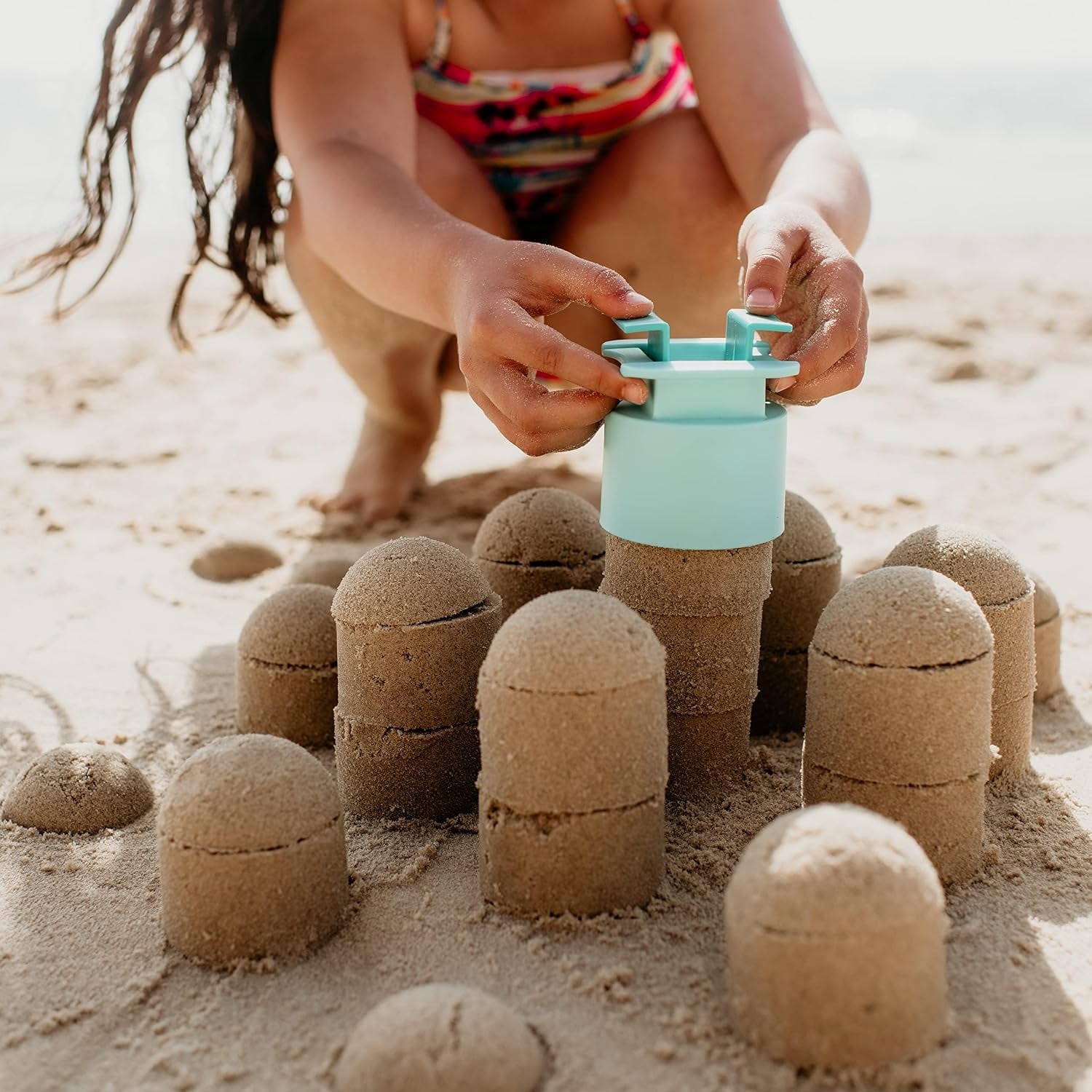
A moulded kit fixes that in the most direct way possible. The mould holds the shape while the sand sets, and when it lifts off, there is a tower standing where there was a pile. That first clean result is the hook. Children who get a tower on the first try will keep going for an hour. Children who watch three collapses in a row go back to the towel.
That is really what a beach sand toy set is for. Not novelty, just removing the friction between wanting to build something and actually building it.
What this set includes and how it works
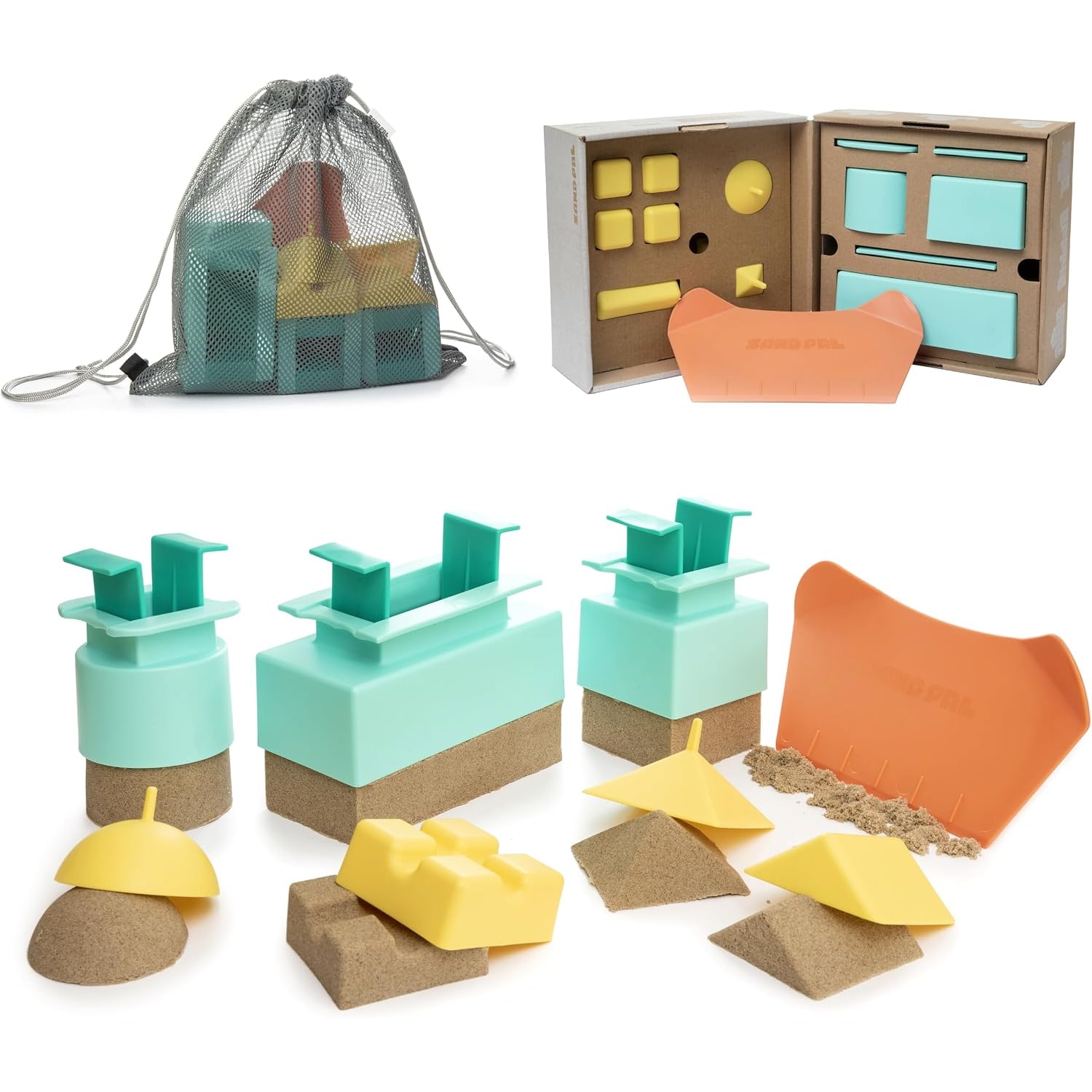
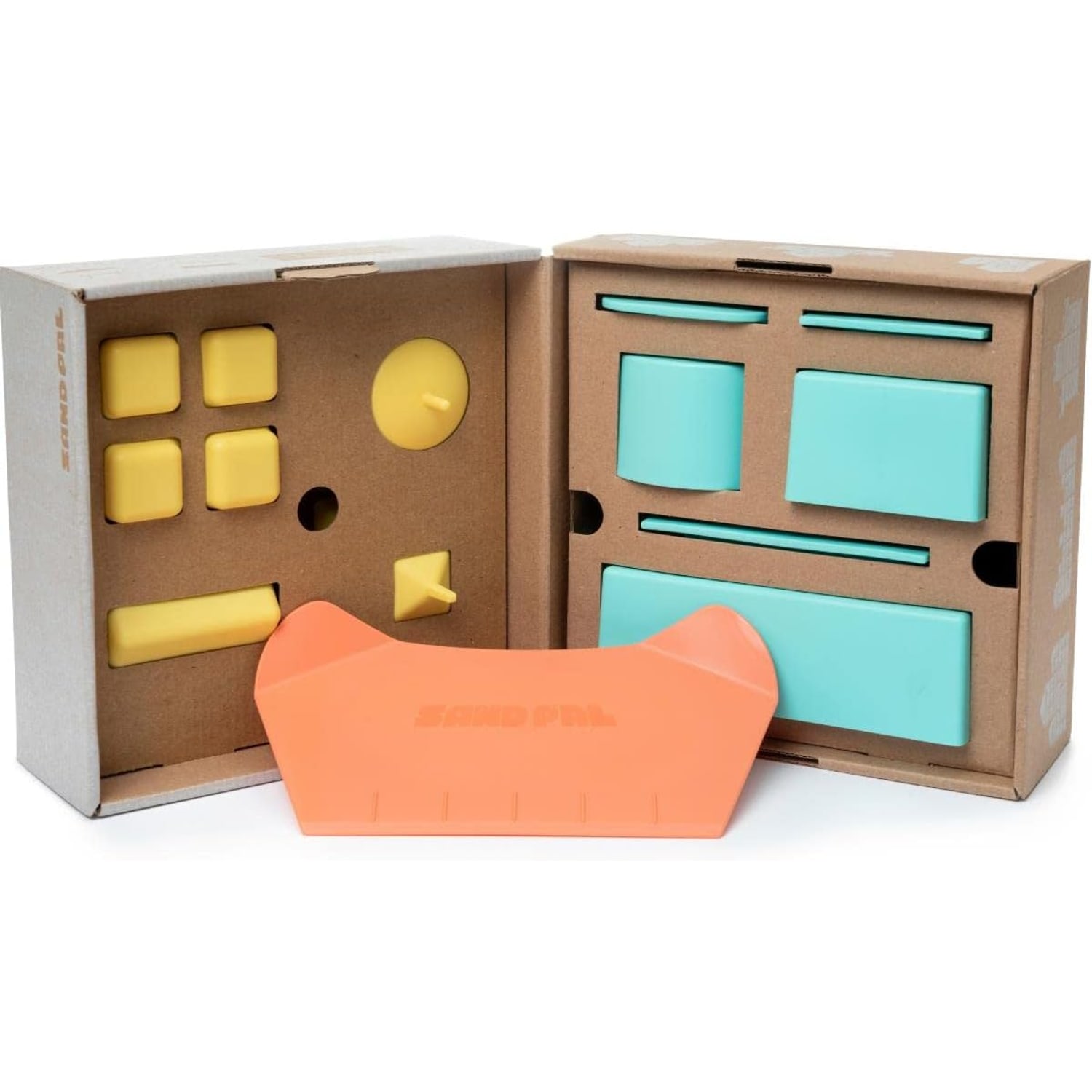
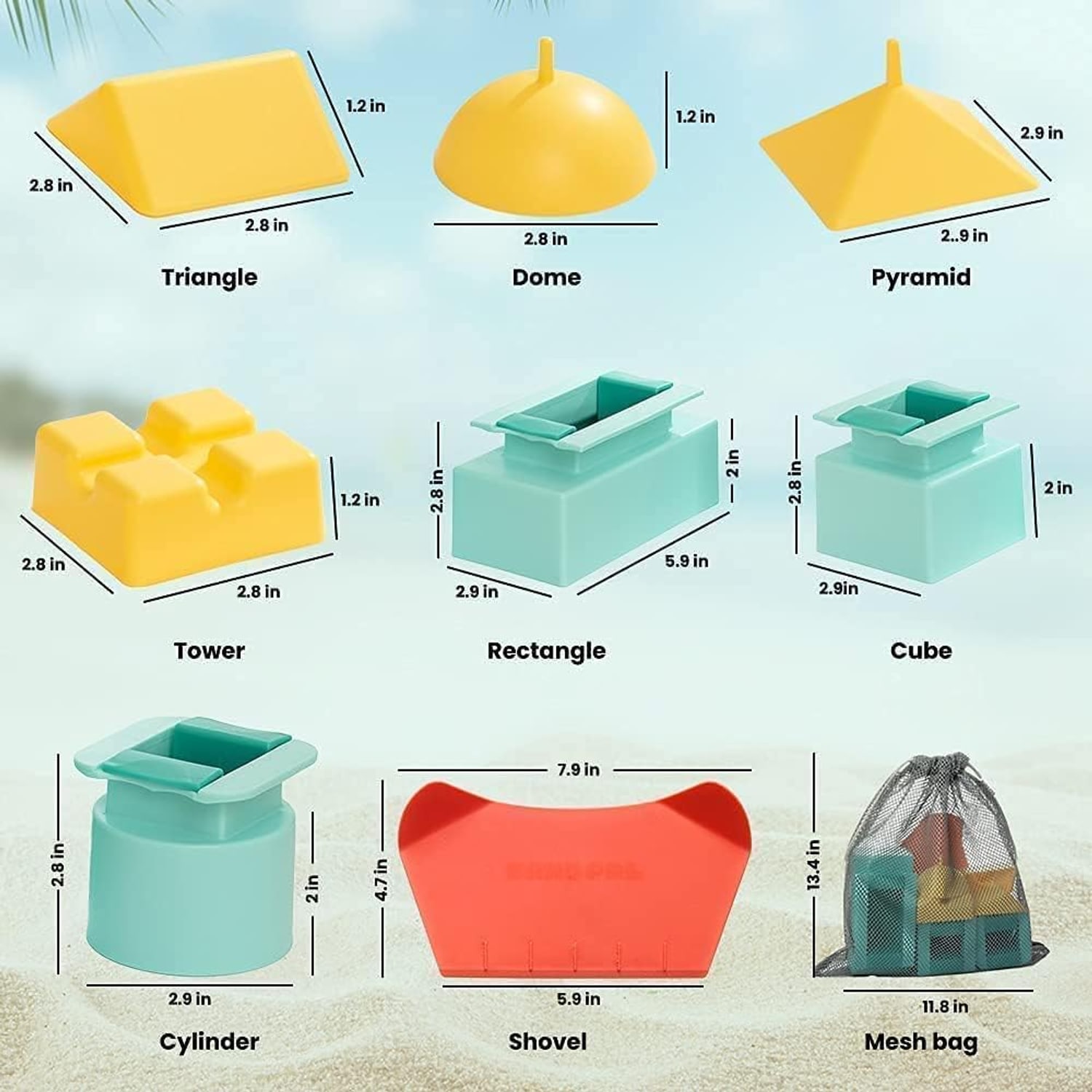
The kit combines castle moulds with digging tools, listed by the maker simply as beach toys. The theme is beach and castles, the material is plastic, and the colour is multicolour. The listing notes a pack of four under number of players, so it is set up for more than one child.
Everything is manual. There is no power source beyond a pair of hands, no batteries required, and no assembly. You open the packaging and the set is ready. For a product that spends its life around salt water and sand, that simplicity is a feature rather than a shortcut. There is no battery compartment to corrode, no switch to clog, no motor to seize.
The working method is straightforward. Scoop damp sand with a tool, press it firmly into a mould, level the open face, flip it over onto the spot you want, tap the sides lightly, and lift. The tap matters. It breaks the suction between sand and plastic so the shape slides out whole instead of tearing.
Packed, the set measures 19.1 cm by 19.1 cm by 15.1 cm. That is small. It sits in the top of a beach bag or in a corner of the car boot and does not demand its own trip from the car park.
Who it suits
The set is for ages 3 and up. Because it contains small parts, it is not for children under 3.
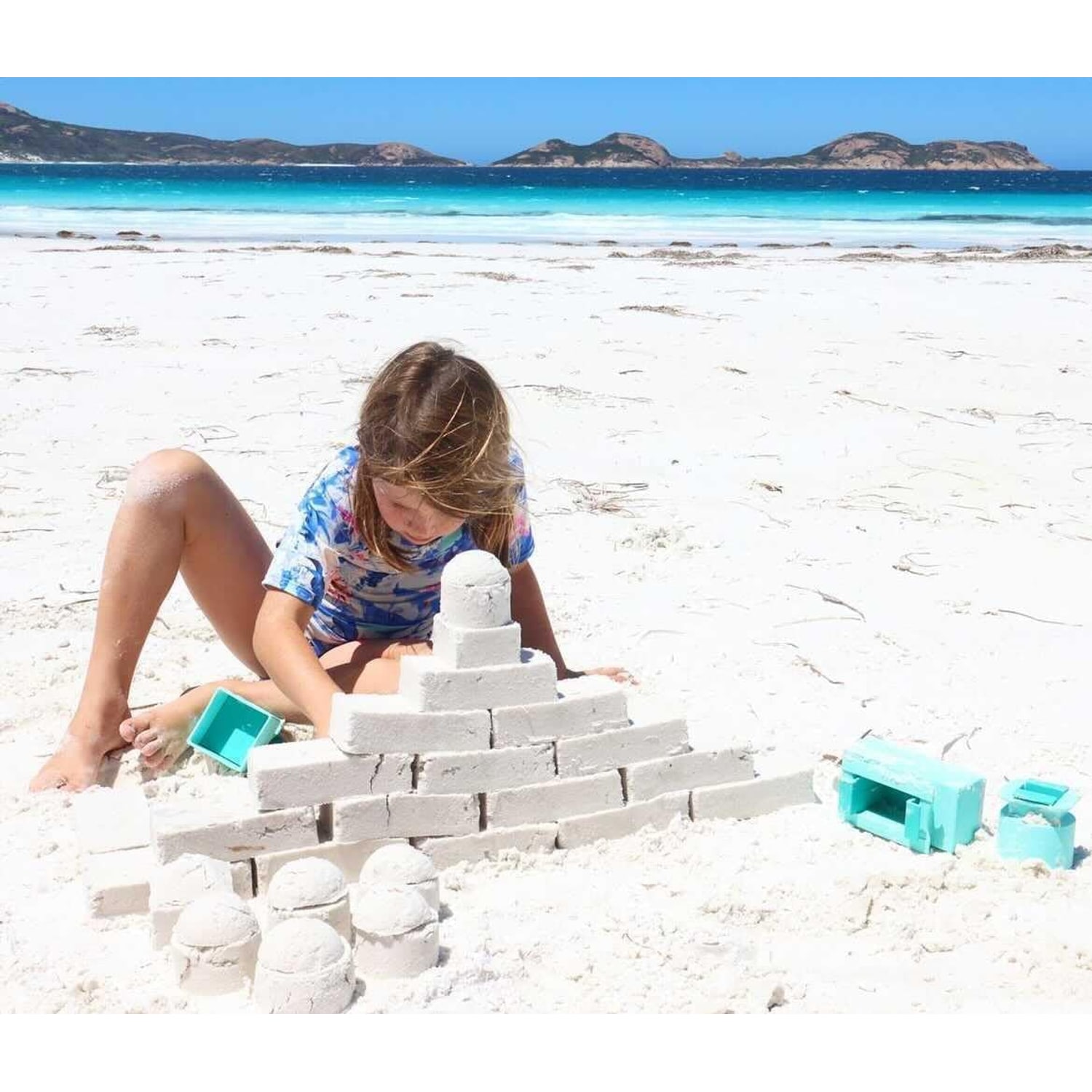
Within that range it covers a lot of ground. A three or four year old will mostly use the moulds on their own, making a row of shapes and knocking them over, which is a perfectly good use. A six or seven year old starts linking shapes into walls and adding a moat. By eight or nine, children are using the digging tools to carve detail into moulded blocks, which is where builds start looking genuinely impressive.
It also suits families who holiday in different places. The moulds are not fussy about material. Damp sand is the obvious one, but wet garden soil, clay and packed snow all hold a shape. That means a set bought for a summer trip is still useful on a cold weekend in a back garden, which is more than most summer sand toys manage.
The four player capacity matters more than it sounds. A single bucket and spade creates a queue, and a queue creates an argument. Enough pieces for several hands means a group can split a build into sections and get on with it.
How to choose between sets
If you are comparing options, a few things separate kits that get used from kits that end up in the shed.
Piece variety counts more than piece count. Ten identical small moulds make ten identical small shapes. A mix of moulds plus actual digging tools lets a child do the whole job, from clearing a base to shaping the detail. This set covers both ends.
Packed size is worth thinking about honestly. Large sets with a full-size bucket look generous online and then prove annoying to carry. At 19.1 cm cubed, this one is a bag item rather than a second piece of luggage.
Material simplicity is a quiet advantage. Plastic moulds rinse clean, dry fast and do not mind being dropped. Anything with fabric, foam or electronics around salt water becomes a maintenance job. If you are hunting for the best kids beach toys for repeated use rather than one holiday, simple moulded plastic tends to outlast everything else in the bag.
Finally, think about where else it will be used. A set that only works on a beach gets used three or four times a year. A set that also works in a sandpit, in the garden mud and in snow earns its shelf space.
Getting better results from the sand
A few habits make a real difference, and children pick them up quickly.
Work with sand from nearer the water, not from the dry top of the beach. Dry grains have no bind and will pour out of a mould like salt. If the only sand available is dry, fill a bucket with water and wet a working pile rather than trying to dampen the whole area.
Pack harder than feels necessary. Press down with the flat of a hand or the back of a tool until the sand stops compressing. Under-packed sand crumbles on the lift and children read that as the mould being faulty when it is just a technique issue.
Build on a flat, firm base. A moulded tower set on uneven sand leans and then topples, taking the next one with it. Flattening a patch first with a digging tool takes thirty seconds and saves a lot of frustration.
Work away from the tide line if you want the build to last past lunch. Or do the opposite and build right at the edge deliberately, since watching the water take a castle is half the entertainment for a lot of children.
Looking after the set
Salt is the main enemy, and it is easy to beat. Rinse everything in fresh water before it goes back in the bag. Salt left to dry on plastic attracts moisture and leaves a gritty film that transfers to car seats and cupboards.
Shake out the water and let the pieces air dry before packing. Sealed damp plastic in a hot car boot smells unpleasant within a week.
For dried mud or clay, warm water and a little mild soap will lift it. A soft brush helps with corners. Avoid harsh solvents and abrasive scourers, which scratch the surface and make future sand release harder.
Store the set out of constant direct sunlight. Long UV exposure makes plastic brittle over several seasons, and brittle plastic cracks on a single hard dig. A shelf in a shed or a cupboard indoors both work fine.
Give the pieces a quick check each season. If anything has split or developed a sharp edge, retire that piece. The rest of the kit keeps working.
Delivery and what happens if it is wrong
Orders ship by tracked courier and most arrive in 5 to 10 working days, with tracking sent when the parcel leaves the warehouse. Shipping costs show at checkout in your local currency before you pay, with free delivery above the order threshold for your storefront.
Returns run for 14 days from delivery for unused items in their original packaging, so keep the box until you have decided. If something arrives damaged or a piece is missing, send a photo through and we will arrange a replacement or refund without asking you to post it back first.
The short version
This is a plastic beach sand toy set that pairs castle moulds with digging tools, sized for ages 3 and up and listed for up to four players. It is manual, needs no batteries and no assembly, packs down to roughly a 19 cm cube, and works with damp sand, soil, clay or snow.
If you want children building rather than giving up, the moulds are the part that does the work. Keep the sand damp, pack it hard, rinse the kit afterwards, and it will see out a good few summers.