
The complete guide
How to Choose Fabric Storage Cubes That Actually Get Used
The pile problem
Walk into most family rooms and you will find at least one pile. Not a disaster, just a slow build-up of toys, books, bits of craft and things that got put down rather than put away. The pile is rarely about laziness. It is about the fact that nobody knows where those things actually live.
Storage only works when putting something away is faster than leaving it out. That is the whole trick. If a child has to open a lid, move a stack and squeeze a toy into a full drawer, the toy stays on the floor. If there is an open cube at waist height with a colour everyone recognises, the toy goes in without anyone being asked twice.
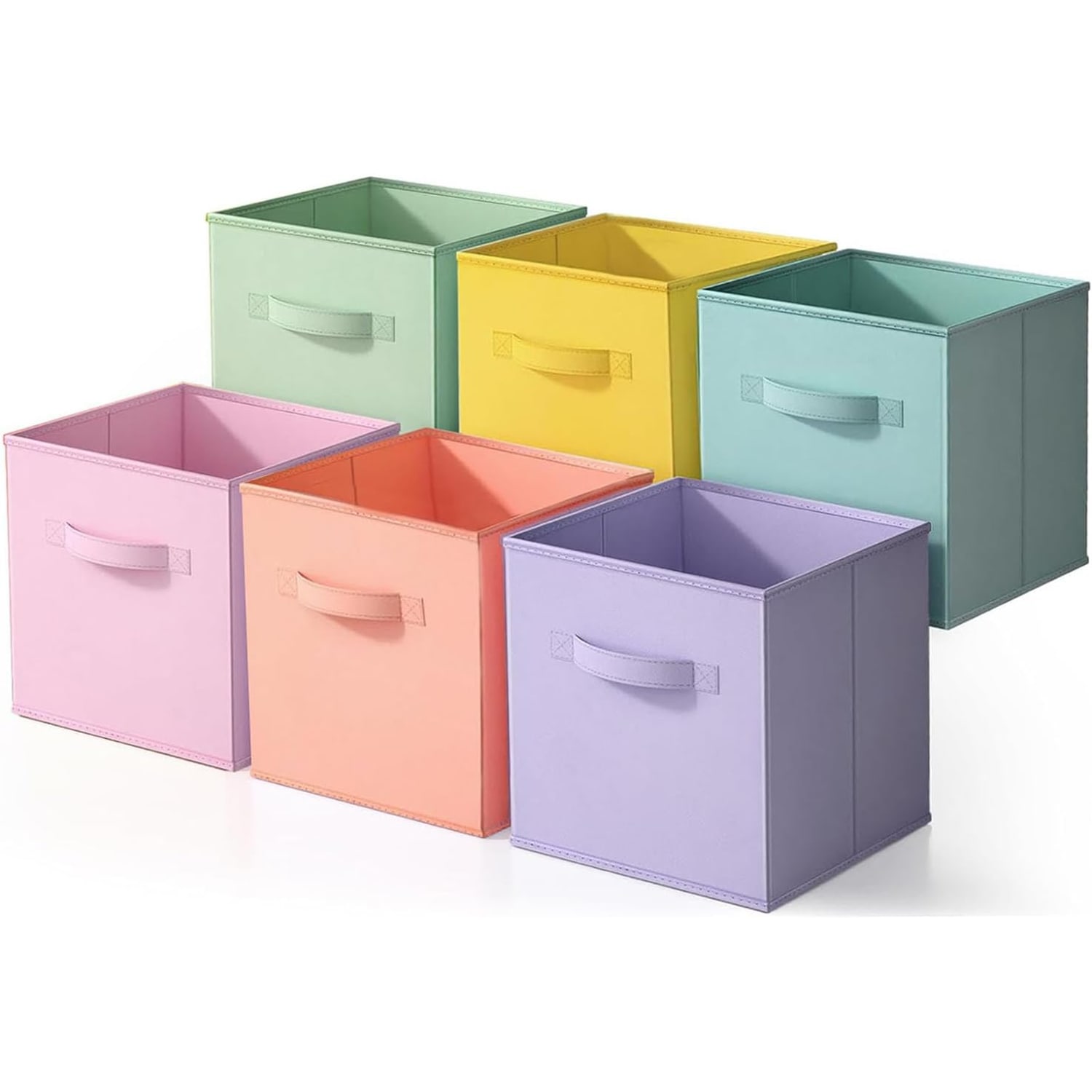
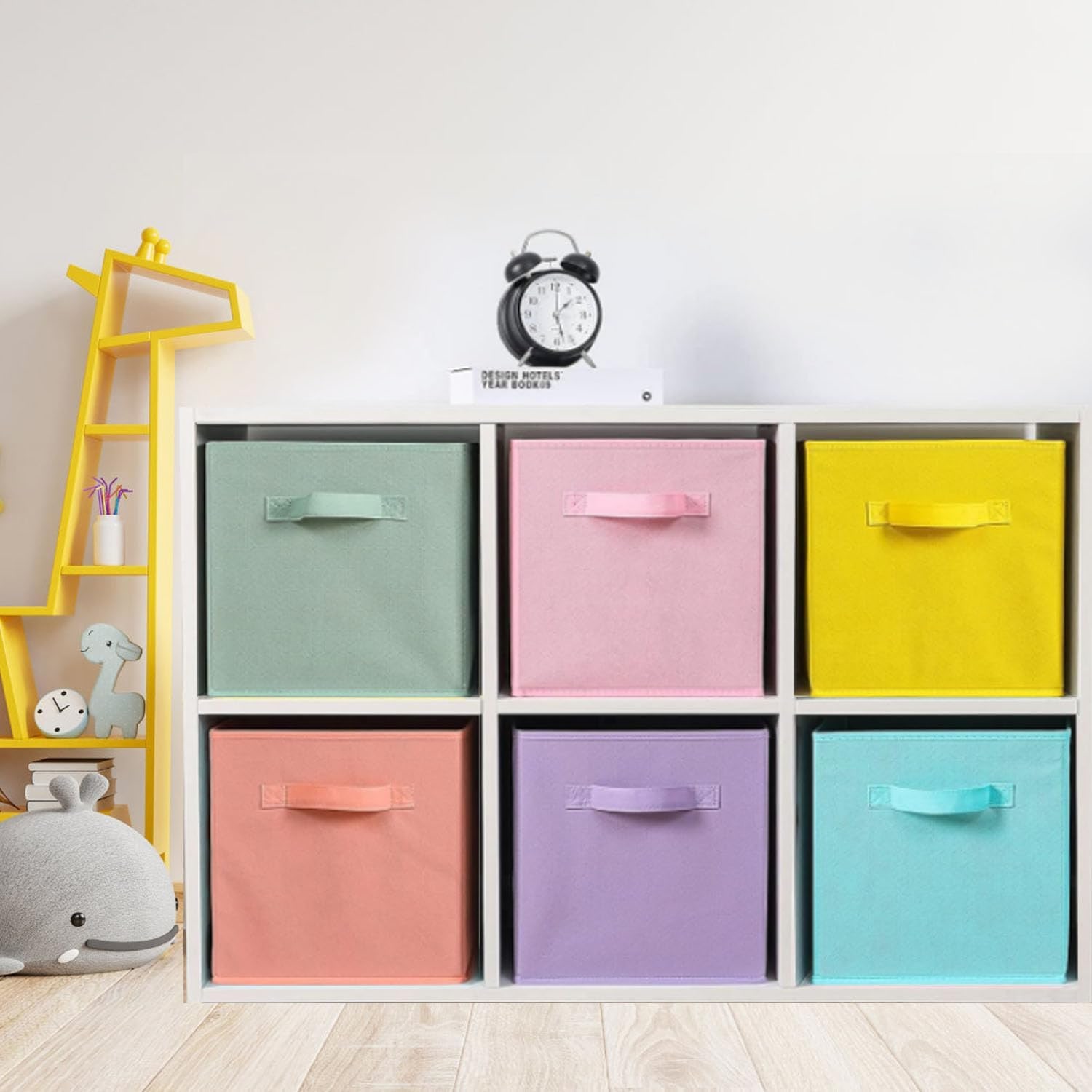
That is what a set of foldable cube storage boxes is for. Six open-top bins, all the same size, all a different colour, ready to take whatever you decide to give them.
How these cubes work
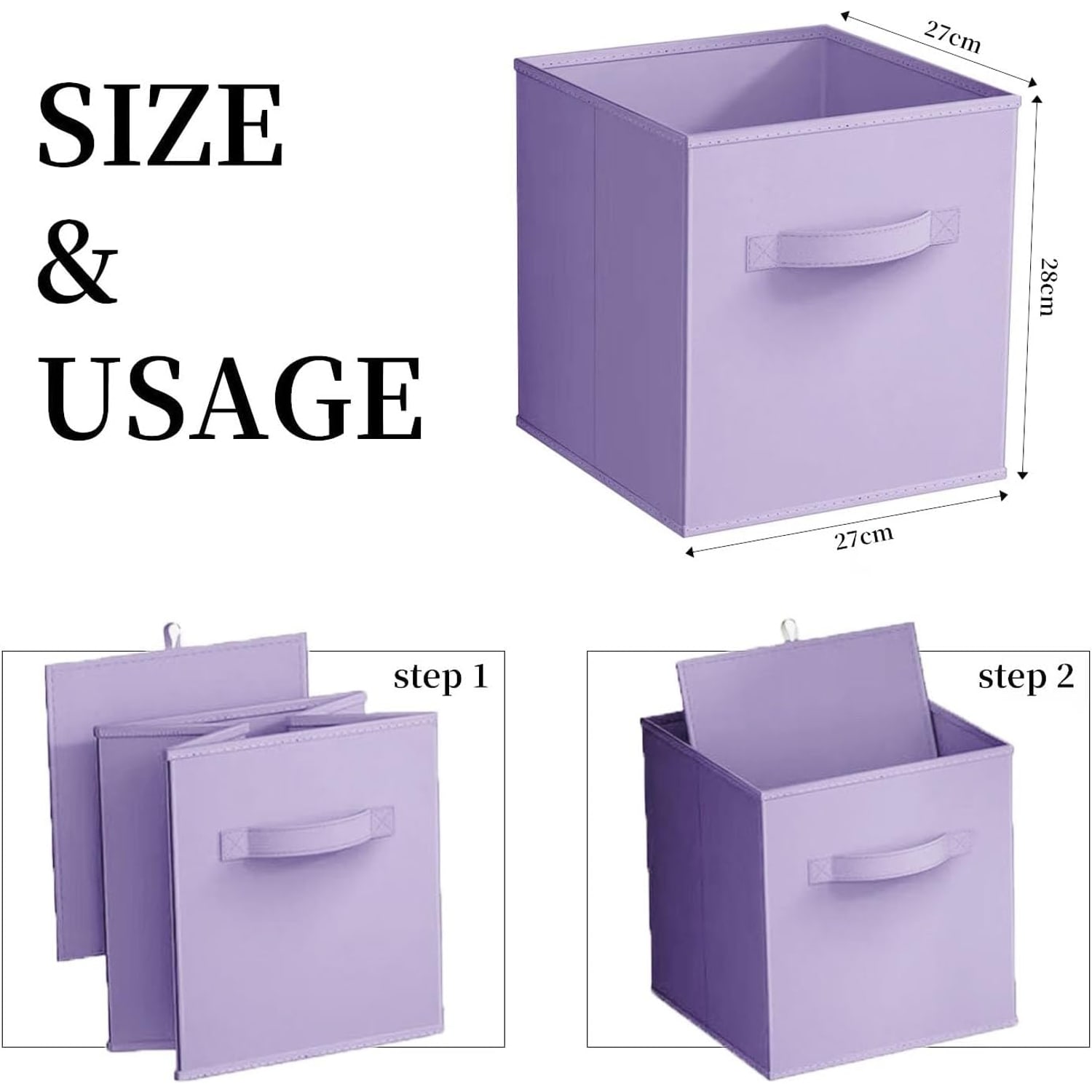
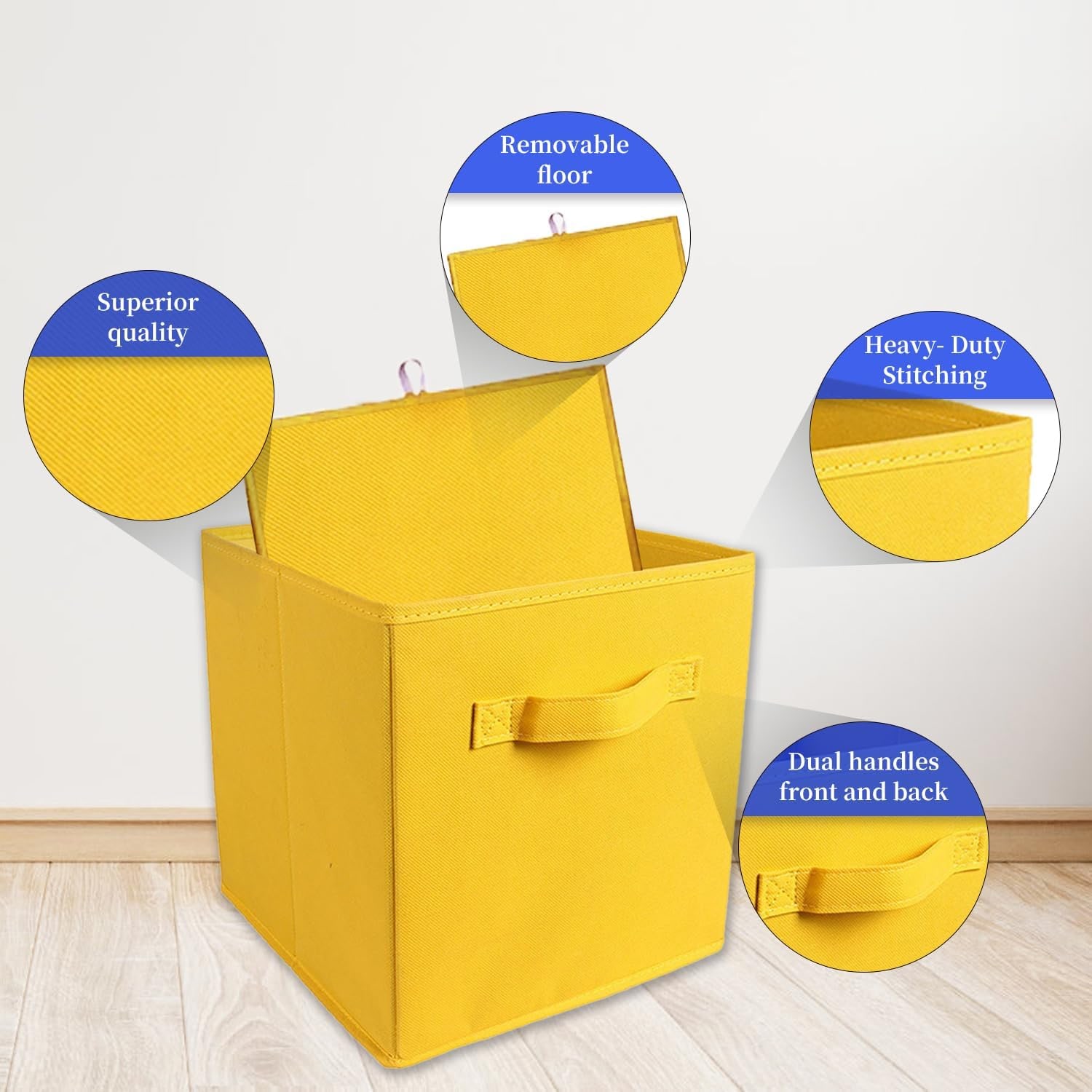
Each cube measures 27 cm wide, 27 cm deep and 28 cm tall, with a stated capacity of around 0.02 cubic metres. The sides are fabric. The base is a separate board that drops into the bottom and gives the bin its shape.
Setting one up takes seconds. Unfold the cube, press the board into the base, and it stands up on its own. Take the board back out and the cube flattens again, which is why these are useful for anything seasonal. Christmas decorations, winter clothes, holiday sports gear and school holiday craft supplies can all live in a cube for part of the year and the cube can disappear for the rest of it.
The set weighs 2.71 kg in total, so each bin is light. Carrying one from a shelf to the middle of the room is easy, which matters more than it sounds. Half the point of a bin is being able to bring it to the mess rather than carrying the mess to the bin.
Why six colours beats six matching bins
Plain bins look tidy on a shelf. Coloured bins get used. There is a real difference.
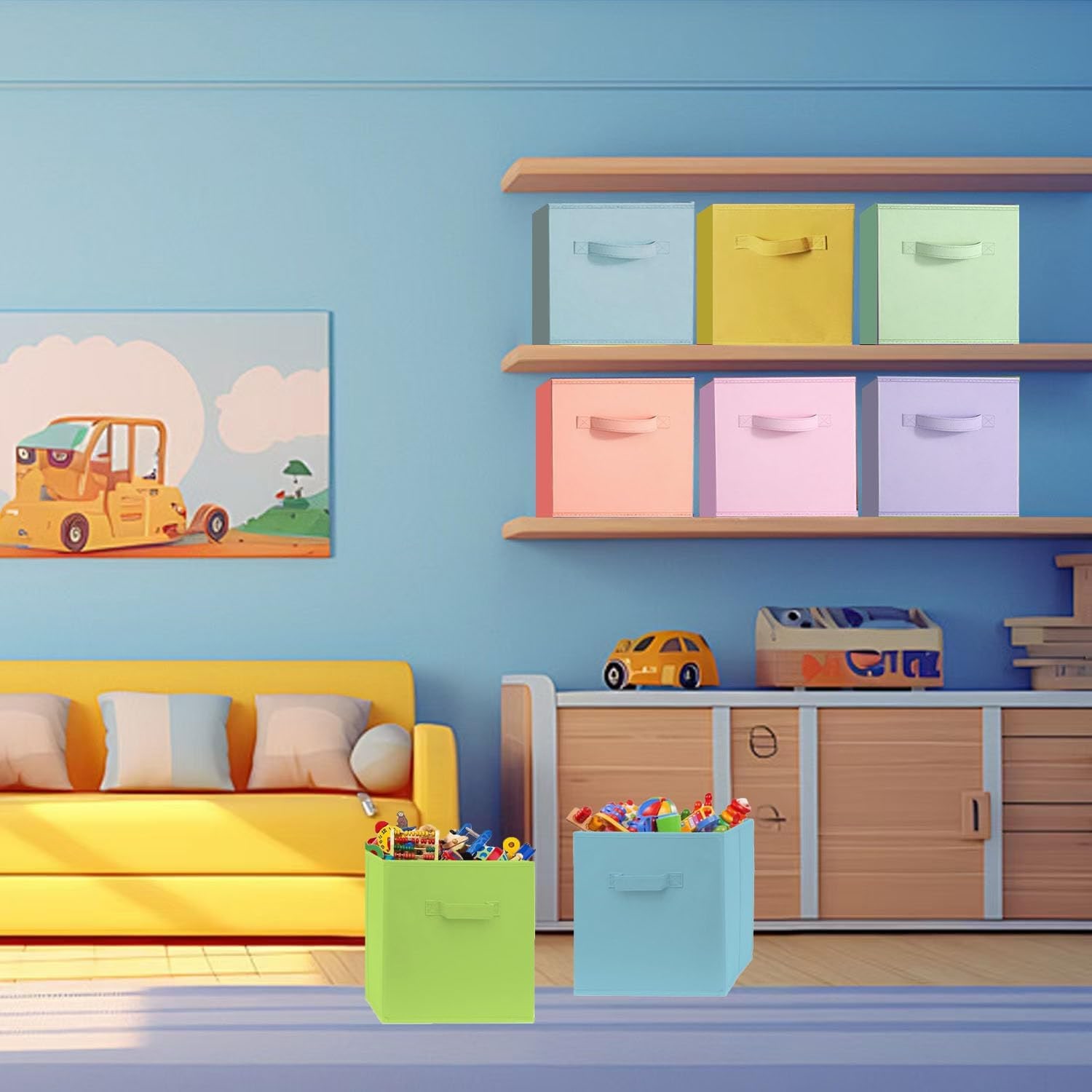
When every cube is a different colour, you do not need labels and you do not need reading skills. Green is books. Orange is cars. Pink is dress-ups. A child who cannot yet read a label can still sort their own toys into the right place, and that is the thing that keeps a system alive after the first week.
The same logic works for adults. In a home office, one cube for cables, one for stationery, one for paperwork waiting to be filed. In a hall cupboard, one per person. You stop thinking about where something goes and just chuck it in the right colour.
If a rainbow shelf is not your style, you can always face the cubes into a cubby unit so only the front edge shows, or spread the colours across different rooms so each space gets one or two.
Where people put them
The most common home for these is a kids room or playroom. They sit well in cubby shelving, along the bottom of a bookcase, or simply in a row against a wall. Toy storage bins at floor level work because a child can reach them without help.
Beyond that, there are plenty of uses:
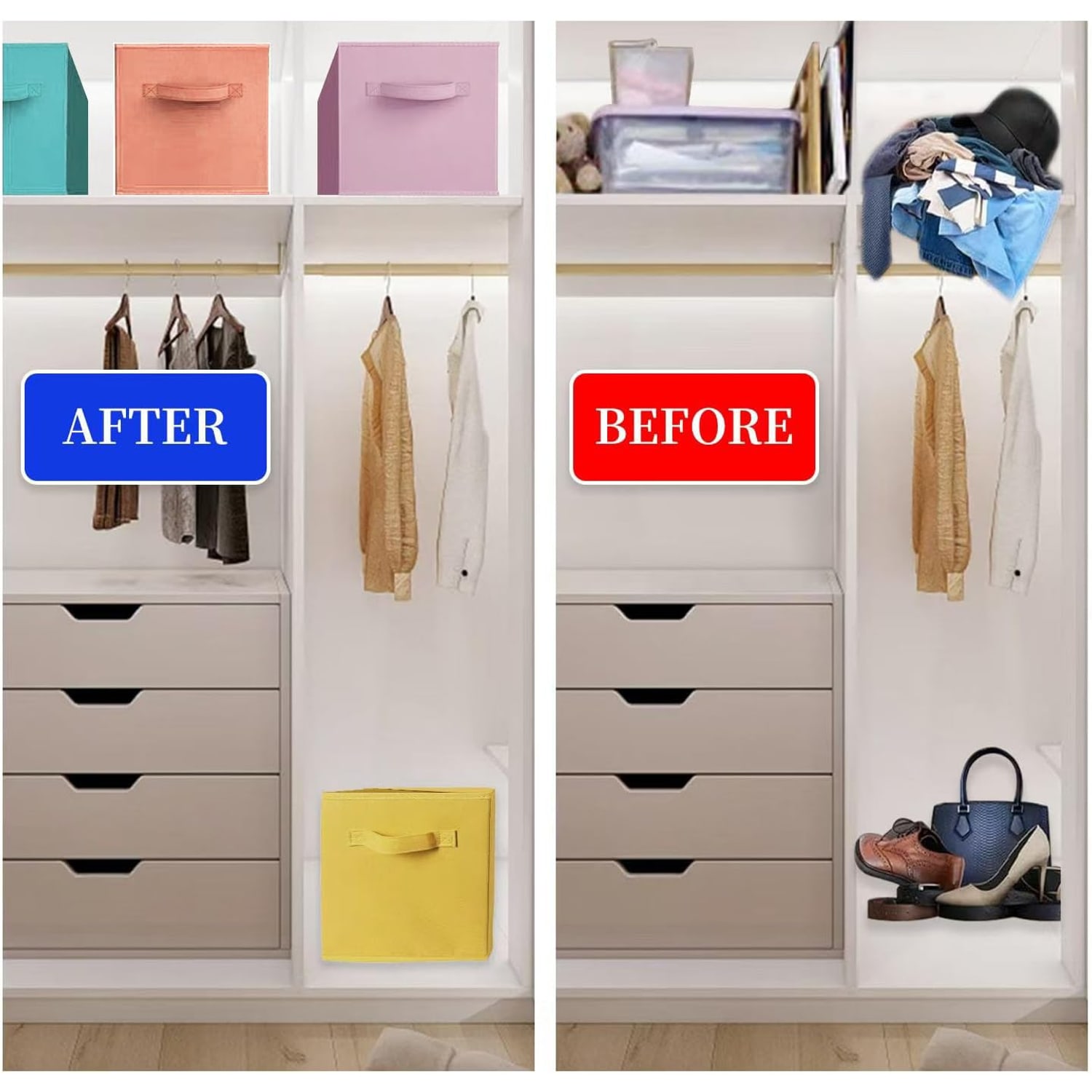
- In a wardrobe, on the top shelf, holding folded jumpers, bags or shoes.
- In a living room, under a console or side table, holding remotes, chargers and magazines.
- In a laundry area, sorting clothes before washing or holding spare linen.
- On a desk shelf, keeping craft supply storage cubes separate from the work stuff.
Under a bed is possible but check your clearance. At 28 cm tall these need a reasonably high bed frame plus room to slide in and out. If your bed is lower, a shallower container will serve you better.
Choosing the right number and size
Before you order, do two quick measurements. First, measure the inside of whatever opening you plan to use. You want a bit more than 27 cm in width and depth and a bit more than 28 cm in height. Fabric bins squeeze, but a squashed cube looks worse than no cube.
Second, count the categories you actually have. Most family rooms need four to six. If you only need three, the spare cubes still get used eventually, usually in a cupboard or a sibling's room. If you need ten, order two sets so the sizes match across the shelf.
A rough rule for filling them: each cube holds roughly what you can carry in two cupped hands a few times over. Blocks, a stack of picture books, a load of folded t-shirts. Heavy items like hardback books are fine, but keep those bins low on the shelf so nobody is lifting weight above their head.
Care that keeps them looking decent
Fabric storage does not need much. Wipe the outside with a damp cloth when it gets grubby and let it dry fully before you refill it. Take the base board out before any wet cleaning, since a board that gets soaked will never sit flat again.
Skip the washing machine, the dryer and bleach. They will wreck the shape and can pull colour out of the fabric.
The one thing worth planning around is sunlight. Any coloured fabric left in a bright window for months will go pale on the sunny side. If your shelf is by a window, rotate the cubes every few months so one side does not take all the light.
When a cube is not in use, lift out the board, fold the fabric flat and slide both behind a wardrobe or under a bed. They take almost no space stored this way, which is one of the better arguments for collapsible fabric cubes over rigid plastic tubs.
A few honest limits
These are soft-sided bins, so they are not built to carry serious weight stacked on top of each other. Two high with a well-packed bottom bin is about the limit. For anything taller, use shelving.
They are also not waterproof. Fine for folded towels on a laundry shelf, not fine sitting in a puddle or next to a shower. Keep them dry and they last.
And there are no lids in this pack. If you want dust protection on a top shelf, lay a cloth over the opening. For everyday use in a lived-in room, open tops are actually the better choice, because a lid is one more barrier between the child and putting the toy away.
The short version
Six fabric storage cubes, six colours, each 27 x 27 x 28 cm, with a base board that pops in and lifts out. They hold toys, books, clothes, craft gear and all the small stuff that currently has no home. They stand up on a shelf, fold flat when you are done, and weigh almost nothing to move around.
Measure your shelf, decide your categories, give each one a colour, and the tidying argument mostly goes away.