
The complete guide
How to Choose a Roll-Up Chess Set That Actually Plays Well
The problem with most home chess sets
Ask anyone who plays regularly about their first chess set and you will usually hear the same complaint. The board was too small. Pieces crowded each other, your fingers kept catching the knight on the next square, and reading the position took more effort than thinking about it. Then there is the second common problem: the board itself refuses to behave. Folding card boards develop a permanent hinge in the middle, and cheap vinyl rolls curl so badly at the corners that pawns end up leaning.
Neither of those sounds serious until you sit down for a proper game. Then every small annoyance adds up. You want to be thinking about your opponent's plan, not flattening the board with your elbow for the fifth time.
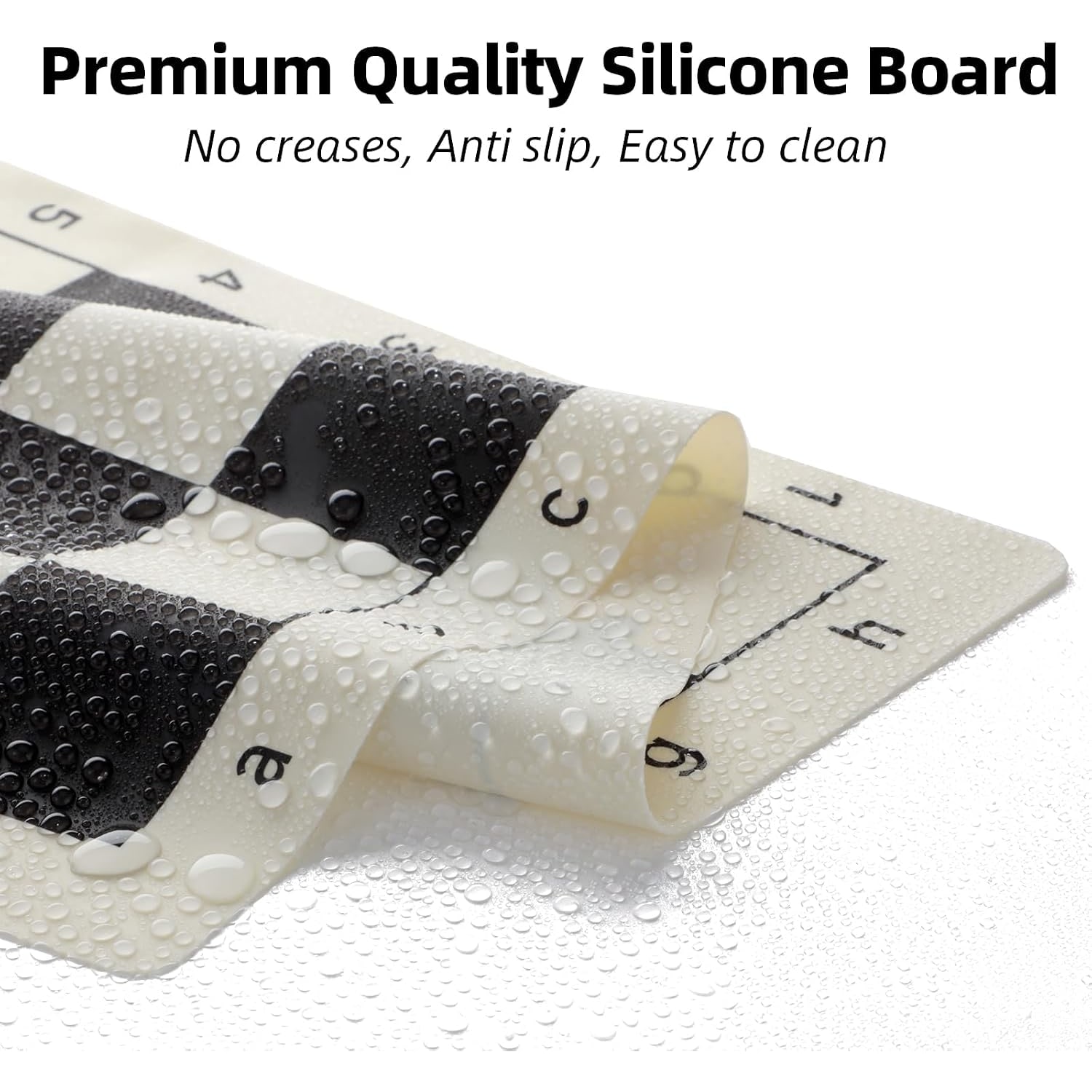
A silicone board chess set solves most of this quietly. Silicone is flexible enough to roll for storage but has enough body to settle flat on a table within seconds of being unrolled. It grips a smooth surface rather than sliding on it. And it wipes clean, which matters more than people expect when a game is being played next to a cup of tea.
What makes this set work
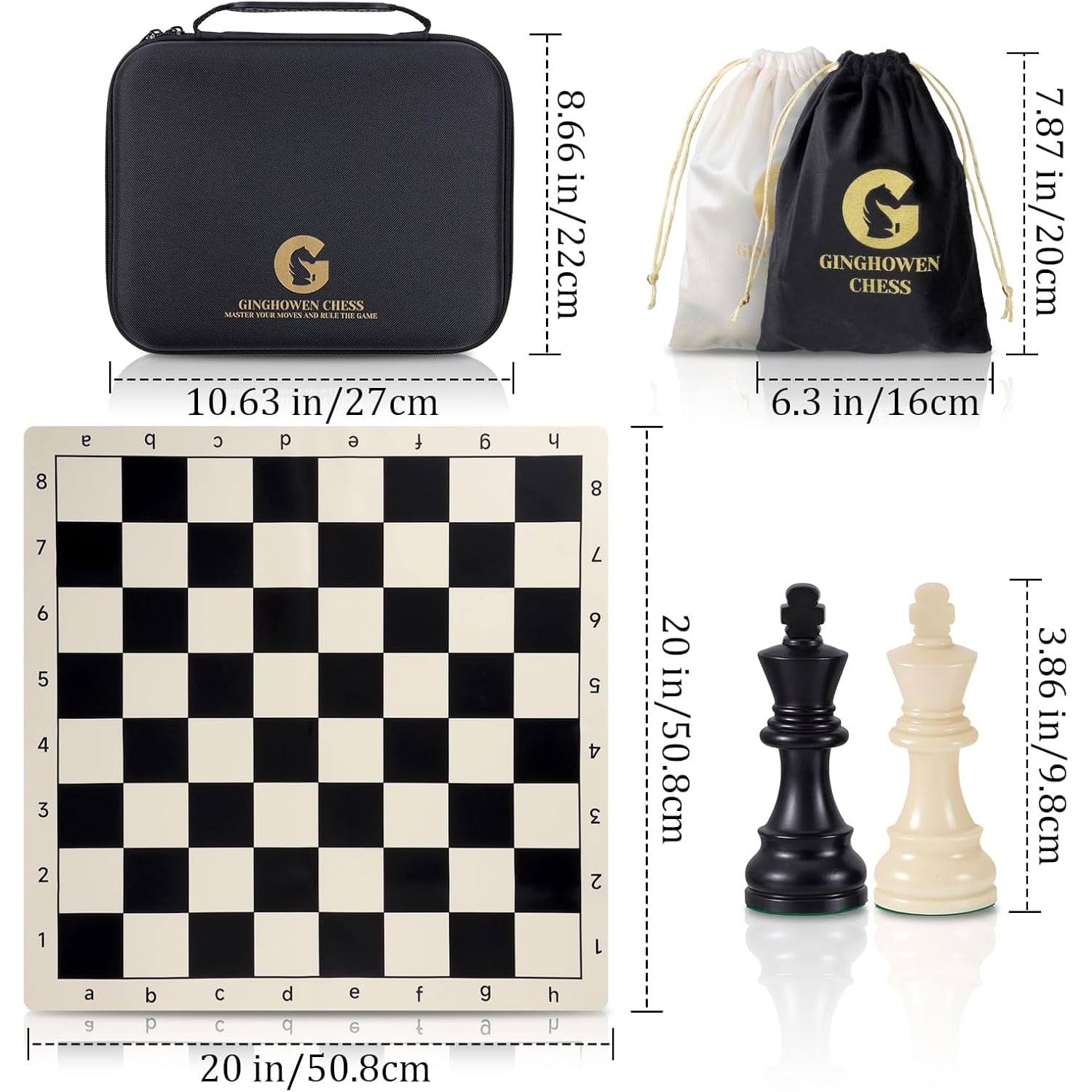
The board here is 50.8cm square, which is 20 inches, with 2.25 inch playing squares. That square size is the standard used in club and tournament play, and it is the single most useful spec on the whole listing. It gives each piece breathing room. You can reach in and lift a bishop without disturbing the pawn beside it, and from a seated position you can read the whole board at a glance.
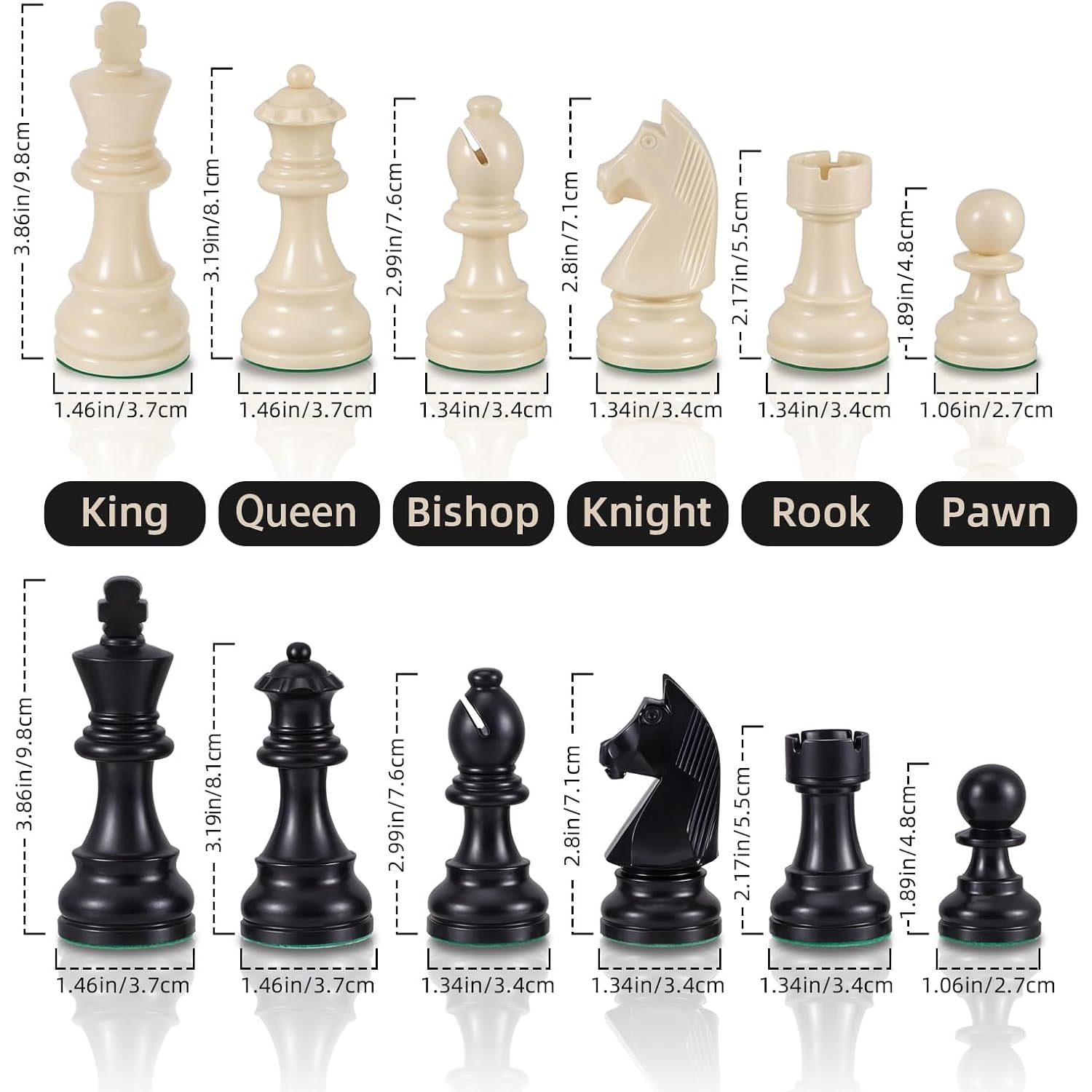
The pieces are plastic with an iron weight moulded inside. That internal weight is what separates a serious playing set from a novelty one. A weighted piece sits where you put it. Lean on the table, nudge the board while reaching for a drink, and the position holds. Hollow plastic pieces tip over at the slightest provocation, and nothing ruins a close endgame faster than resetting from memory.
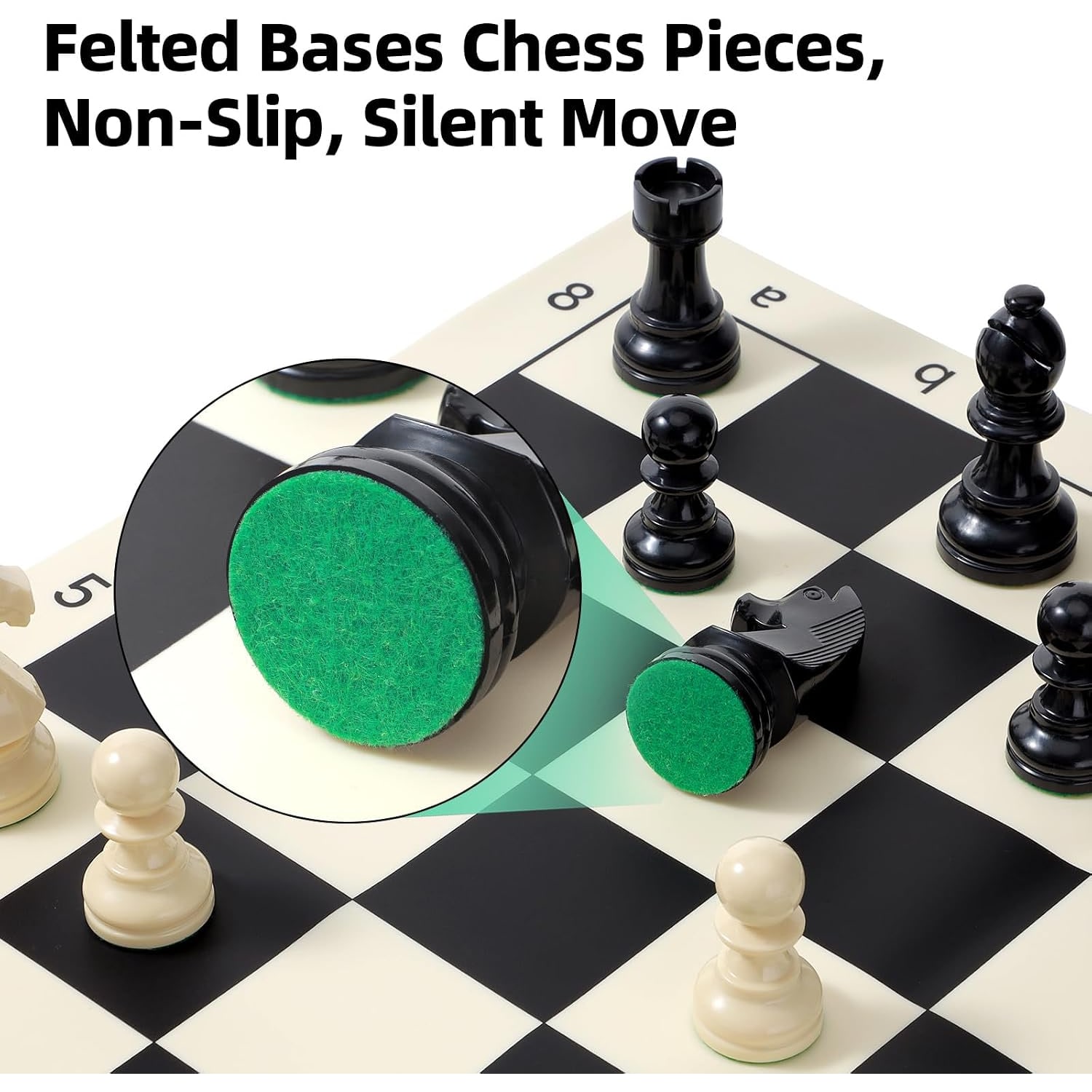
Each base is felted. There are two reasons that is worth having. First, it softens the sound of a move, which keeps a long game from turning into a drumming session. Second, it protects the silicone surface from the small scrapes that eventually dull a board.
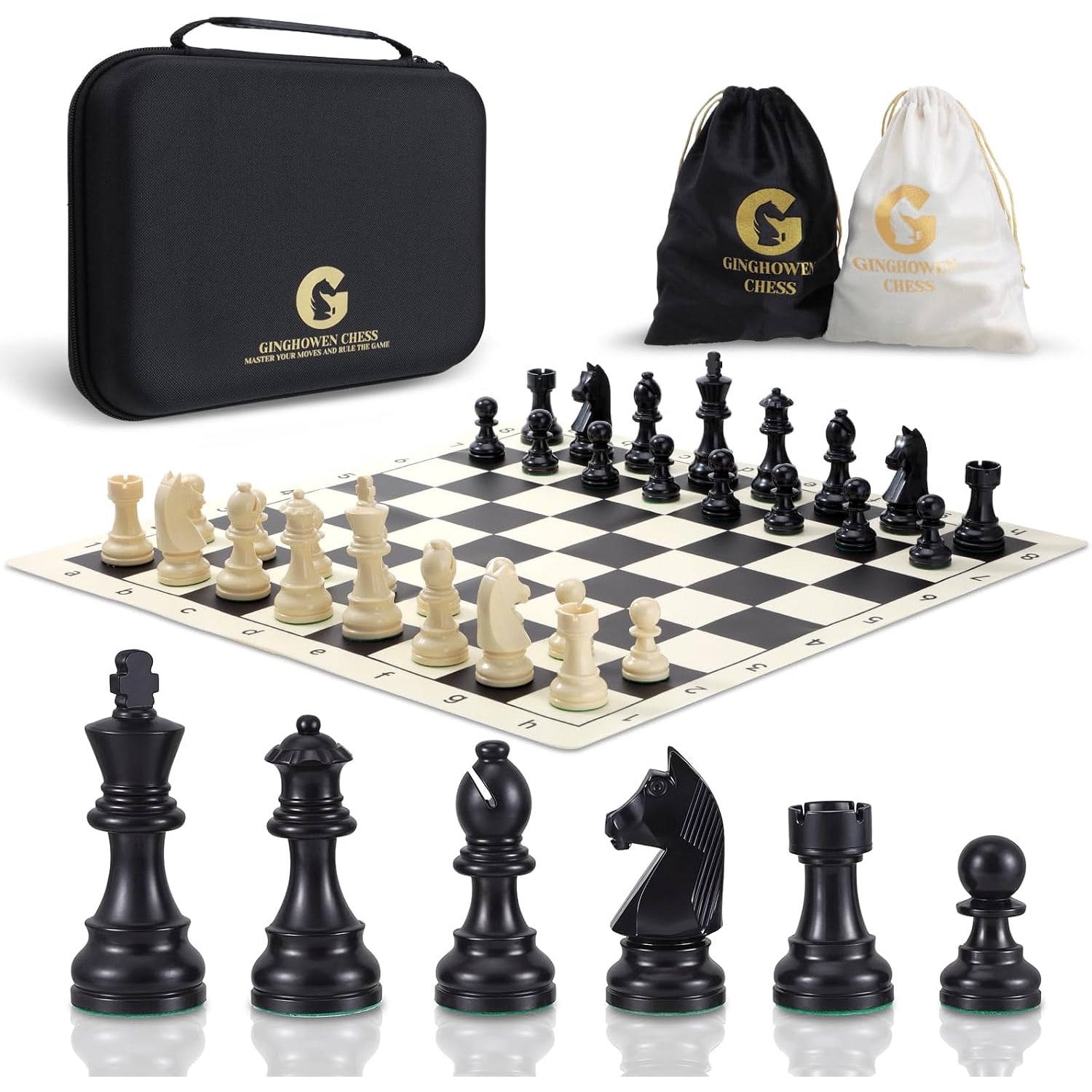
You get 34 pieces rather than the usual 32. The two extra queens exist for pawn promotion. In a standard set, promoting a second pawn means flipping a captured rook upside down and hoping everyone remembers what it represents. With spare queens in the bag, the board stays honest.
Who this suits
If you are buying for someone just starting out, a full-size board is more helpful than it looks. Learning the geometry of chess is easier when the squares are big enough to see the diagonals clearly. Plenty of people searching for the best chess set for beginners assume they should start small and then upgrade, but the upgrade usually happens within a year anyway.
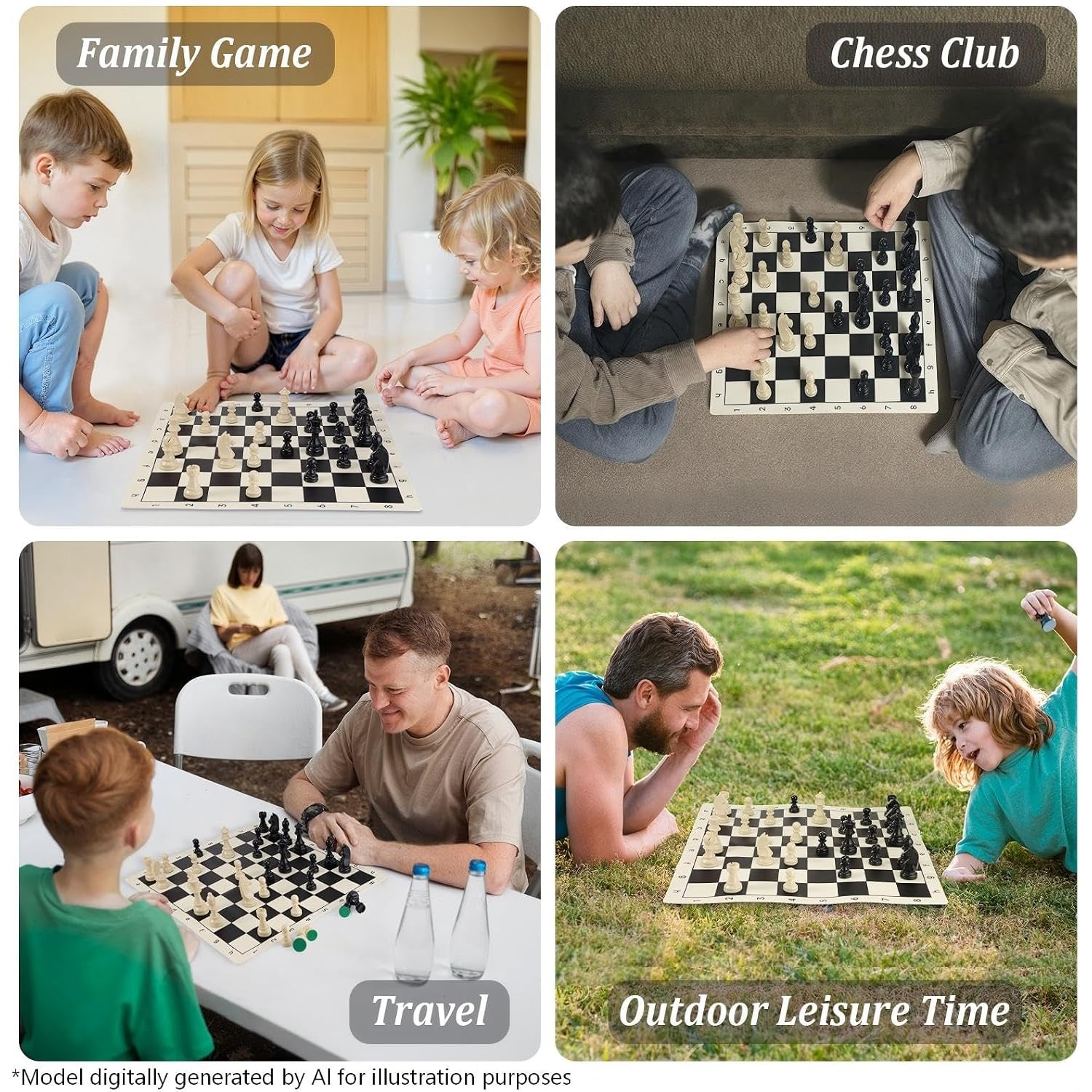
For a regular club player, this works as a second set. The wooden board stays at home and this one lives in a bag. The zippered case and two velvet drawstring bags mean the whole thing packs down in under a minute, and at 1.67kg it does not weigh down a backpack. That combination is what makes a roll-up board popular among people who want the best portable chess set without dropping to a tiny magnetic travel version.
Families get good value from it too. The board can come out on the dining table after dinner and go back in its case before breakfast. There is no permanent setup to negotiate and no fragile wooden pieces to worry about. For households where two or three people play at different skill levels, having a set that is quick to deploy makes the difference between playing weekly and playing twice a year.
It also suits teaching. Coaches often want a board that lies flat on any surface, survives being rolled and unrolled several times a day, and wipes clean after a classroom session. Silicone handles all three.
How to choose between board types
There are four common materials for a chess board, and each has a trade-off worth knowing.
Wooden boards look superb and feel substantial, but they are heavy, they take up permanent space and they do not travel. A knocked wooden board can also chip.
Folding card or plastic boards are cheap and light. The weakness is the hinge. Over time it loosens, the two halves no longer sit level, and pieces on the centre files wobble.
Vinyl roll-up mats are the club standard for good reason, being cheap and light, but thin vinyl keeps a curl and needs weighting down at the corners for the first few games.
Silicone sits between vinyl and wood. It costs more than a vinyl mat but it holds its shape better, grips the table, and resists the dust and static that make vinyl look grubby. If you want something that rolls up but does not feel like a compromise, it is the sensible middle ground. Anyone comparing options for the best roll up chess board will mostly be weighing silicone against vinyl, and the deciding factor is usually how often the board gets packed away.
Checking the fit for your table
A 50.8cm square board needs a decent surface. Dining tables are fine. Most coffee tables are fine. A small bedside table or a narrow console is not. Before you order, put a tape measure across the space you plan to use and leave at least 10cm clear on each side for captured pieces and elbows.
If space is genuinely tight, a smaller board is the better answer, but be honest about how often you will play on it. A cramped board gets used less.
Looking after it
Care is straightforward. Wipe the board with a damp cloth and a little mild soap, then let it dry completely before rolling it. Silicone does not hold dust the way felt-backed boards do, so most of the time a dry wipe is enough.
Clean the pieces the same way, but do not soak them. The felt on the bases holds water and takes a long time to dry properly, and damp felt can mark a board. Keep everything away from direct heat, hobs and open flame.
For storage, pieces go in the two velvet bags, one colour each, and the rolled board slips into the inner pocket of the case. If you have a shelf where the board can lie flat, that is even better, though it is not required. Avoid folding the board into hard creases for long periods, and avoid leaving it in a hot car for days on end.
A note on small parts
Chess pieces are small, and this set carries a choking hazard caution. It is not for children under 3. In a household with young children, the simplest habit is to keep the pieces bagged in the case between games rather than loose in a drawer or on a shelf.
The short version
This is a full tournament-size chess set that packs into a bag. The 2.25 inch squares and weighted pieces give it the feel of a serious playing set, the two spare queens remove the most common annoyance in a long game, and the silicone board unrolls flat instead of fighting you.
It is 50.8cm square, 1.67kg complete, needs no batteries and no assembly, and comes with a zippered case and two velvet bags. If you want one board that works on the dining table tonight and in a backpack next weekend, this is a sound choice.