
The complete guide
How to Choose a Tabletop Easel with Storage
The problem with painting at a table
Most home painting happens on a surface that was never meant for it. The dining table, a desk, the kitchen bench near the window. You lay the canvas flat, which distorts what you see, and then everything else fights for the same space. Brushes roll. A water jar sits too close to a laptop. The paint tubes end up in a plastic bag you have to dig through every time.
Then dinner happens and all of it has to move.
That cycle is the real reason a lot of people paint less than they would like. It is not motivation. It is the fifteen minutes of setup and the fifteen minutes of pack down, twice, every time you want an hour with a brush.
A tabletop easel with storage collapses both of those into about a minute. The canvas sits upright on a proper angle. The brushes live inside the base. You open it, work, close it, and put it on a shelf.
How this one works
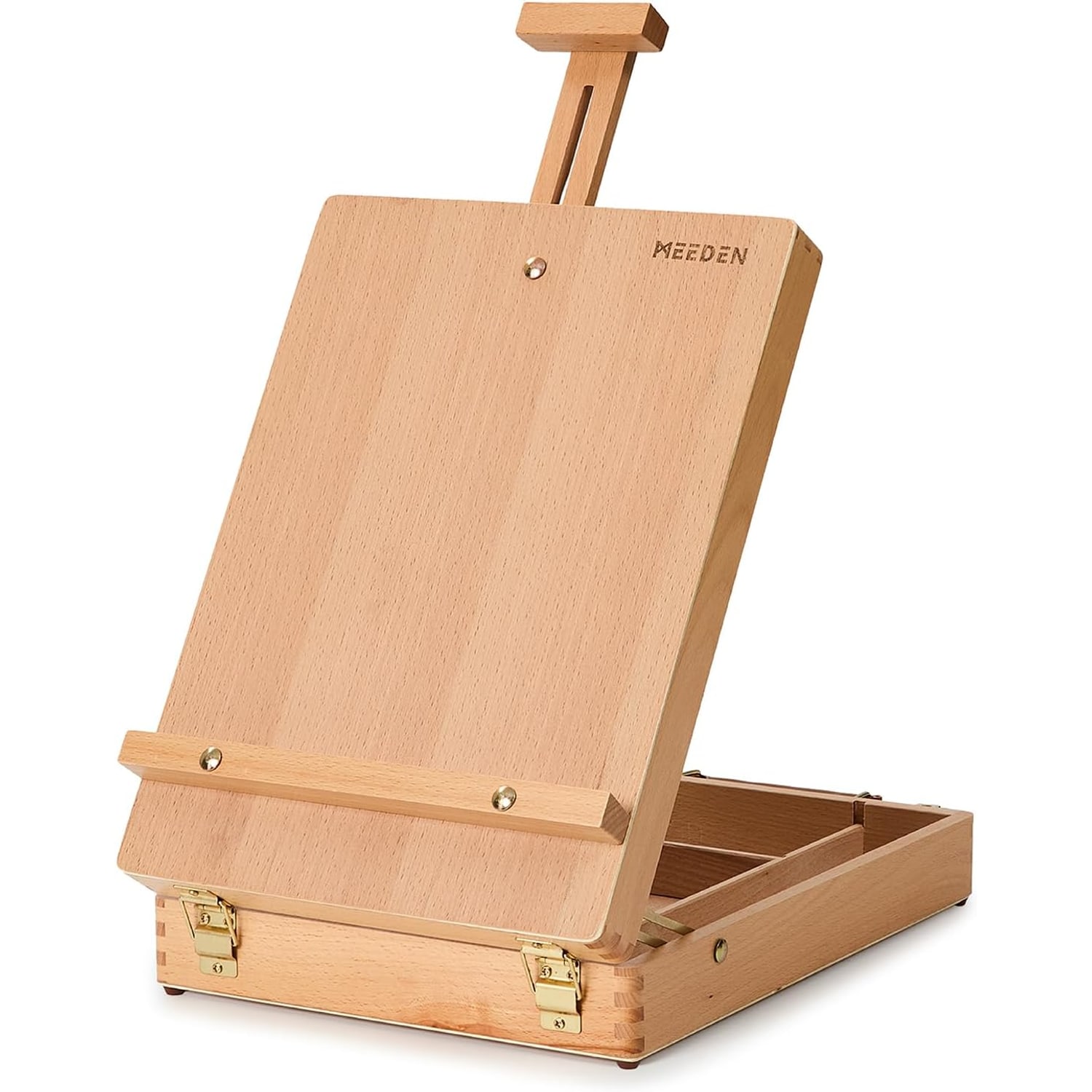
The build here is a single mast easel in beech wood with brass fittings. The base is a shallow box. The lid hinges up and the mast rises out of it, carrying a canvas holder that clamps your surface at the height you want. Side supports fold out and lock, and that locking is what stops the whole arrangement from creeping backwards when you press into the canvas.
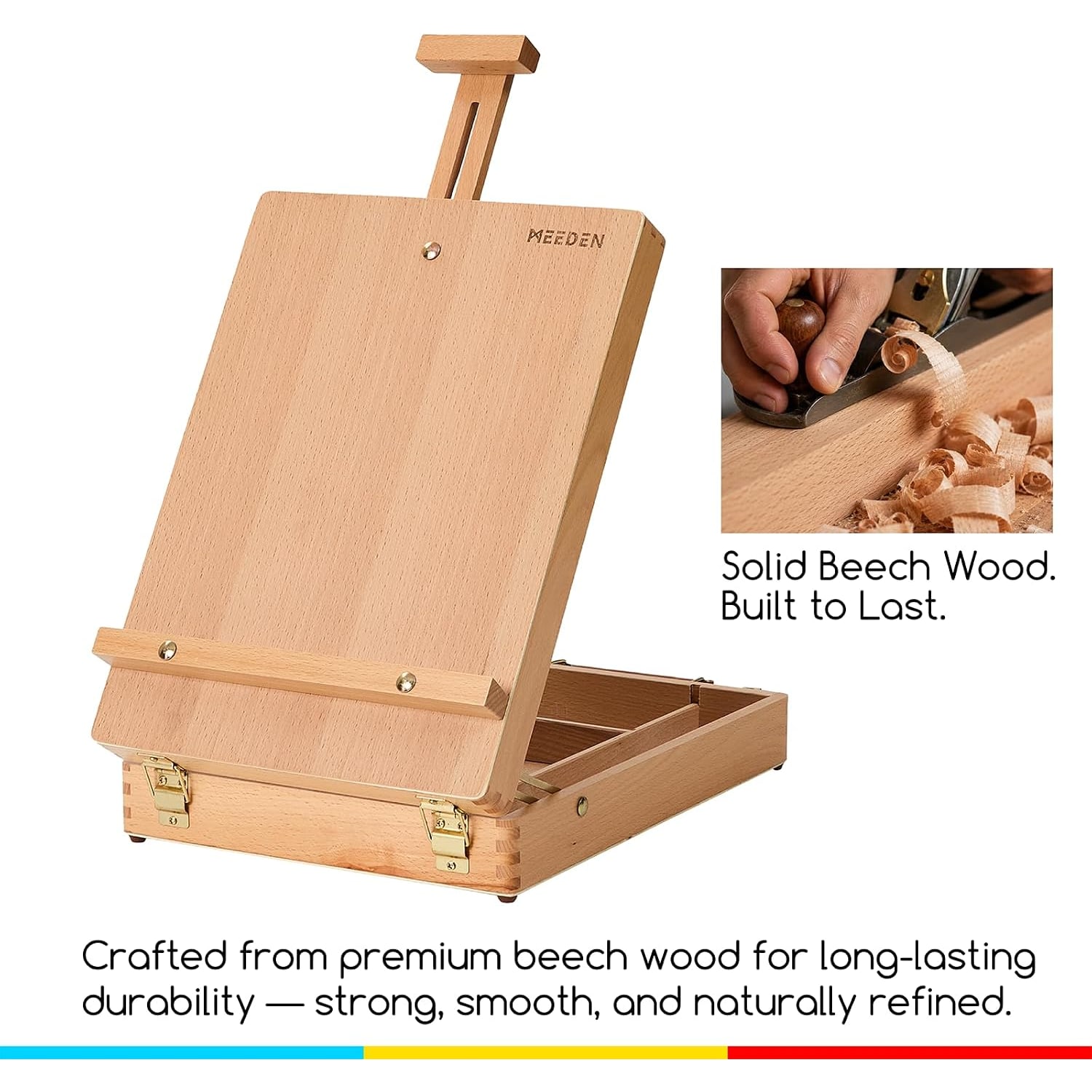
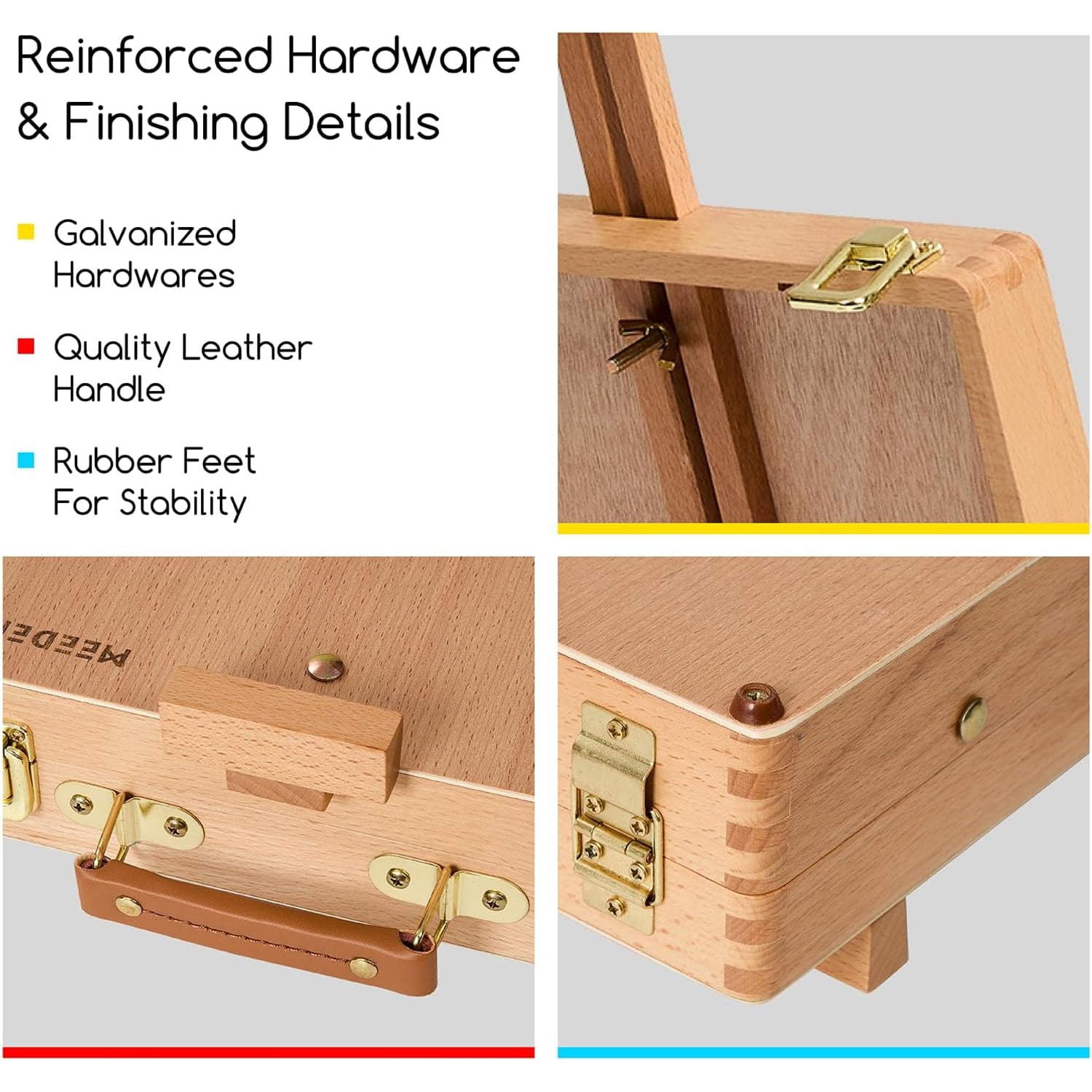
Beech is worth a word. It is a close-grained European hardwood that has been used for workbenches, planes and chisel handles for centuries, because it is dense, it machines cleanly and it does not warp easily in normal indoor conditions. On an easel that translates into a frame that holds its set angle instead of slowly drifting. The dovetail construction at the corners is the traditional joint for a box that gets carried around, since it resists being pulled apart in the direction a handle tugs it.
The finish is hand-rubbed oil rather than a thick lacquer, so the grain stays visible and you can refresh it yourself later with a light coat of wood oil.
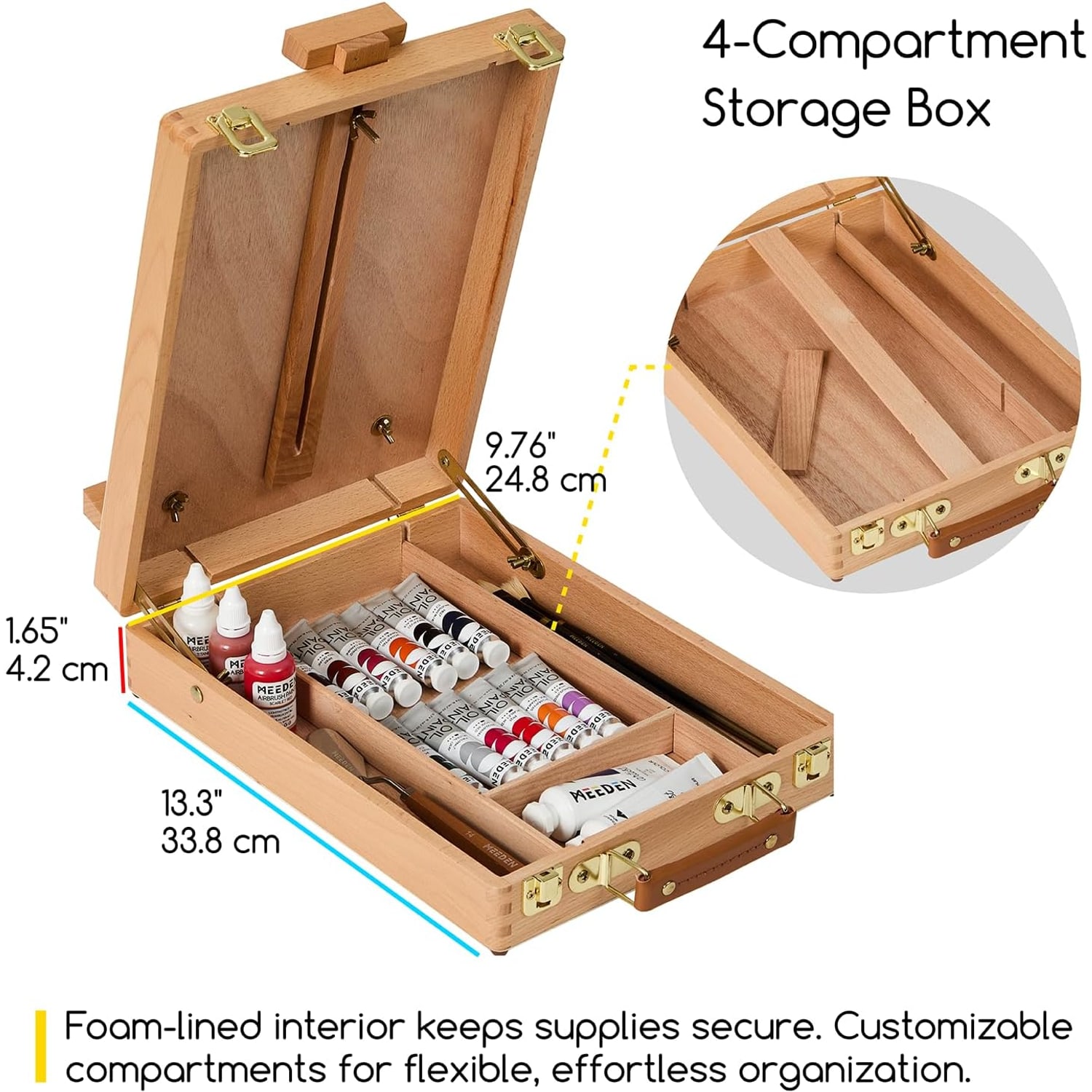
Inside, removable dividers split the compartment. That sounds minor and is not. Every painter carries a different kit. A gouache painter needs a lot of small cells. An oil painter wants one deep slot for tubes and a long run for brushes. Fixed compartments force you to adapt to the box. Removable ones let the box adapt to you, which is the difference between using the storage and ignoring it.
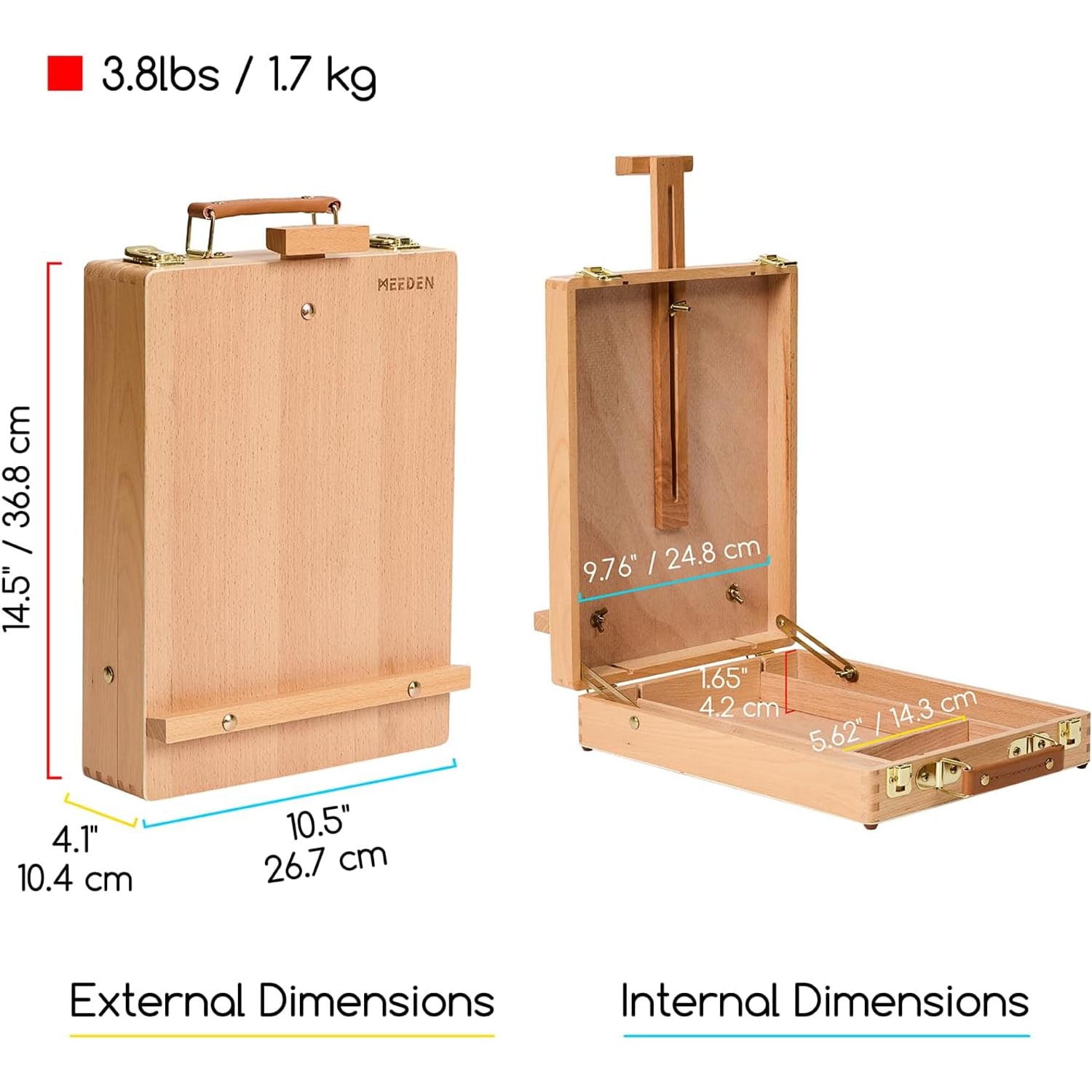
Folded, it sits at 10.5 cm deep by 37 cm wide by 27 cm high and weighs 1.46 kg. A leather handle on the lid carries it.
Who it suits
People short on space. If your studio is a shared table, this is close to the ideal format. The open footprint is about the size of a large book, and the closed footprint is a flat case you can stand on end in a cupboard.
Students and class-goers. Carrying a folding floor easel to a weekly class is a hassle. Carrying a 1.46 kg box with your brushes already in it is not. It also means you never turn up having left the palette knife at home.
Outdoor painters. Plein air work rewards travelling light. This folds to a single object, which is the whole trick. Find a picnic table, a low wall or a flat rock, open it and go.
Anyone starting out. Beginners often buy the cheapest stand they can find, discover it wobbles, and conclude they are bad at painting. A rigid frame with locking supports takes that variable off the table.
Sketchers and illustrators. The holder takes pads and boards, not just canvas, so it works for drawing as much as painting.
Choosing the right easel for your work
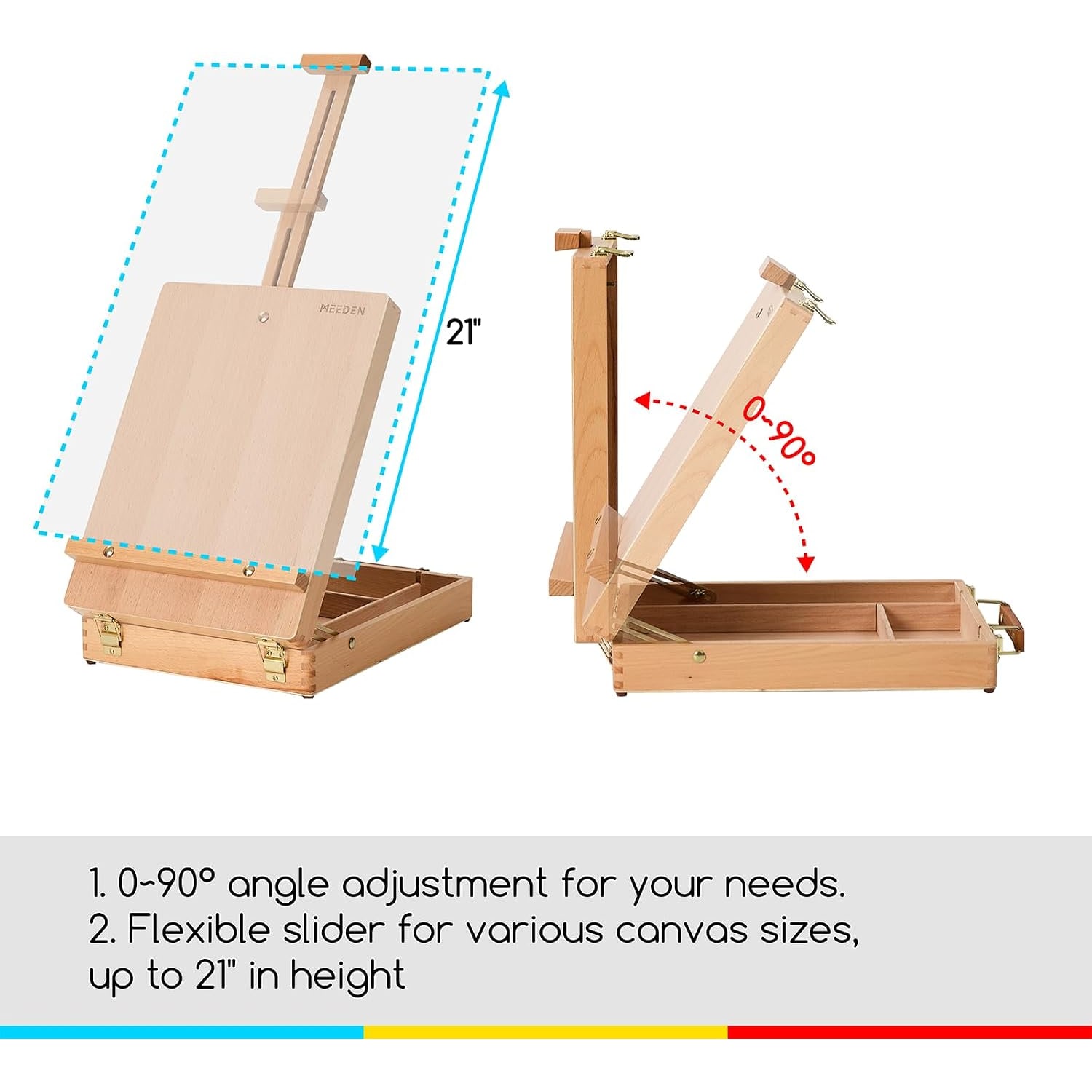
Start with canvas size. This one handles work up to roughly 53 cm tall. Think about what you actually paint, not what you imagine painting. Most people who say they want to do large canvases end up producing a lot of small and medium ones, because those are the sizes that fit a life with a job in it. If you genuinely work above half a metre regularly, you want a floor easel instead, and most painters eventually have one of each.
Then think about angle. Watercolour and ink want a gentle tilt so the wash flows a controlled distance and stops. Oils and acrylics want something near upright so you see the painting the way a viewer will, and so loose paint does not slide. An easel that only offers one angle quietly limits what media you will use. This one moves between vertical and horizontal positions, which means it does not push you toward one medium.
Weight is the next decision, and it cuts both ways. Lighter is better for carrying and worse for stability. At 1.46 kg with a wide beech base, this sits in a reasonable middle. On a solid table it is steady. On a wobbly camp table outdoors, put something heavy in the storage compartment and the centre of gravity drops.
Finally, consider storage honestly. Some tabletop easels are just a stand. Others are a box that happens to prop a canvas. If you already own a tackle box or a roll for your brushes, the storage is a bonus. If your current system is a plastic bag, the storage is the main reason to buy.
Setting it up well
Light first. Put the easel so the light comes over your non-painting shoulder, which keeps your hand from casting a shadow across the work. A north-facing window in the southern hemisphere, or a south-facing one in the north, gives the steadiest light through the day.
Height second. A tabletop easel puts the canvas higher than a flat table, which is good, but if you are hunched you will feel it after an hour. Raise the chair or lower the table until your eyeline falls around the upper third of the canvas.
Then set your interior layout once and stick to it. Brushes in the same slot every session. Tubes in the same corner. It sounds fussy. It means you stop looking for things and start painting, and over a few months that adds up to a lot more finished work.
Looking after beech and brass
Beech is tough but it is still timber. Wipe it with a soft dry cloth, or barely damp if something has dried on. Dry it straight away rather than letting water sit on the surface. Skip solvents, bleach sprays and abrasive pads, all of which will strip an oil finish and leave pale patches.
Catch paint while it is wet. Acrylic in particular goes from wipe-off to scrape-off in about twenty minutes. Keep a rag in the box for that purpose.
For the brass, an occasional buff with a dry cloth keeps the shine. Brass naturally dulls over time, which some people like and some do not. A tiny amount of metal polish on a cotton bud brings it back, kept well away from the timber.
Store it closed. The dividers stay where you left them, dust stays out, and the hinge is protected. Keep it out of direct sun, which fades and dries wood, and out of damp rooms like unheated garages.
Once or twice a year, a thin coat of wood oil applied with a lint-free cloth and buffed off will keep the finish even. Do not pour it on. A little, spread thin, wiped back.
Common mistakes worth avoiding
Overloading the storage is the big one. It is tempting to fill every cell, but the box carries best when it is packed to maybe three quarters. A heavy box strains the hinge and the handle.
Clamping a canvas that is too big is the second. The holder has a working range for a reason, and forcing something oversized puts load on the mast at a bad angle.
Leaving a wet palette inside is the third. Closing the lid on wet paint means opening it later to a mess that has spread to the dividers. Let things dry, or carry the palette separately.
The short version
This is a beech tabletop easel with storage that holds canvas up to about 53 cm, adjusts between vertical and horizontal angles with locking side supports, and packs its own brushes and tubes into a divided compartment underneath. It folds to 10.5 by 37 by 27 cm and weighs 1.46 kg, with a leather handle for carrying. No assembly needed.
If you paint at a shared table, take work outdoors, or carry supplies to a class, it removes most of the friction that stops people painting as often as they mean to. If you work large and work in one fixed spot, a floor easel is the better fit, and plenty of painters end up owning both.