
The complete guide
How To Choose An Ice Cream Shop Playset That Actually Gets Played With
The problem with most pretend food toys
Plenty of play food sets get opened, admired for twenty minutes, then end up scattered under the couch. The food itself is usually fine. What is missing is a reason to do anything with it. A bowl of plastic scoops is just a bowl of plastic scoops until there is a customer, a price and a counter between the two children.
That is the gap a shop playset fills. It gives the food a job. Someone orders, someone serves, money changes hands, and the whole thing repeats with a different flavour. The game has a beginning, a middle and an end, which is exactly what keeps a child coming back to it on a wet Sunday.
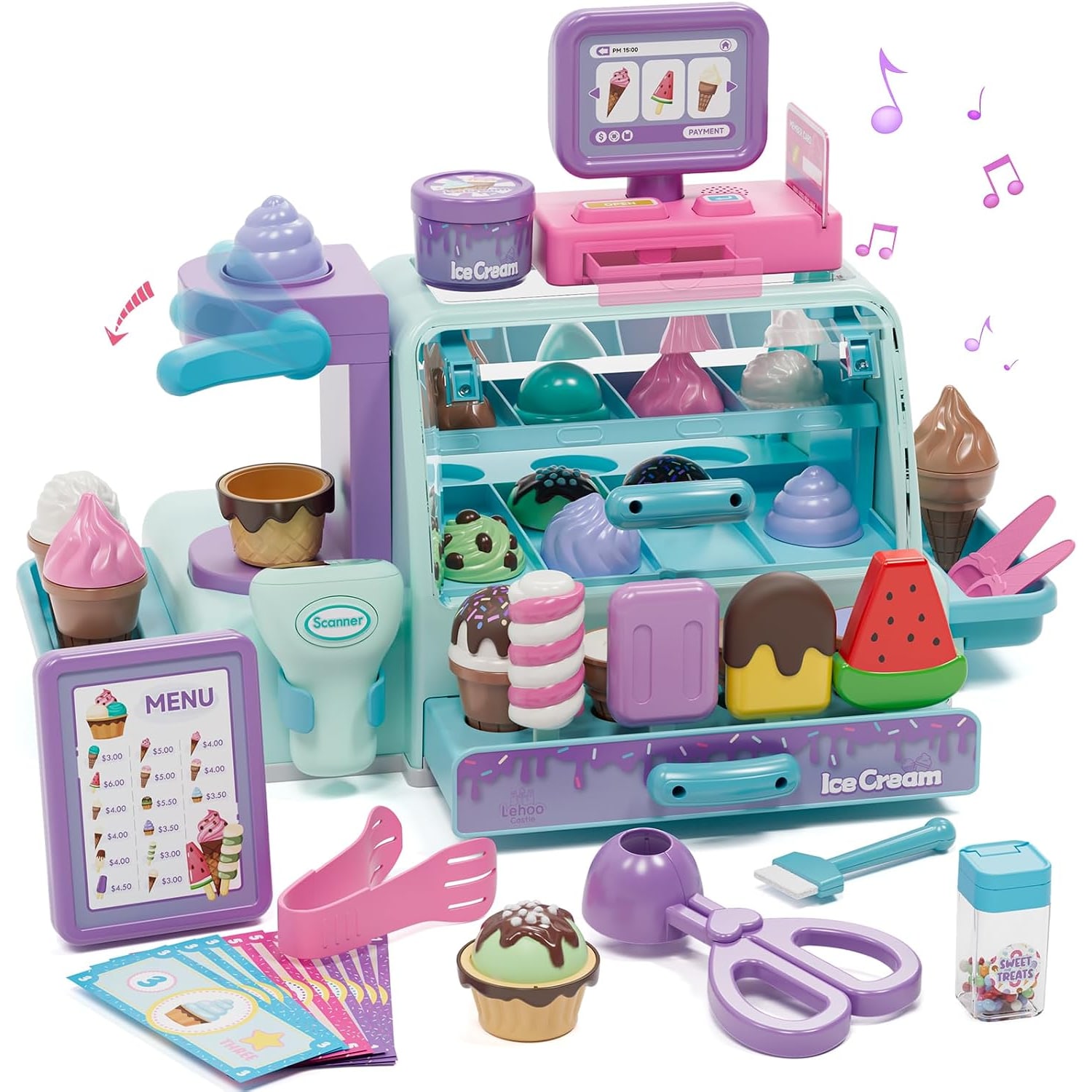
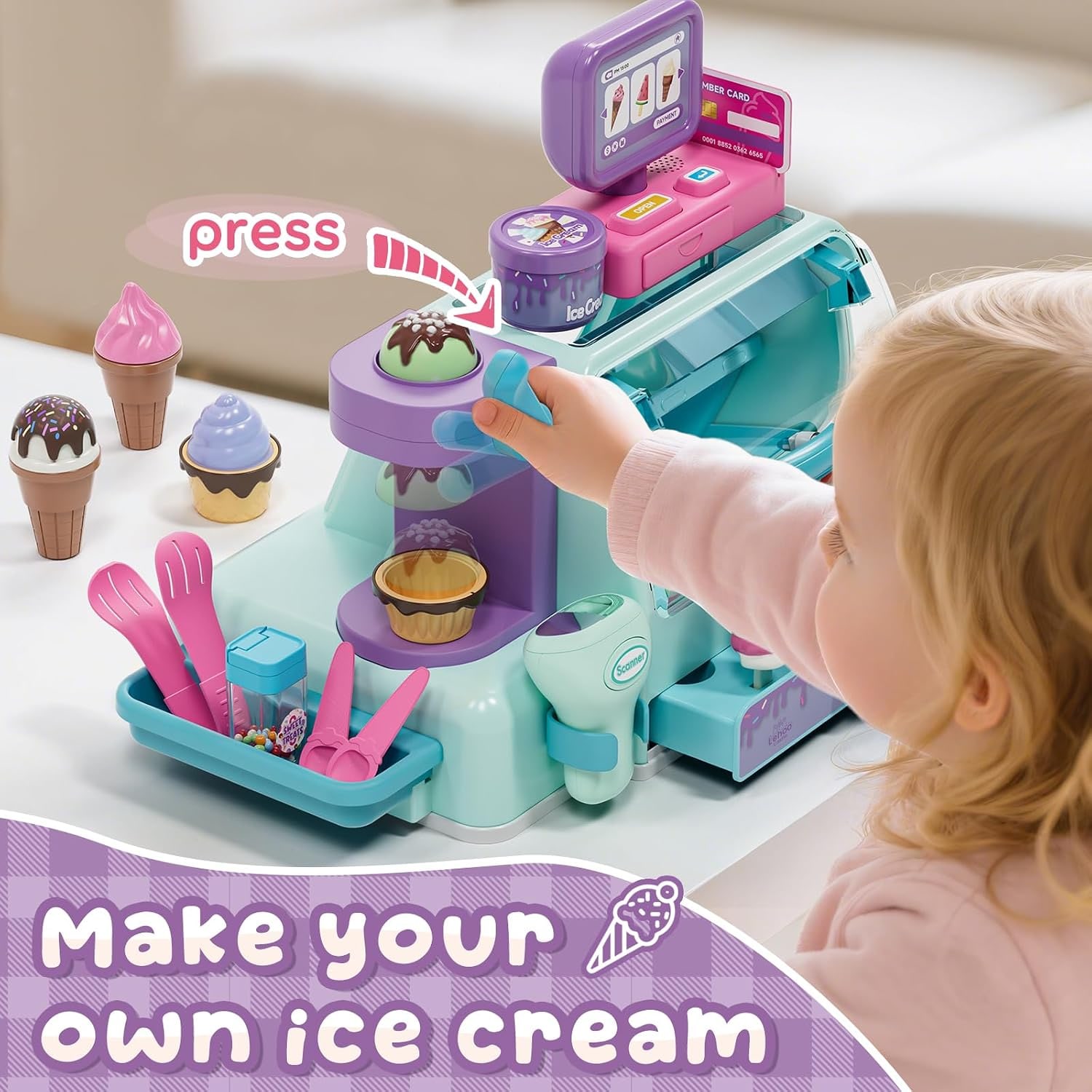
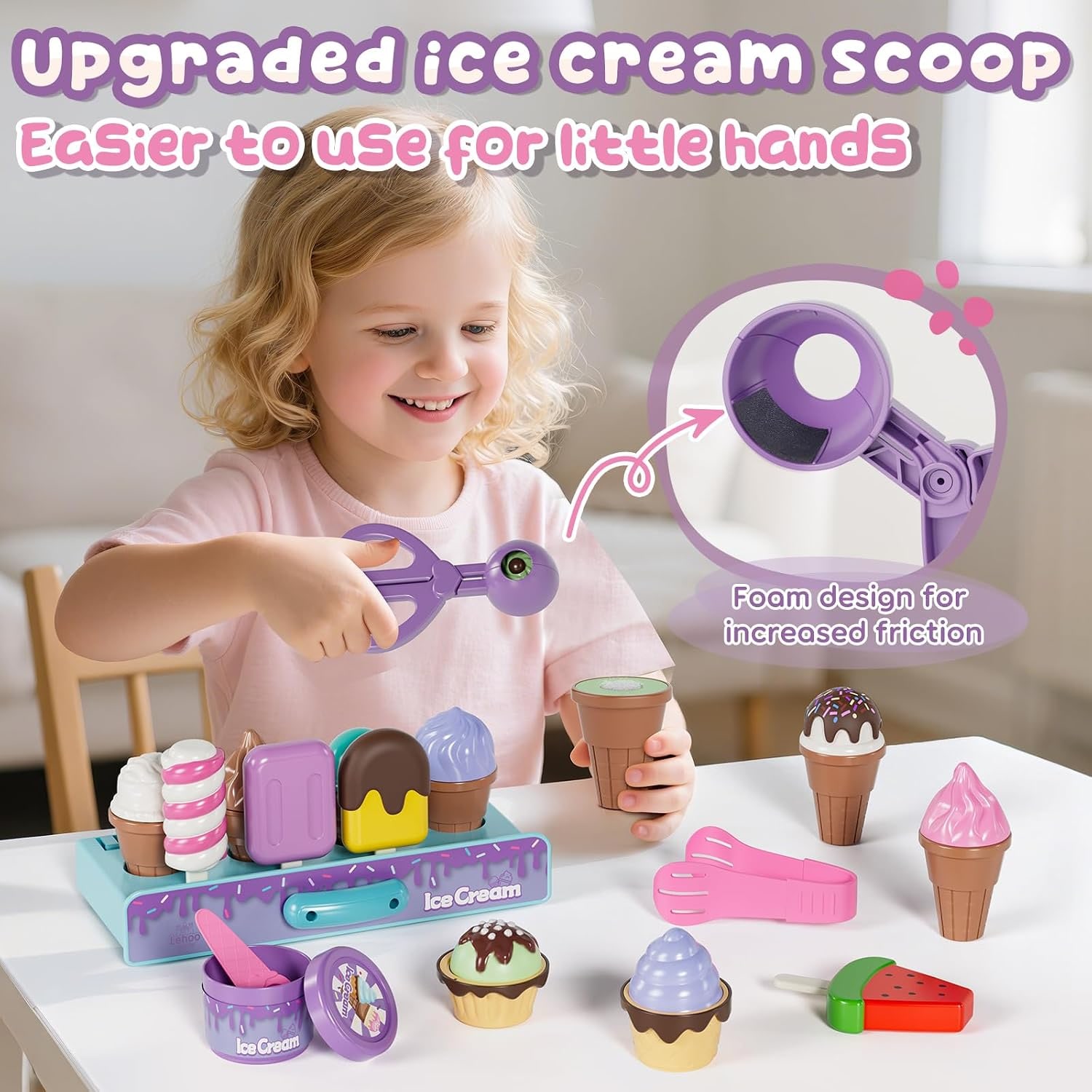
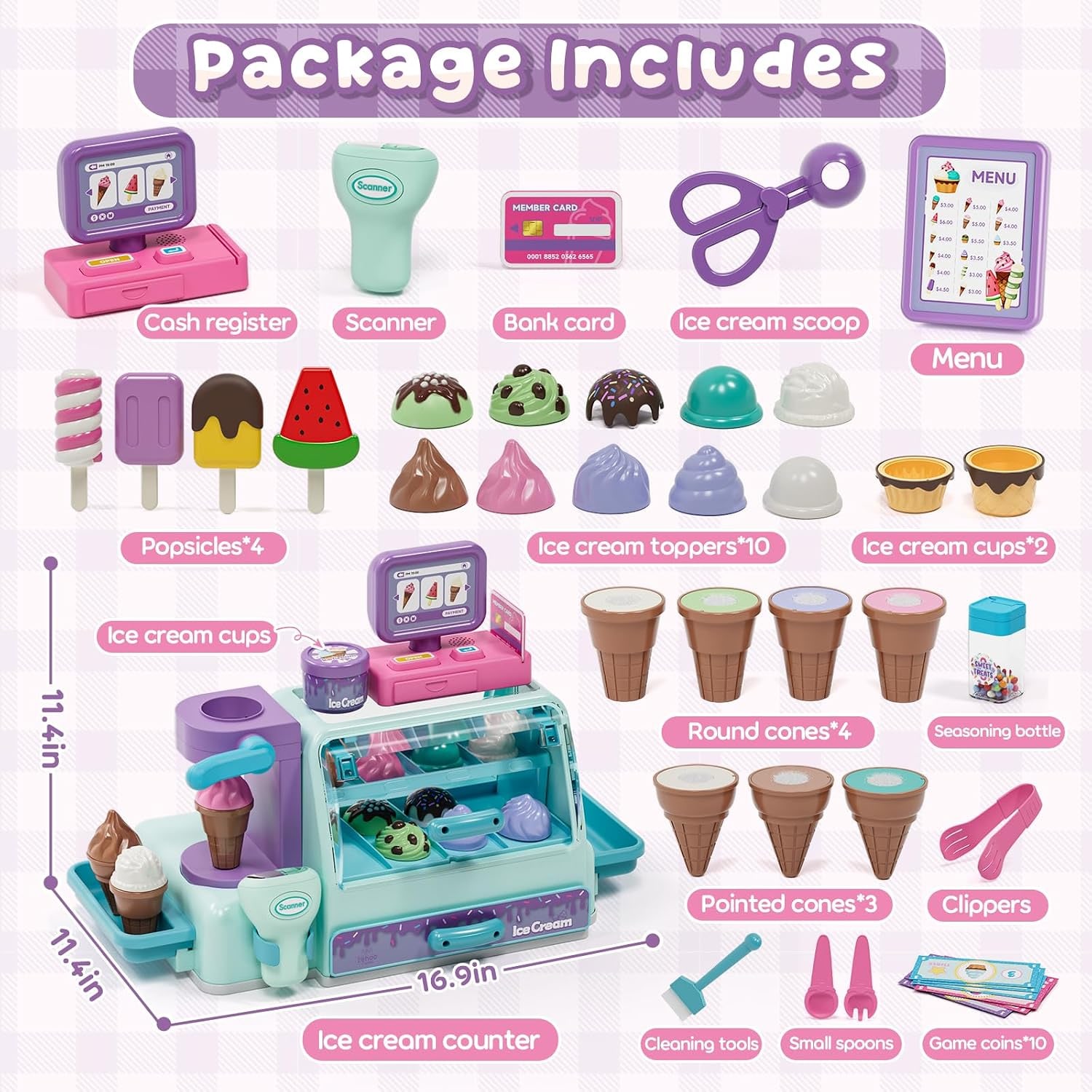
The Ice Cream Counter Playset is built around that idea. More than 30 pieces arrive in the box, and they split roughly into two groups. There is the food and serving side, including cones and a cream dispenser that squirts when you push it. Then there is the shop side, with a cash register, a card, and a scanner that lights up and beeps. Put both halves on a table and the game has everything it needs.
How the counter works in practice
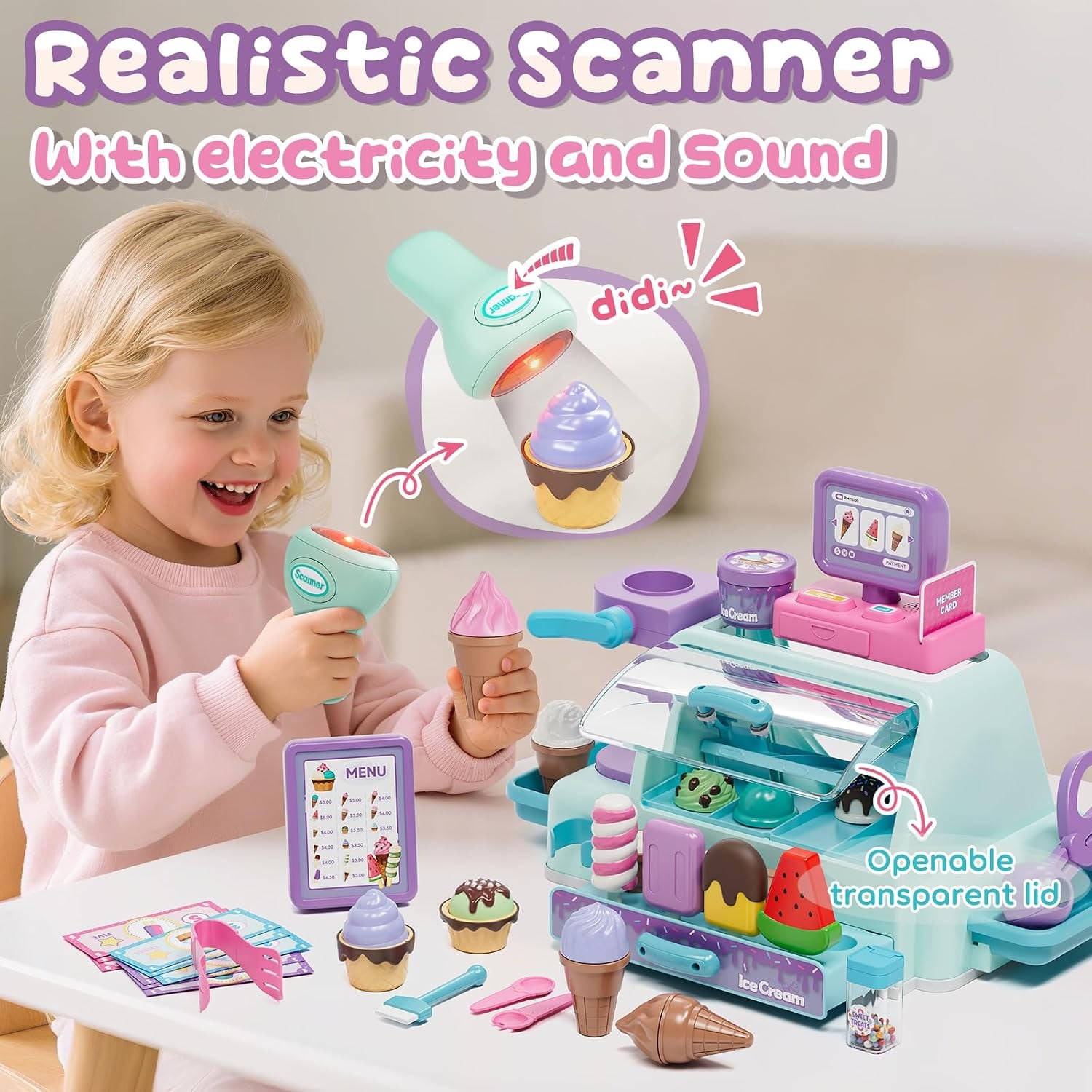
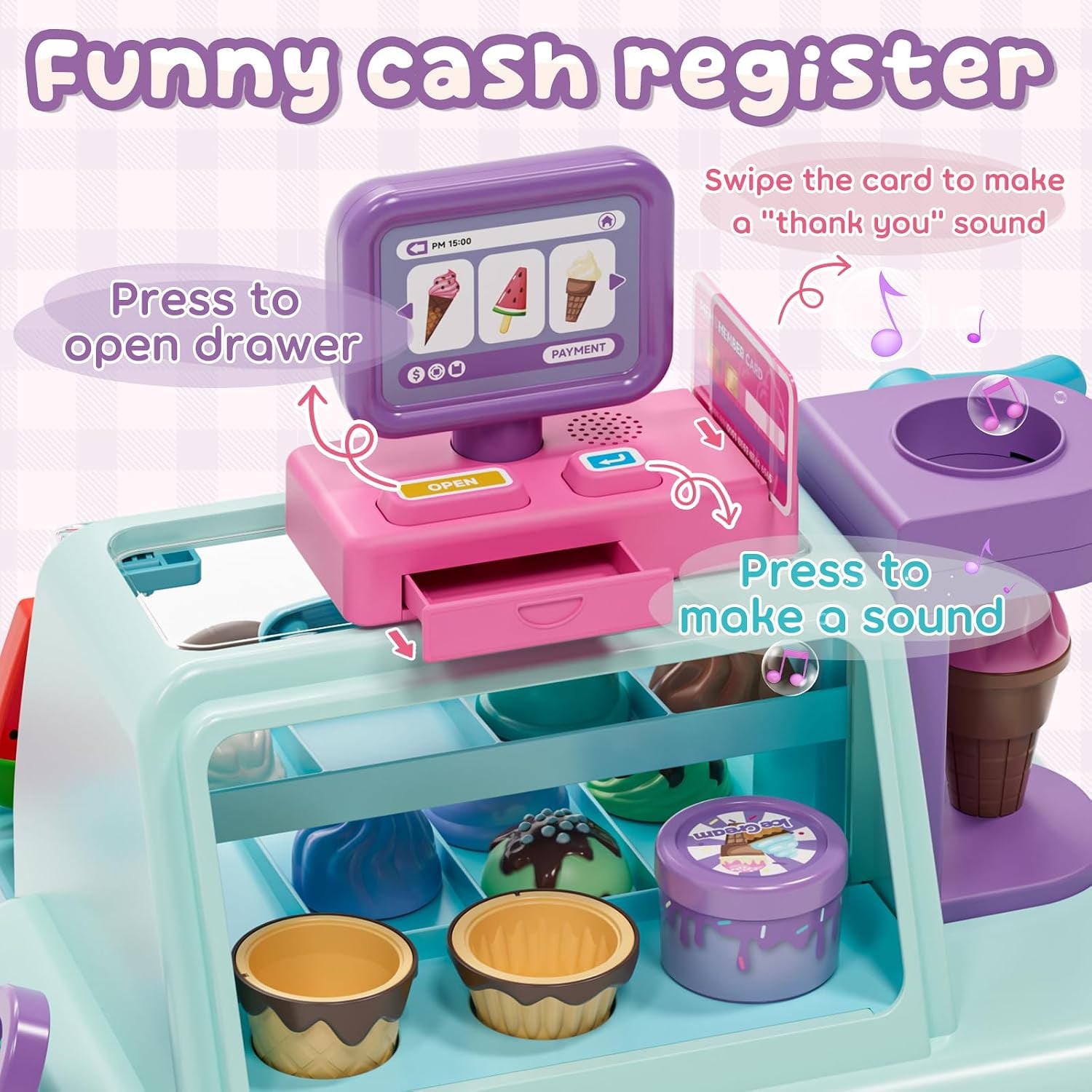
Watch a child use it and a pattern shows up fast. The customer says what they want. The shopkeeper finds the item, passes it over the scanner, waits for the light and the beep, then asks for payment. The card gets swiped, there is a thank you, the drawer pops open with a press of the button, and change comes out. Then the cone gets topped with the dispenser and handed over.
Each of those steps is a small, satisfying action on its own. That matters more than it sounds. Young children repeat actions they enjoy, and repetition is how the whole routine gets learned. Pressing the drawer button is fun by itself. Swiping the card is fun by itself. Squirting the dispenser is the most fun of the lot, which is why most children save it for last and make a performance of it.
The counter is 30.5 cm long, 22.9 cm wide and 18.8 cm high. That height suits a child sitting on the floor or kneeling at a coffee table. It is deliberately not a big piece of furniture. You can set it up in a lounge room, play it for an hour and put it back on a shelf, which is a better fit for most homes than a full-size shop front.
Who it suits
The set is for ages 3 and up. It contains small parts, so it is not suitable for children under 3, and that is worth taking seriously if there is a younger sibling crawling around. Storage with a lid solves most of that problem.
At the younger end of the range, children mostly play the serving half. They scoop, they top, they hand things over, and they press buttons because buttons are good. The money is decoration at that stage, and that is fine.
At the older end, the business half comes alive. Children start setting prices, writing menus on scrap paper, giving each other totals and arguing about whether a double scoop should cost more. Some families find the best pretend ice cream shop toy is one with enough moving parts to grow with a child for two or three years, and the register and scanner here are what do that work.
It also suits group play better than a solo toy. One child behind the counter and two in the queue is a natural setup. Swapping roles happens without an adult suggesting it, because everyone wants a turn at the drawer button.
What to look at before you buy
A few things are worth checking on any shop playset, including this one.
Count the pieces against the space you have. Over 30 pieces sounds generous, and it is, but it also means 30 things to collect at the end. A shallow tray or a lidded box is almost essential. Decide where that box lives before the set arrives.
Think about where it will sit. A footprint of roughly 30 by 23 cm fits most coffee tables and side tables. If you want it to live permanently on a play kitchen bench, measure the bench first. If it will be set up and packed away each time, check that the counter fits your chosen cupboard shelf.
Check the powered features. The scanner, card reader and register sounds all need power. Battery type and quantity are not stated by the maker, so look at the packaging when the box arrives rather than assuming. If this is a birthday present, open the box quietly beforehand and have batteries ready. Nothing deflates a present like a toy that cannot beep.
Think about what else is already in the toy cupboard. Loose play food from other sets works fine here, because the counter does not need special connectors. If you already own a play kitchen, a shop counter is a natural companion rather than a duplicate. Food gets made on one side and sold on the other.
Materials and finish
The set is moulded from ABS plastic. ABS is a firm, rigid plastic that is common in toy manufacturing because it takes moulded detail well and does not flex much under normal handling. Practically speaking, that means edges stay crisp and parts like the drawer and dispenser keep working after a lot of pressing.
The colour is pink. The maker does not break down the colours of each individual accessory, so expect the food pieces to use a mix of shades as you would in any ice cream set.
A few details are simply not stated. Weight is not given. Assembly steps are not described either. If one of those points is important for your decision, it is better to treat it as unknown than to guess.
Keeping it in good shape
Care is straightforward. Wipe the counter and the play food with a soft, damp cloth, then dry them off. Do not soak anything that holds batteries, and keep the whole set out of the dishwasher and the washing machine. Heat and detergent are hard on moulded plastic and worse on electronics.
Store it away from direct sun and heaters. Strong sun fades coloured plastic over time, especially pinks.
For the small pieces, group them by type. Cones with cones, toppings with toppings. Setting up takes a minute instead of ten, and children are far more likely to start a game that does not begin with a hunt. A clear box also lets you see at a glance whether something has gone missing under the couch.
If a sound feature goes quiet, check the batteries before assuming a fault. That solves it most of the time.
Getting more out of it
A few simple additions stretch the play. Paper and crayons let children make a menu and a price list, which pulls writing and numbers into the game without it feeling like a lesson. A small apron or a tea towel over the shoulder turns a child into staff, and costume makes a surprising difference to how long the game runs.
Give customers a shopping list. It changes the game from free-for-all serving into something with a goal. Swap roles on a timer so nobody hogs the register. Set up a queue with cushions. Little structures like these are what take an ice cream shop playset from a twenty-minute toy to an all-afternoon one.
The short version
If you want play food that gets used rather than admired, buy the counter that goes with it. This Ice Cream Counter Playset has over 30 pieces, a register with a pop-open drawer, a card swipe with a thank-you sound, a light-up scanner and a cream dispenser that squirts. It measures 30.5 x 22.9 x 18.8 cm, is pink, and is made from ABS plastic.
It suits ages 3 and up, is not for children under 3 because of small parts, and plays best with two or three children swapping between counter and queue. Sort out a storage box and check the batteries, and the rest takes care of itself.