


The complete guide
How to Choose a Kids Doctor Play Set That Gets Played With
The problem with most doctor kits
Walk down any toy aisle and you will find a dozen doctor kits. Most of them are a moulded plastic case with six silent shapes inside. A child opens it, presses the fake stethoscope to a teddy's chest, hears nothing, and loses interest before the packaging is in the bin. That is the whole lifespan of a lot of these sets.
The reason is simple. Pretend play needs something to push against. If the prop does nothing, the child has to supply every single part of the story themselves, and that is hard work when you are five. A prop that gives a result, even a small one, hands the game a next step. You listen, you hear a thump, you announce a diagnosis. The game moves.
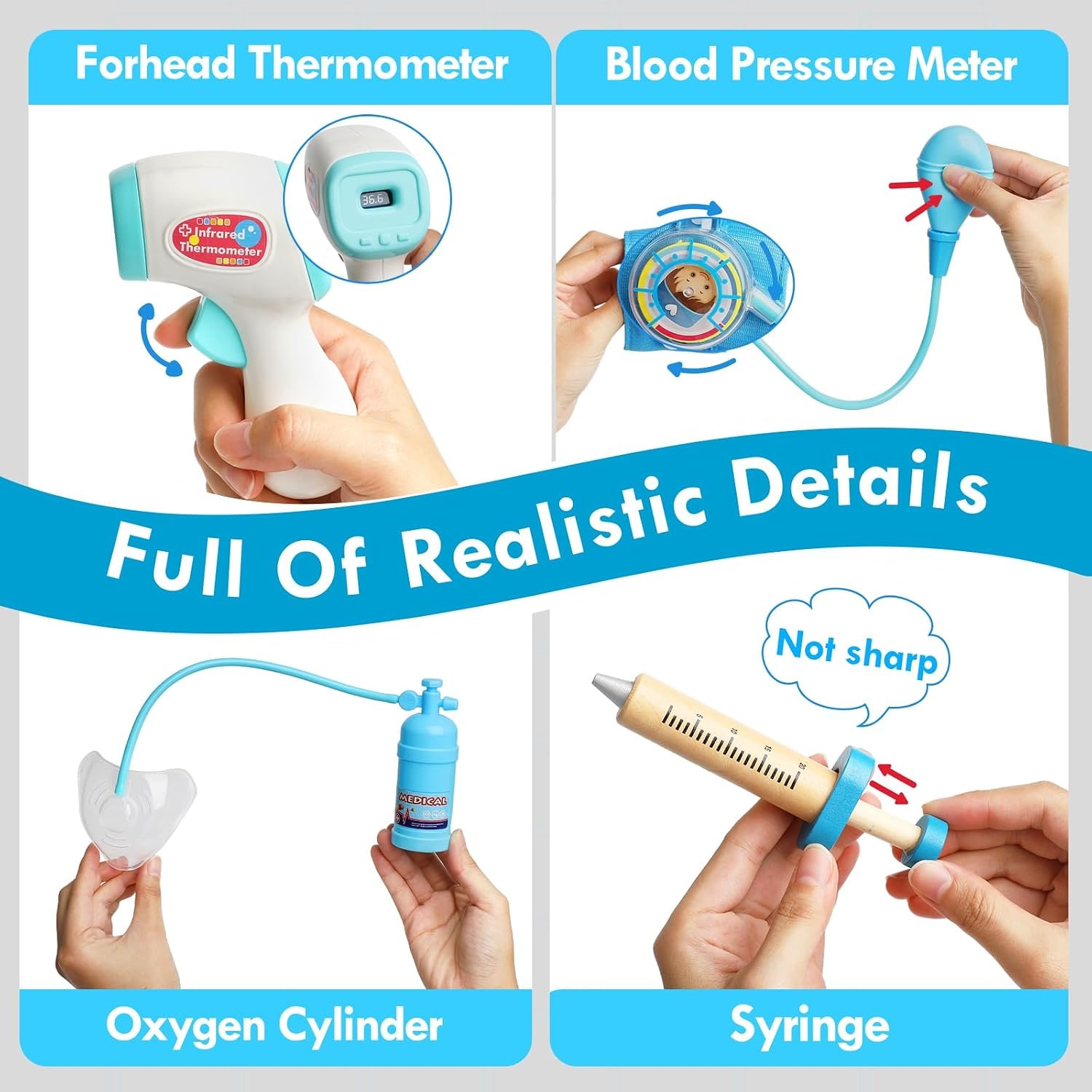
That is where this kids doctor play set differs. The stethoscope picks up an actual heartbeat. The digital thermometer puts a number on a screen. Those two details change the pace of play more than any number of extra plastic pieces would.
What is in the kit
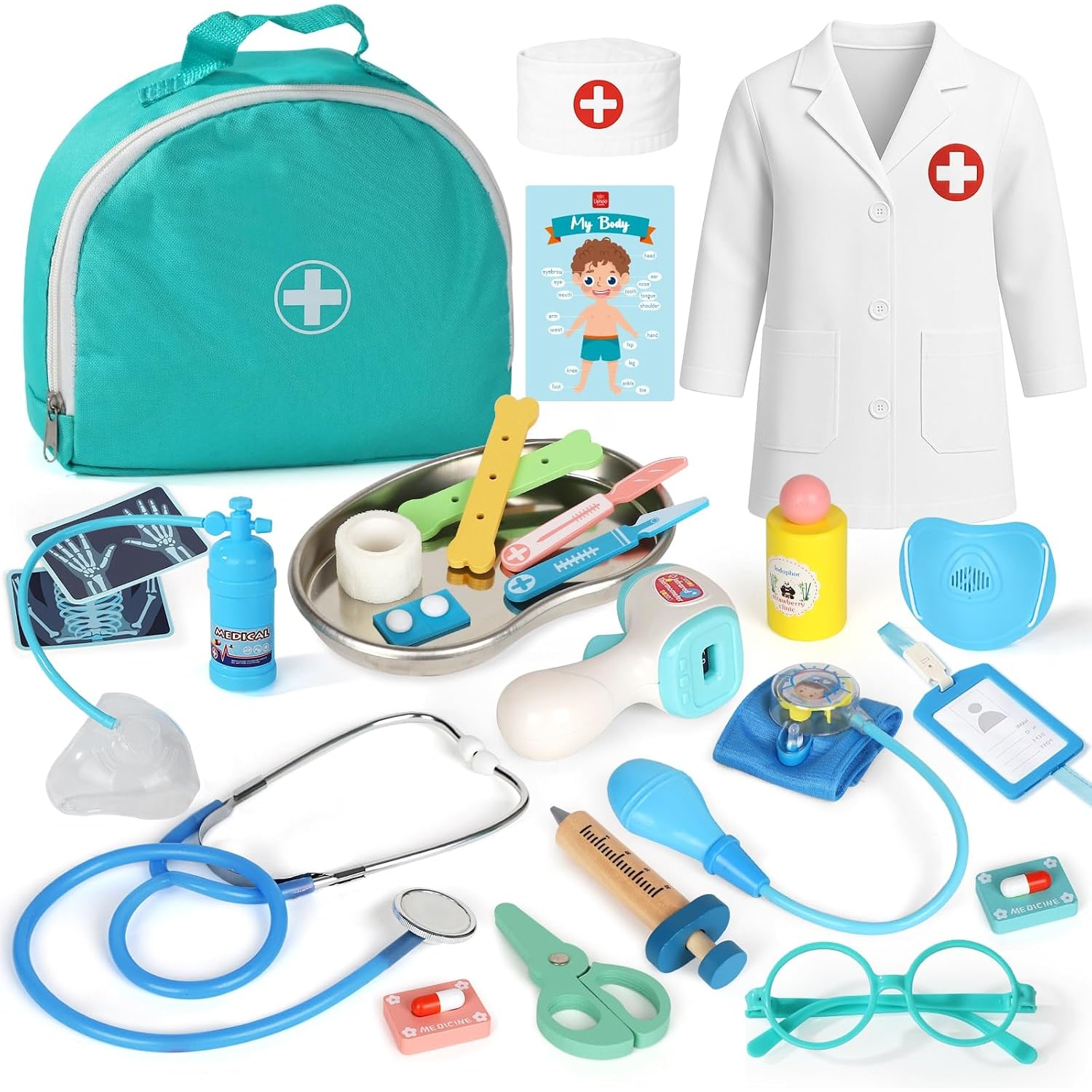
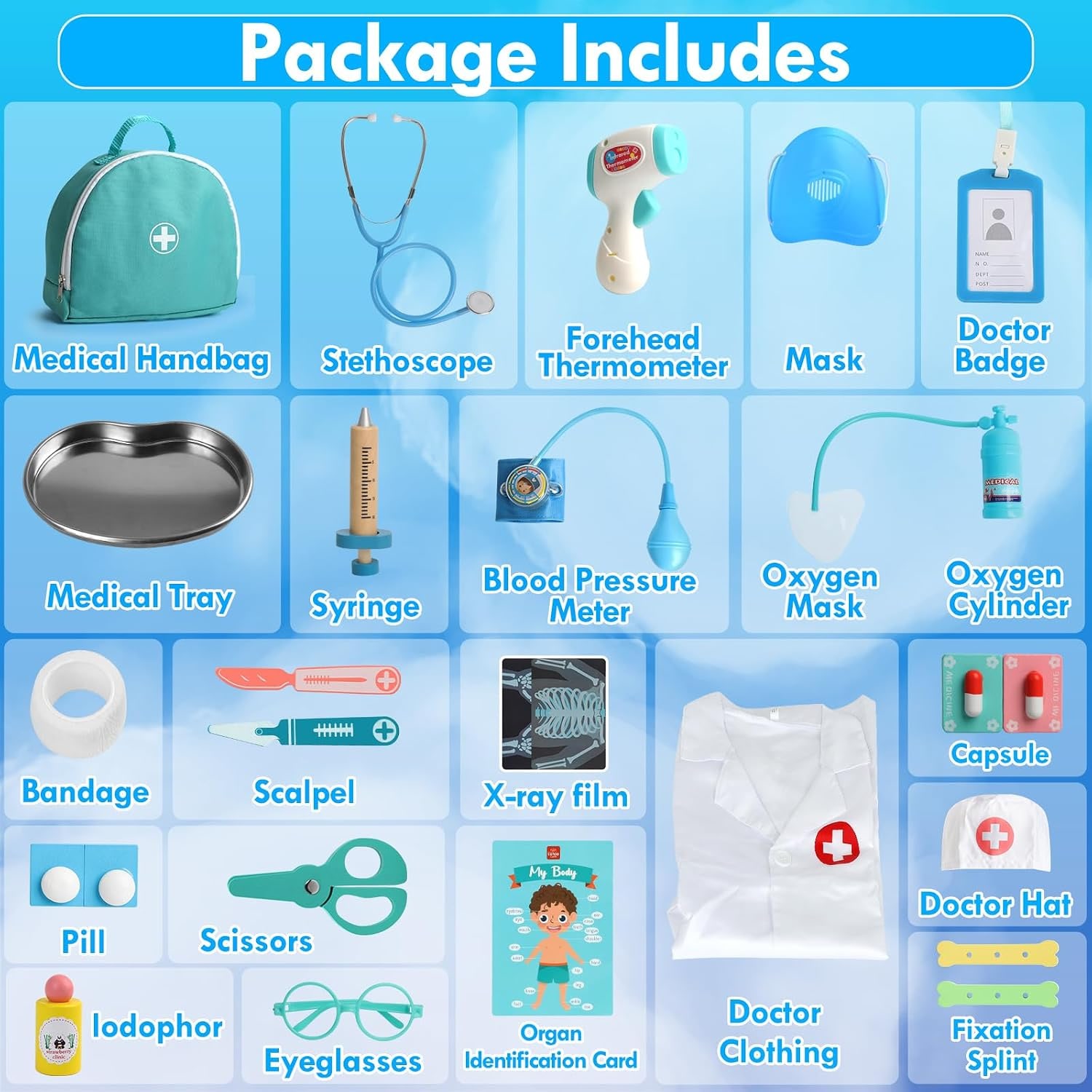
The set is built around a working stethoscope and a digital thermometer. Around those sit doctors' clothing, a mask, a stainless steel tray, and a group of wooden tools including a syringe, a capsule and a scalpel, plus other medical accessories.
The wooden pieces are worth a mention. Most doctor role play toys are entirely plastic, and plastic tools feel the same no matter what they are supposed to be. Wood has a different weight and sound when it is set down on the metal tray. Children pick up on that. Laying the tools out in a neat row before the patient sits down becomes a ritual, which is exactly the sort of copying of real life that makes role play worth doing.
The clothing matters too. Putting on a coat is a signal. It tells everyone in the room who is playing which part, and it tells the child wearing it that they are in charge for the next few minutes. A toy medical kit without something to wear is only half a kit.
The box measures 23.1 x 16 x 13 cm. Brand, weight and country of origin are not stated, and we would rather say so than guess.
How the play usually goes
There is a pattern to this game that repeats in nearly every house. First comes the equipment check. Every tool gets taken out, looked at, and arranged. This can take five minutes and your child will not want to be interrupted.
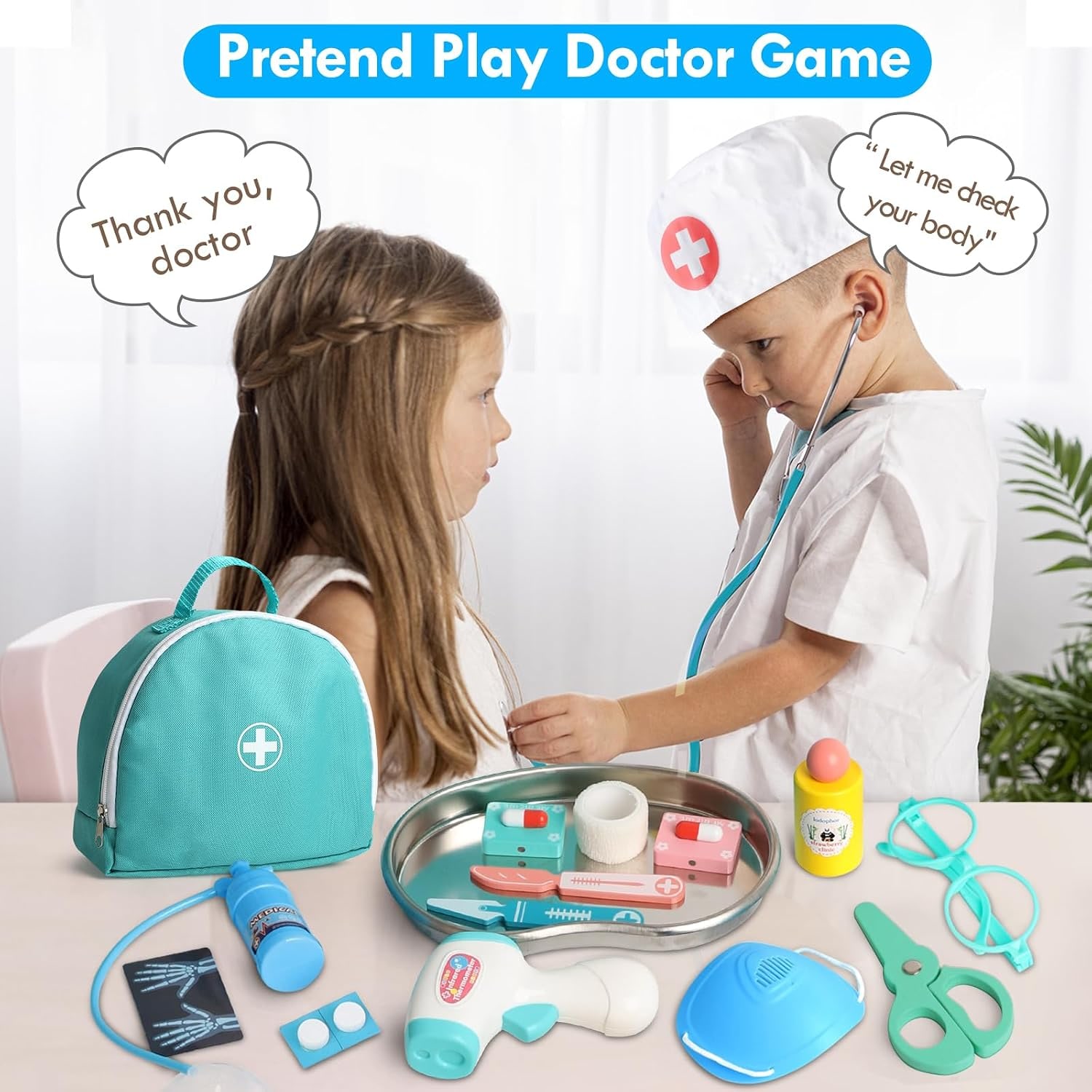
Then comes the first patient, which is usually whoever is sitting still. The stethoscope goes on, there is a pause while they listen hard, and then a very serious announcement. The thermometer comes out next. Then one of the wooden tools gets selected, with a short explanation of why that one and not the other.
After a few rounds, the stories get more elaborate. Patients arrive with specific complaints. There is a waiting list. Soft toys get admitted overnight. If there is a second child involved, roles swap and the whole routine runs again from the other side of the chair.
What you are watching is a child practising a sequence, explaining it out loud, and taking responsibility for someone else in a small, safe way. That is the value in a pretend play doctor kit, and it does not require any claims beyond what is in the box.
Who it suits
This set is for ages 3 and up. It contains small parts, so it is not for children under 3, and that is not a guideline to stretch. The wooden syringe and capsule are exactly the size that a very young child would put in their mouth.
From three to about seven is the sweet spot. Three and four year olds play it straight, listening and announcing. Five and six year olds build stories around it and want other people involved. Older children often keep using it as a prop in bigger games, such as a hospital built out of cushions or a vet clinic for every animal in the house.
It also works for mixed age play, which is useful if you have siblings with a gap between them. The older child takes the doctor role and runs the show, and the younger one is perfectly happy to be the patient on repeat.
How to choose between sets
If you are comparing a few options, there are only a handful of things that actually matter.
Does anything in the set do something? A working stethoscope and a thermometer with a screen will get far more use than a case full of silent shapes. This is the single biggest difference between a kit that lasts and one that does not.
Is there something to wear? Dress-up pieces anchor the role. Without them, children often drift into using the tools for other games within a day.
How many pieces, and where do they live? More pieces means more play but also more to lose. A kit that comes in a box with a tray, like this one, gives the pieces a home. Decide now whether you will keep that box, because once it goes in the recycling the tools start migrating around the house.
Is the size sensible? A 23.1 x 16 x 13 cm box is easy to wrap, carry and store. Huge trolley-style doctor sets look impressive in a photo but they take a permanent corner of a room, and many families regret that by month three.
Finally, think about what your child already owns. If there is already a play kitchen and a toy till, a doctor kit slots neatly into an existing world of pretend services. If the toy box is all vehicles and blocks, a role play set opens up a different kind of play entirely, which is often a bigger win.
Looking after it
None of this is complicated. Wipe the plastic and the stainless steel tray with a soft damp cloth and dry them before the set goes away. Keep the wooden tools dry, never soak them, and do not leave them outside or in a damp bathroom. Wood that gets wet repeatedly will swell and roughen.
The doctors' clothing can be shaken out and spot cleaned with mild soap and cool water, then left to air dry. Skip the dryer.
The best habit, by a wide margin, is counting the tools back onto the tray at the end of each session. Make it part of the game. The doctor tidies the surgery before closing. Children accept that far more easily than being told to clean up.
Store everything in the original box or a lidded tub on a shelf the child can reach themselves. If they cannot get it out without help, it gets played with half as often.
The short version
A doctor kit works when the props respond and the child has something to wear. This one has a stethoscope that picks up a heartbeat, a digital thermometer with a readout, doctors' clothing, a mask, a stainless steel tray and wooden tools, all in a 23.1 x 16 x 13 cm box.
It suits ages 3 and up, contains small parts, and plays just as well alone with soft toys as it does with a sibling in the chair. Keep the box, wipe the pieces down now and then, and put it somewhere your child can reach.
If you want to know whether it fits alongside what they already have, ask us. We would rather point you somewhere else than sell you a set that stays in the cupboard.