
The complete guide
Choosing a Kids Pots and Pans Playset, A Practical Buyer's Guide
The problem with most play cookware
Walk into almost any house with a play kitchen and you will find the same thing. The kitchen itself is lovely, wooden or sturdy plastic, with doors that open and a sink that looks convincing. Then you open the oven and find two warped plastic pans, a spatula that has gone soft at the edges, and a lid that stopped fitting months ago. The accessories never match the kitchen.
That happens because play kitchens are sold on the look of the unit, and the cookware thrown in the box is the cheapest part of the package. It works for about a fortnight. After that, the pans get bent, the handles crack, and the pieces scatter into every corner of the house.
A dedicated kids pots and pans playset solves that. You buy the cookware on its own terms, choose pieces that are the right size and feel, and keep them together in a bag so they are still a set in six months.
What you actually get here
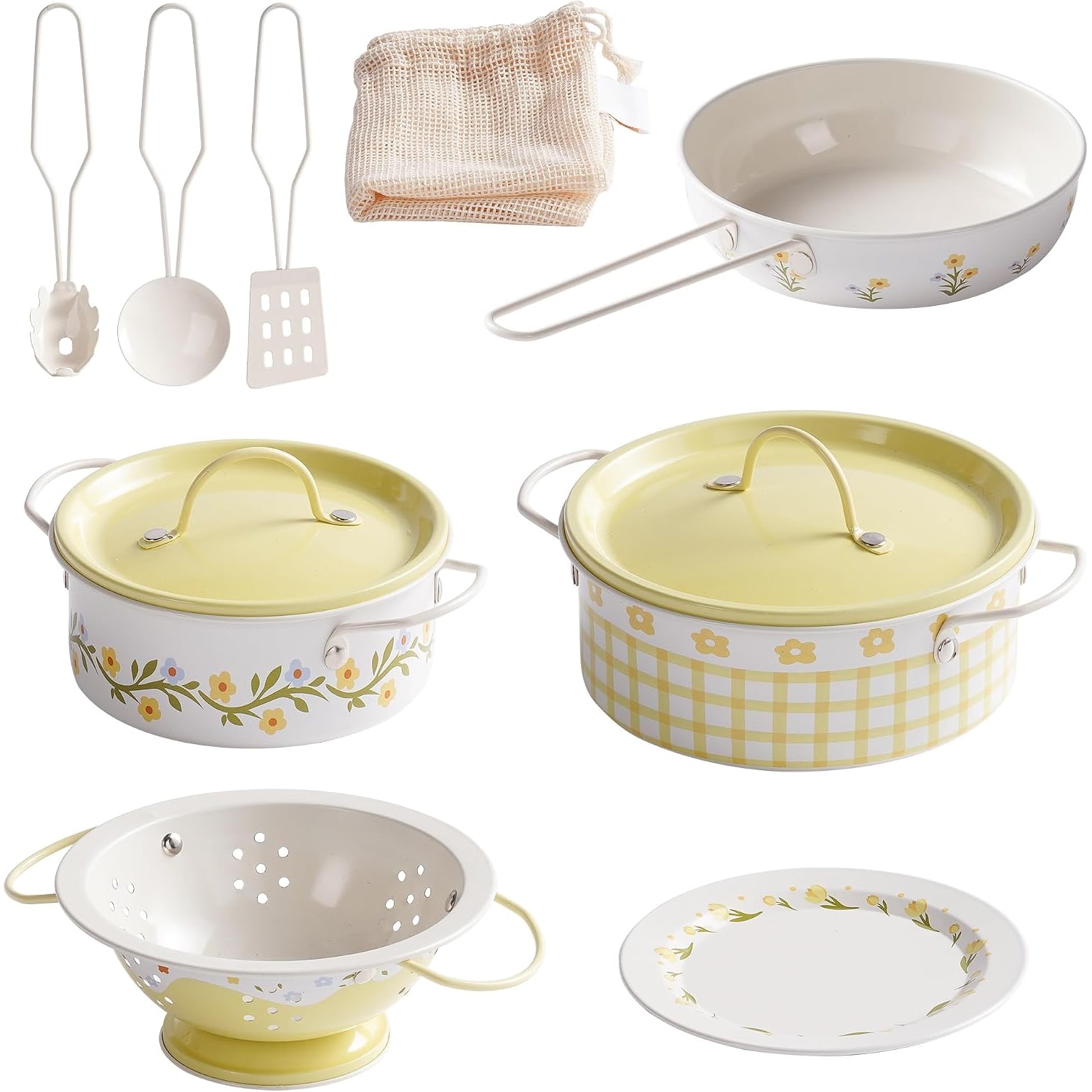
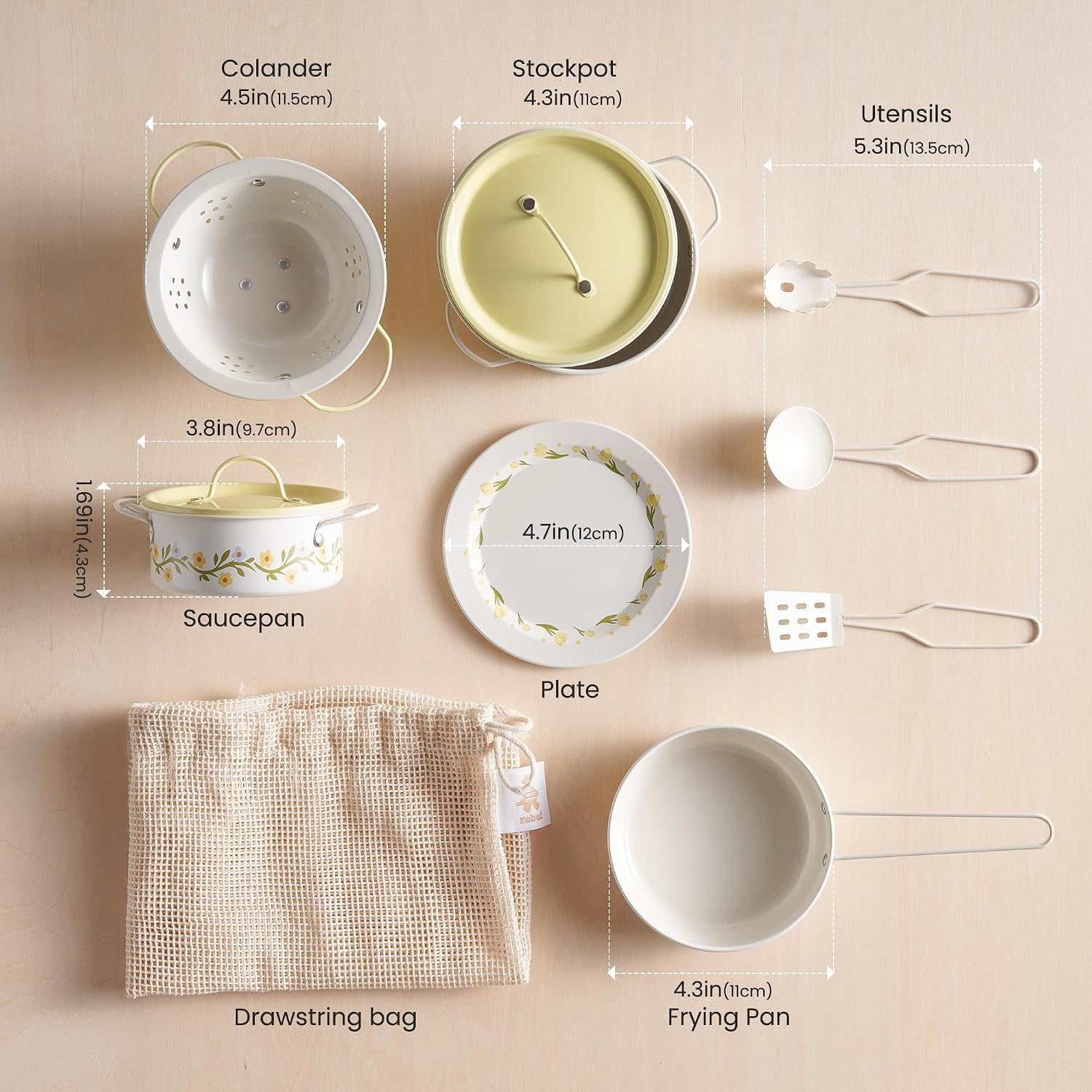
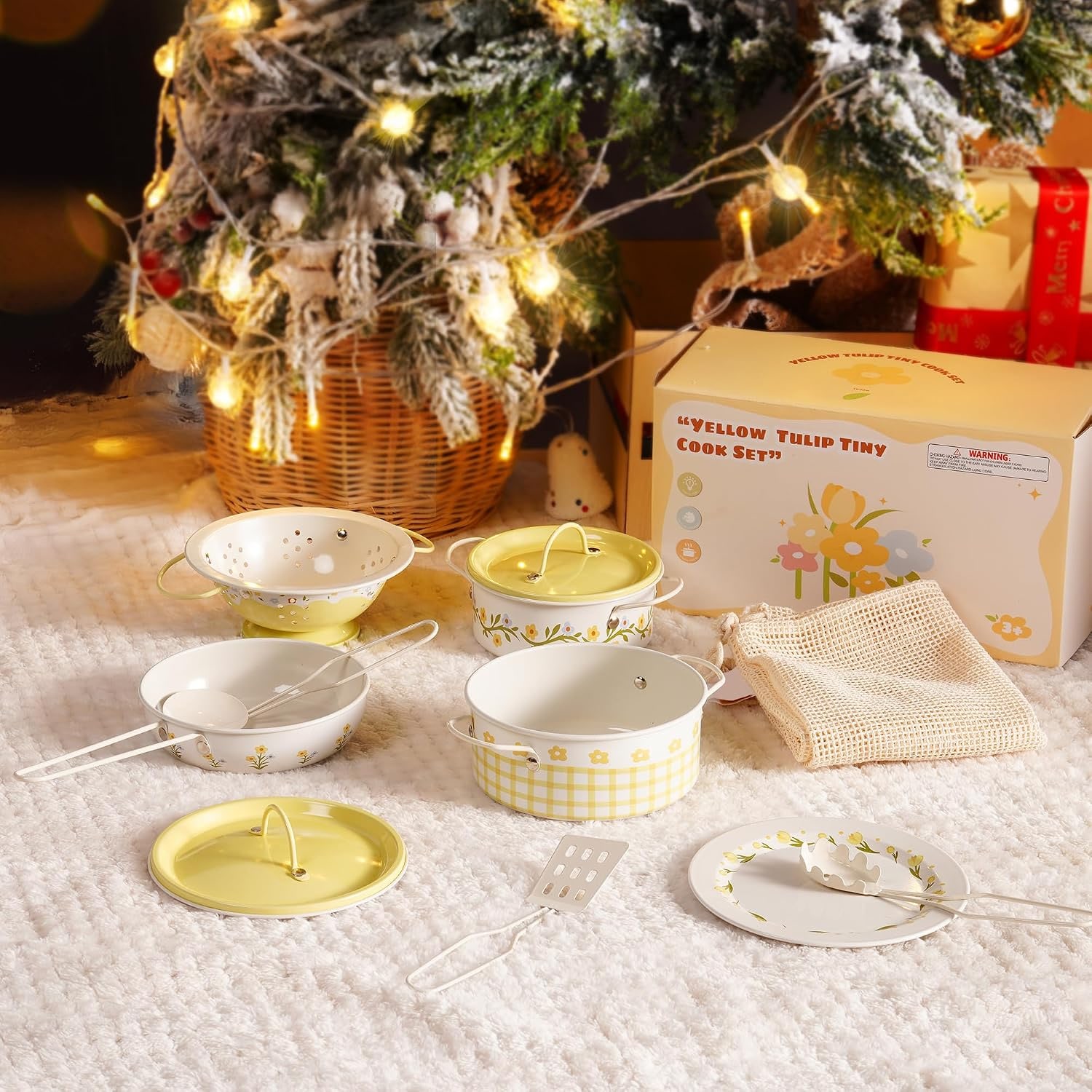
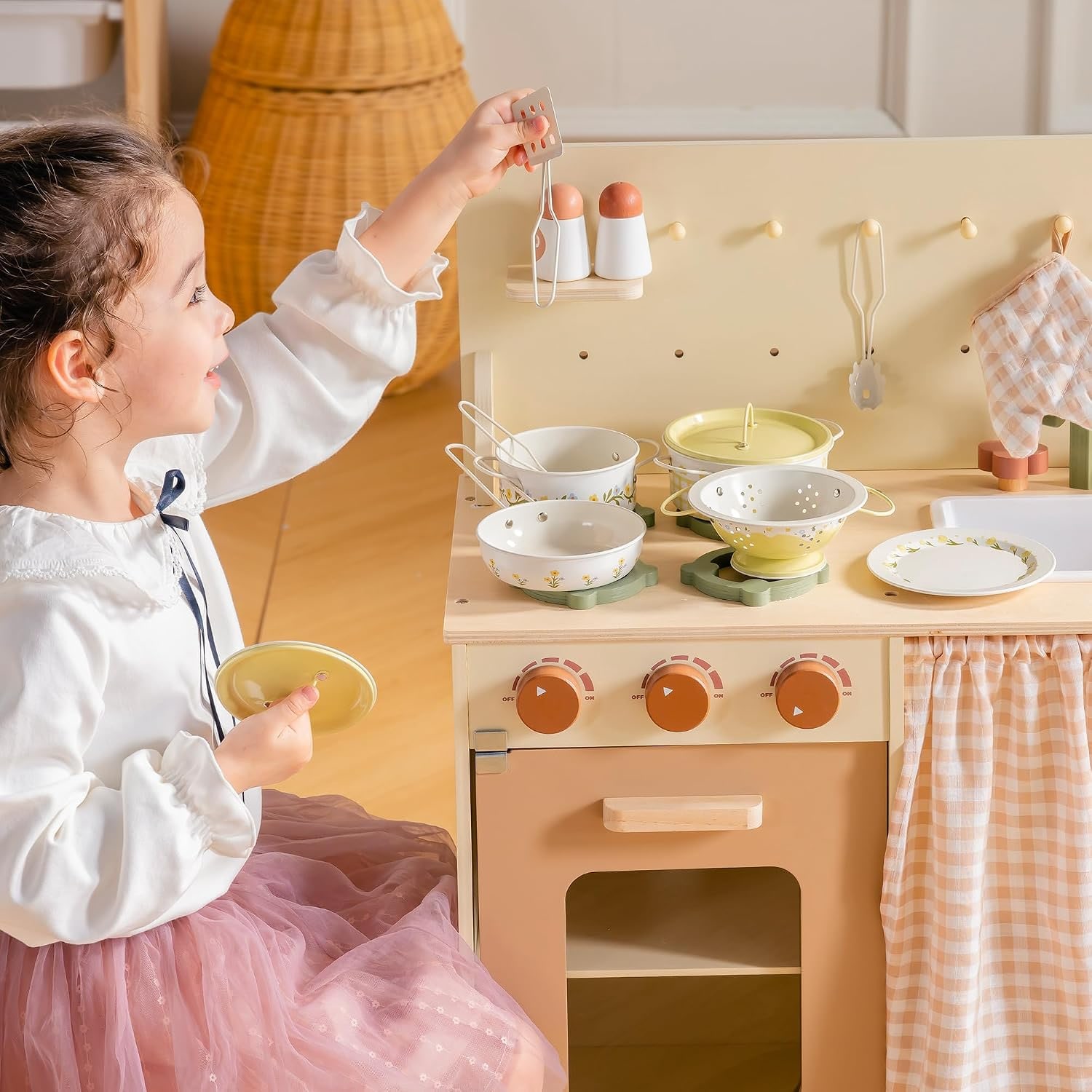
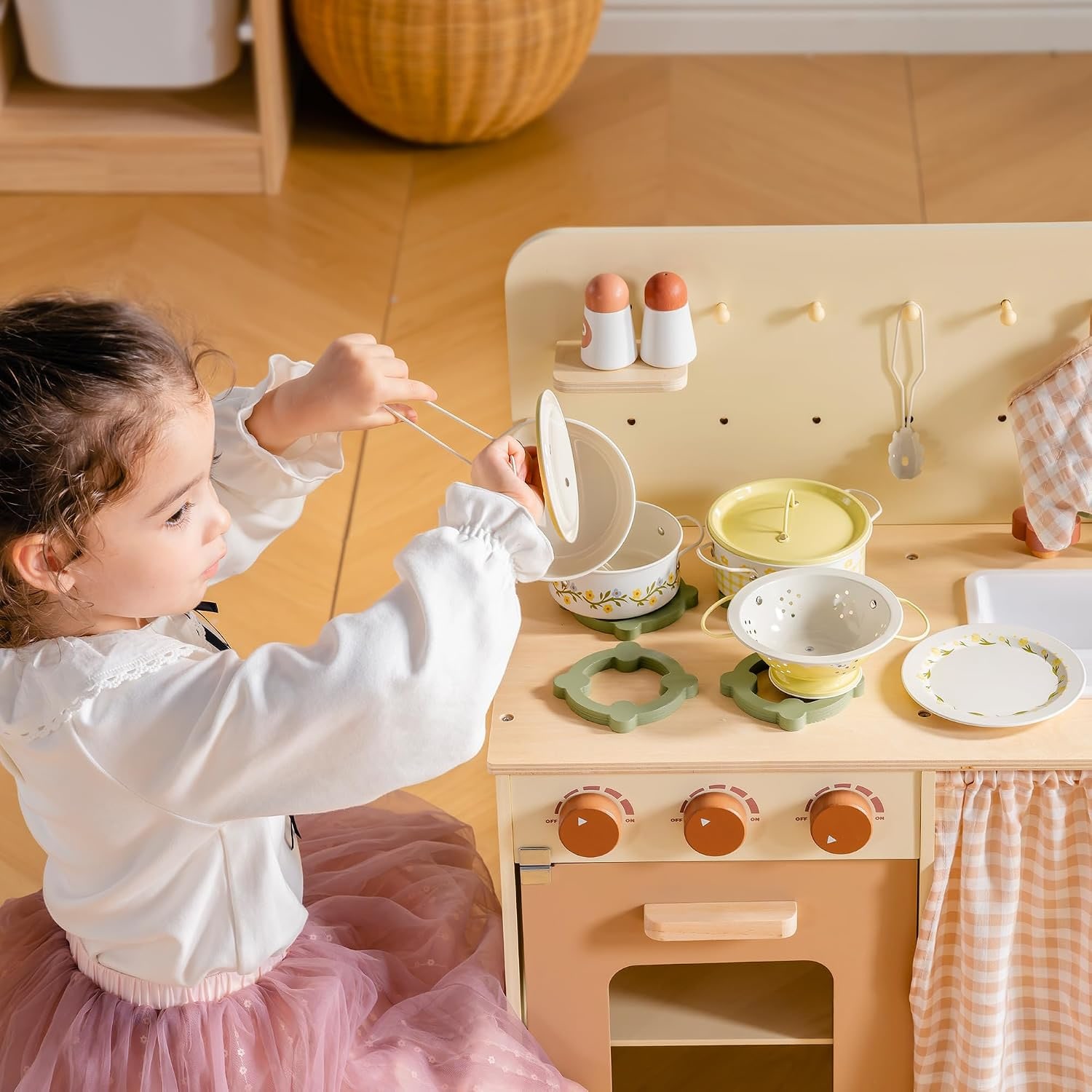
This set has nine pieces. There is a stockpot measuring 3.7 inches in diameter, a saucepan at 4.3 inches, a frying pan also at 4.3 inches, and a hotpot at 4.5 inches. Alongside those you get a plate, three cooking utensils and a mini stove. The drawstring storage bag holds the lot.
The maker lists the material type as metal, the colour as yellow and the theme as kitchen. The packed item dimensions are 12 x 9 x 21 centimetres. It is recommended for ages 3 and up, and because it contains small parts, it is not suitable for children under 3.
That is the full factual picture. Anything beyond it, the exact gauge of the metal, the finish, the weight, is not specified in the information available, so we will not pretend otherwise.
How pretend cooking actually works
Children do not play restaurant the way adults imagine. They do not follow recipes. What they do is run a sequence, and the sequence matters more than the detail.
It usually goes like this. Something gets put in a pan. The pan goes on the stove. There is stirring, often a lot of stirring. Then the food gets tipped onto a plate and handed to whoever is nearby, with firm instructions to eat it. Then the whole thing starts again.
Every piece in a good set supports one step of that loop. The pans hold. The stove is the place things happen. The utensils do the stirring and lifting. The plate ends the sequence and lets a child hand their work to someone else, which is often the bit they care about most.
Sets that miss a step feel incomplete. A pan with no plate leaves the game hanging. Utensils with no stove top means the child improvises on the floor, which works, but less happily.
Why pan size is worth thinking about
The diameters in this set sit between 3.7 and 4.5 inches, which is roughly the width of an adult palm. That is not an accident of manufacturing. It is the size range that works.
Go much bigger and a child has to use two hands to carry a pan, which rules out the one-handed stirring and pouring they want to do. Go much smaller and the pan stops holding anything useful. A single wooden carrot fills it, the game stalls, and the pan starts getting used as a hat instead.
The slight variation between pieces helps too. Four pans that are all identical are four of the same toy. Four pans at different widths give a child reasons to choose one over another, and choosing is where imaginative play lives.
Metal versus plastic
This is the question most people are weighing when they look for the best play kitchen cookware, so it is worth being straight about it.
Metal-style cookware has weight. A child picks it up and the arm registers something. That feedback is a big part of why it reads as real. It also sounds right. Setting a pan down makes a small clink rather than a hollow tap, and that sound is half of what makes a pretend kitchen feel like a kitchen.
The trade-off is noise. If your child likes to stack and bang, you will hear it. A rug under the play area takes the edge off. Most families decide the realism is well worth it.
Plastic has its place. It is quieter and it bounces. But it also dents, warps and discolours in ways metal does not, and the cheapest plastic sets tend to feel like exactly what they are.
Who this suits
Children aged three and up who already copy what happens in the kitchen are the obvious fit. If your child drags a chair to the bench to watch you cook, they are ready for their own pans.
It also suits families who already own a play kitchen and want to stop replacing accessories. Swapping a tired plastic kit for a proper toy cookware set is a cheap way to make an existing kitchen feel new again.
And it works for houses with no play kitchen at all. The mini stove gives the game a base, so a rug and a bit of floor are enough. Plenty of people buy it precisely because it does not need a large piece of furniture.
Because the set contains small parts, it is not for children under 3. If there is a younger sibling crawling about, play sessions need supervising and the bag needs putting up high afterwards.
How to choose between sets
A few things worth checking when you compare options.
Count the pieces, not the marketing. Nine pieces here means nine actual items you can name. Some sets inflate the count with duplicates or packaging extras.
Look for a stove or a base. A set without one leaves a gap in the play sequence that the child has to fill with imagination they would rather spend elsewhere.
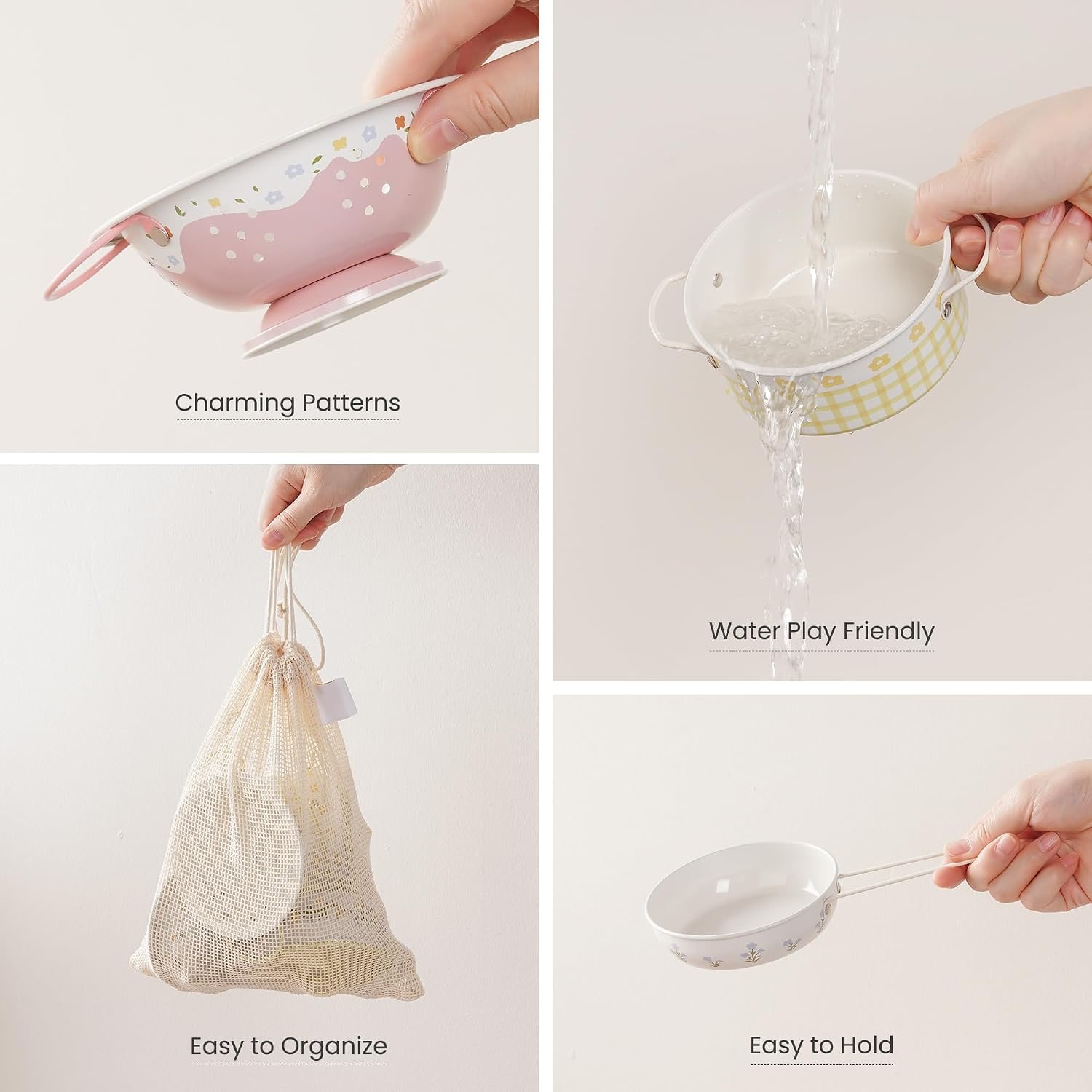
Check there is storage. This sounds minor until the third week, when half the set is missing. A drawstring bag is a small thing that keeps the whole purchase working long-term.
Think about the colour against your room. Yellow is bright and easy to spot on a floor, which, funnily enough, is a practical benefit when you are gathering pieces at the end of the day.
Looking after it
Care is simple. Wipe the pieces with a damp cloth and dry them straight away rather than leaving them to air dry. No dishwasher, no microwave, no oven, and nowhere near real heat.
Keep the set away from real food. Pretend food only, every time, with no exceptions for a quick snack.
Store everything in the drawstring bag between sessions. If you get a child into the habit early, packing up becomes the closing scene of the game rather than a fight. Many children quite enjoy the part where the kitchen closes for the night.
Give the pieces a quick check now and then for bent handles or sharp edges, the same way you would with any toy that gets handled daily.
Getting more out of it
A few ideas that stretch the play.
Pair it with wooden or felt play food. The pan widths hold several pieces, so a child can build a meal rather than cook one item at a time.
Write a tiny menu together on a scrap of paper. Children who can write a few words love taking orders, and it turns solo play into a game with everyone else in the room.
Let the set travel. The bag means it goes to a grandparent's house or a holiday rental without hunting for pieces at the far end. A familiar toy in an unfamiliar room settles a lot of children.
The short version
Nine pieces, metal-style, sized for small hands between 3.7 and 4.5 inches across. A stove to cook on, a plate to serve on, three utensils to stir with, and a bag to keep it all in. Ages 3 and up, and not for children under 3 because of small parts.
If your child already pretends to cook, or your play kitchen came with accessories that have given up, this is a straightforward fix. It does one job properly and it stays together, which is more than most play cookware manages.